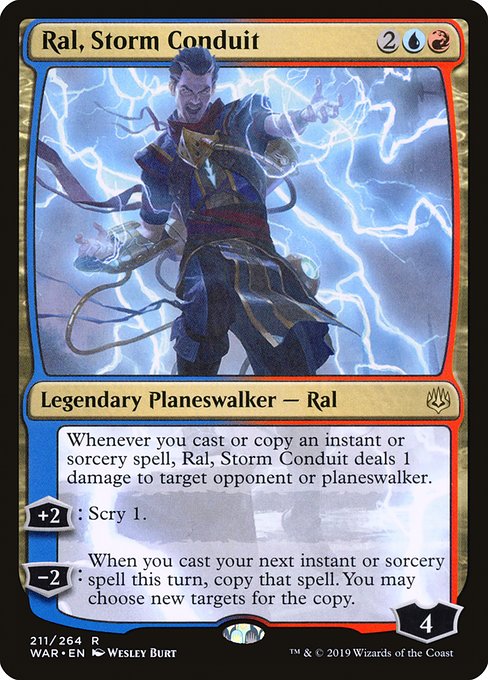
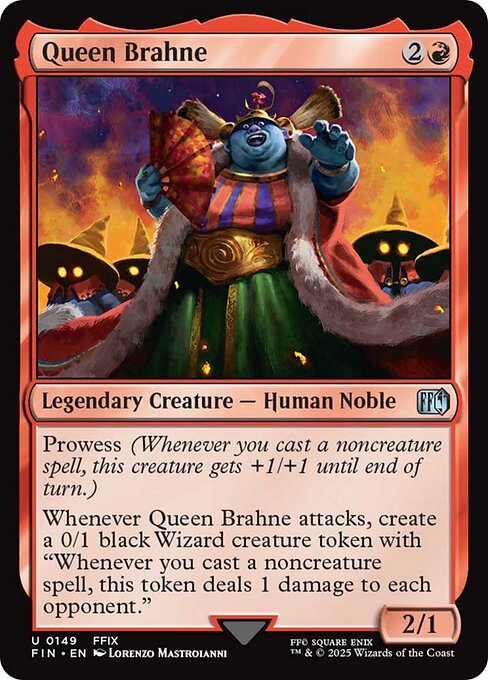
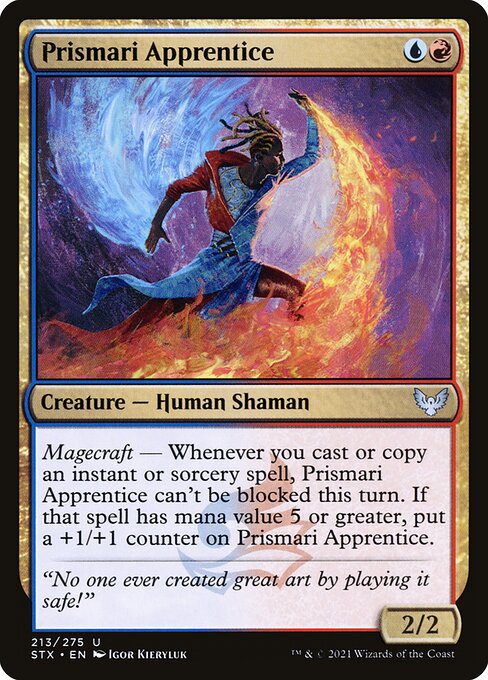
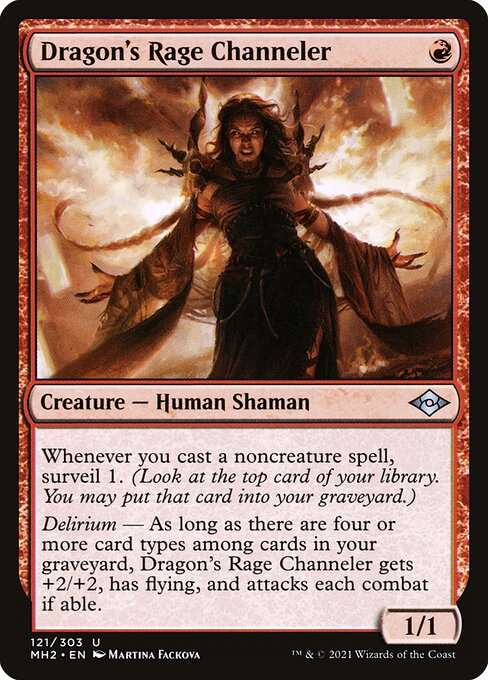
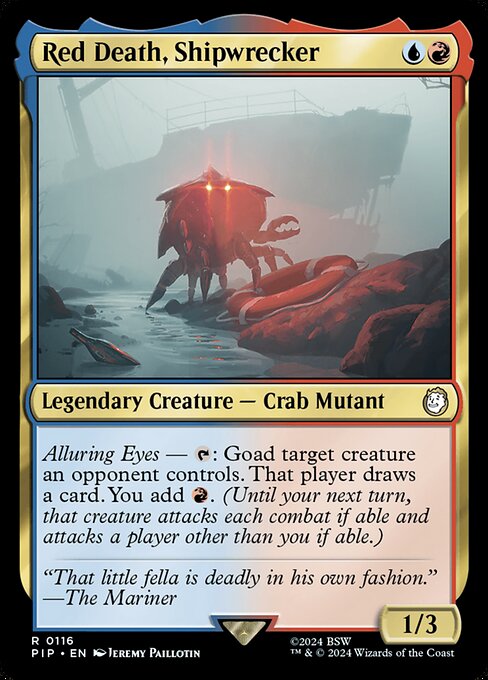
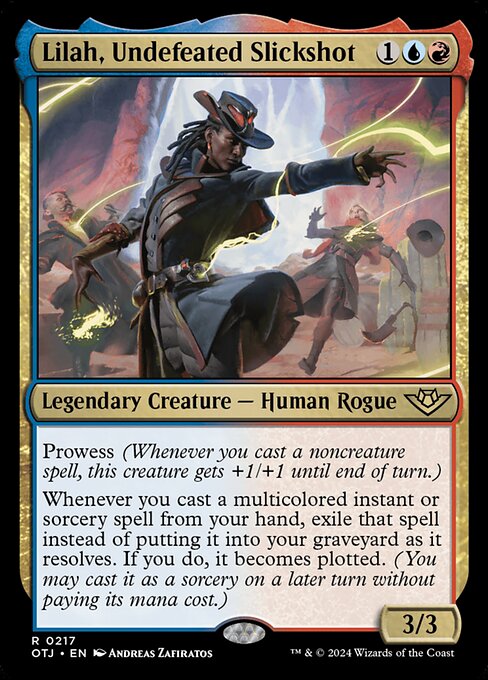
Bohn wants a deck that casts lots of instant and sorcery spells. It also suits a deck that turns its opponents against each other.
Mana cost
Blue, Red ()
Power / toughness3 / 3
RarityRare
Each nonland card in your hand without foretell has foretell. Its foretell cost is equal to its mana cost reduced by . (During your turn, you may pay and exile it from your hand face down. Cast it on a later turn for its foretell cost.)
Whenever you cast your second spell each turn, goad target creature an opponent controls.
Picked for what they do in Bohn's deck. When two cards do the same job, the one with the lower comes first. All of them fit Bohn's color identity.Mana ValueThe total amount of mana a card costs, all added up. A card costing two generic and one green has a mana value of three. Wizards renamed this from "converted mana cost" in 2021, so older cards and articles may still use the old name.Open the full glossary
Color identityEvery color of mana symbol on a card, in its cost and in its rules text. Your commander's color identity sets the limit for your whole deck: every other card has to fit inside it. A deck led by a green and white commander cannot play a card with any blue in its color identity.Open the full glossaryURPlayers write colors as letters: U for blue, R for red. Blue is U because B was already taken by black.SpellslingerSpellslinger decks cast lots of instants and sorceries, one-time spells, and play creatures that reward every spell you cast. Instants and sorceries take effect once and then go to your graveyard, and an instant can even be cast during another player's turn.Open the Spellslinger pageSpellslinger PayoffRewards you specifically for casting or copying instants and sorceries, usually with a trigger each time. Narrower than Spellslinger, which covers the whole instant-and-sorcery family. Archmage Emeritus, Storm-Kiln ArtistOpen the Spellslinger Payoff pageAlternative CostLets you cast a spell by paying some other cost instead of its mana cost, like life, a card from your hand, or nothing at all.Open the Alternative Cost pagePoliticsPolitics decks turn opponents against each other, making their creatures attack someone else or letting the whole table vote. Goad is the most common tool: a goaded creature must attack, and must attack someone other than you if it can.Open the Politics pageForced CombatForces creatures to attack, or decides who they attack, often with goad. In multiplayer it points other people's creatures at each other instead of at you. Bident of Thassa, Toski, Bearer of SecretsOpen the Forced Combat page
Send Us Feedback
What works, what's confusing, what you wish the site did. We read every one.
Not signed in? That is fine. We only keep what you write.
Optional. We only use it to reply to you.
Can we use Google Analytics cookies?
They show us which pages help people. No ads.
Privacy Policy


 . (During your turn, you may pay
 Open the full glossary