- Commander Nexus
- Help
Help
New to Commander, or new to this site? Start here. Nothing on this page needs an account.
Start Here
- What is Commander?
- The format explained for somebody who has never played it: one -legal card leads a deck of exactly 100 cards, and apart from basic lands no two of them can have the same name.
- Let the site build a deck with me
- Session Zero asks a few plain questions about how you like to play, then suggests and decks that suit the answers. No account needed to try it.
- I already have a decklist
- Paste it from Moxfield, Archidekt, Mana Pool, Deckbox, ManaBox or just typed out, and the site reads it and finds every card.
- How powerful is my deck?
- are how players agree on how hard their decks try to win, before the game starts. There are five, and the brackets page explains each one in plain words. A reading of your own deck is coming once we trust its numbers.
Look Something Up
- What does this word mean?
- Every term the game uses, defined in plain English with an example card wherever one helps.
- What kind of deck is this?
- 50 : whole game plans, described by the way the deck intends to win.
- What is this deck built around?
- 131 themes: a creature type, a single idea, a color pair.
- What does one card actually do?
- 211 tags: one job a single card can do, in a vacuum.
- How do I search for a kind of card?
- 74 search words, like is: or is:shockland, each explained in plain words.
- Who can lead a deck?
- All 3,677 legal , A to Z.
- What can I buy ready-made?
- 181 preconstructed decks you can buy and play out of the box, each with its full card list.
Show Me Around
- How do I replay a tutorial?
- Every major screen walks you through its controls the first time you open it. The ? button replays the tour for whatever page you are on, any time, including this one's neighbors. On a phone it sits next to the menu at the top of the screen; on a computer it is in the bottom-left corner. Signed in, Account → Tutorials lists every tour, plays any of them on demand, and turns them off or back on.
- Is there a keyboard shortcut for search?
- Press / anywhere and the cursor jumps to the search box on whatever page you are on. Esc closes any suggestion list.
- Do I need an account?
- No, to look. You can browse and search every card, commander and preconstructed deck, open anyone's shared deck, and run Session Zero without signing in. You need an account only to save something: your own decks, and your collection.
Search Words
Type any of these into the search bar on the Cards or
Commanders tab, on their own or with other words: t:creature is:historic.
Put a minus in front to leave them out: -is:reprint. You don't need to
remember them. Start typing one, like "shock", and the search bar offers it.
Commander
is:commanderCan be your commander-
Cards allowed to lead a deck. Mostly creatures, plus the few other cards whose text says they can be your commander.
Example: Atraxa, Praetors' Voice (Double Masters).
Try
is:commander id:wu. From: Official rules is:partnerPartner-
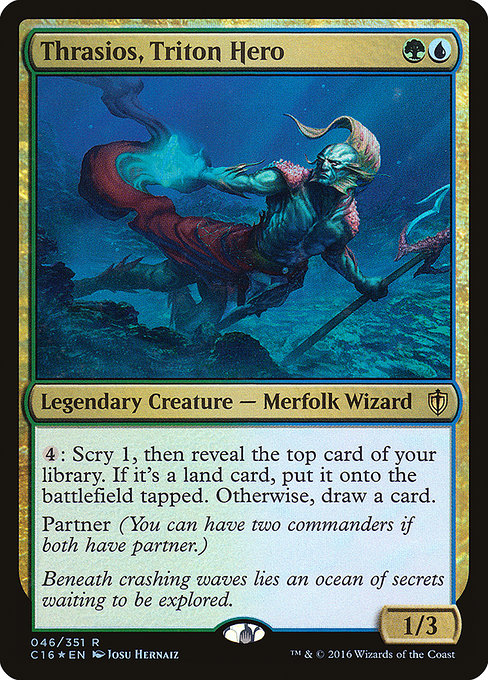
with . A deck can be led by two of these instead of one. A card that says "Partner with" and a name only pairs with that one card.
Example: Kodama of the East Tree (Bloomburrow Commander).
Try
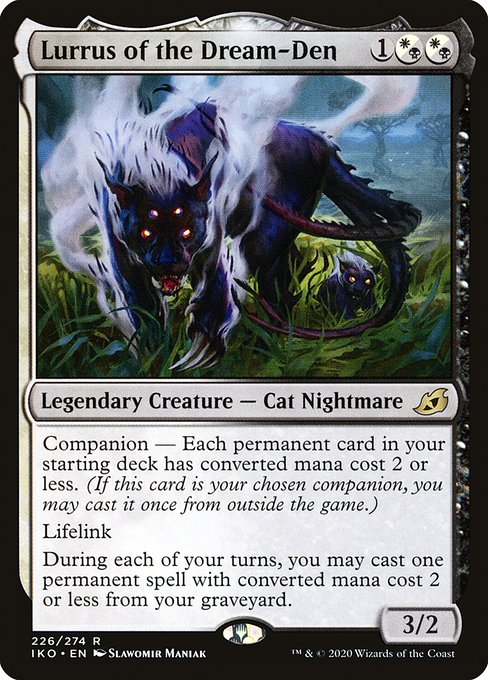
is:partner id:br. From: Official rules is:companionCompanion- Cards with . If your whole deck meets the rule written on the card, it waits outside the game and you can pay {3} to put it into your hand once. Example: Lurrus of the Dream-Den (Pioneer Challenger Decks 2021). From: Official rules
is:gamechangerGame Changer- Cards on the official list. They are strong enough that the limit how many a deck can have. Example: Rhystic Study (Jumpstart 2022). From: Wizards of the Coast
is:bannedBanned in Commander- Cards that aren't allowed in a deck. You can still look them up, and we flag them if one ends up in a deck. Example: Mana Crypt (Double Masters). From: Wizards of the Coast
is:reservedReserved List-
Cards Wizards of the Coast has promised never to , which is often why they cost so much.
Example: Lion's Eye Diamond (Vintage Masters).
Try
is:reserved t:land. From: Scryfall card data
Kinds of Card
is:historicHistoric-
cards, artifacts and . Some cards reward you for spells.
Example: Sol Ring (Secrets of Strixhaven Commander).
Try
is:historic t:creature. From: Official rules is:outlawOutlaw- Cards that are an Assassin, Mercenary, Pirate, Rogue or Warlock. Some cards get better the more outlaws you control. Example: Ragavan, Nimble Pilferer (Modern Horizons 2). From: Official rules
is:partyParty- Cards that are a Cleric, Rogue, Warrior or Wizard. A full party is one of each, and some cards get stronger the more of your party you have. Example: Archmage Emeritus (Secrets of Strixhaven Commander). From: Official rules
is:modalModal-
Spells and abilities that let you pick from a list, like "Choose one" or "Choose two".
Example: Austere Command (Fallout).
Try
is:modal t:instant. From: Our definition is:vanillaVanilla- Creatures with no rules text at all. Just a name, a cost, and and (how much damage it deals and how much it can take). Example: Gigantosaurus (Core Set 2019). From: Player term
is:frenchvanillaFrench vanilla- Creatures whose only rules text is keyword abilities, like or . Example: Vampire Nighthawk (Foundations). From: Player term
is:bearBear- Creatures that cost 2 mana and have 2 and 2 . The name comes from Grizzly Bears, the classic example. Example: Grand Abolisher (The Big Score). From: Player term
is:spellSpell- Every card that isn't a land. Example: Swords to Plowshares (Secrets of Strixhaven Commander). From: Our definition
is:permanentPermanent- Cards that stay on the battlefield once played: creatures, artifacts, enchantments, lands, and . Example: Arcane Signet (Secrets of Strixhaven Commander). From: Official rules
is:hybridHybrid mana- Cards with a mana symbol split in two, like half green and half white. You can pay that symbol with either half. Example: Kitchen Finks (Ultimate Masters). From: Official rules
is:phyrexianPhyrexian mana- Cards with Phyrexian mana symbols. You can pay each one with its color of mana or with 2 life instead. Example: Dismember (Time Spiral Remastered). From: Official rules
Cards With More Than One Part
is:splitSplit card- Two small cards printed side by side on one card. You choose which half to . Example: Wear // Tear (Fallout). From: Official rules
is:flipFlip card- Cards with a second half printed upside down. When the card tells you to, you turn it around and use the other half. Example: Budoka Gardener // Dokai, Weaver of Life (Commander 2018). From: Official rules
is:transformTransforming- Double-faced cards that start on the front face and turn over to the back when something tells them to. Example: Delver of Secrets // Insectile Aberration (Innistrad Remastered). From: Official rules
is:mdfcModal double-faced-
Double-faced cards where you choose which face to play. Many have a spell on the front and a land on the back.
Example: Sink into Stupor // Soporific Springs (Modern Horizons 3).
Try
is:mdfc t:land. From: Official rules is:dfcDouble-faced- Any card with a face on both sides instead of a card back. Example: Etali, Primal Conqueror // Etali, Primal Sickness (March of the Machine). From: Official rules
is:meldMeld- Pairs of cards that combine into one bigger card when you have both on the battlefield. Example: Bruna, the Fading Light (Innistrad Remastered). From: Official rules
is:meldpartMeld piece- One of the two cards that together. Each is a normal card you can play on its own. Example: Gisela, the Broken Blade (Innistrad Remastered). From: Official rules
is:meldresultMelded card- The big card two pieces turn into. It is printed on the back of one of the pieces, so you never play it by itself. Example: Brisela, Voice of Nightmares (Innistrad Remastered). From: Official rules
is:adventureAdventure- Cards with a second, smaller spell printed inside them, called an . You can the card normally, or cast the Adventure first. If you do, the card waits in and you can cast it from there later. Example: Bonecrusher Giant // Stomp (Commander Legends: Battle for Baldur's Gate). From: Wizards rulings
is:levelerLevel up- Creatures you can pay mana into to level up. They get stronger at the levels printed on the card. Example: Joraga Treespeaker (Rise of the Eldrazi). From: Official rules
Lands
is:fetchlandFetch land- Lands you to go and find another land in your deck, like Polluted Delta. Example: Polluted Delta (Modern Horizons 3). From: Player term
is:triomeTriome-
Lands with three basic land types, so they make any of three colors of mana.
Example: Ketria Triome (Ikoria: Lair of Behemoths).
Also works as
is:tricycleland. From: Player term is:shocklandShock land- Lands with two basic land types that ask you to pay 2 life, or they come in . Example: Steam Vents (Lorwyn Eclipsed). From: Player term
is:dualOriginal dual land- The ten original lands with two basic land types and nothing else on them, like Underground Sea. Example: Underground Sea (Limited Edition Beta). From: Player term
is:bikelandCycling land- Lands with two basic land types that come in and have {2}: pay {2} and it to draw a new card when you don't need it. Example: Canyon Slough (Lorwyn Eclipsed Commander). From: Player term
is:manlandCreature land-
Lands that can turn into creatures for a while and still count as lands.
Example: Mutavault (Commander Legends: Battle for Baldur's Gate).
Also works as
is:creatureland. From: Player term is:bouncelandBounce land-
Lands that come in and send one of your other lands back to your hand, but make two mana each time you them.
Example: Azorius Chancery (Duskmourn: House of Horror Commander).
Also works as
is:karoo. From: Player term is:painlandPain land- Lands that make mana for free, or one of two colors if you take 1 damage. Example: Adarkar Wastes (Edge of Eternities Commander). From: Player term
is:checklandCheck land- Lands that come in untapped if you already control a land of one of the two types they check for, like a Plains or an Island. Example: Glacial Fortress (Edge of Eternities Commander). From: Player term
is:fastlandFast land- Lands that come in untapped early in the game, while you control two or fewer other lands, and after that. Example: Seachrome Coast (Bloomburrow Commander). From: Player term
is:slowlandSlow land- The opposite of fast lands: they come in early on, and untapped once you control two or more other lands. Example: Deserted Beach (Innistrad Remastered). From: Player term
is:gainlandGain land- Lands that come in and give you 1 life when they do. Example: Tranquil Cove (Aetherdrift). From: Player term
is:pathwayPathway- Double-faced lands. You choose which side to play, and each side makes one color. Example: Riverglide Pathway // Lavaglide Pathway (Zendikar Rising). From: Player term
is:scrylandScry land- Lands that come in and let you 1: look at the top card of your , then leave it there or put it on the bottom. Example: Temple of Mystery (Secrets of Strixhaven Commander). From: Player term
is:surveillandSurveil land- Lands with two basic land types that come in and let you 1: look at the top card of your , then leave it there or put it into your . Example: Undercity Sewers (Murders at Karlov Manor). From: Player term
is:storagelandStorage land- Lands that can save up mana on the card as storage and spend it all on a later turn. Example: Calciform Pools (Time Spiral Remastered). From: Player term
is:filterlandFilter land- Lands that turn mana you already have into mana of the colors you need. Example: Mystic Gate (Commander Masters). From: Player term
is:canopylandCanopy land- Lands that cost 1 life each time they make colored mana. When you no longer need the land, you can it to draw a card. Example: Horizon Canopy (Doctor Who). From: Player term
is:shadowlandReveal land-
Lands that come in untapped if you show a land of one of their two types from your hand, and if you don't.
Example: Choked Estuary (Murders at Karlov Manor Commander).
Also works as
is:snarl. From: Player term is:tangolandBattle land-
Lands with two basic land types that come in untapped only if you control two or more basic lands.
Example: Prairie Stream (Aetherdrift Commander).
Also works as
is:battleland. From: Player term is:bondlandBond land- Lands made for games with more than two players. They come in untapped when you have two or more opponents, which in is almost always. Example: Luxury Suite (Commander Legends: Battle for Baldur's Gate). From: Player term
is:trilandThree-color tapped land- Lands that come in and make any one of three colors. Example: Arcane Sanctum (Aetherdrift Commander). From: Player term
Printings
is:reprintReprinted- Cards that have been printed more than once. Example: Sol Ring (Commander 2021). From: Scryfall card data
is:firstprintFirst printing-
The where a card first appeared. Add a set to see what that set brought in that was new.
Example: Sol Ring (Limited Edition Alpha).
Try
s:mh3 is:firstprint. From: Our definition is:uniquePrinted once- Cards that have only ever come out in one set. Example: Urza's Cave (Modern Horizons 3). From: Our definition
is:promoPromo- Special handed out at events, in stores or with products, rather than found in regular packs. Example: Sol Ring (Love Your LGS 2022). From: Scryfall card data
is:spotlightStory Spotlight- Cards that show a key moment from a set's story. Example: An Offer You Can't Refuse (Streets of New Capenna). From: Scryfall card data
is:fullartFull art-
where the artwork covers the whole card.
Example: Island (Unfinity).
Also works as
is:full. From: Scryfall card data is:hiresHigh-quality image- with a sharp, high-resolution picture of the real card. New or rare printings sometimes only have a blurry or stand-in picture for a while. Example: Birds of Paradise (Ravnica Remastered). From: Scryfall card data
is:foilComes in foil- made in a shiny version. Example: Cyclonic Rift (Ravnica Remastered). From: Scryfall card data
is:nonfoilComes in non-foil- made in a regular, non-shiny version. Example: Sol Ring (Limited Edition Alpha). From: Scryfall card data
is:etchedEtched foil- made in , a with a textured, metallic look. Example: Swords to Plowshares (Strixhaven Mystical Archive). From: Scryfall card data
is:digitalDigital only- that only exist in online games like MTG Arena or Magic Online. Example: Sol Ring (Vintage Masters). From: Scryfall card data
is:boosterIn booster packs- you can open in booster packs. Example: Lion's Eye Diamond (Vintage Masters). From: Scryfall card data
is:textlessTextless- with no rules text on the card, just the art. Example: Sol Ring (Secret Lair Drop). From: Scryfall card data
is:oversizedOversized- Large versions of cards, made as prizes or for display rather than for play. Example: Swords to Plowshares (Oversized League Prizes). From: Scryfall card data
is:colorshiftedColorshifted- that reimagine a card in a different color, first seen in Planar . Example: Damnation (Planar Chaos). From: Scryfall card data
is:funnyJoke sets- from joke sets like Unfinity. Only the ones allowed in show up here. Example: Clown Car (Unfinity). From: Scryfall card data
is:alchemyAlchemy- from Alchemy, the digital sets made for MTG Arena. Example: Sulfur Falls (Alchemy: Edge of Eternities). From: Scryfall card data
is:oldOld card frame- in the original card frame, used from 1993 to 2003. Example: Sol Ring (Unlimited Edition). From: Scryfall card data
is:newModern card frame- in any of the newer card frames, used from 2003 on, including the one on cards today. Example: Sol Ring (Secrets of Strixhaven Commander). From: Scryfall card data
is:masterpieceMasterpiece- Special with unusual art and frames, found now and then in booster packs of certain sets. Example: Cultivate (Strixhaven Mystical Archive). From: Scryfall card data
is:universesbeyondUniverses Beyond- from Universes Beyond sets, where Magic crosses over with other worlds like The Lord of the Rings, Doctor Who or Final Fantasy. Example: Gandalf the Grey (The Lord of the Rings: Tales of Middle-earth). From: Scryfall card data
Printed on the Card
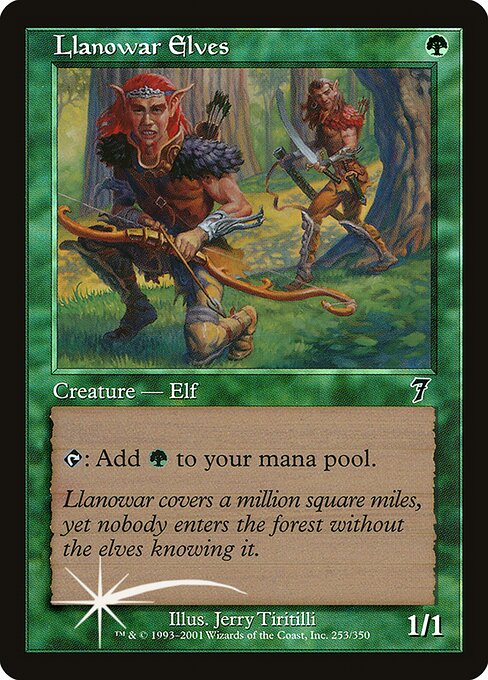
has:flavorFlavor text- with flavor text: the italic story text that doesn't affect the game. Example: Llanowar Elves (Foundations). From: Scryfall card data
has:watermarkWatermark- with a faint symbol behind the rules text, like a guild or faction logo. Example: Cyclonic Rift (Ravnica Remastered). From: Scryfall card data
has:indicatorColor indicator-
Cards with a small colored dot by the type line. It sets the card's color when there's no mana cost to show it.
Example: Pact of Negation (Time Spiral Remastered).
Also works as
is:indicator. From: Scryfall card data has:security_stampSecurity stamp- with the small shiny stamp at the bottom, there to show the card is genuine. Example: Command Tower (Secret Lair Drop). From: Scryfall card data
Something Is Wrong
- A card is missing, or its details are wrong
- Card details and prices are refreshed every day. If a search finds nothing, the results page offers a Report the gap button that tells us exactly what you looked for.
- What changed recently?
- Every change to the site is written up, in plain language, on the changelog.
 Open the full glossaryLegendaryA word printed on some cards, as in Legendary Creature. Your commander is usually a legendary creature, and that is where the word matters most in Commander.
 Open the full glossaryBracketA number from 1 to 5 describing how strong a Commander deck is meant to be, so everyone at the table can agree on a fair game before it starts. Bracket 1 is a deck built purely for fun and Bracket 5 is as competitive as it gets. It is Wizards of the Coast's own system, not ours.Open the full glossaryArchetypeThe overall plan a deck is built around, such as aggro, control or combo. Two decks with the same archetype win in a similar way, even with different commanders.Open the full glossaryHistoricA card that is legendary, an artifact, or a Saga. Cards that reward you for historic spells count all three.Open the full glossaryPartnerAn ability that lets you have two commanders instead of one. Both must have partner, or one must name the other, and your deck uses the colors of both.
 Open the full glossaryCompanionA creature that starts outside your deck. If your deck meets the condition printed on it, you can pay 3 once per game to put it into your hand.
 Open the full glossaryGame ChangersCards that warp the game disproportionately around themselves, requiring immediate answers.Open the full glossaryReprintA card printed again in a later set, with the same rules text as before and sometimes new art. Reprints are why one card can have many printings.Open the full glossarySagaAn enchantment that does something different each turn. It gains a lore counter as it enters and again after your draw step, then is sacrificed after its last chapter.Open the full glossaryCasting (short for Cast)To cast a spell is to put it on the stack and pay its cost, usually from your hand. Playing a land is not casting, and a copy of a spell is not cast either.Open the full glossaryPowerThe first of the two numbers in a creature's bottom-right corner. It is how much damage that creature deals when it fights or attacks.Open the full glossaryToughnessThe second of the two numbers in a creature's bottom-right corner. It is how much damage the creature can take in a turn before it dies. A creature whose toughness reaches zero dies immediately.Open the full glossaryFlyingA creature with flying can only be blocked by creatures that also have flying or reach. It is the most common way to get combat damage past a ground army.
 Open the full glossaryTrampleIf a creature with trample is blocked, damage beyond what is needed to destroy its blockers spills over to the defending player.Open the full glossaryPlaneswalkerA powerful ally on the battlefield. You spend its Loyalty counters to use one ability each turn, and opponents can attack it to knock it out.
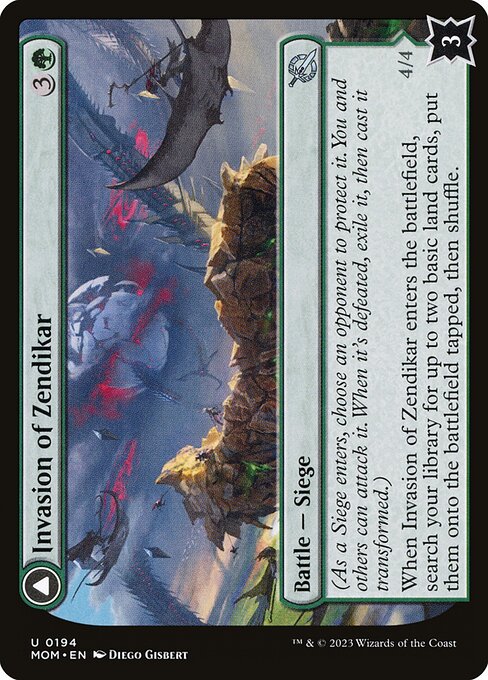
 Open the full glossaryBattleA card type you attack to defeat. It enters with defense counters, damage dealt to it removes them, and defeating it earns the reward on the card, such as casting its back face for free.
 Open the full glossaryCastTo cast a spell is to put it on the stack and pay its cost, usually from your hand. Playing a land is not casting, and a copy of a spell is not cast either.Open the full glossaryMeldA pair of specific cards that can combine into one huge creature if you control both. Until then each half is an ordinary card.
 Open the full glossaryAdventureA card with a second spell, also called an Adventure, printed beside its main half. Cast the Adventure first and the card goes to exile, so you can cast the main half from exile later.
 Open the full glossaryExileRemoves a card from the game entirely rather than putting it in the graveyard. Exiled cards are much harder to get back, which is why exile is the strongest answer to recursion.Open the full glossarySacrificeTo put one of your own permanents into your graveyard because a card tells you to or lets you. You can only sacrifice things you control, and it does not count as destroying them, so effects that stop a card from being destroyed do not stop it.
 Open the full glossaryTappedTurned sideways to show that it has been used for mana, to attack or to pay a cost. It stays that way until it untaps.
 Open the full glossaryCyclingCycling is a cost you pay from your hand: discard the card and draw a new one. It turns a card you cannot use right now into a fresh draw.
 Open the full glossaryDiscardMoving a card from a player's hand to their graveyard. Some cards make opponents discard; others reward you for discarding your own cards.
 Open the full glossaryTapTo tap a permanent is to turn it sideways, usually to pay a cost such as making mana or attacking. A tapped permanent cannot be tapped again until it untaps.Open the full glossaryColorlessHaving no color. Many artifacts and all lands are colorless, and colorless is not a sixth color of mana.
 Open the full glossaryScryLook at the top card or cards of your library and choose to keep each on top or move it to the bottom. It improves your next draw without drawing anything.Open the full glossaryLibraryYour deck once the game has started: the face-down pile you draw from. A card that says "search your library" lets you look through it for a card.Open the full glossarySurveilLook at the top card or cards of your library and choose to keep each on top or put it into your graveyard. It is a kind of filtering that also fuels graveyard strategies.Open the full glossaryGraveyardThe discard pile. Cards that are destroyed, discarded or used up go here. In Commander plenty of cards bring them back, which is why graveyards are a resource rather than a bin.Open the full glossaryCounterTwo different things share this word. A counter is a small marker placed on a card, such as a +1/+1 counter. To counter a spell is to stop it resolving while it is still on the stack.Open the full glossaryPrintingOne version of a card in one set. The same card can be printed again in many sets, each time with its own artwork, set code and collector number.Open the full glossaryFoilA card printed with a shiny finish. It has the same rules as the regular version, and only the look changes.Open the full glossaryEtched FoilA foil finish with a textured, metallic look instead of the usual rainbow shine. It has the same rules as other versions of the card.Open the full glossaryChaosChaos decks fill the game with random effects like coin flips, dice rolls and random swaps, so nobody's plan goes as expected. It is built for fun and big stories more than for winning quickly.Open the full glossary