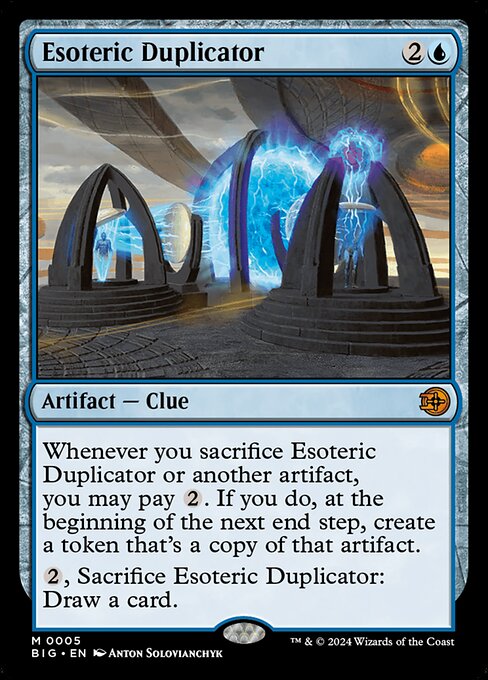
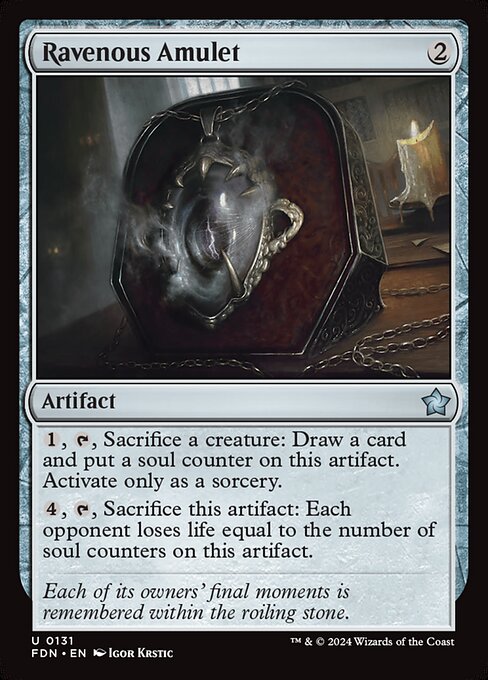
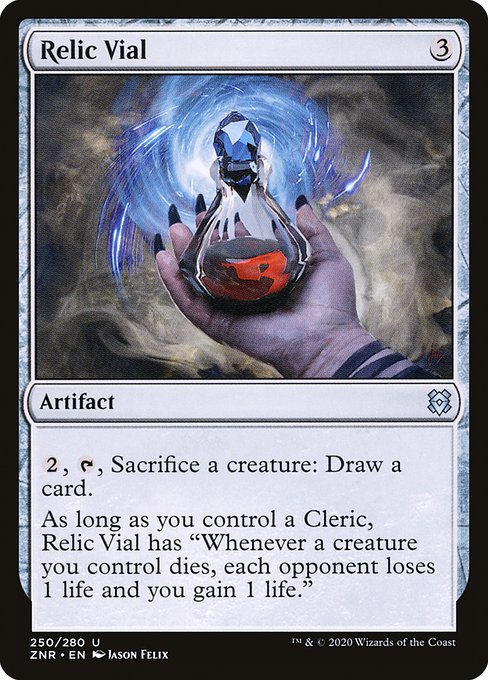
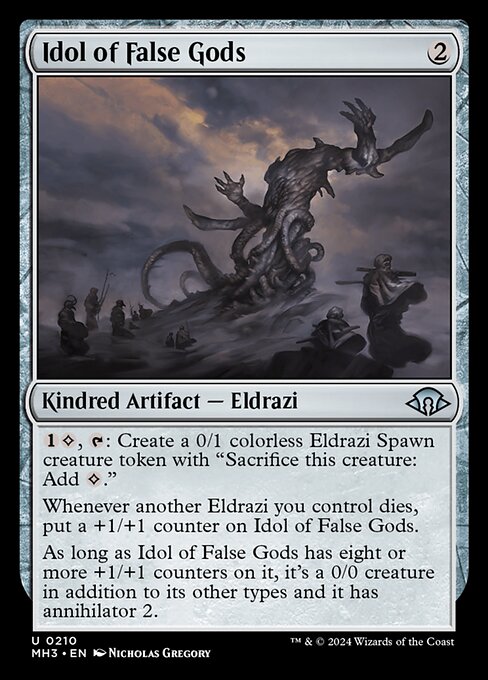
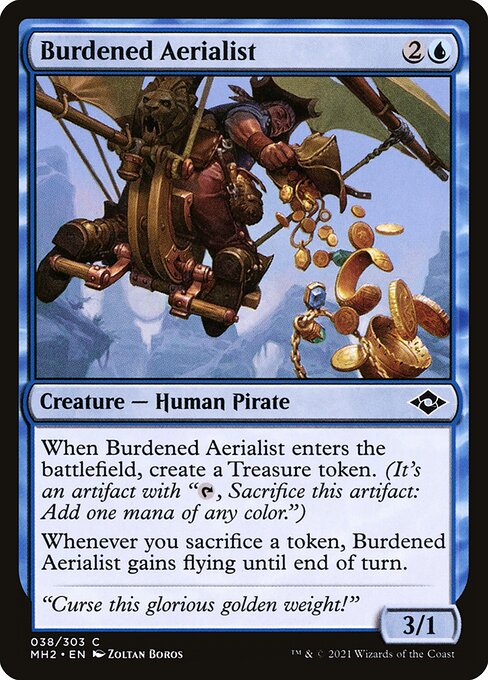
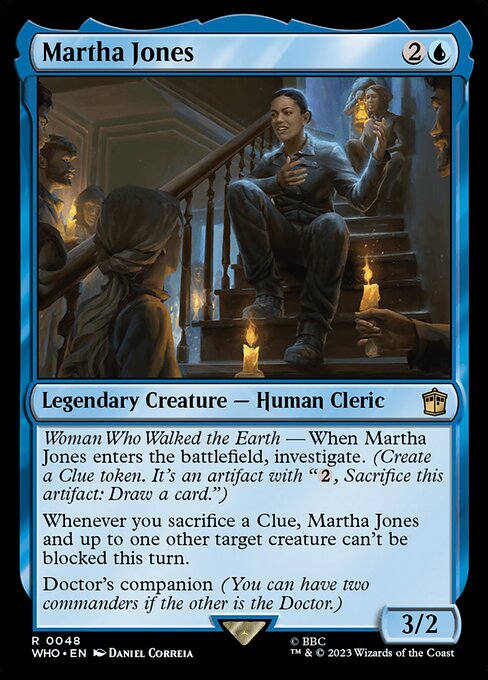
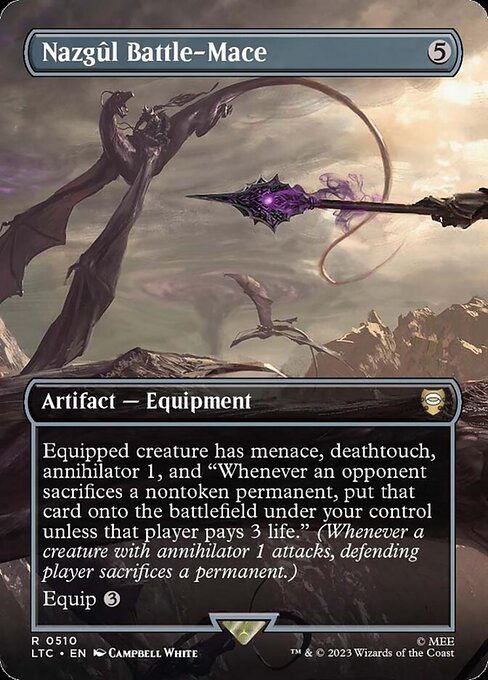
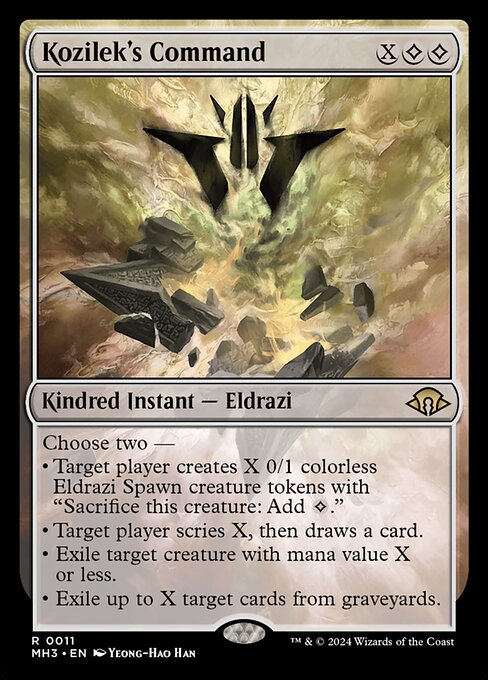
Senator Peacock wants a deck that sacrifices its own creatures to drain opponents' life. It also suits a deck that gives up its own cards on purpose to get something back.
Mana cost
Blue ()
Power / toughness3 / 4
RarityRare
Artifacts you control are Clues in addition to their other types and have ", Sacrifice this artifact: Draw a card."
Whenever you sacrifice a Clue, target creature can't be blocked this turn.
Picked for what they do in Senator Peacock's deck. When two cards do the same job, the one with the lower comes first. All of them fit Senator Peacock's color identity.Mana ValueThe total amount of mana a card costs, all added up. A card costing two generic and one green has a mana value of three. Wizards renamed this from "converted mana cost" in 2021, so older cards and articles may still use the old name.Open the full glossary
explain how Senator Peacock works in tricky situations. They come from Wizards of the Coast, the company that makes Magic.RulingThe official answer to how a card works in a tricky situation. Most rulings are written by Wizards of the Coast, the company that makes Magic, and a few are notes from Scryfall, the card database Magic players use. A ruling explains a card. It does not change what the card says.Open the full glossary
Wizards of the Coast2 Feb 2024
Clue is an artifact type. Even though it appears on some cards with other permanent types, it's never a creature type, a land type, or anything but an artifact type.
Wizards of the Coast2 Feb 2024
If an effect refers to a Clue, it means any Clue artifact, not just a Clue artifact token. For example, you can sacrifice Wrench to pay for Alquist Proft, Master Sleuth's activated ability.
Wizards of the Coast2 Feb 2024
If Senator Peacock somehow becomes an artifact, it will also be a Clue.
Wizards of the Coast2 Feb 2024
Some abilities trigger "whenever you sacrifice a Clue". Those abilities trigger whenever you sacrifice a Clue for any reason, not just to activate a Clue's activated ability.
Wizards of the Coast2 Feb 2024
Some spells and abilities that investigate may require targets. If each target chosen is an illegal target as that spell or ability tries to resolve, it won't resolve. You won't create any Clue tokens.
Wizards of the Coast2 Feb 2024
The artifacts retain any types, subtypes, supertypes, and abilities they have.
Wizards of the Coast2 Feb 2024
You can't sacrifice a Clue to pay multiple costs. For example, you can't sacrifice a Clue token to activate its own ability and also to activate Alquist Proft, Master Sleuth's ability.
Color identityEvery color of mana symbol on a card, in its cost and in its rules text. Your commander's color identity sets the limit for your whole deck: every other card has to fit inside it. A deck led by a green and white commander cannot play a card with any blue in its color identity.Open the full glossaryUPlayers write colors as letters: U for blue. Blue is U because B was already taken by black.AristocratsAristocrats decks sacrifice their own creatures on purpose and profit every time one dies, often by draining life from each opponent. A sacrifice outlet, a card that lets you sacrifice whenever you like, decides when that happens.Open the Aristocrats pageSacrifice PayoffRewards you whenever something is sacrificed, meaning put into the graveyard on purpose. The reward might be a +1/+1 counter, a card, or a drained opponent, and it is the reason a deck sacrifices its own creatures. Compare Sacrifice Outlet, the card that lets you sacrifice, and Death Trigger, which fires when a creature dies for any reason. Korvold, Fae-Cursed King, Mayhem Devil, Savra, Queen of the GolgariOpen the Sacrifice Payoff pageSelf-SacrificeSacrifices itself as part of its own ability, trading the permanent away for what it does. Evolving Wilds, Mind StoneOpen the Self-Sacrifice pageDrawDraws you extra cards. More cards means more choices every turn, and in a 100-card deck it is the main way to find the pieces you need. Rhystic Study, SkullclampOpen the Draw pageMana SinkGives you somewhere useful to spend spare mana, usually through an ability you can activate again and again. Rogue's Passage, Mind StoneOpen the Mana Sink pageType ChangerAdds a type to permanents on top of the types they already have. Making everything an artifact or a land switches on cards that only interact with that type. Liquimetal Torque, Phyrexian MetamorphOpen the Type Changer pageSacrificeSacrifice decks give up their own creatures, Treasures and other cards on purpose and get something back each time. A sacrifice outlet, a card that lets you sacrifice whenever you want, is the heart of the deck.Open the Sacrifice pageEvasionAn ability that makes a creature hard to block, so its attacks reach the player. Flying, menace, landwalk and plain 'can't be blocked' are the common kinds.Open the Evasion page
Send Us Feedback
What works, what's confusing, what you wish the site did. We read every one.
Not signed in? That is fine. We only keep what you write.
Optional. We only use it to reply to you.
Can we use Google Analytics cookies?
They show us which pages help people. No ads.
Privacy Policy


 , Sacrifice this artifact: Draw a card."
 Open the full glossary