- Commander Nexus
- Commanders
- Alrund, God of the Cosmos // Hakka, Whispering Raven
Command zone

Alrund, God of the Cosmos // Hakka, Whispering Raven
Legendary Creature — God // Legendary Creature — Bird
Alrund wants a deck that is built around one creature type, like Elves or Dragons. It also works in a deck built around Birds, Gods / Devotion or Library Manipulation.
- Mana cost


- Blue ()
- Power / toughness1 / 1
- RarityMythic
Alrund gets +1/+1 for each card in your hand and each foretold card you own in exile.
At the beginning of your end step, choose a card type, then reveal the top two cards of your library. Put all cards of the chosen type revealed this way into your hand and the rest on the bottom of your library in any order.
//
Flying
Whenever Hakka deals combat damage to a player, return it to its owner's hand, then scry 2.
Build a deck with Alrund Find it in the app
- Archetypes
Cards That Fit Alrund, God of the Cosmos
Picked for what they do in Alrund's deck. When two cards do the same job, the one with the lower comes first. All of them fit Alrund's color identity.Mana ValueThe total amount of mana a card costs, all added up. A card costing two generic and one green has a mana value of three. Wizards renamed this from "converted mana cost" in 2021, so older cards and articles may still use the old name. Open the full glossary
plan6


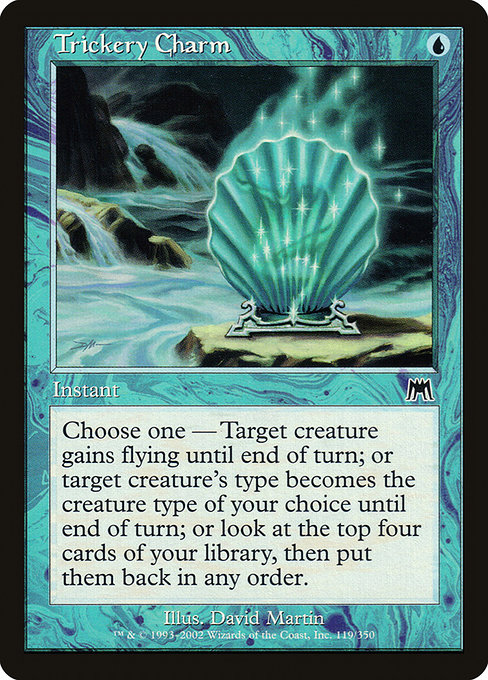

plan6


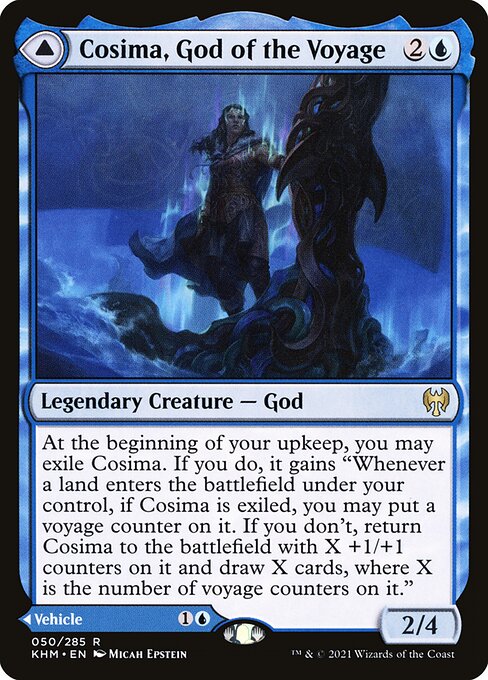
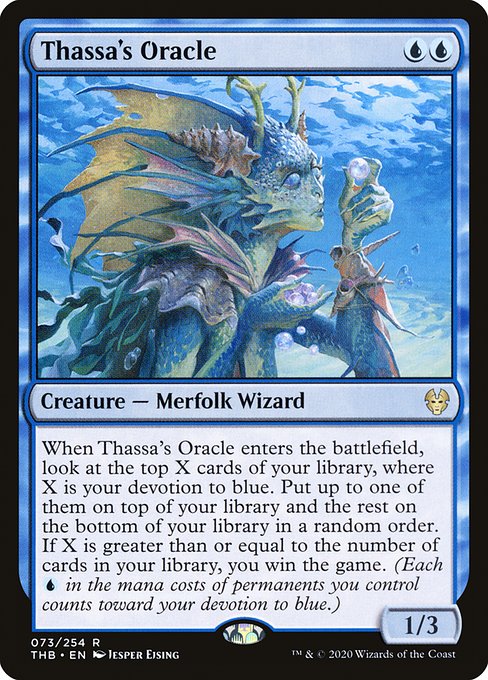


plan6


Rulings for Alrund, God of the Cosmos
explain how Alrund works in tricky situations. They come from Wizards of the Coast, the company that makes Magic, and from Scryfall, the card database Magic players use.RulingThe official answer to how a card works in a tricky situation. Most rulings are written by Wizards of the Coast, the company that makes Magic, and a few are notes from Scryfall, the card database Magic players use. A ruling explains a card. It does not change what the card says.Open the full glossary
Alrund recieved day 1 eratta to clarify that you select from the cards "revealed this way". For more information, see https://magic.wizards.com/en/articles/archive/feature/kaldheim-release-notes-2021-01-22
A modal double-faced card can't be transformed or be put onto the battlefield transformed. Ignore any instruction to transform a modal double-faced card or to put one onto the battlefield transformed.
Alrund's first ability applies only while Alrund is on the battlefield. In every other zone, Alrund is 1/1.
If an effect allows you to play a land or cast a spell from among a group of cards, you may play or cast a modal double-faced card with any face that fits the criteria of that effect.
If an effect allows you to play a specific modal double-faced card, you may cast it as a spell or play it as a land, as determined by which face you choose to play. If an effect allows you to cast (rather than "play") a specific modal double-faced card, you can't play it as a land.
If an effect instructs a player to choose a card name, the name of either face may be chosen. If that effect or a linked ability refers to a spell with the chosen name being cast and/or a land with the chosen name being played, it considers only the chosen name, not the other face's name.
If an effect puts a double-faced card onto the battlefield, it enters with its front face up. If that front face can't be put onto the battlefield, it doesn't enter the battlefield.
In the Commander variant, a double-faced card's color identity is determined by the mana costs and mana symbols in the rules text of both faces combined. If either face has a color indicator or basic land type, those are also considered.
The mana value of a modal double-faced card is based on the characteristics of the face that's being considered. On the stack and battlefield, consider whichever face is up. In all other zones, consider only the front face. This is different than how the mana value of a transforming double-faced card is determined.
The words "revealed this way" were inadvertently omitted from the printed card. Alrund's Oracle text was updated to include this phrase.
There is a single triangle icon in the top left corner of the front face. There is a double triangle icon in the top left corner of the back face.
To determine whether it is legal to play a modal double-faced card, consider only the characteristics of the face you're playing and ignore the other face's characteristics.
You may choose any card type, but the ones that may appear in your library are artifact, battle, creature, enchantment, instant, kindred, land, planeswalker, and sorcery. Supertypes such as snow and basic may not be chosen. Subtypes such as God, Aura, and Forest also may not be chosen.
13 rulings, 12 written by Wizards of the Coast. Read the originals on Gatherer ↗
Similar Commanders
Commanders that share the most with Alrund, and what they share.