- Commander Nexus
- Commanders
- Francisco, Fowl Marauder
Command zone

Francisco, Fowl Marauder
Legendary Creature — Bird Pirate
Francisco wants a deck that is built around one creature type, like Elves or Dragons. It has partner, so it can share the lead with a second partner commander.
- Mana cost


- Black ()
- Power / toughness0 / 1
- RarityRare
Flying
Francisco can't block.
Whenever one or more Pirates you control deal damage to a player, Francisco explores.
Partner (You can have two commanders if both have partner.)
Build a deck with Francisco Find it in the app
- Archetypes
- Themes
Cards That Fit Francisco, Fowl Marauder
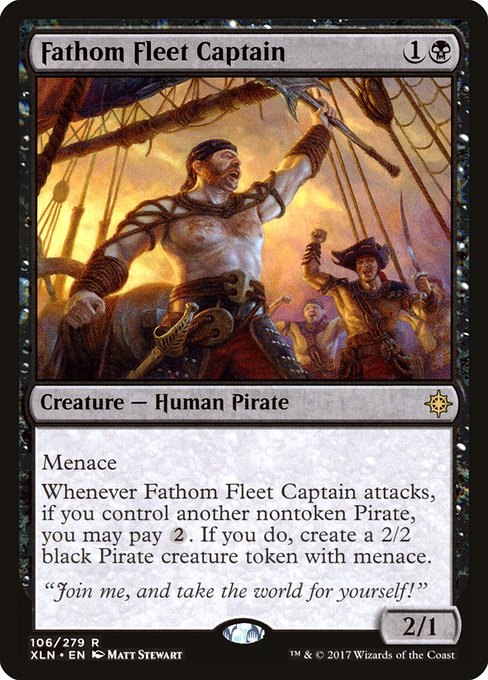
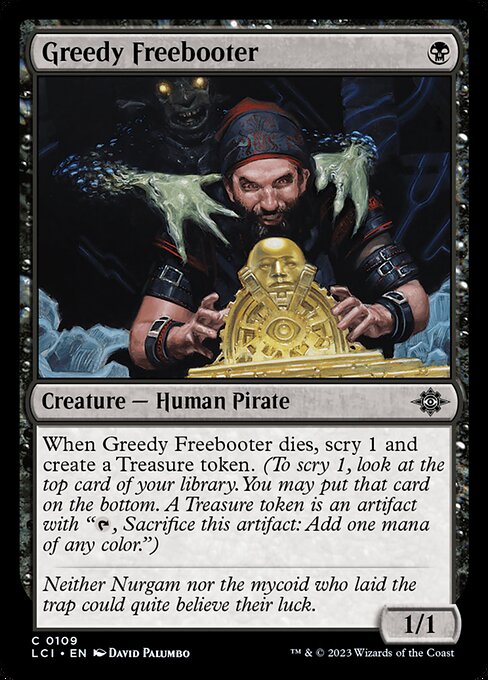
Picked for what they do in Francisco's deck. When two cards do the same job, the one with the lower comes first. All of them fit Francisco's color identity.Mana ValueThe total amount of mana a card costs, all added up. A card costing two generic and one green has a mana value of three. Wizards renamed this from "converted mana cost" in 2021, so older cards and articles may still use the old name. Open the full glossary
plan6


plan6







Rulings for Francisco, Fowl Marauder
explain how Francisco works in tricky situations. They come from Wizards of the Coast, the company that makes Magic.RulingThe official answer to how a card works in a tricky situation. Most rulings are written by Wizards of the Coast, the company that makes Magic, and a few are notes from Scryfall, the card database Magic players use. A ruling explains a card. It does not change what the card says.Open the full glossary
An effect that checks whether you control your commander is satisfied if you control one or both of your two commanders.
Both commanders start in the command zone, and the remaining 98 cards (or 58 cards in a Commander Draft game) of your deck are shuffled to become your library.
If a resolving spell or ability instructs a specific creature to explore but that creature has left the battlefield, the creature still explores. If you reveal a nonland card this way, you won't put a +1/+1 counter on anything, but you may put the revealed card into your graveyard. Effects that trigger "whenever a creature explores" trigger as appropriate.
If an ability instructs a creature to explore, its controller reveals the top card of their library. If it's a land card, they'll put it into their hand. Otherwise, they'll put a +1/+1 counter on that creature, then choose to either leave that card on top of their library or put it into their graveyard.
If no card is revealed, most likely because that player's library is empty, the exploring creature receives a +1/+1 counter.
If one or more Pirates you control deal damage to multiple players at once (for example, in combat, or with an ability such as that of Lightning-Rig Crew), Francisco, Fowl Marauder's ability triggers once for each of those players.
If something refers to your commander while you have two commanders, it refers to one of them of your choice. If you are instructed to perform an action on your commander (e.g. put it from the command zone into your hand due to Command Beacon), you choose one of your commanders at the time the effect happens.
If your Commander deck has two commanders, you can only include cards whose own color identities are also found in your commanders' combined color identities.
In some unusual cases, noncreature permanents may explore. For example, if the creature card returned by Defossilize is somehow not a creature once it's on the battlefield, it can still explore. You'll take all the same actions, and you may end up putting a +1/+1 counter on the permanent. (Note that some effects target a creature, and those effects would still require a legal target to have it explore.)
Once an ability that causes a creature to explore begins to resolve, no player may take any other actions until it's done. Notably, opponents can't try to remove the exploring creature after you reveal a nonland card but before it receives a counter.
Once the game begins, your two commanders are tracked separately. If you cast one, you won't have to pay an additional {2} the first time you cast the other. A player loses the game after having been dealt 21 damage from any one of them, not from both of them combined.
Some spells or abilities might cause a creature to explore multiple times in a row. If you reveal a nonland card when a creature explores and leave it on top of your library, then the creature explores again immediately afterwards, you'll reveal the same card again.
To have two commanders, both must have the partner ability as the game begins. Losing the ability during the game doesn't cause either to cease to be your commander.
You can choose two commanders with partner that are the same color or colors. In Commander Draft, you can even choose two of the same commander with partner if you drafted them. If you do this, make sure you keep the number of times you've cast each from the command zone clear for "commander tax" purposes.
14 rulings, all written by Wizards of the Coast. Read the originals on Gatherer ↗
Similar Commanders
Commanders that share the most with Francisco, and what they share.