- Commander Nexus
- Commanders
- God-Eternal Kefnet
Command zone

God-Eternal Kefnet
Legendary Creature — Zombie God
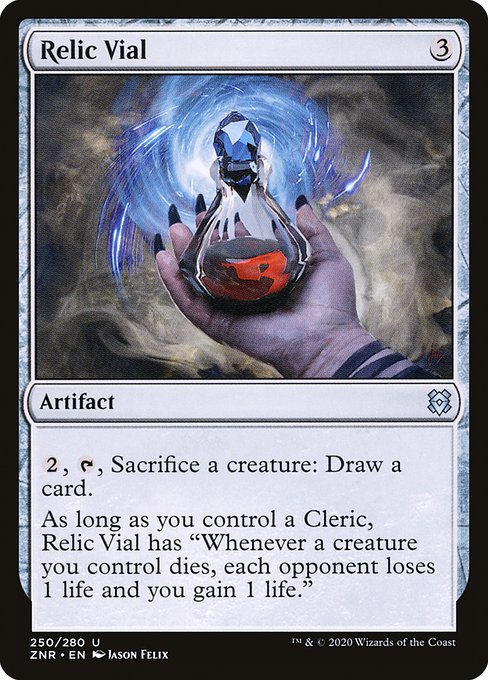
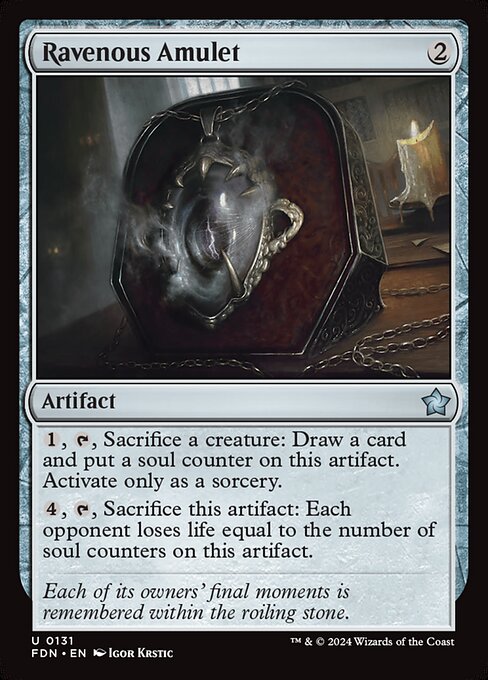
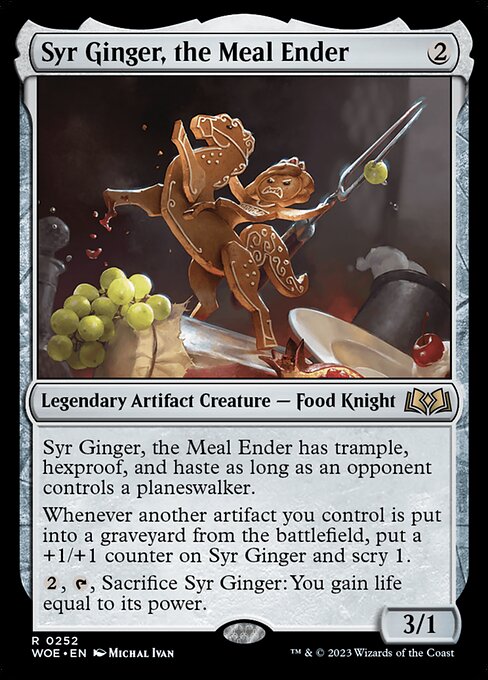
God-Eternal Kefnet wants a deck that sacrifices its own creatures to drain opponents' life. It also works in a deck built around Gods / Devotion or Zombies.
- Mana cost


- Blue ()
- Power / toughness4 / 5
- RarityMythic
Flying
You may reveal the first card you draw each turn as you draw it. Whenever you reveal an instant or sorcery card this way, copy that card and you may cast the copy. That copy costs less to cast.
When God-Eternal Kefnet dies or is put into exile from the battlefield, you may put it into its owner's library third from the top.
Build a deck with God-Eternal Kefnet Find it in the app
- Archetypes
- Themes
Cards That Fit God-Eternal Kefnet
Picked for what they do in God-Eternal Kefnet's deck. When two cards do the same job, the one with the lower comes first. All of them fit God-Eternal Kefnet's color identity.Mana ValueThe total amount of mana a card costs, all added up. A card costing two generic and one green has a mana value of three. Wizards renamed this from "converted mana cost" in 2021, so older cards and articles may still use the old name. Open the full glossary
plan6







Rulings for God-Eternal Kefnet
explain how God-Eternal Kefnet works in tricky situations. They come from Wizards of the Coast, the company that makes Magic.RulingThe official answer to how a card works in a tricky situation. Most rulings are written by Wizards of the Coast, the company that makes Magic, and a few are notes from Scryfall, the card database Magic players use. A ruling explains a card. It does not change what the card says.Open the full glossary
If an effect exiles the God and immediately returns it to the battlefield, its last ability triggers but will have no effect. However, if an effect exiles it and would return it to the battlefield at a later time, the God's ability may return that card to its owner's library first. If it does, the effect that exiled it won't return it later.
If an effect puts a card into your hand without using the word "draw," the card wasn't drawn.
If one of these Gods dies and it's your commander, you may put it into the command zone before its ability puts it into your library. If you save your commander this way, it won't put it into your library. The same is true if it would be exiled.
If one of these Gods leaves the graveyard or exile while its last ability is on the stack, it will remain in its new zone, even if that zone is a graveyard or exile.
If the card leaves your hand before Kefnet's triggered ability resolves, you'll copy it using its last known information.
If the God's owner has two or fewer cards in their library, the God is put on the bottom of their library as its last ability resolves.
If you control another player's God when it dies, you decide whether to put that card into its owner's library.
If you reveal a card this way, it remains revealed until Kefnet's triggered ability finishes resolving.
If you somehow control more than one God-Eternal Kefnet (perhaps because one is a Spark Double), you may reveal a card you draw for any number of their abilities. One at a time, each will copy the card if it's an instant or sorcery, and you may cast each of them. Each copy resolves before you cast the next, and each copy's cost is reduced by only {2}.
In a multiplayer game, if you put another player's God onto the battlefield under your control, it will be exiled as you leave the game. If you were still the controller of that God, you would control its triggered ability but you have left the game; that ability won't resolve and the card remains in exile. Similarly, if you lose the game at the same time that another player's God that you put onto the battlefield is destroyed, it remains in its owner's graveyard.
It's important to reveal the first card you draw each turn (or choose not to reveal it) before it is mixed with the other cards in your hand. You look at the card as you draw it before choosing whether to reveal it.
Multiple card draws are always treated as a sequence of individual card draws. For example, if you haven't drawn any cards yet during a turn and cast a spell that instructs you to draw three cards, you'll draw them one at a time. Only the first card drawn this way may be revealed and copied with Kefnet's ability.
The copy is created in and cast from your hand.
To determine the total cost of a spell, start with the mana cost or alternative cost you're paying, add any cost increases, then apply any cost reductions (such as that of Kefnet's ability). The mana value of the spell remains unchanged, no matter what the total cost to cast it was.
You can cast the copy during the resolution of the triggered ability if it's a sorcery, no matter whose turn it is or which phase it is.
You can cast the copy only as Kefnet's triggered ability resolves. If you don't want to cast it at that time (or you can't cast it, perhaps because there are no legal targets available), the copy ceases to exist. You can't cast it later.
You can reveal and copy an instant or sorcery card this way on any turn, not just your own, if it's the first card you've drawn that turn.
You don't have to reveal a drawn card if you don't wish to copy it at that time.
18 rulings, all written by Wizards of the Coast. Read the originals on Gatherer ↗
Similar Commanders
Commanders that share the most with God-Eternal Kefnet, and what they share.