- Commander Nexus
- Commanders
- Keranos, God of Storms
Command zone
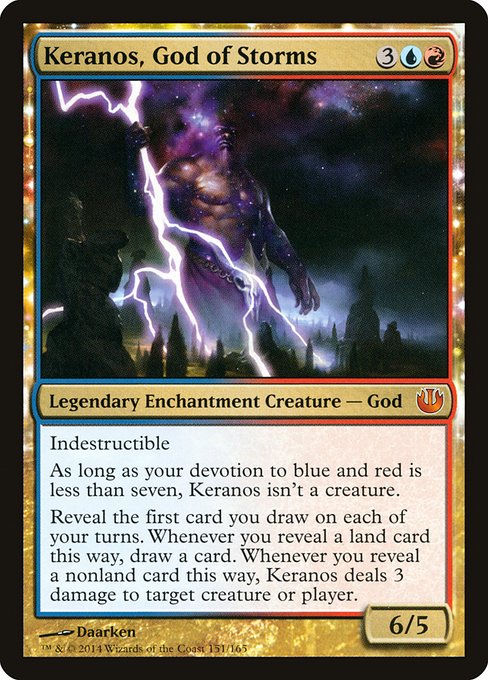
Keranos, God of Storms
Legendary Enchantment Creature — God
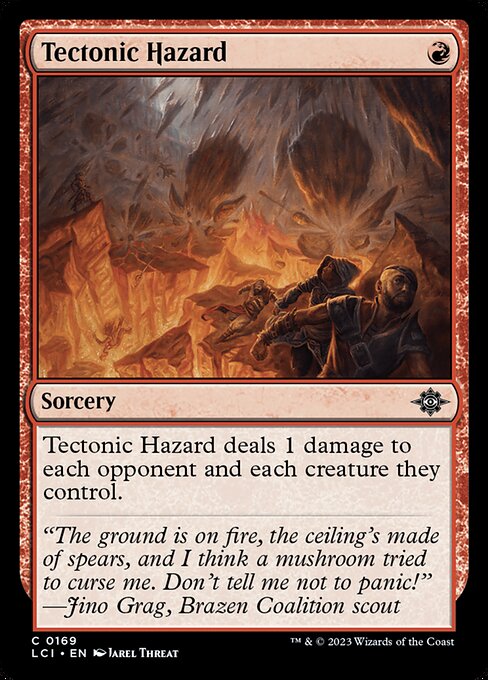
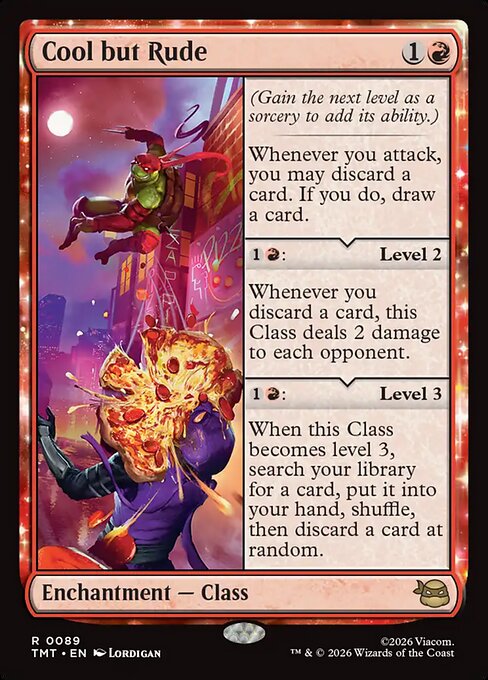
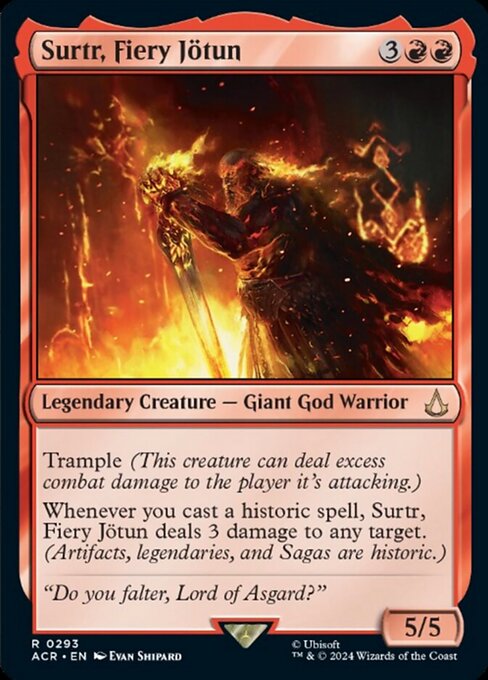
Keranos wants a deck that deals one damage at a time, again and again. It also suits a deck that deals damage straight to its opponents.
- Mana cost


- Blue, Red ()
- Power / toughness6 / 5
- RarityMythic
Indestructible
As long as your devotion to blue and red is less than seven, Keranos isn't a creature.
Reveal the first card you draw on each of your turns. Whenever you reveal a land card this way, draw a card. Whenever you reveal a nonland card this way, Keranos deals 3 damage to any target.
Build a deck with Keranos Find it in the app
- Themes
Cards That Fit Keranos, God of Storms
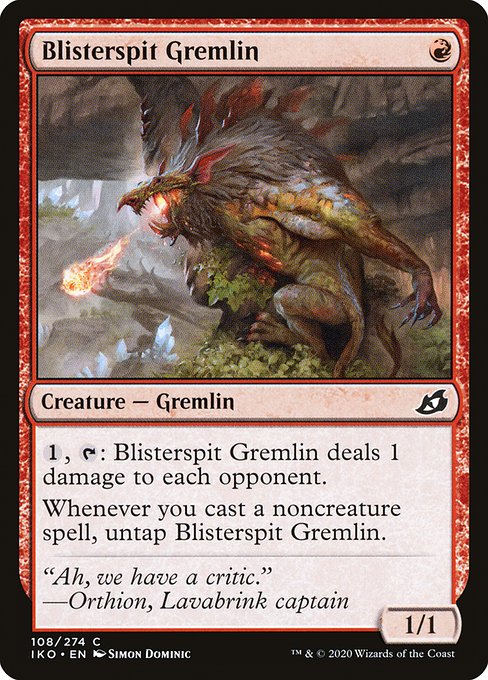
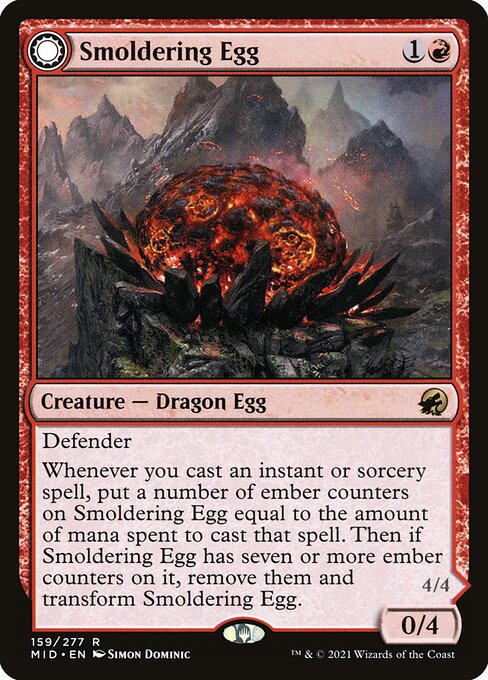
Picked for what they do in Keranos's deck. When two cards do the same job, the one with the lower comes first. All of them fit Keranos's color identity.Mana ValueThe total amount of mana a card costs, all added up. A card costing two generic and one green has a mana value of three. Wizards renamed this from "converted mana cost" in 2021, so older cards and articles may still use the old name. Open the full glossary
plan6



plan6





Rulings for Keranos, God of Storms
explain how Keranos works in tricky situations. They come from Wizards of the Coast, the company that makes Magic.RulingThe official answer to how a card works in a tricky situation. Most rulings are written by Wizards of the Coast, the company that makes Magic, and a few are notes from Scryfall, the card database Magic players use. A ruling explains a card. It does not change what the card says.Open the full glossary
If you reveal a land card this way, Keranos's triggered ability will cause you to draw another card.
As a God enters the battlefield, your devotion to its color will determine whether any replacement effects that affect creatures entering the battlefield apply to that God. Because replacement effects are considered before the God is on the battlefield, the mana symbols in its mana cost won't be counted when determining this.
Counters put on a God remain on it while it's not a creature, even if they have no effect.
If a God is attacking or blocking and it stops being a creature, it will be removed from combat. It won't rejoin combat if it resumes being a creature later during that combat.
If a God stops being a creature, it loses the type creature and the creature type God. It continues to be a legendary enchantment.
If an effect causes a God to lose all abilities, its ability that causes it to stop being a creature still applies if appropriate.
The abilities of Gods function as long as they're on the battlefield, regardless of whether they're creatures.
The type-changing ability that can make a God not be a creature functions only on the battlefield. It's always a creature card in other zones, regardless of your devotion to its color. It's always a creature spell while it's on the stack.
When a God enters the battlefield, your devotion to its color (including the mana symbols in the mana cost of the God itself) will determine if a creature entered the battlefield or not for abilities that trigger whenever a creature enters the battlefield.
Your devotion to two colors is the number of mana symbols among mana costs of permanents you control that are the first color, the second, or both. If an effect counts your devotion to two colors, a hybrid symbol that is both of those colors is counted just once.
10 rulings, all written by Wizards of the Coast. Read the originals on Gatherer ↗
Similar Commanders
Commanders that share the most with Keranos, and what they share.


