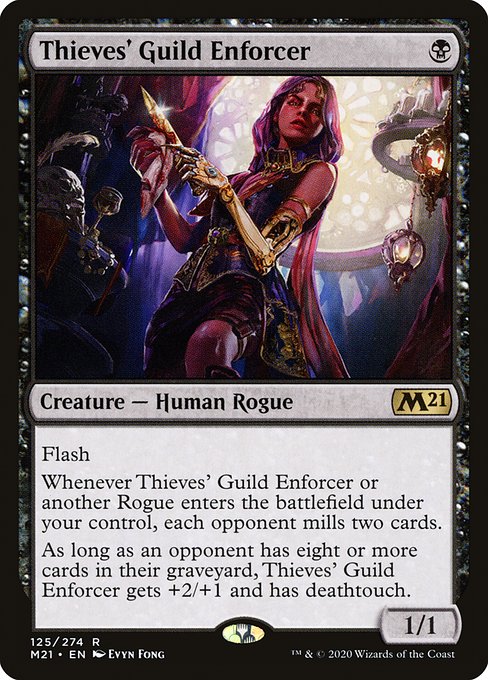
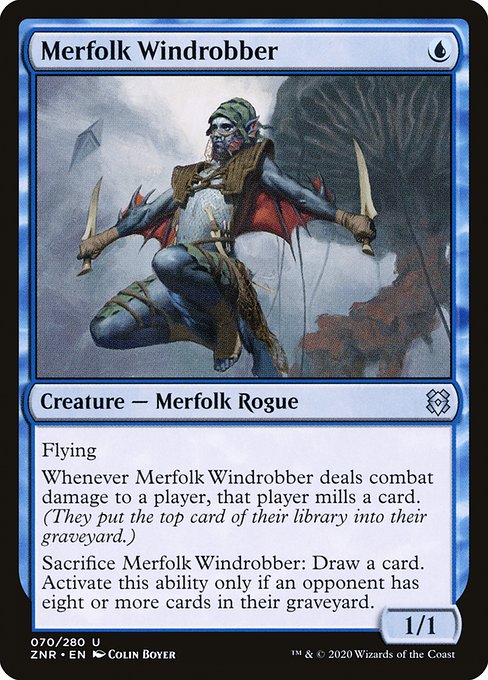
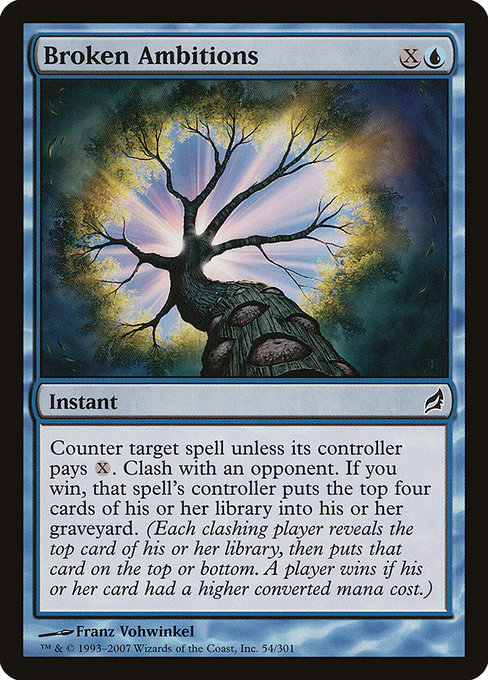
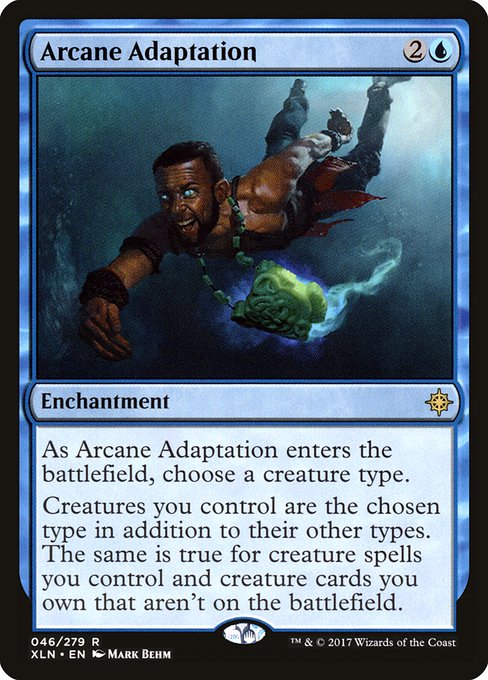
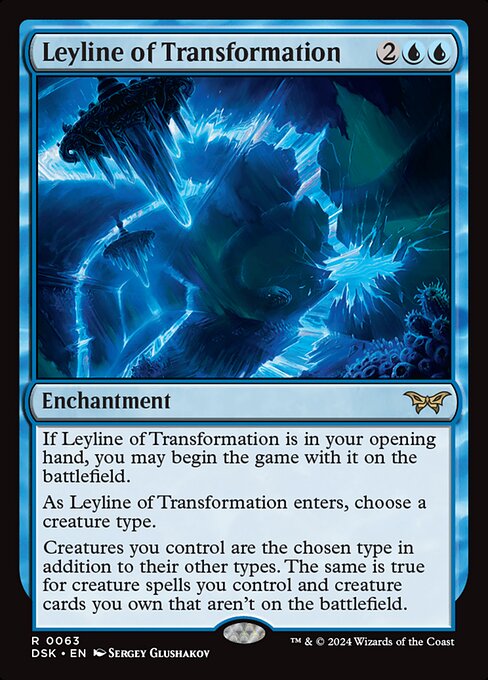
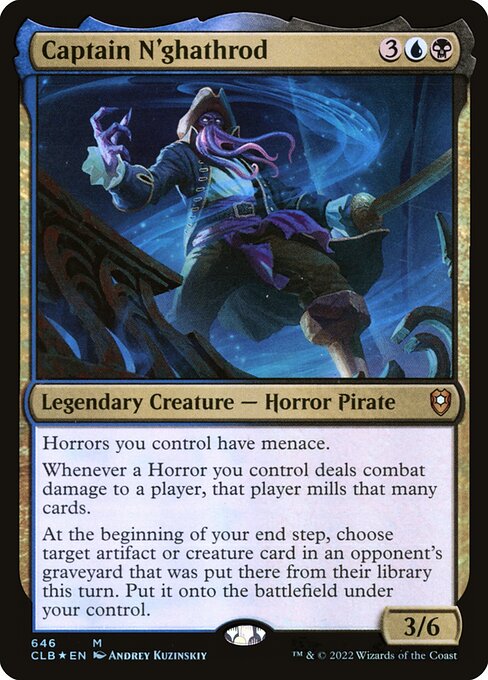
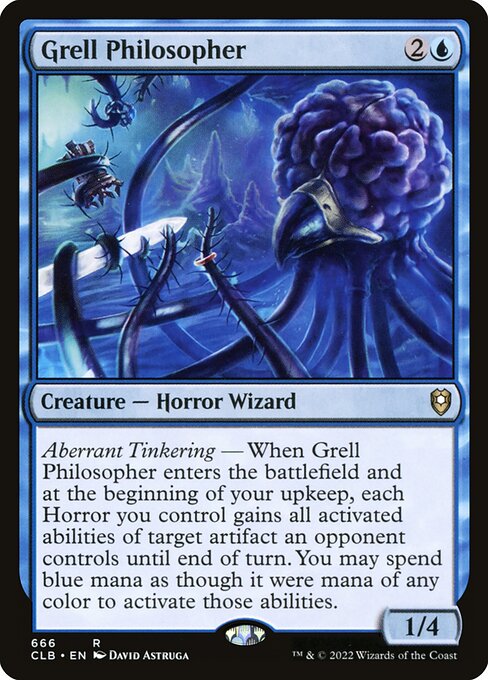
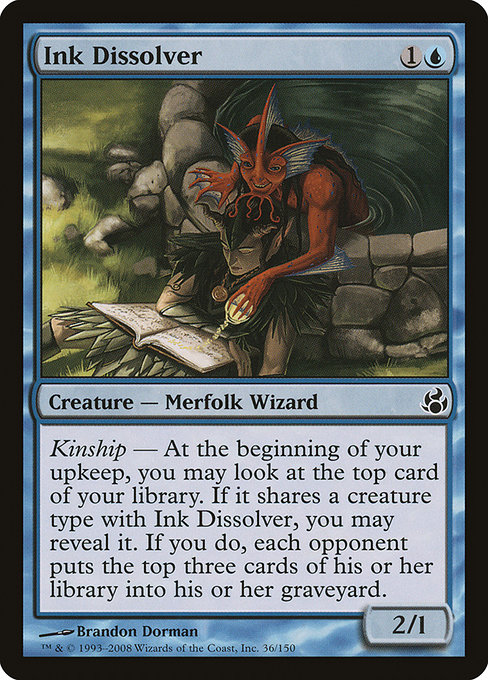
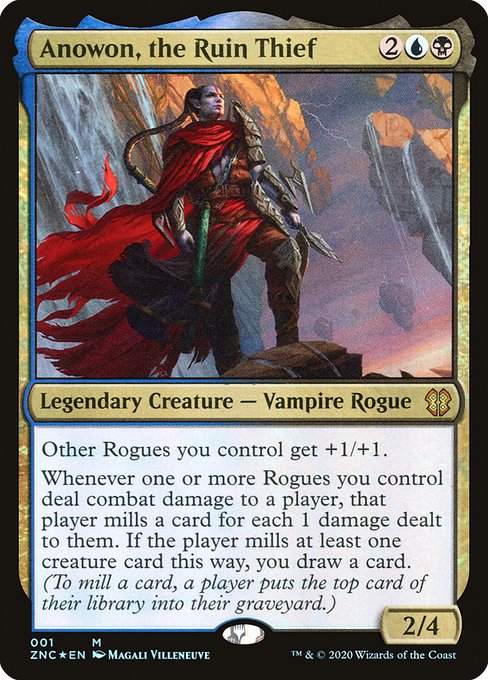
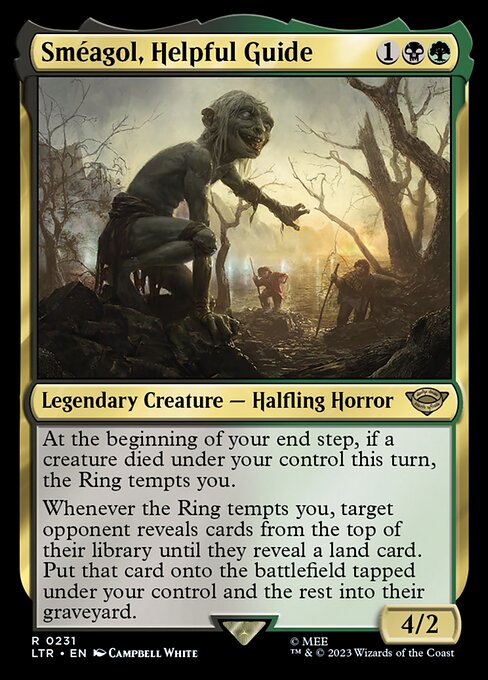
Umbris wants a deck that wins by emptying its opponents' decks. It also suits a deck that is built around one creature type, like Elves or Dragons.
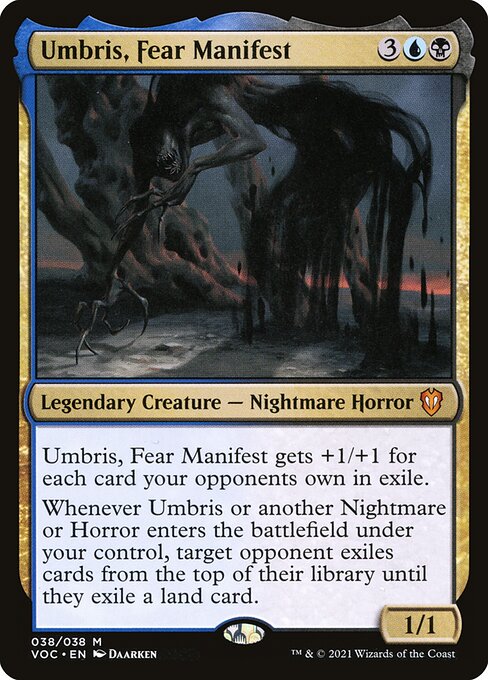
Mana cost
Blue, Black ()
Power / toughness1 / 1
RarityMythic
Umbris gets +1/+1 for each card your opponents own in exile.
Whenever Umbris or another Nightmare or Horror you control enters, target opponent exiles cards from the top of their library until they exile a land card.
Picked for what they do in Umbris's deck. When two cards do the same job, the one with the lower comes first. All of them fit Umbris's color identity.Mana ValueThe total amount of mana a card costs, all added up. A card costing two generic and one green has a mana value of three. Wizards renamed this from "converted mana cost" in 2021, so older cards and articles may still use the old name.Open the full glossary
explain how Umbris works in tricky situations. They come from Wizards of the Coast, the company that makes Magic.RulingThe official answer to how a card works in a tricky situation. Most rulings are written by Wizards of the Coast, the company that makes Magic, and a few are notes from Scryfall, the card database Magic players use. A ruling explains a card. It does not change what the card says.Open the full glossary
Wizards of the Coast19 Nov 2021
Umbris, Fear Manifest's first ability counts all cards your opponents own in exile, not just cards exiled by the second ability.
Color identityEvery color of mana symbol on a card, in its cost and in its rules text. Your commander's color identity sets the limit for your whole deck: every other card has to fit inside it. A deck led by a green and white commander cannot play a card with any blue in its color identity.Open the full glossaryUBPlayers write colors as letters: U for blue, B for black. Blue is U because B was already taken by black.MillMill decks win by emptying opponents' libraries, the decks they draw from: a player who has to draw from an empty library loses the game. Milling means putting cards from the top of a library straight into the graveyard.Open the Mill pageMillPuts cards from the top of a player's library, the deck they draw from, straight into their graveyard. Aimed at opponents it can win the game, because a player who has to draw from an empty library loses.Open the Mill pageTypal PayoffRewards you for playing lots of one kind of creature. That includes "lords" that make every other Goblin or Merfolk you control bigger, and cards that ask you to choose a creature type and then pay you off for it. A creature type is the word on the middle line of the card, like Goblin, Elf or Zombie.Open the Typal Payoff pageTypal/KindredTypal decks are built around one creature type, like Elves, Dragons or Zombies, with cards that make that type stronger. The type is printed after the dash on the card's type line, and the strategy is also called kindred or tribal.Open the Typal/Kindred pageStatic BuffGives creatures a lasting bonus to power and toughness while it remains on the battlefield, rather than a boost that wears off at end of turn. Garruk's Uprising, Patchwork BannerOpen the Static Buff pageHorrorsHorrors are mostly black creatures with no single job, though many care about the graveyard.Open the Horrors pageStat ScalingA creature whose power and toughness count something, so it grows as the game goes on. It might count lands you control or cards in your graveyard. Craterhoof Behemoth, Psychosis CrawlerOpen the Stat Scaling pageLibrary ManipulationCards that let you look at, rearrange or play from the top of your deck, so you control what you draw next.Open the Library Manipulation page
Send Us Feedback
What works, what's confusing, what you wish the site did. We read every one.
Not signed in? That is fine. We only keep what you write.
Optional. We only use it to reply to you.
Can we use Google Analytics cookies?
They show us which pages help people. No ads.
Privacy Policy


 Open the full glossary