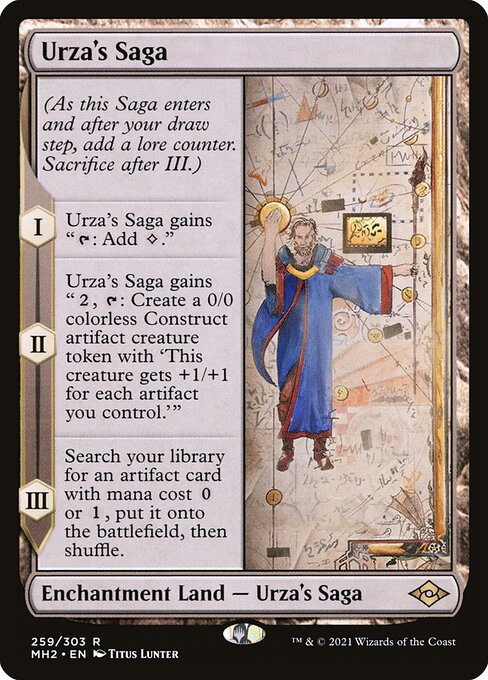
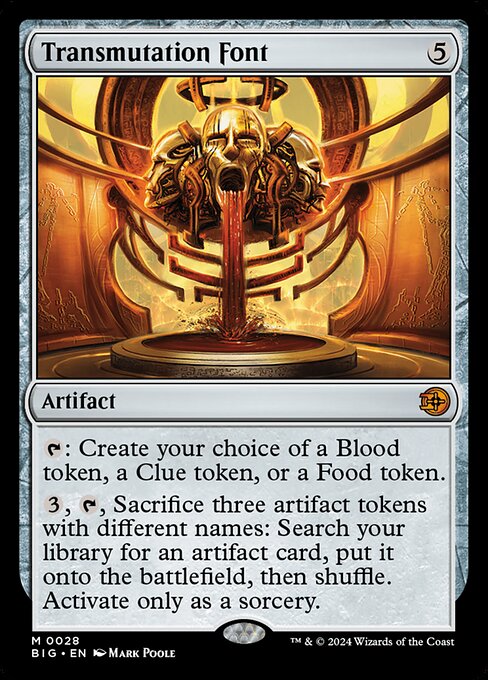
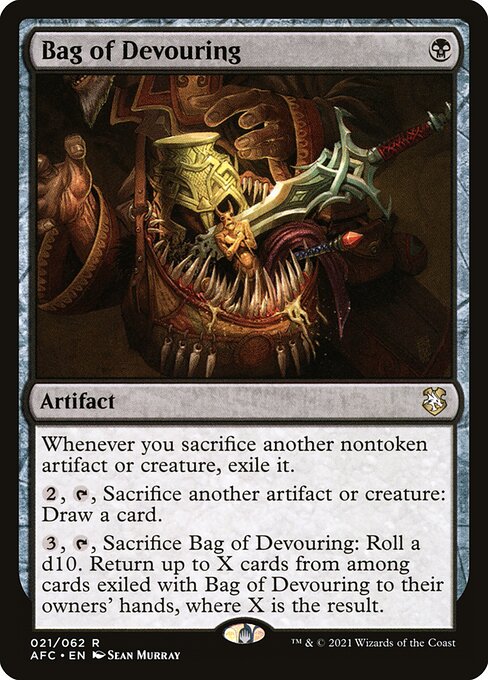
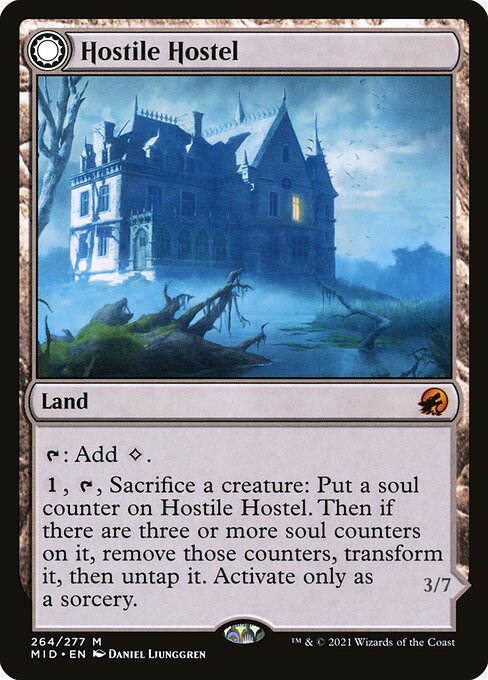
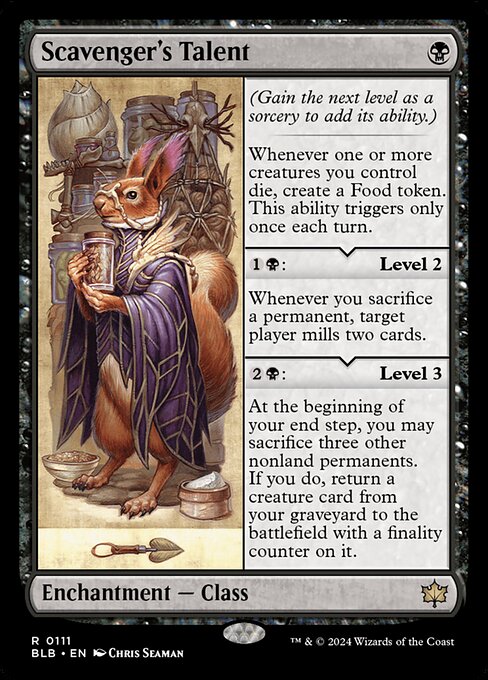
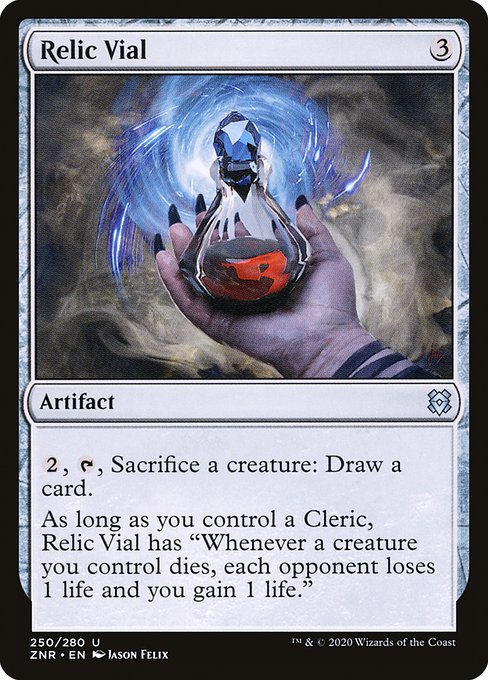
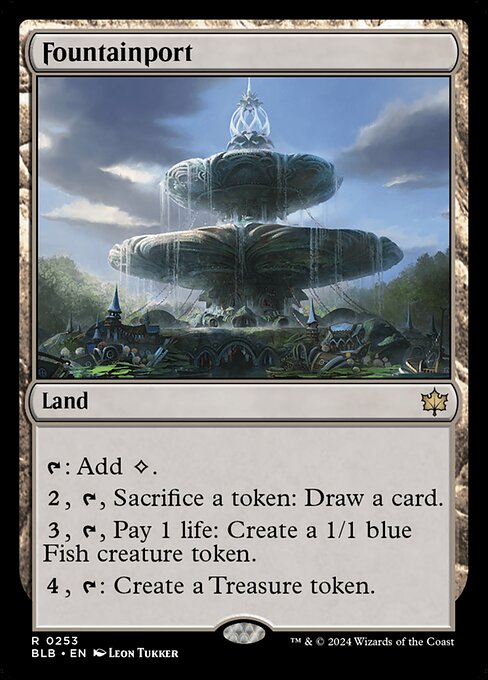
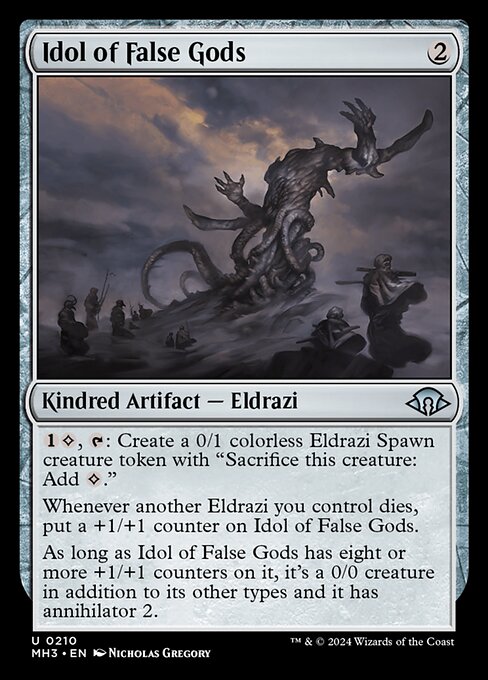
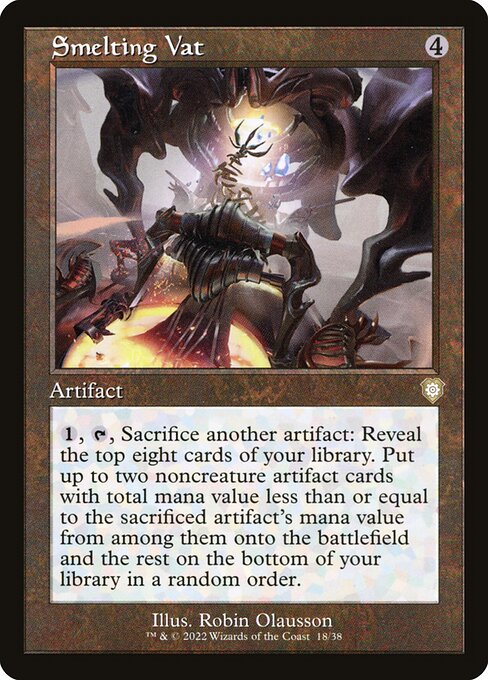
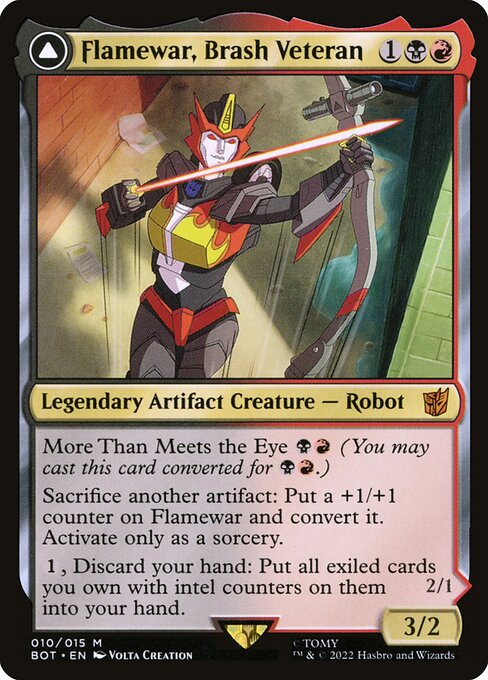
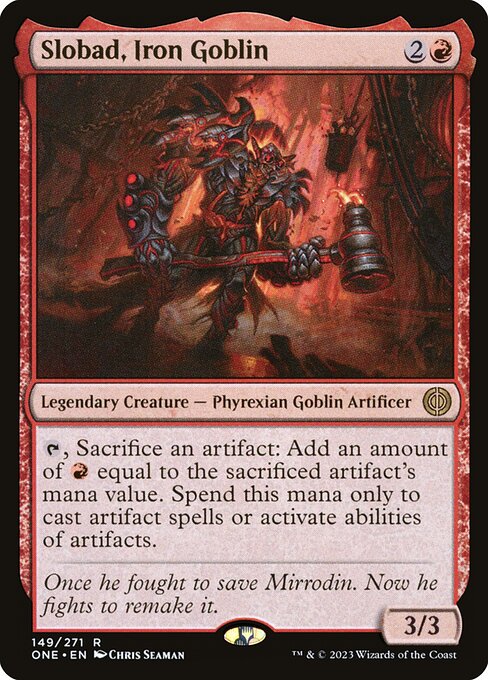
Keskit wants a deck that fills the table with artifacts that make mana and draw cards. It has partner, so it can share the lead with a second partner commander.
Mana cost
Black ()
Power / toughness1 / 3
RarityUncommon
, Sacrifice three other artifacts and/or creatures: Look at the top three cards of your library. Put two of them into your hand and the other into your graveyard.
Partner (You can have two commanders if both have partner.)
Picked for what they do in Keskit's deck. When two cards do the same job, the one with the lower comes first. All of them fit Keskit's color identity.Mana ValueThe total amount of mana a card costs, all added up. A card costing two generic and one green has a mana value of three. Wizards renamed this from "converted mana cost" in 2021, so older cards and articles may still use the old name.Open the full glossary
explain how Keskit works in tricky situations. They come from Wizards of the Coast, the company that makes Magic.RulingThe official answer to how a card works in a tricky situation. Most rulings are written by Wizards of the Coast, the company that makes Magic, and a few are notes from Scryfall, the card database Magic players use. A ruling explains a card. It does not change what the card says.Open the full glossary
Wizards of the Coast10 Nov 2020
An effect that checks whether you control your commander is satisfied if you control one or both of your two commanders.
Wizards of the Coast10 Nov 2020
Both commanders start in the command zone, and the remaining 98 cards (or 58 cards in a Commander Draft game) of your deck are shuffled to become your library.
Wizards of the Coast10 Nov 2020
If something refers to your commander while you have two commanders, it refers to one of them of your choice. If you are instructed to perform an action on your commander (e.g. put it from the command zone into your hand due to Command Beacon), you choose one of your commanders at the time the effect happens.
Wizards of the Coast10 Nov 2020
If your Commander deck has two commanders, you can only include cards whose own color identities are also found in your commanders' combined color identities. If Falthis and Kediss are your commanders, your deck may contain cards with black and/or red in their color identity, but not cards with green, white, or blue.
Wizards of the Coast10 Nov 2020
Once the game begins, your two commanders are tracked separately. If you cast one, you won't have to pay an additional {2} the first time you cast the other. A player loses the game after having been dealt 21 damage from any one of them, not from both of them combined.
Wizards of the Coast10 Nov 2020
To have two commanders, both must have the partner ability as the game begins. Losing the ability during the game doesn't cause either to cease to be your commander.
Wizards of the Coast10 Nov 2020
You can choose two commanders with partner that are the same color or colors. In Commander Draft, you can even choose two of the same commander with partner if you drafted them. If you do this, make sure you keep the number of times you've cast each from the command zone clear for "commander tax" purposes.
Color identityEvery color of mana symbol on a card, in its cost and in its rules text. Your commander's color identity sets the limit for your whole deck: every other card has to fit inside it. A deck led by a green and white commander cannot play a card with any blue in its color identity.Open the full glossaryBPlayers write colors as letters: B for black.ArtifactsAn artifacts deck fills the battlefield with artifacts, cards like Sol Ring that stay in play and keep working turn after turn. Played together, they give you extra mana and extra cards. A handful of keywords turn up on artifacts again and again. Equip means you pay a cost to attach an Equipment such as Swiftfoot Boots to one of your creatures. If that creature dies, the Equipment does not go to your graveyard with it. It stays on the battlefield, and you can pay the cost again to attach it to another creature. Crew means you tap your own creatures with enough total power between them to turn a Vehicle such as Smuggler's Copter into a creature until the end of the turn. A Treasure is a token you can sacrifice (put into your graveyard on purpose) for one mana of any color. A token is a game piece that a card makes, not a card from your deck, and Pitiless Plunderer is one card that makes Treasures. Affinity makes a spell like Frogmite cheaper for each artifact you control. Unearth brings a card like Combat Courier back from your graveyard for one turn, and then it is exiled. Modular creatures like Arcbound Ravager enter with +1/+1 counters and pass them to another artifact creature when they die.Open the Artifacts pageArtifact PayoffRewards you for having artifacts: counting them, triggering off them, or getting cheaper as you play more. Urza's Saga, Mox OpalOpen the Artifact Payoff pageCard SelectionImproves what you draw rather than how much: you look at the top few cards of your library and decide what stays on top. Ponder lets you rearrange the top three, Serum Visions lets you scry, and Consider lets you surveil. It makes your draws more reliable without giving you extra cards.Open the Card Selection pageSacrifice OutletA permanent that lets you sacrifice your own creatures or artifacts whenever you want, usually for free. Every Aristocrats deck needs one, because cards that reward a creature dying only help if you choose when it dies. Ashnod's Altar, Viscera SeerOpen the Sacrifice Outlet pageAristocratsAristocrats decks sacrifice their own creatures on purpose and profit every time one dies, often by draining life from each opponent. A sacrifice outlet, a card that lets you sacrifice whenever you like, decides when that happens.Open the Aristocrats pageDrawDraws you extra cards. More cards means more choices every turn, and in a 100-card deck it is the main way to find the pieces you need. Rhystic Study, SkullclampOpen the Draw pageSacrificeSacrifice decks give up their own creatures, Treasures and other cards on purpose and get something back each time. A sacrifice outlet, a card that lets you sacrifice whenever you want, is the heart of the deck.Open the Sacrifice pageLibrary ManipulationCards that let you look at, rearrange or play from the top of your deck, so you control what you draw next.Open the Library Manipulation page
Send Us Feedback
What works, what's confusing, what you wish the site did. We read every one.
Not signed in? That is fine. We only keep what you write.
Optional. We only use it to reply to you.
Can we use Google Analytics cookies?
They show us which pages help people. No ads.
Privacy Policy


 , Sacrifice three other artifacts and/or creatures: Look at the top three cards of your library. Put two of them into your hand and the other into your graveyard.
 Open the full glossary