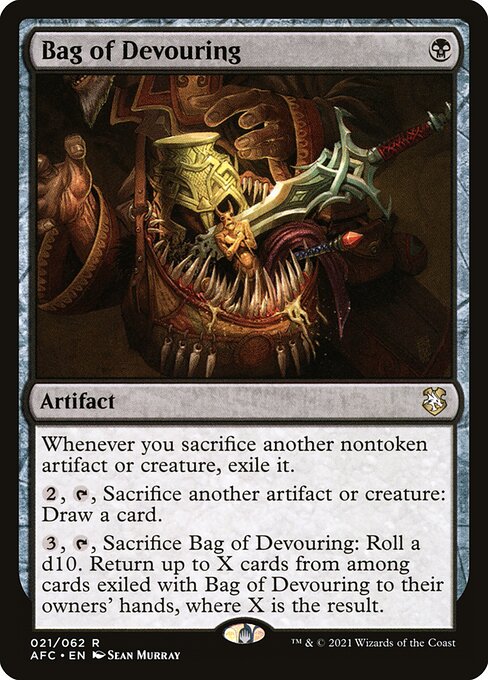
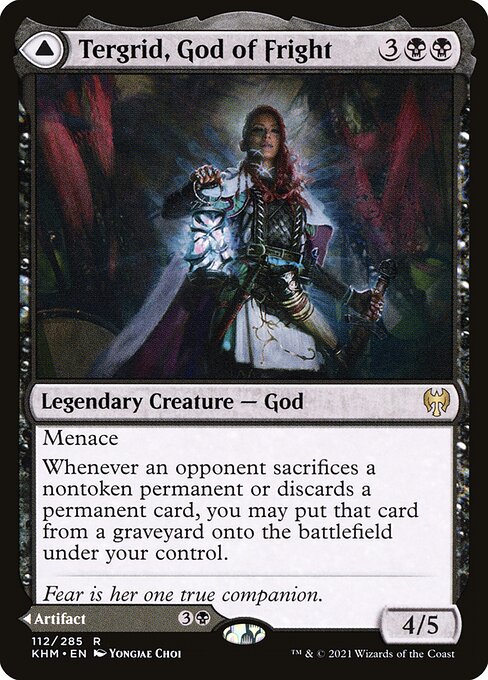
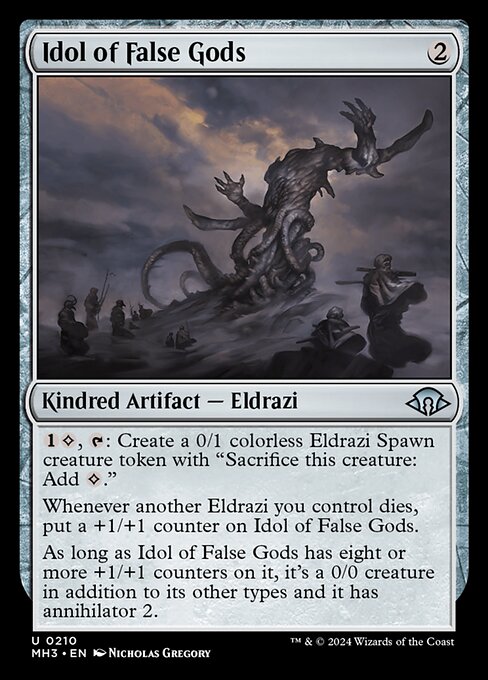
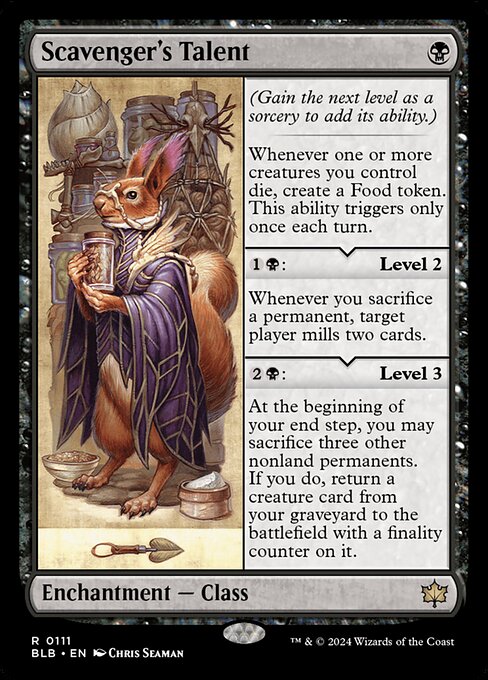
Braids wants a deck that gives up its own cards on purpose to get something back. It also suits a deck that slows the whole table down with rules everyone must follow.
Mana cost
Black ()
Power / toughness3 / 3
RarityRare
At the beginning of your end step, you may sacrifice an artifact, creature, enchantment, land, or planeswalker. If you do, each opponent may sacrifice a permanent of their choice that shares a card type with it. For each opponent who doesn't, that player loses 2 life and you draw a card.
Picked for what they do in Braids's deck. When two cards do the same job, the one with the lower comes first. All of them fit Braids's color identity.Mana ValueThe total amount of mana a card costs, all added up. A card costing two generic and one green has a mana value of three. Wizards renamed this from "converted mana cost" in 2021, so older cards and articles may still use the old name.Open the full glossary
explain how Braids works in tricky situations. They come from Wizards of the Coast, the company that makes Magic.RulingThe official answer to how a card works in a tricky situation. Most rulings are written by Wizards of the Coast, the company that makes Magic, and a few are notes from Scryfall, the card database Magic players use. A ruling explains a card. It does not change what the card says.Open the full glossary
Wizards of the Coast9 Sep 2022
If the permanent that you sacrifice as you resolve Braids's triggered ability has more than one card type, each opponent may choose to sacrifice any permanent they control that shares any card type with it. For example, if the permanent you sacrifice is an artifact creature, one opponent might choose to sacrifice an artifact and another opponent might choose to sacrifice a creature.
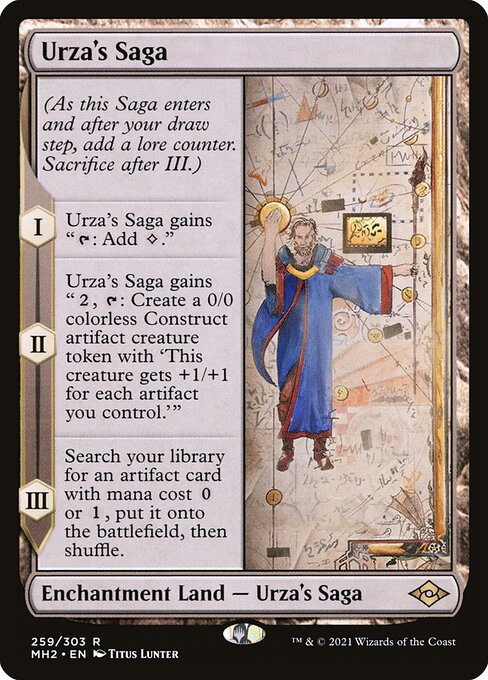
Color identityEvery color of mana symbol on a card, in its cost and in its rules text. Your commander's color identity sets the limit for your whole deck: every other card has to fit inside it. A deck led by a green and white commander cannot play a card with any blue in its color identity.Open the full glossaryBPlayers write colors as letters: B for black.SacrificeSacrifice decks give up their own creatures, Treasures and other cards on purpose and get something back each time. A sacrifice outlet, a card that lets you sacrifice whenever you want, is the heart of the deck.Open the Sacrifice pageDrawDraws you extra cards. More cards means more choices every turn, and in a 100-card deck it is the main way to find the pieces you need. Rhystic Study, SkullclampOpen the Draw pageForced SacrificeMakes opponents sacrifice their own permanents. Because they choose what to lose, it gets around protection and hexproof that ordinary removal cannot touch. Braids, Arisen Nightmare, Living DeathOpen the Forced Sacrifice pageGame ChangerCards that warp the game disproportionately around themselves, requiring immediate answers.What the brackets meanLife DrainAn opponent loses life and you gain that life from the same effect. Blood Artist, Zulaport Cutthroat. It lets Aristocrats decks win without ever attacking. Every drain card is also tagged Life Gain; this tag is the part where the life comes out of somebody.Open the Life Drain pageStaxStax decks slow the whole game down with cards that make spells cost more, stop lands from untapping, or limit what players can do each turn. The deck is built so those limits hurt it least. Many groups dislike playing against it, so check with your table first.Open the Stax pageArtifactsAn artifacts deck fills the battlefield with artifacts, cards like Sol Ring that stay in play and keep working turn after turn. Played together, they give you extra mana and extra cards. A handful of keywords turn up on artifacts again and again. Equip means you pay a cost to attach an Equipment such as Swiftfoot Boots to one of your creatures. If that creature dies, the Equipment does not go to your graveyard with it. It stays on the battlefield, and you can pay the cost again to attach it to another creature. Crew means you tap your own creatures with enough total power between them to turn a Vehicle such as Smuggler's Copter into a creature until the end of the turn. A Treasure is a token you can sacrifice (put into your graveyard on purpose) for one mana of any color. A token is a game piece that a card makes, not a card from your deck, and Pitiless Plunderer is one card that makes Treasures. Affinity makes a spell like Frogmite cheaper for each artifact you control. Unearth brings a card like Combat Courier back from your graveyard for one turn, and then it is exiled. Modular creatures like Arcbound Ravager enter with +1/+1 counters and pass them to another artifact creature when they die.Open the Artifacts pageArtifact PayoffRewards you for having artifacts: counting them, triggering off them, or getting cheaper as you play more. Urza's Saga, Mox OpalOpen the Artifact Payoff page
Send Us Feedback
What works, what's confusing, what you wish the site did. We read every one.
Not signed in? That is fine. We only keep what you write.
Optional. We only use it to reply to you.
Can we use Google Analytics cookies?
They show us which pages help people. No ads.
Privacy Policy


 Open the full glossary