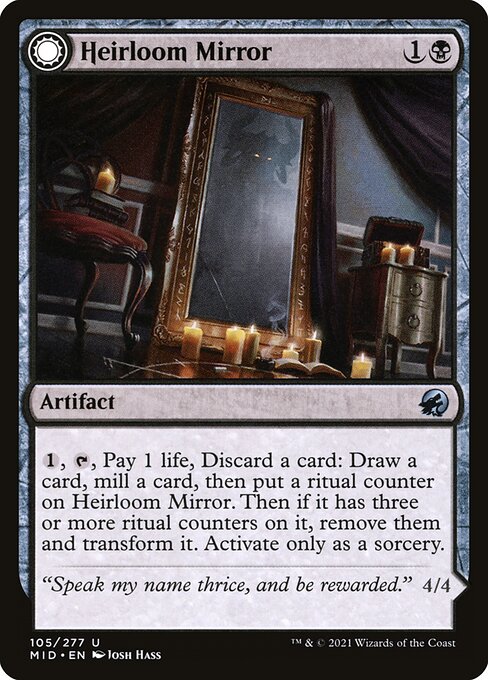
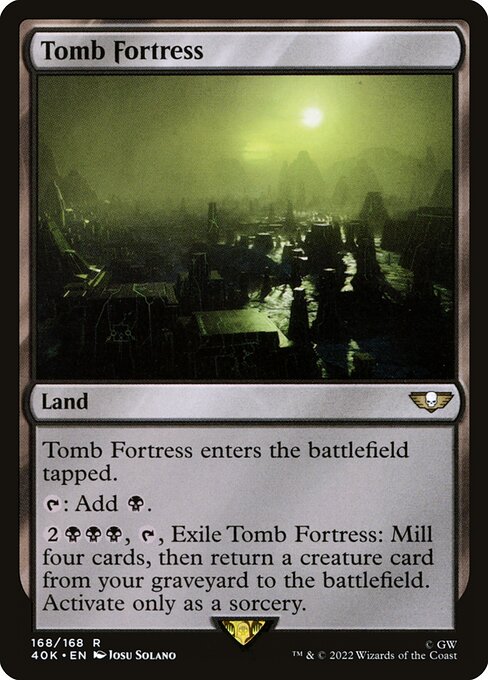
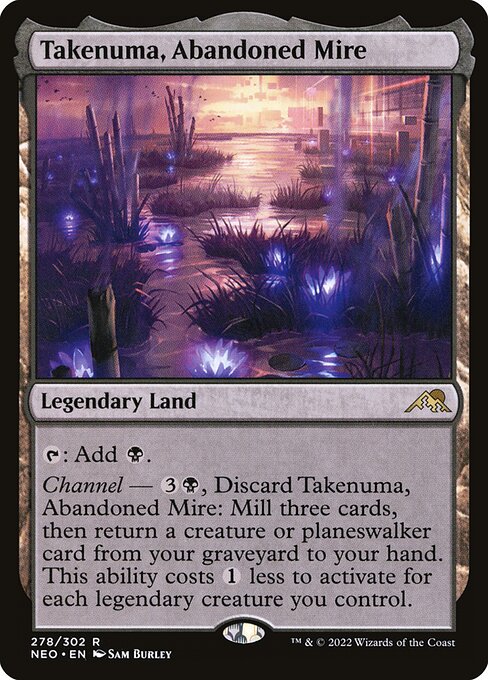
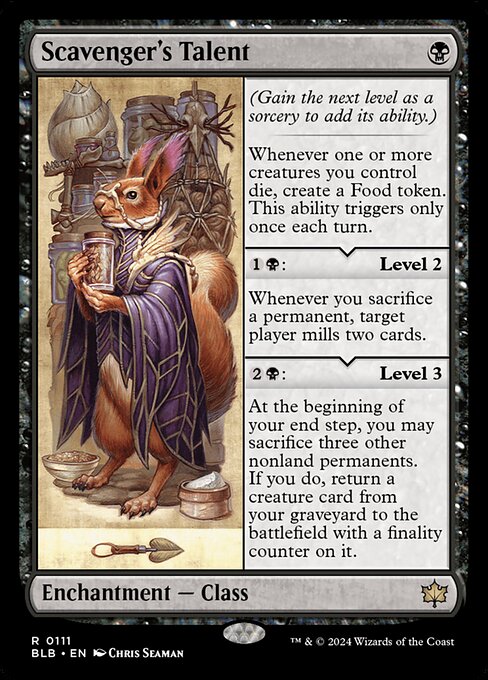
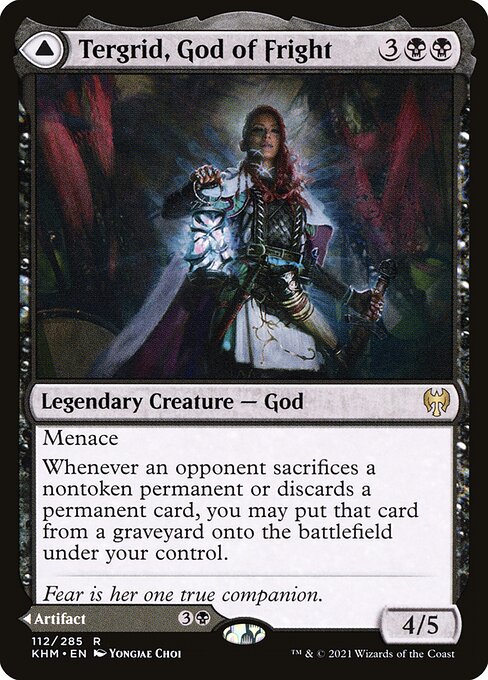
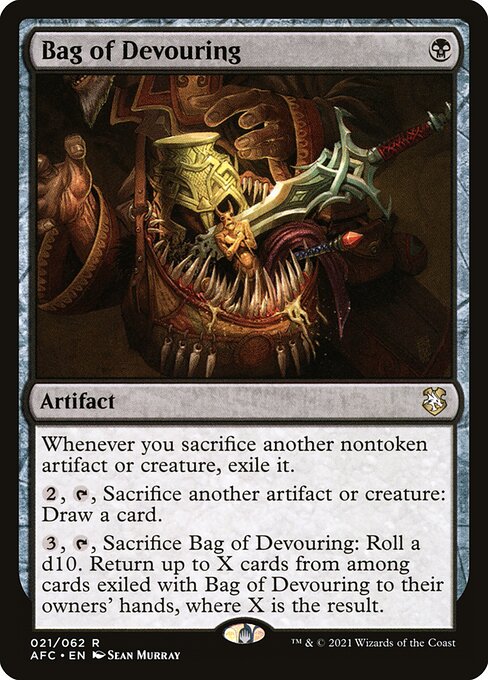
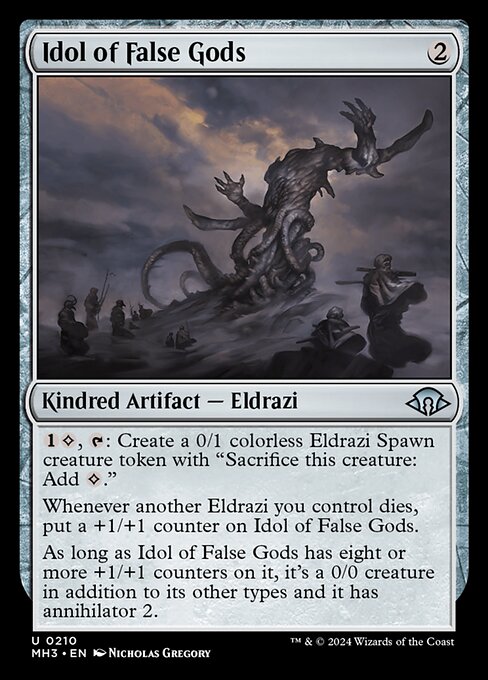
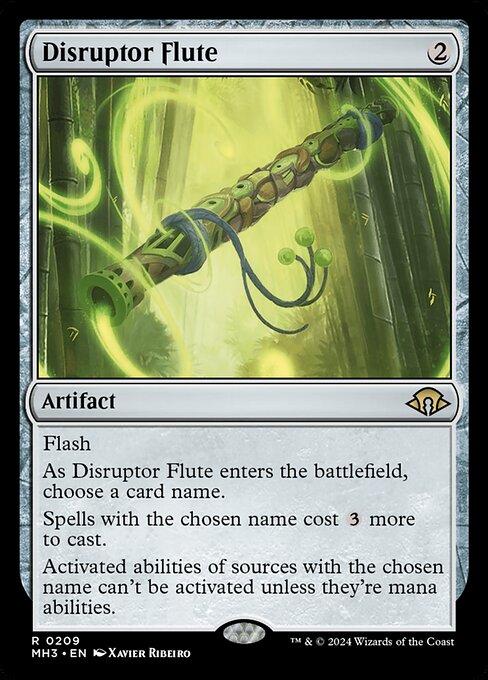
Sheoldred wants a deck that fills its discard pile and plays cards back out of it. It also suits a deck that gives up its own cards on purpose to get something back.
Mana cost
Black ()
Power / toughness4 / 5
RarityMythic
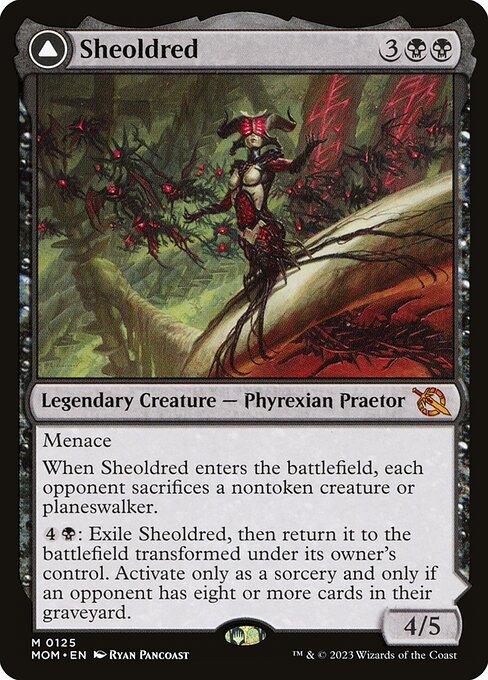
Menace
When Sheoldred enters, each opponent sacrifices a nontoken creature or planeswalker of their choice.
: Exile Sheoldred, then return it to the battlefield transformed under its owner's control. Activate only as a sorcery and only if an opponent has eight or more cards in their graveyard.
//
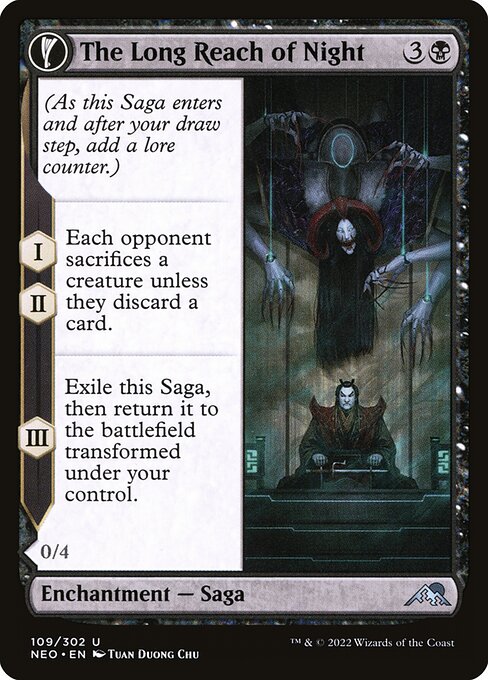
(As this Saga enters and after your draw step, add a lore counter.)
I — For each opponent, destroy up to one target creature or planeswalker that player controls.
II — Each opponent discards three cards, then mills three cards.
III — Put all creature cards from all graveyards onto the battlefield under your control. Exile this Saga, then return it to the battlefield (front face up).
Picked for what they do in Sheoldred's deck. When two cards do the same job, the one with the lower comes first. All of them fit Sheoldred's color identity.Mana ValueThe total amount of mana a card costs, all added up. A card costing two generic and one green has a mana value of three. Wizards renamed this from "converted mana cost" in 2021, so older cards and articles may still use the old name.Open the full glossary
explain how Sheoldred works in tricky situations. They come from Wizards of the Coast, the company that makes Magic.RulingThe official answer to how a card works in a tricky situation. Most rulings are written by Wizards of the Coast, the company that makes Magic, and a few are notes from Scryfall, the card database Magic players use. A ruling explains a card. It does not change what the card says.Open the full glossary
Wizards of the Coast14 Apr 2023
Once you’ve activated Sheoldred’s last ability, it doesn’t matter what happens to the number of cards in opponents’ graveyards. The ability will resolve even if no opponent has eight or more cards in their graveyard by that time.
Wizards of the Coast14 Apr 2023
To resolve chapter II of The True Scriptures in a multiplayer game, the next opponent in turn order (or, if it’s an opponent’s turn, the opponent whose turn it is) chooses three cards in hand. Any opponent who has fewer than three cards in hand chooses all cards they have in hand. They set the chosen cards aside without revealing them. Then each other opponent in turn order does the same. Next, all chosen cards are revealed and discarded at the same time. Then, each opponent mills three cards.
Wizards of the Coast14 Apr 2023
To resolve Sheoldred’s enters-the-battlefield ability in a multiplayer game, the next opponent in turn order (or, if it’s an opponent’s turn, the opponent whose turn it is) chooses a creature they control to sacrifice. Then each other opponent in turn order does the same. Then those creatures are sacrificed at the same time.
Wizards of the Coast14 Apr 2023
You can activate Sheoldred’s last ability if any opponent has eight or more cards in their graveyard, not necessarily all of them.
Color identityEvery color of mana symbol on a card, in its cost and in its rules text. Your commander's color identity sets the limit for your whole deck: every other card has to fit inside it. A deck led by a green and white commander cannot play a card with any blue in its color identity.Open the full glossaryBPlayers write colors as letters: B for black.Graveyard/Self-MillGraveyard decks fill their own graveyard on purpose, then play cards from it as if it were a second hand. Moving cards from the top of your own deck straight into the graveyard is called self-mill.Open the Graveyard/Self-Mill pageSelf-MillPuts cards from your OWN library into your graveyard on purpose. Milling means moving cards off the top of a library into a graveyard. Aimed at an opponent that is an attack; aimed at yourself it is setup, filling the graveyard for the cards that want to use what is in it. Stitcher's Supplier, Hermit DruidOpen the Self-Mill pageGraveyard HateEmpties graveyards or stops cards from coming back out of them, shutting down decks built on reusing their graveyard. Bojuka Bog, Scavenger Grounds. It answers a whole plan rather than one card: without it, something like Eternal Witness keeps returning the same card all game.Open the Graveyard Hate pageReanimationReturns a creature card from a graveyard straight to the battlefield, skipping its mana cost. That is why decks built around it put their biggest creatures into the graveyard on purpose. Named for Reanimate. Animate DeadOpen the Reanimation pageRecursionBrings cards back from the graveyard: to your hand, to the battlefield, or letting them be cast again from where they lie. Eternal Witness, Reanimate, VictimizeOpen the Recursion pageSacrificeSacrifice decks give up their own creatures, Treasures and other cards on purpose and get something back each time. A sacrifice outlet, a card that lets you sacrifice whenever you want, is the heart of the deck.Open the Sacrifice pageGame ChangerCards that warp the game disproportionately around themselves, requiring immediate answers.What the brackets meanForced SacrificeMakes opponents sacrifice their own permanents. Because they choose what to lose, it gets around protection and hexproof that ordinary removal cannot touch. Braids, Arisen Nightmare, Living DeathOpen the Forced Sacrifice pageOpponent DiscardMakes opponents discard cards from their hands. In a format where everyone starts with seven and refills slowly, stripping a hand can be harder to recover from than losing a creature. Windfall, Sword of Feast and FamineOpen the Opponent Discard pageMana SinkGives you somewhere useful to spend spare mana, usually through an ability you can activate again and again. Rogue's Passage, Mind StoneOpen the Mana Sink pageETB ValueDoes something useful the moment it arrives: an enter the battlefield ability, which players shorten to ETB. You keep that effect even if the card is removed straight afterwards, which is why these pair so well with flicker cards that make them enter again. Solemn Simulacrum, The One RingOpen the ETB Value pageStaxStax decks slow the whole game down with cards that make spells cost more, stop lands from untapping, or limit what players can do each turn. The deck is built so those limits hurt it least. Many groups dislike playing against it, so check with your table first.Open the Stax page
Send Us Feedback
What works, what's confusing, what you wish the site did. We read every one.
Not signed in? That is fine. We only keep what you write.
Optional. We only use it to reply to you.
Can we use Google Analytics cookies?
They show us which pages help people. No ads.
Privacy Policy


 Open the full glossary