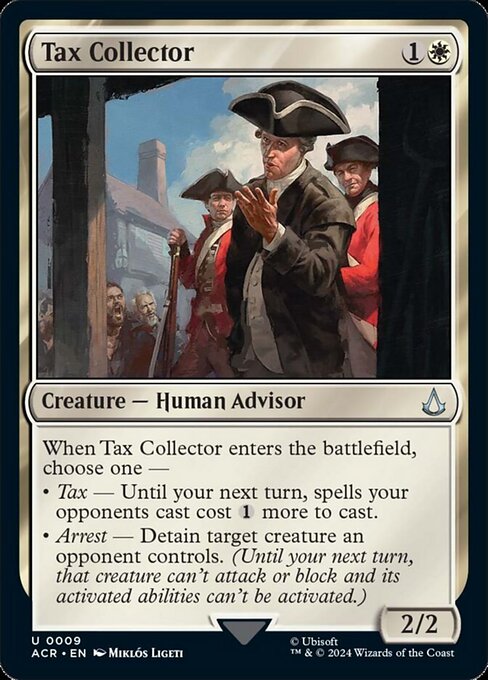
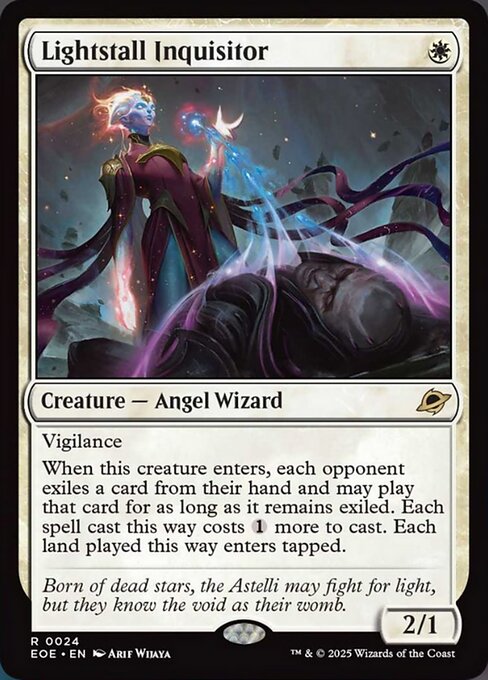
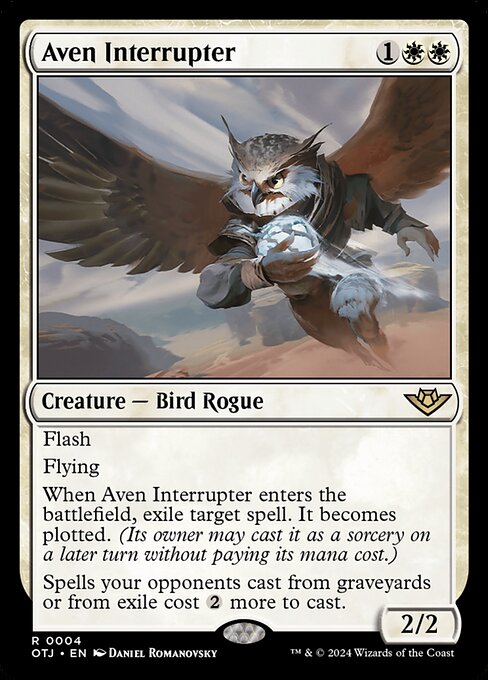
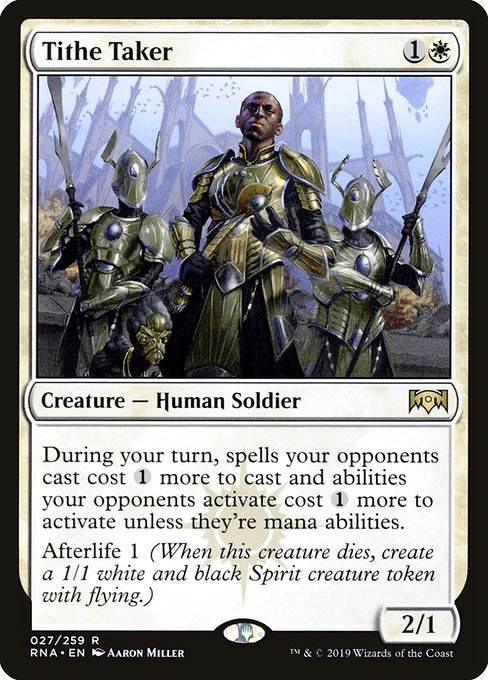
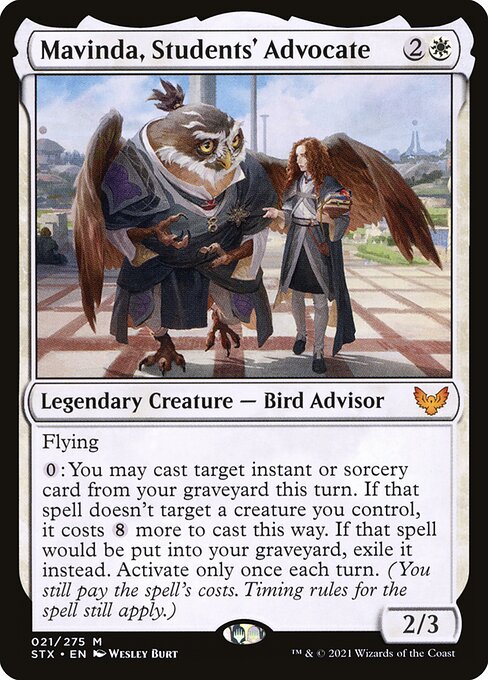
Mavinda wants a deck that plays small creatures that make life hard for opponents. It also suits a deck that fills its discard pile and plays cards back out of it.
Mana cost
White ()
Power / toughness2 / 3
RarityMythic
Flying
: You may cast target instant or sorcery card from your graveyard this turn. If that spell doesn't target a creature you control, it costs more to cast this way. If that spell would be put into your graveyard, exile it instead. Activate only once each turn. (You still pay the spell's costs. Timing rules for the spell still apply.)
Picked for what they do in Mavinda's deck. When two cards do the same job, the one with the lower comes first. All of them fit Mavinda's color identity.Mana ValueThe total amount of mana a card costs, all added up. A card costing two generic and one green has a mana value of three. Wizards renamed this from "converted mana cost" in 2021, so older cards and articles may still use the old name.Open the full glossary
Color identityEvery color of mana symbol on a card, in its cost and in its rules text. Your commander's color identity sets the limit for your whole deck: every other card has to fit inside it. A deck led by a green and white commander cannot play a card with any blue in its color identity.Open the full glossaryWPlayers write colors as letters: W for white.HatebearsHatebears decks play cheap creatures that each carry a rule making life harder for opponents, such as spells costing more. Each one is small, but together they slow the whole table down while they attack.Open the Hatebears pageHatebearA cheap creature, costing 3 mana or less, with a rule that slows everyone else down. Spells cost more, things enter tapped, or players cannot do something. It is the community's word for it, and a deck of them is a Hatebears deck. Thalia, Guardian of Thraben, Drannith Magistrate, Collector OupheOpen the Hatebear pageCost ModificationChanges what a spell costs to cast: cheaper for you, or more expensive for everyone. It is the broad family; Cost Reducer and Spell Tax say which direction a given card goes. Herald's Horn, Foundry InspectorOpen the Cost Modification pageGraveyard/Self-MillGraveyard decks fill their own graveyard on purpose, then play cards from it as if it were a second hand. Moving cards from the top of your own deck straight into the graveyard is called self-mill.Open the Graveyard/Self-Mill pageCast from GraveyardLets you cast spells or play lands straight from your graveyard, so the graveyard becomes a second hand. This is different from Reanimation, which puts a creature card onto the battlefield without casting it. Karador, Ghost Chieftain, Muldrotha, the Gravetide, Yawgmoth's WillOpen the Cast from Graveyard pageRecursionBrings cards back from the graveyard: to your hand, to the battlefield, or letting them be cast again from where they lie. Eternal Witness, Reanimate, VictimizeOpen the Recursion pageMana SinkGives you somewhere useful to spend spare mana, usually through an ability you can activate again and again. Rogue's Passage, Mind StoneOpen the Mana Sink pageReanimatorReanimator decks put big creatures into their own graveyard early, then bring them back onto the battlefield without paying their cost. It gets a huge creature into play far sooner than you could afford to cast it.Open the Reanimator page
Send Us Feedback
What works, what's confusing, what you wish the site did. We read every one.
Not signed in? That is fine. We only keep what you write.
Optional. We only use it to reply to you.
Can we use Google Analytics cookies?
They show us which pages help people. No ads.
Privacy Policy


 : You may cast target instant or sorcery card from your graveyard this turn. If that spell doesn't target a creature you control, it costs
 more to cast this way. If that spell would be put into your graveyard, exile it instead. Activate only once each turn. (You still pay the spell's costs. Timing rules for the spell still apply.)
 Open the full glossary