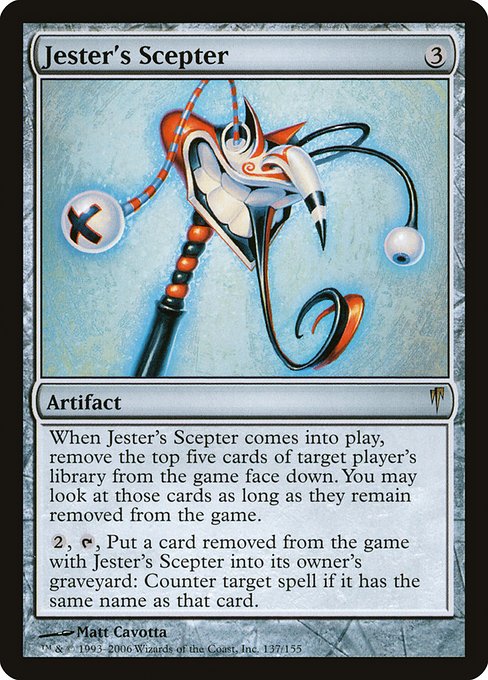
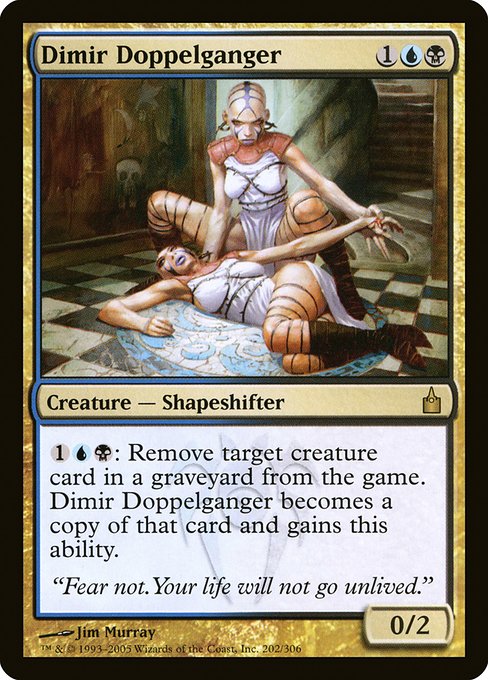
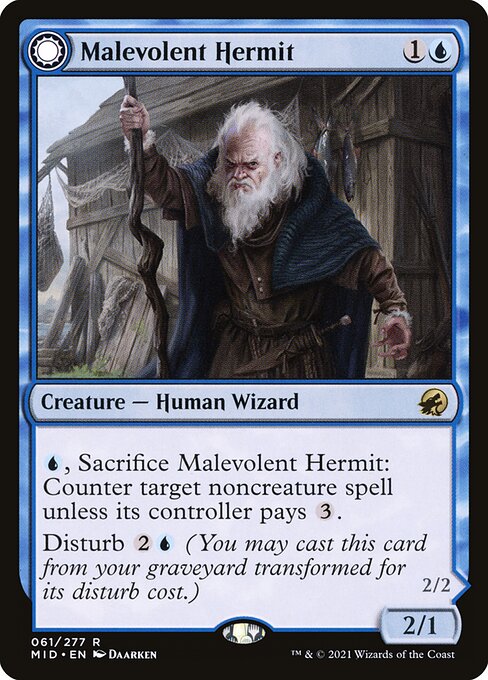
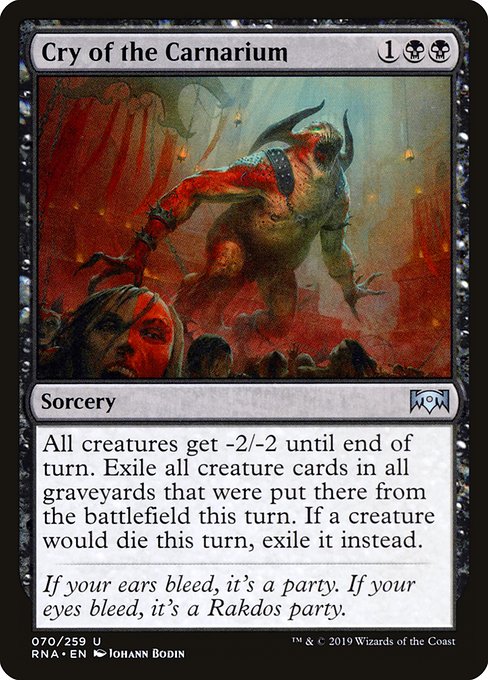
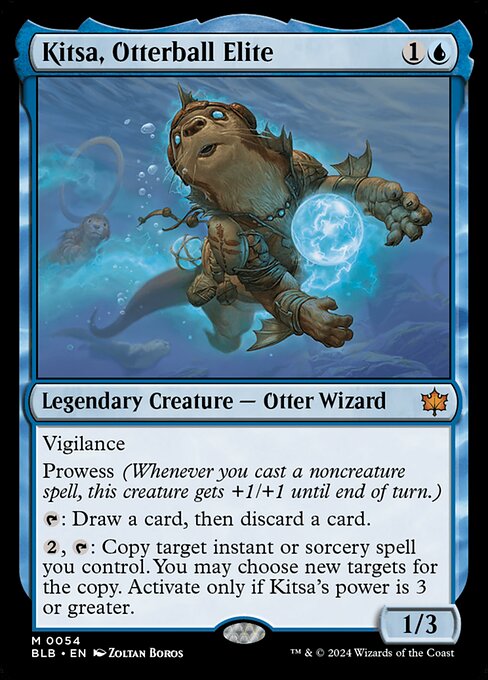
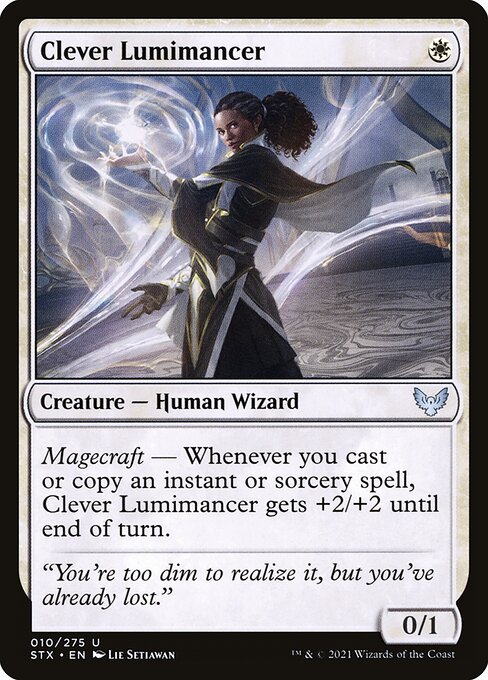
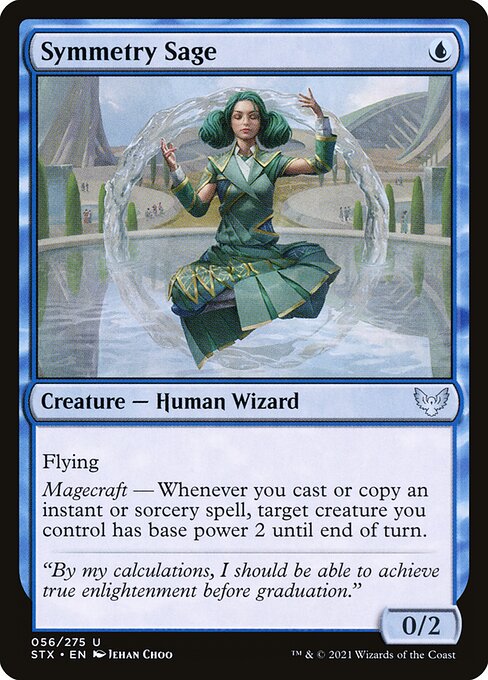
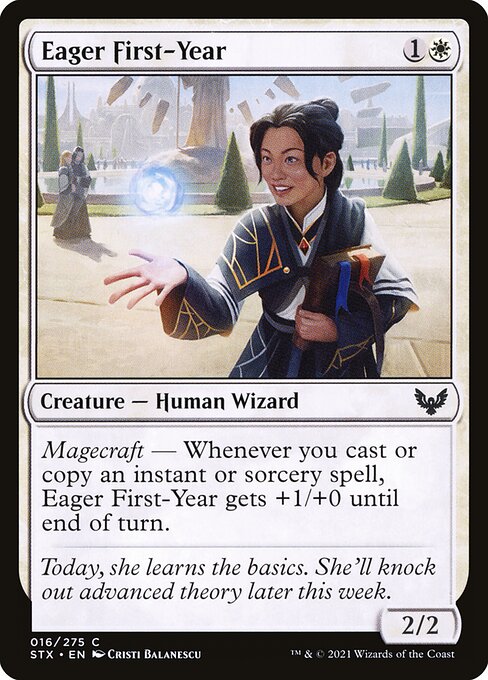
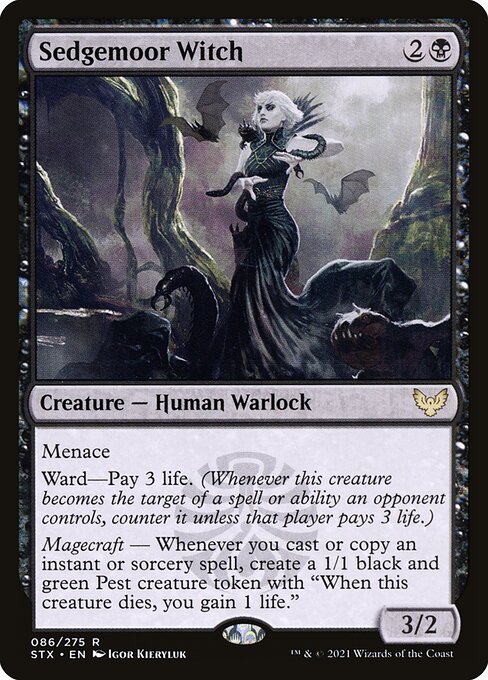
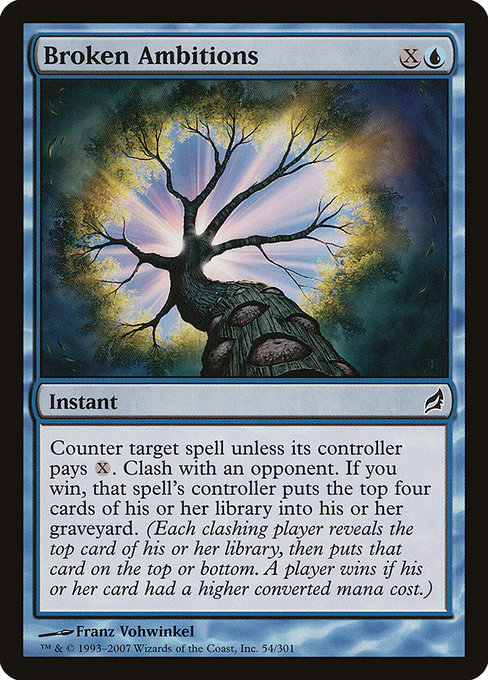
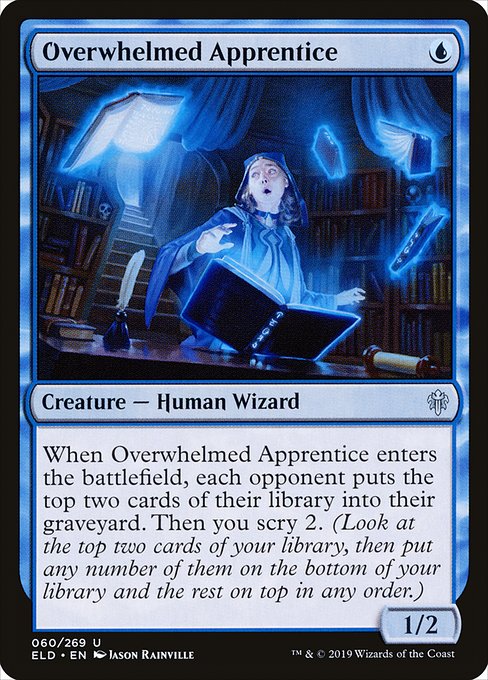
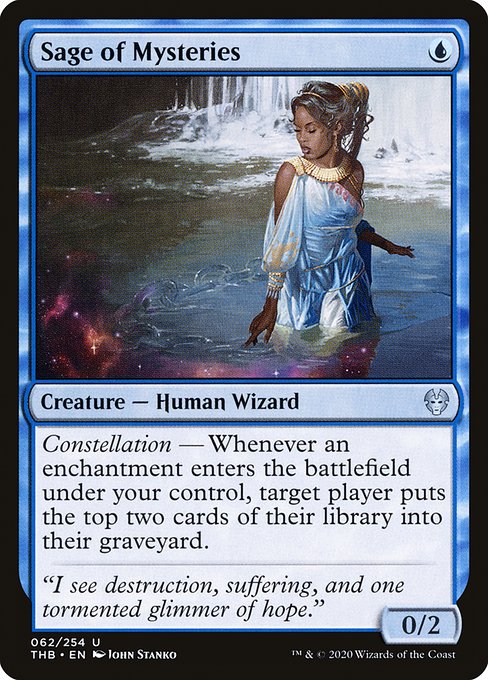
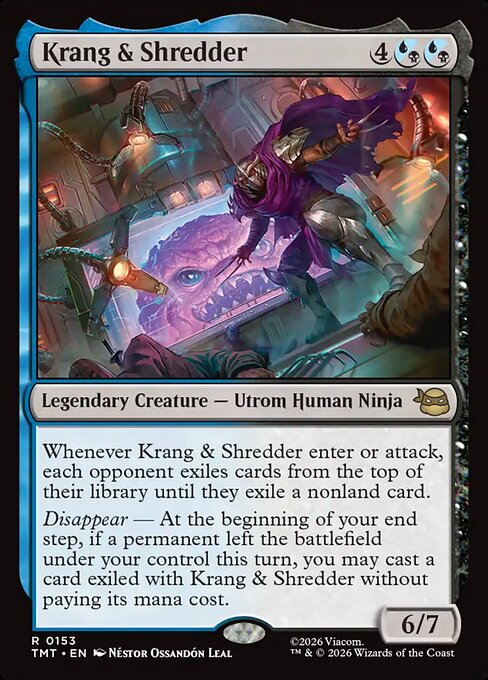
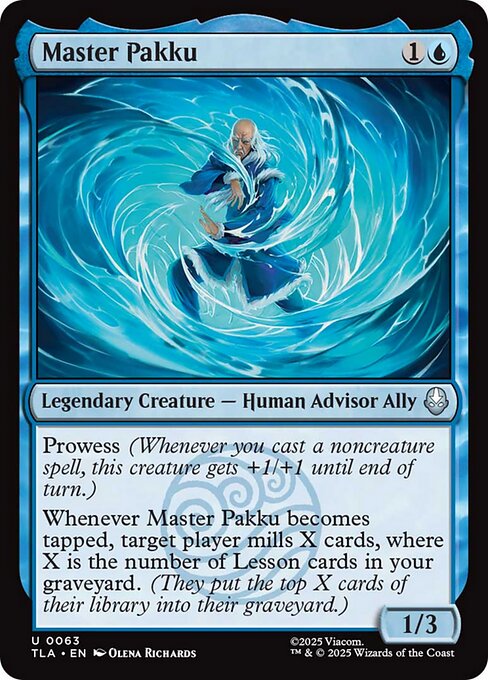
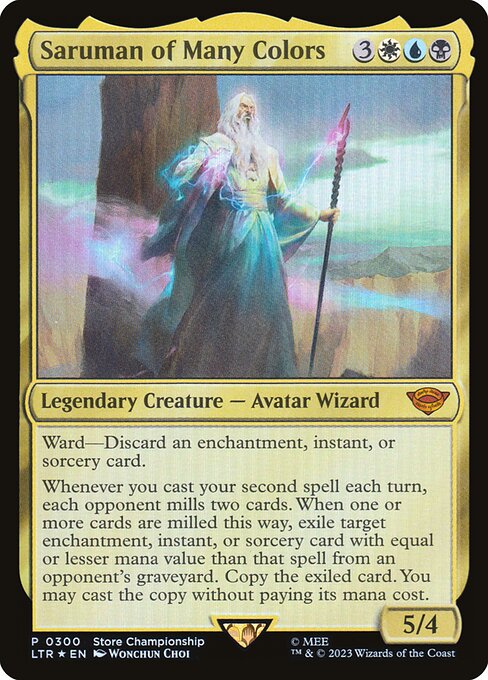
Saruman of Many Colors wants a deck that answers everything its opponents play, then wins late. It also suits a deck that casts lots of instant and sorcery spells.
Mana cost
White, Blue, Black ()
Power / toughness5 / 4
RarityMythic
Ward—Discard an enchantment, instant, or sorcery card.
Whenever you cast your second spell each turn, each opponent mills two cards. When one or more cards are milled this way, exile target enchantment, instant, or sorcery card with equal or lesser mana value than that spell from an opponent's graveyard. Copy the exiled card. You may cast the copy without paying its mana cost.
Picked for what they do in Saruman of Many Colors's deck. When two cards do the same job, the one with the lower comes first. All of them fit Saruman of Many Colors's color identity.Mana ValueThe total amount of mana a card costs, all added up. A card costing two generic and one green has a mana value of three. Wizards renamed this from "converted mana cost" in 2021, so older cards and articles may still use the old name.Open the full glossary
explain how Saruman of Many Colors works in tricky situations. They come from Wizards of the Coast, the company that makes Magic.RulingThe official answer to how a card works in a tricky situation. Most rulings are written by Wizards of the Coast, the company that makes Magic, and a few are notes from Scryfall, the card database Magic players use. A ruling explains a card. It does not change what the card says.Open the full glossary
Wizards of the Coast16 Jun 2023
If the spell you cast has {X} in its mana cost, you must choose 0 as the value of X when casting it without paying its mana cost.
Wizards of the Coast16 Jun 2023
If you cast a spell "without paying its mana cost," you can't pay any alternative costs. You can, however, pay additional costs, such as kicker costs. If the card has any mandatory additional costs, you must pay those.
Wizards of the Coast16 Jun 2023
If you don't have an enchantment, instant, or sorcery card in your hand, you won't be able to pay Saruman of Many Colors's ward cost.
Wizards of the Coast16 Jun 2023
If you don't want to cast the copy, you can choose not to; the copy ceases to exist the next time state-based actions are checked.
Wizards of the Coast16 Jun 2023
You cast the copy while the ability is resolving and still on the stack. You can't wait to cast it later in the turn.
Wizards of the Coast16 Jun 2023
You don't choose a target for Saruman of Many Colors's ability at the time it triggers. Rather, a second "reflexive" ability triggers when one or more cards are milled this way. You choose a target for that ability as it goes on the stack. Each player may respond to this triggered ability as normal.
Color identityEvery color of mana symbol on a card, in its cost and in its rules text. Your commander's color identity sets the limit for your whole deck: every other card has to fit inside it. A deck led by a green and white commander cannot play a card with any blue in its color identity.Open the full glossaryWUBPlayers write colors as letters: W for white, U for blue, B for black. Blue is U because B was already taken by black.ControlControl decks answer what everyone else plays, stopping spells and removing dangerous cards, then win slowly once they are in charge. Expect lots of removal, spells that cancel other spells, and extra card draw.Open the Control pageGraveyard HateEmpties graveyards or stops cards from coming back out of them, shutting down decks built on reusing their graveyard. Bojuka Bog, Scavenger Grounds. It answers a whole plan rather than one card: without it, something like Eternal Witness keeps returning the same card all game.Open the Graveyard Hate pageStack InteractionActs while a spell is waiting to take effect: countering it, changing what it targets, or copying it. When someone casts a spell it waits on the stack, and every player gets priority, a chance to respond, before it happens. Counterspell, NegateOpen the Stack Interaction pageSpellslingerSpellslinger decks cast lots of instants and sorceries, one-time spells, and play creatures that reward every spell you cast. Instants and sorceries take effect once and then go to your graveyard, and an instant can even be cast during another player's turn.Open the Spellslinger pageSpellslinger PayoffRewards you specifically for casting or copying instants and sorceries, usually with a trigger each time. Narrower than Spellslinger, which covers the whole instant-and-sorcery family. Archmage Emeritus, Storm-Kiln ArtistOpen the Spellslinger Payoff pageProtectionA creature with protection from something, like a color, is safe from anything with that quality. It cannot be damaged, enchanted or equipped, blocked, or targeted by it, and players remember the four with the word DEBT. It does not stop effects that neither target nor damage, like a board wipe that destroys every creature. ProgenitusOpen the Protection pageMillMill decks win by emptying opponents' libraries, the decks they draw from: a player who has to draw from an empty library loses the game. Milling means putting cards from the top of a library straight into the graveyard.Open the Mill pageMillPuts cards from the top of a player's library, the deck they draw from, straight into their graveyard. Aimed at opponents it can win the game, because a player who has to draw from an empty library loses.Open the Mill page
Send Us Feedback
What works, what's confusing, what you wish the site did. We read every one.
Not signed in? That is fine. We only keep what you write.
Optional. We only use it to reply to you.
Can we use Google Analytics cookies?
They show us which pages help people. No ads.
Privacy Policy


 Open the full glossary