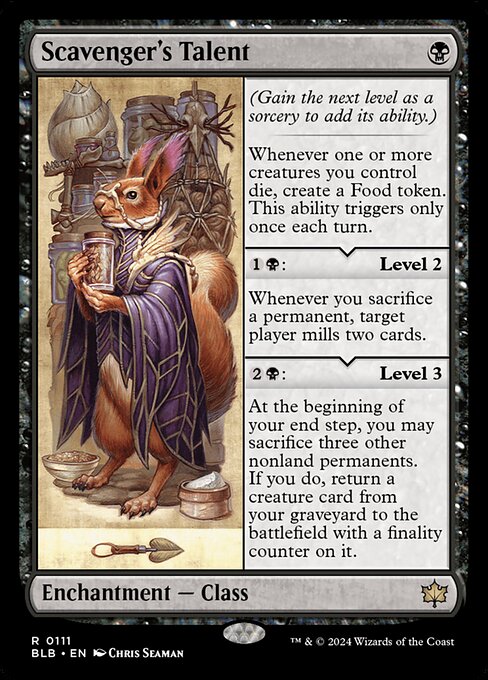
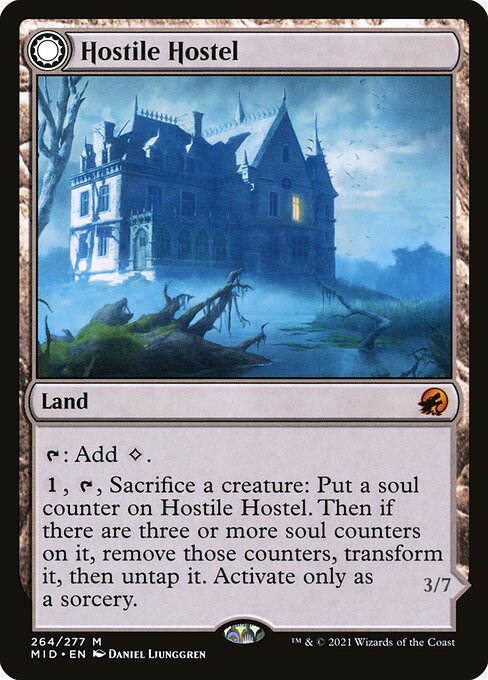
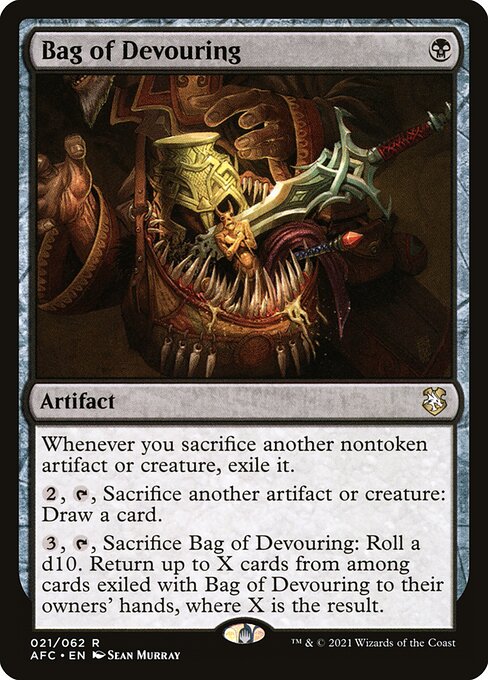
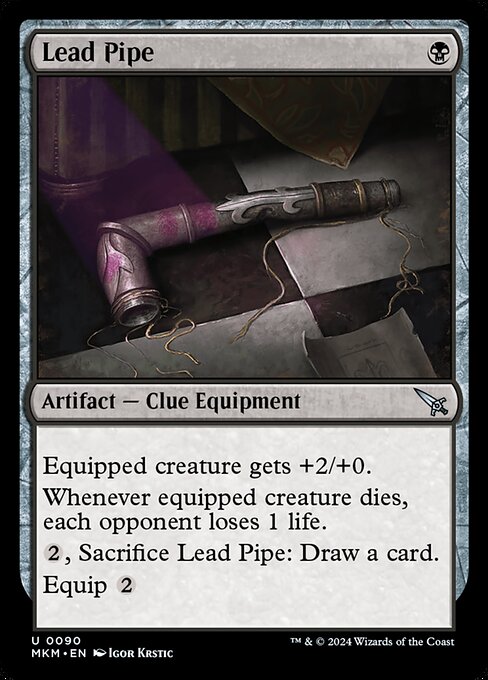
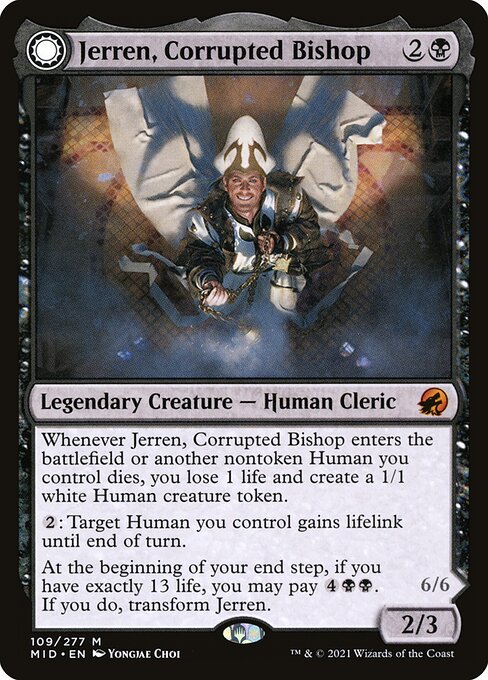
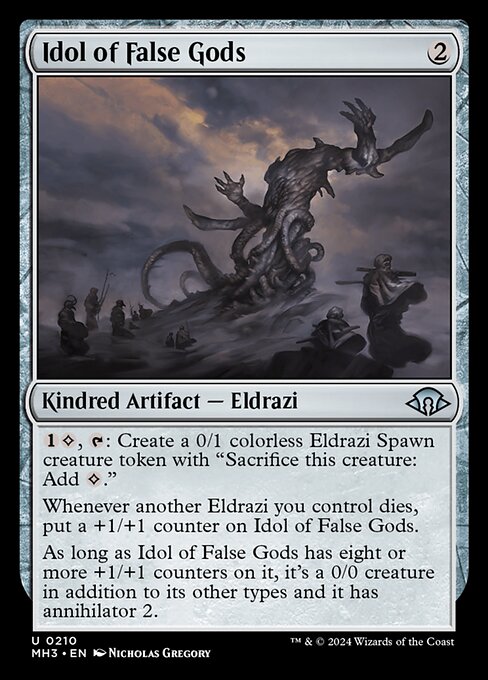
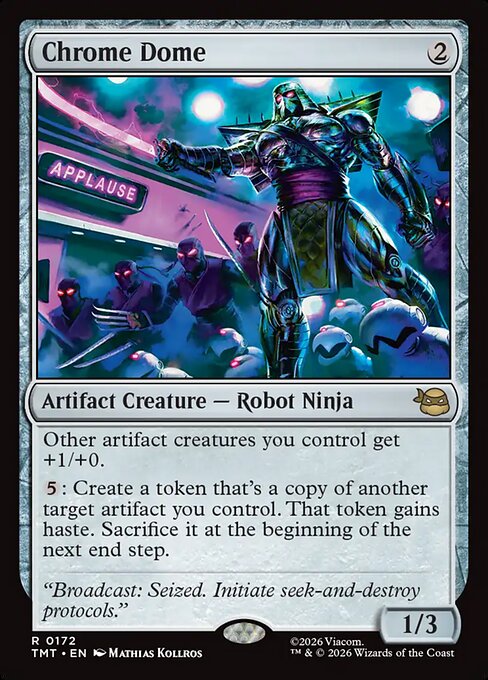
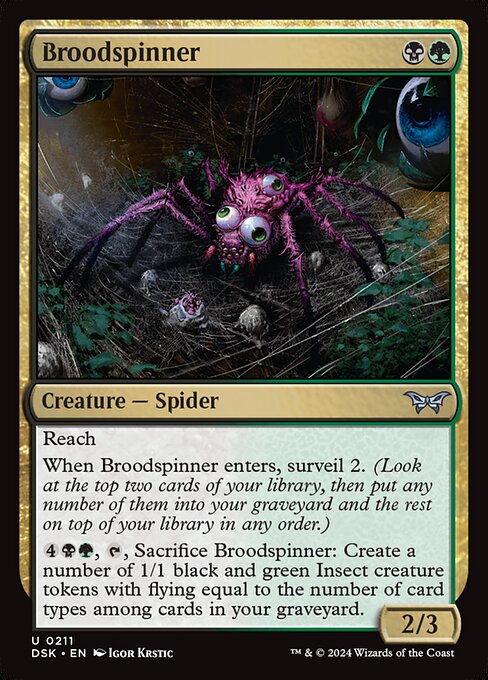
Shelob wants a deck that sacrifices its own creatures to drain opponents' life. It also suits a deck that is built around one creature type, like Elves or Dragons.
Mana cost
Black, Green ()
Power / toughness8 / 8
RarityRare
Deathtouch, ward
Other Spiders you control have deathtouch and ward .
Whenever another creature dealt damage this turn by a Spider you controlled dies, create a token that's a copy of that creature, except it's a Food artifact with ", , Sacrifice this token: You gain 3 life," and it loses all other card types.
Picked for what they do in Shelob's deck. When two cards do the same job, the one with the lower comes first. All of them fit Shelob's color identity.Mana ValueThe total amount of mana a card costs, all added up. A card costing two generic and one green has a mana value of three. Wizards renamed this from "converted mana cost" in 2021, so older cards and articles may still use the old name.Open the full glossary
explain how Shelob works in tricky situations. They come from Wizards of the Coast, the company that makes Magic.RulingThe official answer to how a card works in a tricky situation. Most rulings are written by Wizards of the Coast, the company that makes Magic, and a few are notes from Scryfall, the card database Magic players use. A ruling explains a card. It does not change what the card says.Open the full glossary
Wizards of the Coast16 Jun 2023
Any enters-the-battlefield abilities of the copied creature will trigger when the token enters the battlefield. Any "as [this creature] enters the battlefield" or "[this creature] enters the battlefield with" abilities of the chosen creature will also work.
Wizards of the Coast16 Jun 2023
Except for being a Food artifact, having the listed activated ability, and losing all other card types and subtypes, the token copies only what was printed on the original creature (unless that creature is copying something else; see below). It doesn't copy whether that creature was tapped or untapped, whether it had any counters on it or Auras or Equipment attached to it, or any non-copy effects that had changed its power, toughness, types, color, or so on.
Wizards of the Coast16 Jun 2023
If the copied creature has {X} in its mana cost, X is considered to be 0.
Wizards of the Coast16 Jun 2023
If the copied creature is a token, the new token that's created copies the original characteristics of that token as stated by the effect that created that token, with the exceptions noted above.
Wizards of the Coast16 Jun 2023
If the copied creature is copying something else, then the token enters the battlefield as whatever that creature copied, with the exceptions noted above.
Wizards of the Coast16 Jun 2023
Since the token is a Food artifact and not a creature, it can't attack or block unless it becomes a creature somehow.
Wizards of the Coast16 Jun 2023
The token copies the creature as it last existed on the battlefield before it died, not as it exists in the graveyard.
Wizards of the Coast8 Nov 2024
Food is an artifact type. Even though it appears on some creatures, it's never a creature type.
Wizards of the Coast8 Nov 2024
Whatever you do, don't eat the delicious cards.
Wizards of the Coast8 Nov 2024
You can't sacrifice a Food to pay multiple costs. For example, you can't sacrifice a Food token to activate its own ability and also to activate Maraleaf Rider's ability.
Color identityEvery color of mana symbol on a card, in its cost and in its rules text. Your commander's color identity sets the limit for your whole deck: every other card has to fit inside it. A deck led by a green and white commander cannot play a card with any blue in its color identity.Open the full glossaryBGPlayers write colors as letters: B for black, G for green.AristocratsAristocrats decks sacrifice their own creatures on purpose and profit every time one dies, often by draining life from each opponent. A sacrifice outlet, a card that lets you sacrifice whenever you like, decides when that happens.Open the Aristocrats pageDeath TriggerTriggers when a creature dies, whether it is this creature, one of yours or an opponent's. These are the cards that pay you in an Aristocrats deck: something else makes creatures die, and these decide what you get each time. Blood Artist, Solemn SimulacrumOpen the Death Trigger pageToken EngineMakes tokens again and again rather than once. A token is a creature or other permanent created by a card, with no card of its own. Something that makes one token gives you a body; something that makes them every turn gives you a board you can keep rebuilding after it is cleared. Grave Titan, Bitterblossom, OphiomancerOpen the Token Engine pageLife GainGains you life, once or over and over. Soul Warden, The Great Henge. In Commander life is something to spend, not just a cushion, and many of these cards also set off others that reward gaining life.Open the Life Gain pageProtectionA creature with protection from something, like a color, is safe from anything with that quality. It cannot be damaged, enchanted or equipped, blocked, or targeted by it, and players remember the four with the word DEBT. It does not stop effects that neither target nor damage, like a board wipe that destroys every creature. ProgenitusOpen the Protection pageSelf-SacrificeSacrifices itself as part of its own ability, trading the permanent away for what it does. Evolving Wilds, Mind StoneOpen the Self-Sacrifice pageMana SinkGives you somewhere useful to spend spare mana, usually through an ability you can activate again and again. Rogue's Passage, Mind StoneOpen the Mana Sink pageTypal/KindredTypal decks are built around one creature type, like Elves, Dragons or Zombies, with cards that make that type stronger. The type is printed after the dash on the card's type line, and the strategy is also called kindred or tribal.Open the Typal/Kindred pageTypal PayoffRewards you for playing lots of one kind of creature. That includes "lords" that make every other Goblin or Merfolk you control bigger, and cards that ask you to choose a creature type and then pay you off for it. A creature type is the word on the middle line of the card, like Goblin, Elf or Zombie.Open the Typal Payoff pageStatic BuffGives creatures a lasting bonus to power and toughness while it remains on the battlefield, rather than a boost that wears off at end of turn. Garruk's Uprising, Patchwork BannerOpen the Static Buff pageClonesClone decks copy the best creature on the battlefield, whoever owns it, so they always have one of the strongest things on the table. A copy also gets the original's 'when this enters' ability, so each clone can bring a fresh effect too.Open the Clones pageCloneCopies a creature or another permanent already on the battlefield. Copying the best thing on the table is often cheaper than casting something equally strong. Phyrexian Metamorph, Helm of the HostOpen the Clone pageToken MakerCreates one or more tokens. Different cards make very different ones: creatures Grave Titan, Treasures Smothering Tithe, Clues Tireless Tracker or Food Gilded Goose. This is one of our largest tags, so pair it with an archetype or theme when you are hunting a specific kind.Open the Token Maker pageSpidersSpiders are mostly green, and most have reach, which lets them block flying creatures. Magic's Spider-Man cards count too.Open the Spiders page
Send Us Feedback
What works, what's confusing, what you wish the site did. We read every one.
Not signed in? That is fine. We only keep what you write.
Optional. We only use it to reply to you.
Can we use Google Analytics cookies?
They show us which pages help people. No ads.
Privacy Policy


 , Sacrifice this token: You gain 3 life," and it loses all other card types.
 Open the full glossary