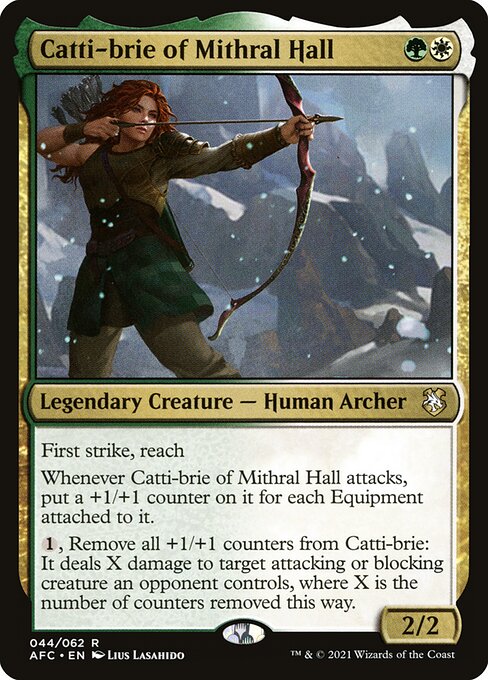
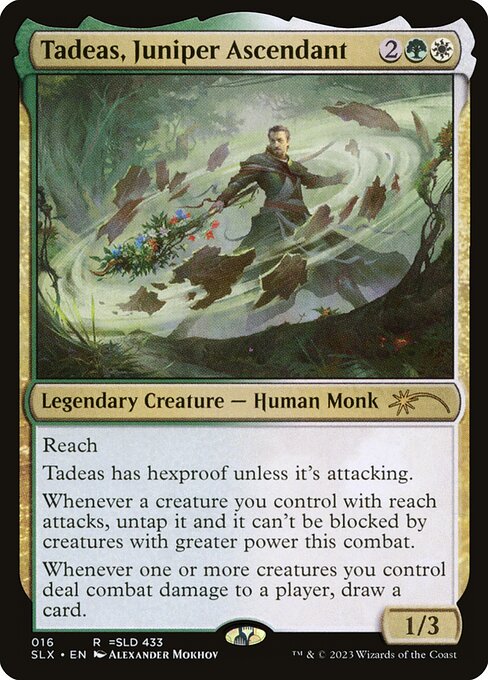
Picked for what they do in Sigarda's deck. When two cards do the same job, the one with the lower comes first. All of them fit Sigarda's color identity.Mana ValueThe total amount of mana a card costs, all added up. A card costing two generic and one green has a mana value of three. Wizards renamed this from "converted mana cost" in 2021, so older cards and articles may still use the old name.Open the full glossary
explain how Sigarda works in tricky situations. They come from Wizards of the Coast, the company that makes Magic.RulingThe official answer to how a card works in a tricky situation. Most rulings are written by Wizards of the Coast, the company that makes Magic, and a few are notes from Scryfall, the card database Magic players use. A ruling explains a card. It does not change what the card says.Open the full glossary
Wizards of the Coast7 Dec 2018
As a spell or ability an opponent controls resolves, if it would force you to sacrifice a permanent, you just don't. That part of the effect does nothing. If that spell or ability gives you the option to sacrifice a permanent (as Desecration Demon does), you can't take that option.
Wizards of the Coast7 Dec 2018
If a spell or ability an opponent controls states that something happens unless you sacrifice a permanent (as Mogis, God of Slaughter does), you can't choose to sacrifice a permanent. On the other hand, if a spell or ability an opponent controls instructs you to sacrifice a permanent unless you perform an action (as Killing Wave does), you can choose whether or not to perform the action. If you don't perform the action, nothing happens, since you can't sacrifice any permanents.
Wizards of the Coast7 Dec 2018
Sigarda's ability affects only sacrifices. It won't stop a creature from dying due to lethal damage or having 0 toughness, and it won't stop a permanent from being put into its owner's graveyard due to the "legend rule." None of these are sacrifices; they're the result of game rules.
Color identityEvery color of mana symbol on a card, in its cost and in its rules text. Your commander's color identity sets the limit for your whole deck: every other card has to fit inside it. A deck led by a green and white commander cannot play a card with any blue in its color identity.Open the full glossaryWGPlayers write colors as letters: W for white, G for green.VoltronVoltron decks load one creature, usually the commander, with Equipment and Auras until it can win by attacking on its own. In Commander, a player dealt 21 or more combat damage by the same commander over the game loses, so one huge commander can knock a player out.Open the Voltron pageVoltron CommanderA legendary creature that can carry the whole game plan by itself. It protects itself, grows with what is attached to it, or rewards attacking alone. The deck piles Auras and Equipment onto it and wins with commander damage, since 21 or more combat damage from one commander knocks a player out. Named for the toy robot built from smaller pieces. Zurgo Helmsmasher, Uril, the Miststalker, Sigarda, Host of HeronsOpen the Voltron Commander pageProtectionA creature with protection from something, like a color, is safe from anything with that quality. It cannot be damaged, enchanted or equipped, blocked, or targeted by it, and players remember the four with the word DEBT. It does not stop effects that neither target nor damage, like a board wipe that destroys every creature. ProgenitusOpen the Protection pageEvasionAn ability that makes a creature hard to block, so its attacks reach the player. Flying, menace, landwalk and plain 'can't be blocked' are the common kinds.Open the Evasion page
Send Us Feedback
What works, what's confusing, what you wish the site did. We read every one.
Not signed in? That is fine. We only keep what you write.
Optional. We only use it to reply to you.
Can we use Google Analytics cookies?
They show us which pages help people. No ads.
Privacy Policy


 Open the full glossary