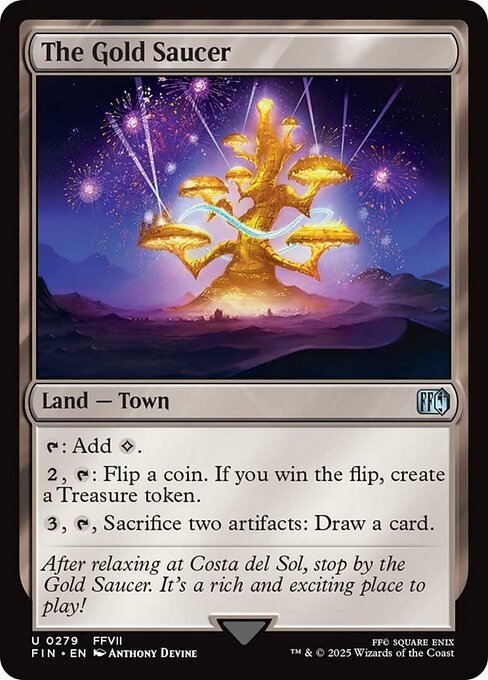
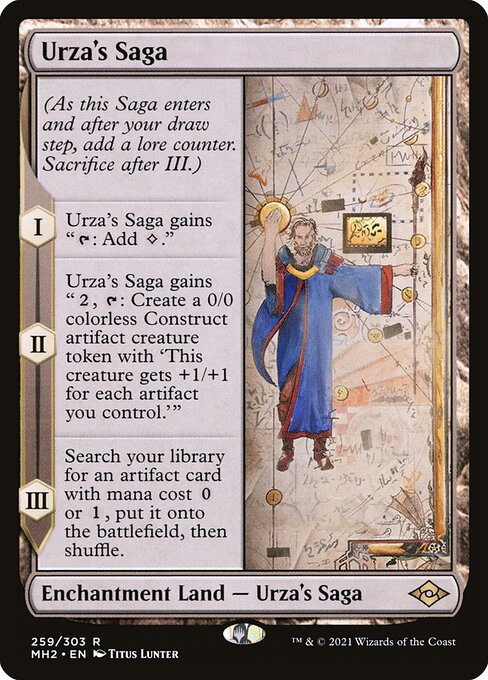
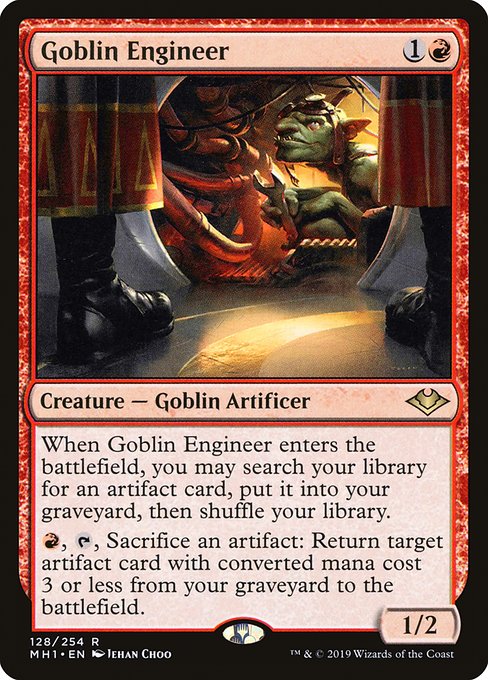
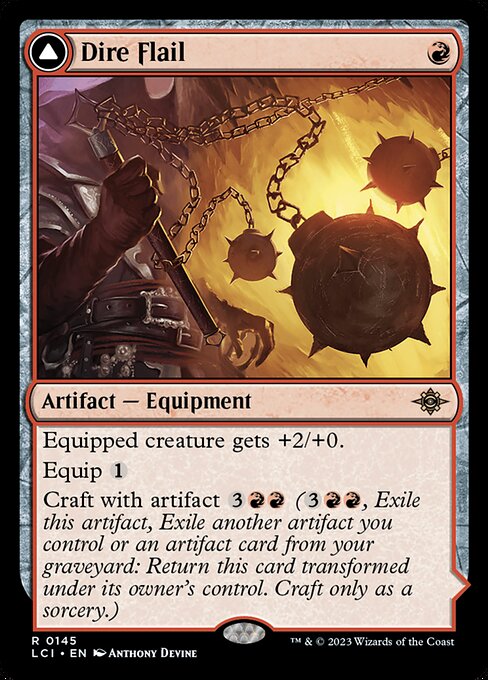
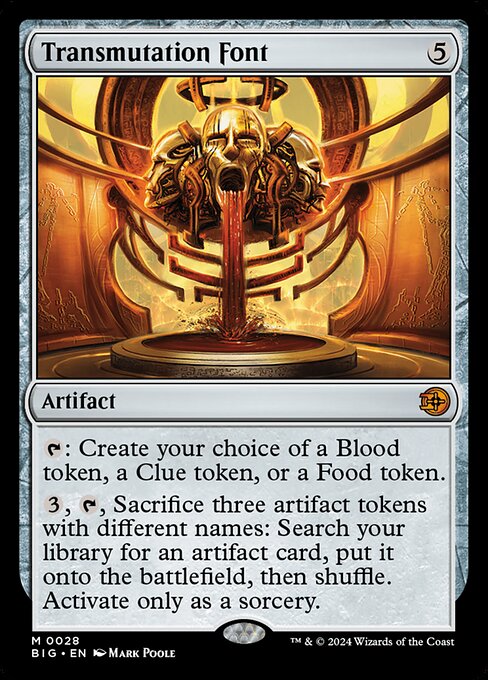
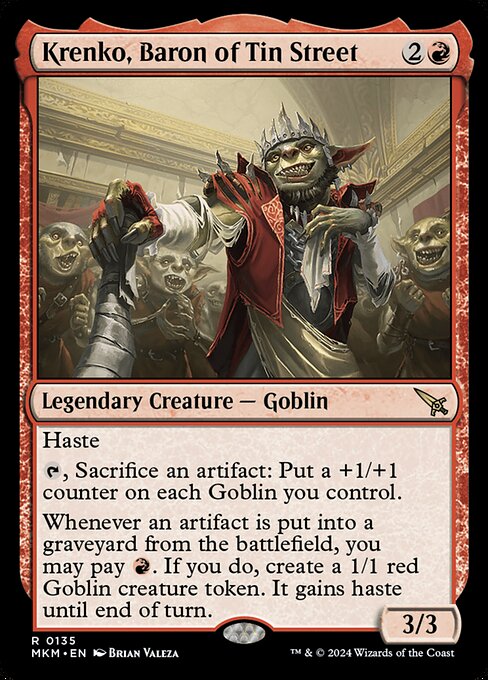
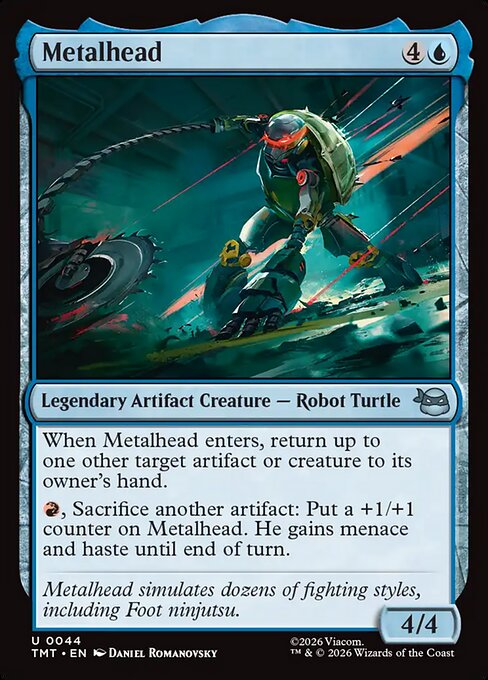
Strax wants a deck that loves coin flips, dice rolls and wild surprises. It also suits a deck that fills the table with artifacts that make mana and draw cards.
Mana cost
Red, Green ()
Power / toughness5 / 5
RarityRare
Vigilance, trample
Grenades! — , , Sacrifice an artifact: Choose a player at random. When you do, Strax fights another target creature that player controls.
Glory of Battle — Whenever Strax deals damage to a creature, put a +1/+1 counter on Strax.
Picked for what they do in Strax's deck. When two cards do the same job, the one with the lower comes first. All of them fit Strax's color identity.Mana ValueThe total amount of mana a card costs, all added up. A card costing two generic and one green has a mana value of three. Wizards renamed this from "converted mana cost" in 2021, so older cards and articles may still use the old name.Open the full glossary
explain how Strax works in tricky situations. They come from Wizards of the Coast, the company that makes Magic.RulingThe official answer to how a card works in a tricky situation. Most rulings are written by Wizards of the Coast, the company that makes Magic, and a few are notes from Scryfall, the card database Magic players use. A ruling explains a card. It does not change what the card says.Open the full glossary
Wizards of the Coast13 Oct 2023
If Strax is dealt damage equal to its toughness while fighting, it will die before the +1/+1 counter from its last ability can save it.
Wizards of the Coast13 Oct 2023
The player is chosen at random, but Strax's controller gets to choose which of their creatures it fights.
Color identityEvery color of mana symbol on a card, in its cost and in its rules text. Your commander's color identity sets the limit for your whole deck: every other card has to fit inside it. A deck led by a green and white commander cannot play a card with any blue in its color identity.Open the full glossaryRGPlayers write colors as letters: R for red, G for green.ChaosChaos decks fill the game with random effects like coin flips, dice rolls and random swaps, so nobody's plan goes as expected. It is built for fun and big stories more than for winning quickly.Open the Chaos pageCoin Flip / Die RollLeaves part of the outcome to chance: a coin flip, a die roll, or a choice made at random. A flip that can only hurt you, like the one on Mana Crypt, does not count, because no deck is built around it. Ancient Copper Dragon, Delina, Wild MageOpen the Coin Flip / Die Roll pageArtifact PayoffRewards you for having artifacts: counting them, triggering off them, or getting cheaper as you play more. Urza's Saga, Mox OpalOpen the Artifact Payoff pageDamage RemovalRemoves creatures by dealing damage to them rather than by destroying them outright. This includes fight cards, where your creature deals the damage. Damage only kills a creature if it at least equals its toughness, so it can miss the biggest ones, and it does not kill a creature that cannot be destroyed. Lightning Bolt, Rabid Bite, PyroclasmOpen the Damage Removal pageMana SinkGives you somewhere useful to spend spare mana, usually through an ability you can activate again and again. Rogue's Passage, Mind StoneOpen the Mana Sink pageCounter EngineAdds +1/+1 counters over and over rather than once. A counter here is a small permanent marker that raises a creature's power and toughness for good. It is not a counterspell, which is a different thing entirely. Something that adds them every turn makes your whole board bigger and keeps it that way. Hardened Scales, Corpsejack MenaceOpen the Counter Engine page+1/+1 CountersPuts +1/+1 counters on creatures, permanently raising their power and toughness. Unlike a temporary boost that wears off at end of turn, these markers stay put and stack up over a long game. Hardened Scales, The Great HengeOpen the +1/+1 Counters pageArtifactsAn artifacts deck fills the battlefield with artifacts, cards like Sol Ring that stay in play and keep working turn after turn. Played together, they give you extra mana and extra cards. A handful of keywords turn up on artifacts again and again. Equip means you pay a cost to attach an Equipment such as Swiftfoot Boots to one of your creatures. If that creature dies, the Equipment does not go to your graveyard with it. It stays on the battlefield, and you can pay the cost again to attach it to another creature. Crew means you tap your own creatures with enough total power between them to turn a Vehicle such as Smuggler's Copter into a creature until the end of the turn. A Treasure is a token you can sacrifice (put into your graveyard on purpose) for one mana of any color. A token is a game piece that a card makes, not a card from your deck, and Pitiless Plunderer is one card that makes Treasures. Affinity makes a spell like Frogmite cheaper for each artifact you control. Unearth brings a card like Combat Courier back from your graveyard for one turn, and then it is exiled. Modular creatures like Arcbound Ravager enter with +1/+1 counters and pass them to another artifact creature when they die.Open the Artifacts pageSacrifice OutletA permanent that lets you sacrifice your own creatures or artifacts whenever you want, usually for free. Every Aristocrats deck needs one, because cards that reward a creature dying only help if you choose when it dies. Ashnod's Altar, Viscera SeerOpen the Sacrifice Outlet page+1/+1 Counters+1/+1 counter decks put small markers on their creatures that make each one permanently bigger, and keep adding more every turn. Each +1/+1 counter adds one to a creature's power (the damage it deals) and toughness (the damage it can take).Open the +1/+1 Counters page
Send Us Feedback
What works, what's confusing, what you wish the site did. We read every one.
Not signed in? That is fine. We only keep what you write.
Optional. We only use it to reply to you.
Can we use Google Analytics cookies?
They show us which pages help people. No ads.
Privacy Policy


 ,
 , Sacrifice an artifact: Choose a player at random. When you do, Strax fights another target creature that player controls.
 Open the full glossary