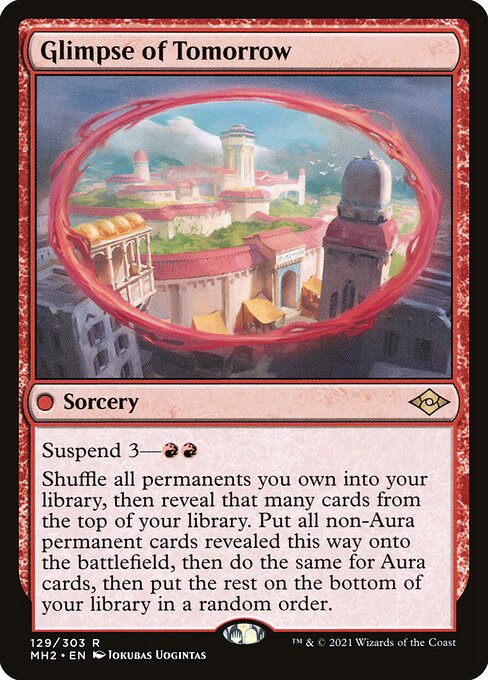
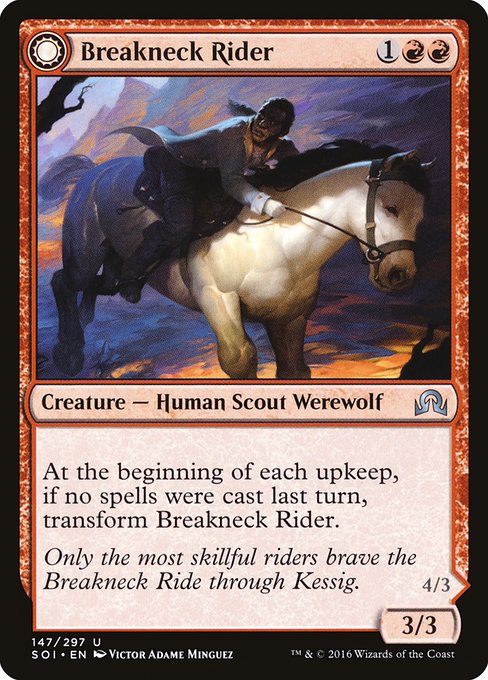
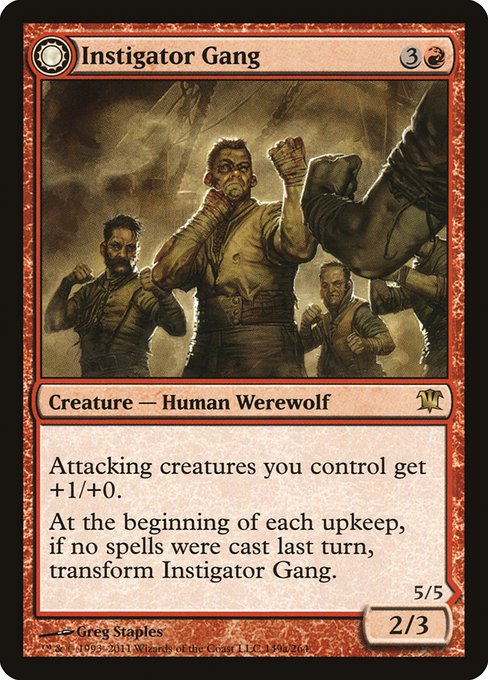
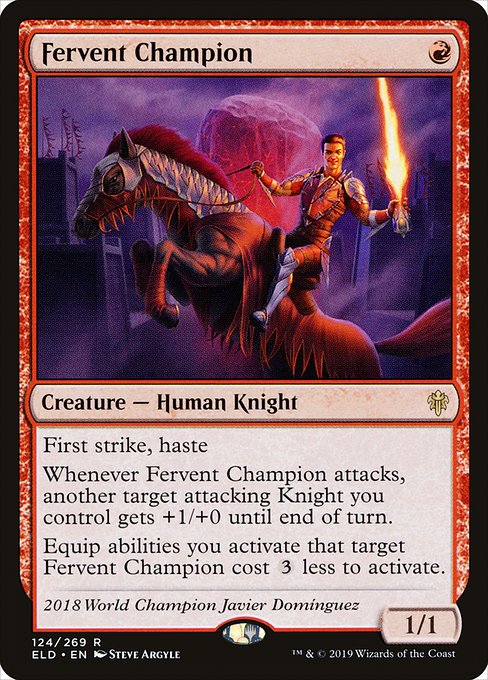
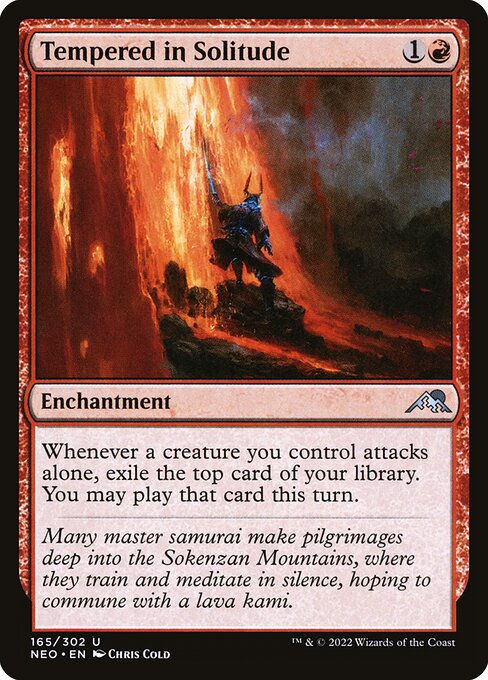
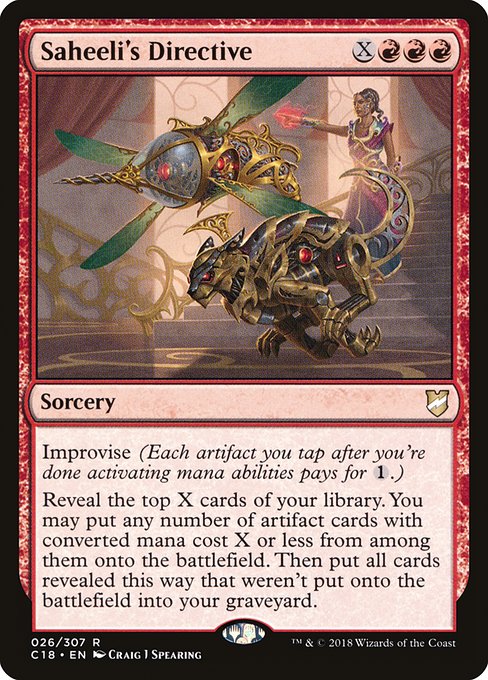
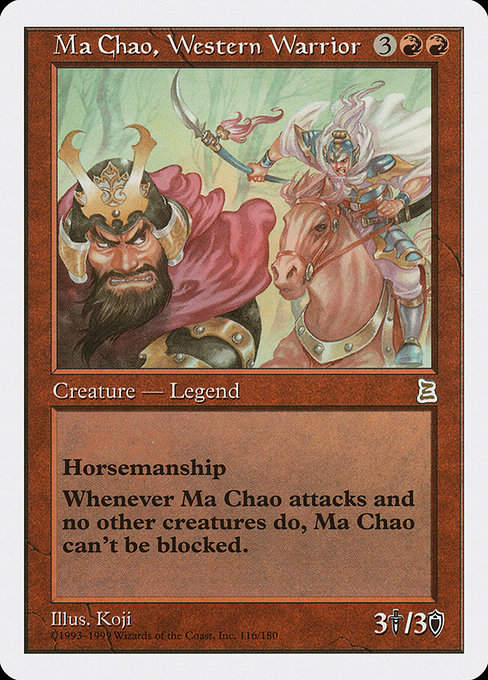
Gilgamesh wants a deck that piles armor and magic onto one creature and attacks with it. It also suits a deck that puts expensive cards onto the battlefield without paying for them.
Mana cost
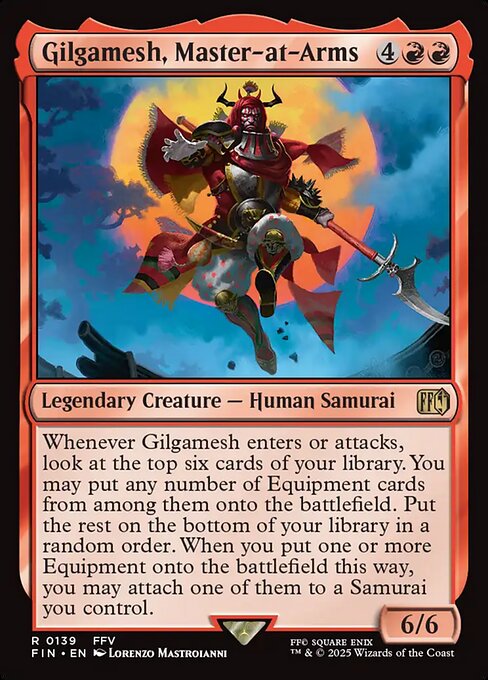
Red ()
Power / toughness6 / 6
RarityRare
Whenever Gilgamesh enters or attacks, look at the top six cards of your library. You may put any number of Equipment cards from among them onto the battlefield. Put the rest on the bottom of your library in a random order. When you put one or more Equipment onto the battlefield this way, you may attach one of them to a Samurai you control.
Picked for what they do in Gilgamesh's deck. When two cards do the same job, the one with the lower comes first. All of them fit Gilgamesh's color identity.Mana ValueThe total amount of mana a card costs, all added up. A card costing two generic and one green has a mana value of three. Wizards renamed this from "converted mana cost" in 2021, so older cards and articles may still use the old name.Open the full glossary
explain how Gilgamesh works in tricky situations. They come from Wizards of the Coast, the company that makes Magic.RulingThe official answer to how a card works in a tricky situation. Most rulings are written by Wizards of the Coast, the company that makes Magic, and a few are notes from Scryfall, the card database Magic players use. A ruling explains a card. It does not change what the card says.Open the full glossary
Wizards of the Coast6 Jun 2025
If you put an Equipment with job select onto the battlefield with Gilgamesh's ability, the job select ability and the reflexive triggered ability will both trigger, and you'll choose the order in which those abilities go on the stack. For example, if you put the reflexive triggered ability on the top of the stack with the job select ability below it, the reflexive triggered ability will resolve first and allow you to attach the Equipment to a Samurai you control. After that, regardless of whether or not you chose to attach the Equipment to a Samurai you control, the job select ability will create a Hero token and attach the Equipment to the Hero token.
Wizards of the Coast6 Jun 2025
You can't use the reflexive triggered ability to try to attach an Equipment to a creature if that Equipment can't legally be attached to that creature.
Color identityEvery color of mana symbol on a card, in its cost and in its rules text. Your commander's color identity sets the limit for your whole deck: every other card has to fit inside it. A deck led by a green and white commander cannot play a card with any blue in its color identity.Open the full glossaryRPlayers write colors as letters: R for red.VoltronVoltron decks load one creature, usually the commander, with Equipment and Auras until it can win by attacking on its own. In Commander, a player dealt 21 or more combat damage by the same commander over the game loses, so one huge commander can knock a player out.Open the Voltron pageVoltron CommanderA legendary creature that can carry the whole game plan by itself. It protects itself, grows with what is attached to it, or rewards attacking alone. The deck piles Auras and Equipment onto it and wins with commander damage, since 21 or more combat damage from one commander knocks a player out. Named for the toy robot built from smaller pieces. Zurgo Helmsmasher, Uril, the Miststalker, Sigarda, Host of HeronsOpen the Voltron Commander pageVoltron SupportHelps you stack Auras and Equipment onto a single creature: cheaper attaching, protection, or extra ways to suit it up. Hammer of Nazahn, Sigarda's AidOpen the Voltron Support pageCheat into PlayCheat into Play decks put huge creatures and other expensive cards onto the battlefield without paying their mana costs. A card says "put a creature card from your hand onto the battlefield", and an eight-mana dragon is attacking on turn three. Sneak Attack Kaalia of the Vast Natural OrderOpen the Cheat into Play pageCheat into PlayPuts permanents straight onto the battlefield without casting them, from your deck, your hand or your graveyard. Skipping the cast skips the mana cost, and counterspells with it. Genesis Wave, Coiling OracleOpen the Cheat into Play pageCard SelectionImproves what you draw rather than how much: you look at the top few cards of your library and decide what stays on top. Ponder lets you rearrange the top three, Serum Visions lets you scry, and Consider lets you surveil. It makes your draws more reliable without giving you extra cards.Open the Card Selection pageAttack TriggerTriggers when a creature attacks, so the reward comes from declaring the attack. You get it even if the creature is blocked. Sword of the Animist, Adeline, Resplendent CatharOpen the Attack Trigger pageTypal/KindredTypal decks are built around one creature type, like Elves, Dragons or Zombies, with cards that make that type stronger. The type is printed after the dash on the card's type line, and the strategy is also called kindred or tribal.Open the Typal/Kindred pageTypal PayoffRewards you for playing lots of one kind of creature. That includes "lords" that make every other Goblin or Merfolk you control bigger, and cards that ask you to choose a creature type and then pay you off for it. A creature type is the word on the middle line of the card, like Goblin, Elf or Zombie.Open the Typal Payoff pageLibrary ManipulationCards that let you look at, rearrange or play from the top of your deck, so you control what you draw next.Open the Library Manipulation page
Send Us Feedback
What works, what's confusing, what you wish the site did. We read every one.
Not signed in? That is fine. We only keep what you write.
Optional. We only use it to reply to you.
Can we use Google Analytics cookies?
They show us which pages help people. No ads.
Privacy Policy


 Open the full glossary