- Commander Nexus
- Commanders
- Killian, Decisive Mentor
Command zone
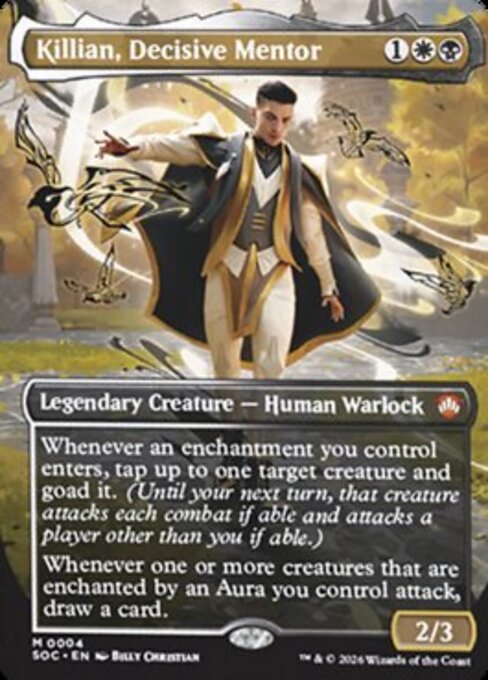
Killian, Decisive Mentor
Legendary Creature — Human Warlock
Killian wants a deck that plays lots of enchantments and draws a card for each one. It leads the ready-made Silverquill Influence deck (2026).
- Mana cost


- White, Black ()
- Power / toughness2 / 3
- RarityMythic
Whenever an enchantment you control enters, tap up to one target creature and goad it. (Until your next turn, that creature attacks each combat if able and attacks a player other than you if able.)
Whenever one or more creatures that are enchanted by an Aura you control attack, draw a card.
Build a deck with Killian Find it in the app
- Archetypes
- Themes
-
- Humans
- Warlocks
Cards That Fit Killian, Decisive Mentor
Picked for what they do in Killian's deck. When two cards do the same job, the one with the lower comes first. All of them fit Killian's color identity.Mana ValueThe total amount of mana a card costs, all added up. A card costing two generic and one green has a mana value of three. Wizards renamed this from "converted mana cost" in 2021, so older cards and articles may still use the old name. Open the full glossary
plan6


plan6


plan6

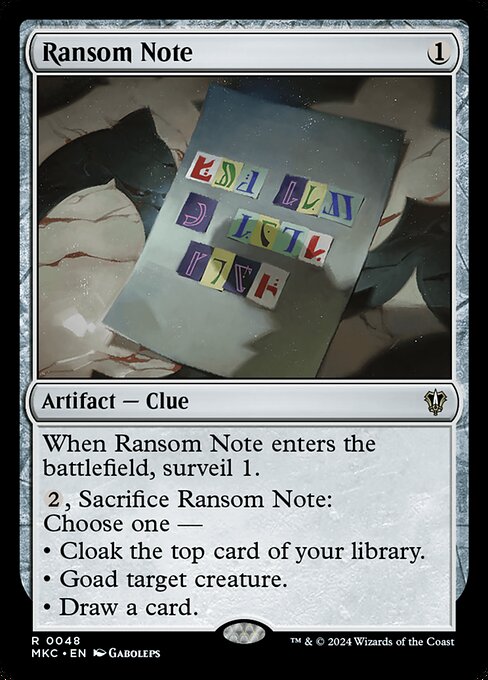
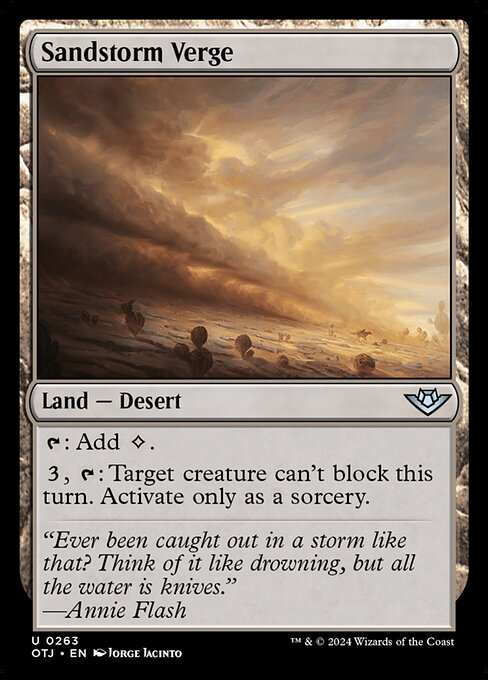


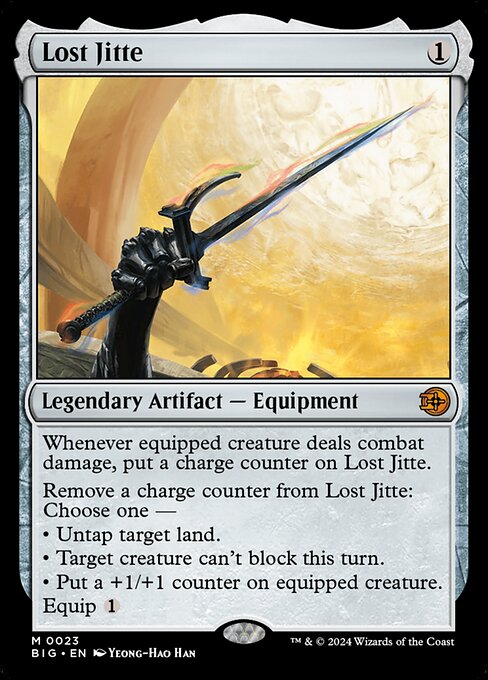
Decks Led by Killian, Decisive Mentor
Killian leads a ready-made deck.PreconShort for preconstructed deck: a ready-to-play deck sold in a box by Wizards of the Coast. A Commander precon comes with its commander and all 100 cards, so you can play it straight away and change cards later.Open the full glossary
-
 Silverquill InfluenceOfficial precon
All 100 Cards
Commander · 1
Creatures · 25
- 1×Ajani's Chosen
- 1×Archon of Sun's Grace
- 1×Armored Skyhunter
- 1×Breena, the Demagogue
- 1×Combat Calligrapher
- 1×Defacing Duskmage // Vandal's Edit
- 1×Doomwake Giant
- 1×Eidolon of Countless Battles
- 1×Eiganjo Dynastorian // Replenish
- 1×Eriette of the Charmed Apple
- 1×Firemane Commando
- 1×Hateful Eidolon
- 1×Herald of Amity
- 1×Keen Duelist
- 1×Killian, Ink Duelist
- 1×Kor Spiritdancer
- 1×Mangara, the Diplomat
- 1×Nils, Discipline Enforcer
- 1×Pearl-Ear, Imperial Advisor
- 1×Scriv, the Obligator
- 1×Shadrix Silverquill
- 1×Sram, Senior Edificer
- 1×Starfield Mystic
- 1×Tomik, Wielder of Law
- 1×Transcendent Envoy
Instants · 4
Sorceries · 3
Artifacts · 4
Enchantments · 26
- 1×Angelic Destiny
- 1×Animate Dead
- 1×Chains of Custody
- 1×Changing Loyalty
- 1×Coercive Impetus
- 1×Darksteel Mutation
- 1×Eldrazi Conscription
- 1×Fallen Ideal
- 1×Flickering Ward
- 1×Forum Filibuster
- 1×Ghostly Prison
- 1×Ghoulish Impetus
- 1×Gift of Immortality
- 1×Intermediate Chirography
- 1×Land Tax
- 1×Martial Impetus
- 1×Parasitic Impetus
- 1×Raffine's Guidance
- 1×Redemption Arc
- 1×Sage's Reverie
- 1×Screams from Within
- 1×Sentinel's Eyes
- 1×Sheltered by Ghosts
- 1×Shielded by Faith
- 1×Songbirds' Blessing
- 1×Spirit Mantle
Lands · 37
- 1×Arcane Lighthouse
- 1×Bojuka Bog
- 1×Caves of Koilos
- 1×Command Tower
- 1×Desolate Mire
- 1×Eclipsed Steppe
- 1×Exotic Orchard
- 1×Fabled Passage
- 1×Fetid Heath
- 1×Forum of Amity
- 1×Isolated Chapel
- 1×Path of Ancestry
- 8×Plains
- 1×Shineshadow Snarl
- 1×Silverquill Campus
- 1×Study Hall
- 1×Sunlit Marsh
- 8×Swamp
- 1×Temple of Silence
- 1×Terramorphic Expanse
- 1×Turbulent Moor
- 1×Umbral Expanse
- 1×War Room
Rulings for Killian, Decisive Mentor
explain how Killian works in tricky situations. They come from Wizards of the Coast, the company that makes Magic.RulingThe official answer to how a card works in a tricky situation. Most rulings are written by Wizards of the Coast, the company that makes Magic, and a few are notes from Scryfall, the card database Magic players use. A ruling explains a card. It does not change what the card says.Open the full glossary
Attacking with a goaded creature doesn't cause it to stop being goaded. If there is an additional combat phase that turn, or if another player gains control of it before it stops being goaded, it must attack again if able.
Being goaded isn't an ability the creature has. Once it's been goaded, it must attack as detailed above even if it loses all abilities.
If a creature you control has been goaded by multiple opponents, it must attack one of your opponents that hasn't goaded it, as that fulfills the maximum number of goad requirements. If a creature you control has been goaded by each of your opponents, the creature must attack an opponent (rather than a planeswalker or battle), but you choose which opponent it attacks.
If the creature doesn't meet any of the above exceptions and can attack, it must attack a player other than the controller of the spell or ability that goaded it if able. If the creature can't attack any of those players but could otherwise attack, it must attack a planeswalker an opponent controls, a battle an opponent protects, or the player that goaded it.
If, during a player's declare attackers step, a creature that player controls that's been goaded is tapped, is affected by a spell or ability that says it can't attack, or hasn't been under that player's control continuously since the turn began (and doesn't have haste), then it doesn't attack. If there's a cost associated with having a creature attack a player, its controller isn't forced to pay that cost, so it doesn't have to attack that player.
5 rulings, all written by Wizards of the Coast. Read the originals on Gatherer ↗
Similar Commanders
Commanders that share the most with Killian, and what they share.