


From Cute to Brute
From Cute to Brute is a .Secret LairSpecial Magic cards sold by Wizards of the Coast on their own online store for a short time. Most are cards that already exist, given new art by a well-known artist or another franchise. A Secret Lair copy of a card plays exactly like any other copy of it.Open the full glossaryDropOne Secret Lair product: a few cards sold together, usually 4 to 6, often with a foil and a non-foil version. Wizards calls each one a drop.Open the full glossary
Released 98 cards
Sign in to see which of these cards you already own. Sign in We could not check your collection just now. Try again in a minute.
We do not sell anything and we are not paid for this. Secret Lair is sold by Wizards of the Coast.
Every card in this drop
Click a card for the card itself, the decks that play it and, once you are signed in, whether you already own a copy. To mark every card here at once, press Show what I own. A foil is the shiny version of a card. Secret Lair sells it as a separate Foil Edition of the same drop.
-
Esika, God of the Tree // The Prismatic Bridge
- Card Kingdom foil $39.99
- Cardmarket foil €27.30
- Mana Pool foil $40.72
- TCGplayer foil $41.95
-
Archangel Avacyn // Avacyn, the Purifier
- Cardmarket foil €11.59
- Mana Pool foil $20.84
- TCGplayer foil $26.08
-
Bloodline Keeper // Lord of Lineage
- Card Kingdom foil $23.99
- Cardmarket foil €17.31
- Mana Pool foil $19.49
- TCGplayer foil $20.25
-

Nicol Bolas, the Ravager // Nicol Bolas, the Arisen
- Cardmarket foil €38.19
- Mana Pool foil $59.50
- TCGplayer foil $60.16
-

Westvale Abbey // Ormendahl, Profane Prince
- Card Kingdom foil $21.99
- Cardmarket foil €14.02
- Mana Pool foil $18.92
- TCGplayer foil $21.06
-

- Card Kingdom $0.35
- Cardmarket €0.27
- Mana Pool $0.17
- TCGplayer $0.32
-

- Card Kingdom $2.99
- Cardmarket €1.94
- Mana Pool $2.26
- TCGplayer $3.65
-

- Card Kingdom $0.39
- Cardmarket €0.33
- Mana Pool $0.15
- TCGplayer $0.21
-

- Card Kingdom $0.59
- Cardmarket €0.41
- Mana Pool $0.31
- TCGplayer $0.27
-

- Card Kingdom $0.59
- Cardmarket €0.48
- Mana Pool $0.25
- TCGplayer $0.40
-

Arlinn Kord // Arlinn, Embraced by the Moon
- Card Kingdom $1.79
- Cardmarket €1.02
- Mana Pool $1.00
- TCGplayer $1.17
-

Voldaren Pariah // Abolisher of Bloodlines
- Card Kingdom $0.79
- Cardmarket €0.54
- Mana Pool $0.52
- TCGplayer $1.14
-

- Card Kingdom $17.99
- Cardmarket €17.95
- Mana Pool $13.81
- TCGplayer $14.20
-

- Card Kingdom $10.99
- Cardmarket €8.03
- Mana Pool $6.38
- TCGplayer $8.42
-

- Card Kingdom $1.79
- Cardmarket €0.93
- Mana Pool $1.18
- TCGplayer $1.88
-

- Card Kingdom $0.79
- Cardmarket €0.38
- Mana Pool $0.30
- TCGplayer $1.12
-
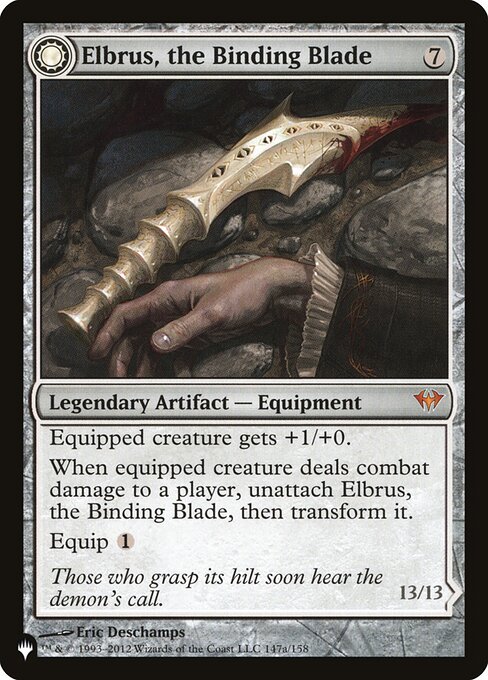
Elbrus, the Binding Blade // Withengar Unbound
- Card Kingdom $4.99
- Cardmarket €2.98
- Mana Pool $4.62
- TCGplayer $4.98
-

- Card Kingdom $2.99
- Cardmarket €1.84
- Mana Pool $2.18
- TCGplayer $2.85
-

- Card Kingdom $3.99
- Cardmarket €1.42
- Mana Pool $1.86
- TCGplayer $1.93
-

- Card Kingdom $0.49
- Cardmarket €0.38
- Mana Pool $0.20
- TCGplayer $0.30
-

- Card Kingdom $0.49
- Cardmarket €0.49
- Mana Pool $0.15
- TCGplayer $0.29
-

- Card Kingdom $0.35
- Cardmarket €0.40
- Mana Pool $0.20
- TCGplayer $0.27
-

- Card Kingdom $0.49
- Cardmarket €0.13
- Mana Pool $0.52
- TCGplayer $3.37
-

- Card Kingdom $21.99
- Cardmarket €13.34
- Mana Pool $15.04
- TCGplayer $15.72
-

- Card Kingdom $3.99
- Cardmarket €2.01
- Mana Pool $2.17
- TCGplayer $2.09
-

Chandra, Fire of Kaladesh // Chandra, Roaring Flame
- Card Kingdom $2.49
- Cardmarket €1.38
- Mana Pool $1.51
- TCGplayer $1.96
-

Jace, Vryn's Prodigy // Jace, Telepath Unbound
- Cardmarket €5.33
- Mana Pool $7.07
- TCGplayer $7.33
-

Kytheon, Hero of Akros // Gideon, Battle-Forged
- Card Kingdom $2.79
- Cardmarket €1.77
- Mana Pool $1.03
- TCGplayer $1.91
-

Liliana, Heretical Healer // Liliana, Defiant Necromancer
- Card Kingdom $7.99
- Cardmarket €3.27
- Mana Pool $6.53
- TCGplayer $6.60
-

Nissa, Vastwood Seer // Nissa, Sage Animist
- Card Kingdom $4.49
- Cardmarket €3.75
- Mana Pool $3.64
- TCGplayer $4.13
-

- Card Kingdom $0.59
- Cardmarket €0.54
- Mana Pool $0.15
- TCGplayer $0.25
-

Azor's Gateway // Sanctum of the Sun
- Card Kingdom $2.99
- Cardmarket €2.28
- Mana Pool $2.44
- TCGplayer $2.61
-

Hadana's Climb // Winged Temple of Orazca
- Card Kingdom $3.49
- Cardmarket €2.62
- Mana Pool $1.80
- TCGplayer $3.18
-

Journey to Eternity // Atzal, Cave of Eternity
- Card Kingdom $5.99
- Cardmarket €5.99
- Mana Pool $4.91
- TCGplayer $5.56
-

- Card Kingdom $6.99
- Cardmarket €7.32
- Mana Pool $5.58
- TCGplayer $5.90
-

Legion's Landing // Adanto, the First Fort
- Card Kingdom $5.49
- Cardmarket €3.81
- Mana Pool $2.55
- TCGplayer $3.62
-

Search for Azcanta // Azcanta, the Sunken Ruin
- Card Kingdom $3.99
- Cardmarket €2.91
- Mana Pool $1.79
- TCGplayer $2.13
-

Thaumatic Compass // Spires of Orazca
- Card Kingdom $2.49
- Cardmarket €1.70
- Mana Pool $1.07
- TCGplayer $1.82
-

- Card Kingdom $1.29
- Cardmarket €0.61
- Mana Pool $0.52
- TCGplayer $0.57
-

- Card Kingdom $2.29
- Cardmarket €1.13
- Mana Pool $1.21
- TCGplayer $1.67
-

- Card Kingdom $1.49
- Cardmarket €1.29
- Mana Pool $0.83
- TCGplayer $1.10
-

Garruk Relentless // Garruk, the Veil-Cursed
- Card Kingdom $1.29
- Cardmarket €0.71
- Mana Pool $0.83
- TCGplayer $0.82
-

- Card Kingdom $0.59
- Cardmarket €0.37
- Mana Pool $0.29
- TCGplayer $0.35
-

Brightclimb Pathway // Grimclimb Pathway
- Card Kingdom $5.99
- Cardmarket €4.76
- Mana Pool $4.41
- TCGplayer $4.52
-

Branchloft Pathway // Boulderloft Pathway
- Card Kingdom $5.99
- Cardmarket €3.60
- Mana Pool $3.50
- TCGplayer $3.72
-

Cragcrown Pathway // Timbercrown Pathway
- Card Kingdom $3.99
- Cardmarket €3.49
- Mana Pool $3.01
- TCGplayer $3.46
-

Needleverge Pathway // Pillarverge Pathway
- Card Kingdom $7.49
- Cardmarket €4.69
- Mana Pool $4.41
- TCGplayer $4.75
-

Riverglide Pathway // Lavaglide Pathway
- Card Kingdom $6.99
- Cardmarket €5.32
- Mana Pool $5.75
- TCGplayer $5.66
-

Valakut Awakening // Valakut Stoneforge
- Card Kingdom $32.99
- Cardmarket €14.85
- Mana Pool $15.93
- TCGplayer $16.59
-

Bala Ged Recovery // Bala Ged Sanctuary
- Card Kingdom $10.99
- Cardmarket €6.94
- Mana Pool $6.98
- TCGplayer $7.85
-

Clearwater Pathway // Murkwater Pathway
- Card Kingdom $7.49
- Cardmarket €5.83
- Mana Pool $4.86
- TCGplayer $4.92
-

Hagra Mauling // Hagra Broodpit
- Card Kingdom $2.79
- Cardmarket €1.83
- Mana Pool $1.58
- TCGplayer $1.77
-

Ondu Inversion // Ondu Skyruins
- Cardmarket €1.28
- Mana Pool $1.09
- TCGplayer $1.13
-

- Card Kingdom $0.49
- Cardmarket €0.20
- Mana Pool $0.20
- TCGplayer $0.20
-

- Card Kingdom $7.49
- Cardmarket €3.32
- Mana Pool $10.55
- TCGplayer $5.44
-

- Card Kingdom $0.35
- Cardmarket €0.22
- Mana Pool $0.15
- TCGplayer $0.21
-

- Card Kingdom $0.35
- Cardmarket €0.20
- Mana Pool $0.15
- TCGplayer $0.24
-

Blightstep Pathway // Searstep Pathway
- Card Kingdom $8.99
- Cardmarket €5.79
- Mana Pool $5.68
- TCGplayer $5.66
-

Hengegate Pathway // Mistgate Pathway
- Card Kingdom $7.49
- Cardmarket €5.75
- Mana Pool $5.05
- TCGplayer $4.91
-

Barkchannel Pathway // Tidechannel Pathway
- Card Kingdom $8.99
- Cardmarket €5.75
- Mana Pool $4.86
- TCGplayer $4.87
-

Darkbore Pathway // Slitherbore Pathway
- Card Kingdom $9.49
- Cardmarket €7.08
- Mana Pool $6.18
- TCGplayer $6.42
-

Valki, God of Lies // Tibalt, Cosmic Impostor
- Card Kingdom $3.99
- Cardmarket €3.90
- Mana Pool $3.42
- TCGplayer $3.66
-

- Card Kingdom $0.99
- Cardmarket €0.93
- Mana Pool $0.15
- TCGplayer $0.32
-

- Card Kingdom $0.79
- Cardmarket €0.87
- Mana Pool $0.56
- TCGplayer $0.58
-

Kolvori, God of Kinship // The Ringhart Crest
- Card Kingdom $0.49
- Cardmarket €0.35
- Mana Pool $0.15
- TCGplayer $0.32
-

Cosima, God of the Voyage // The Omenkeel
- Card Kingdom $1.29
- Cardmarket €1.04
- Mana Pool $0.77
- TCGplayer $0.79
-

Plargg, Dean of Chaos // Augusta, Dean of Order
- Card Kingdom $0.49
- Cardmarket €0.24
- Mana Pool $0.20
- TCGplayer $0.38
-

Valentin, Dean of the Vein // Lisette, Dean of the Root
- Card Kingdom $1.49
- Cardmarket €0.75
- Mana Pool $0.93
- TCGplayer $1.42
-

Shaile, Dean of Radiance // Embrose, Dean of Shadow
- Card Kingdom $0.49
- Cardmarket €0.40
- Mana Pool $0.33
- TCGplayer $0.34
-

Mila, Crafty Companion // Lukka, Wayward Bonder
- Card Kingdom $3.49
- Cardmarket €1.86
- TCGplayer $1.31
-
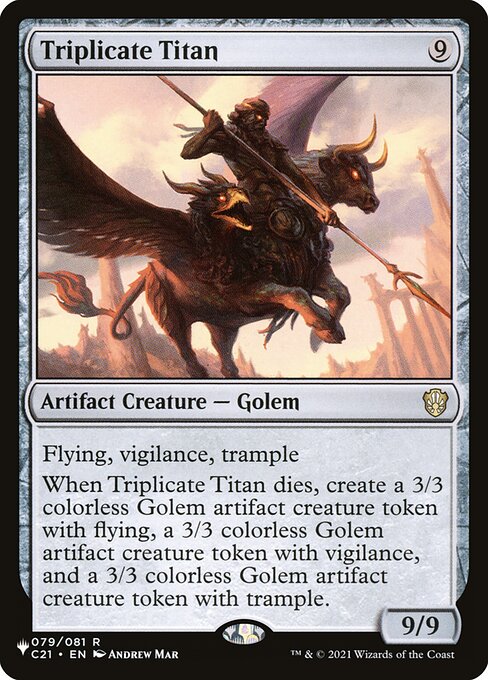
- Card Kingdom $1.49
- Cardmarket €1.18
- Mana Pool $0.63
- TCGplayer $1.09
-

- Card Kingdom $0.79
- Cardmarket €0.49
- Mana Pool $0.52
- TCGplayer $0.50
-

- Card Kingdom $0.49
- Cardmarket €0.53
- Mana Pool $0.18
- TCGplayer $0.37
-

Arlinn, the Pack's Hope // Arlinn, the Moon's Fury
- Card Kingdom $3.49
- Cardmarket €2.89
- Mana Pool $1.87
- TCGplayer $3.32
-

Ludevic, Necrogenius // Olag, Ludevic's Hubris
- Card Kingdom $0.49
- Cardmarket €0.26
- Mana Pool $0.15
- TCGplayer $0.20
-

Dennick, Pious Apprentice // Dennick, Pious Apparition
- Card Kingdom $0.59
- Cardmarket €0.28
- Mana Pool $0.31
- TCGplayer $0.32
-

Tovolar's Huntmaster // Tovolar's Packleader
- Card Kingdom $0.69
- Cardmarket €0.31
- Mana Pool $0.27
- TCGplayer $0.37
-

- Card Kingdom $0.99
- Cardmarket €0.57
- Mana Pool $0.41
- TCGplayer $0.31
-

- Card Kingdom $0.35
- Cardmarket €0.23
- Mana Pool $0.17
- TCGplayer $0.29
-

- Card Kingdom $0.39
- Cardmarket €0.60
- Mana Pool $0.15
- TCGplayer $0.30
-

- Card Kingdom $3.99
- Cardmarket €2.55
- Mana Pool $2.34
- TCGplayer $2.68
-

- Card Kingdom $1.79
- Cardmarket €1.41
- Mana Pool $1.27
- TCGplayer $1.58
-

- Card Kingdom $1.99
- Cardmarket €0.83
- Mana Pool $1.71
- TCGplayer $1.82
-

- Card Kingdom $0.59
- Cardmarket €0.51
- Mana Pool $0.34
- TCGplayer $0.38
-

- Card Kingdom $0.35
- Cardmarket €0.29
- Mana Pool $0.20
- TCGplayer $0.36
-

- Card Kingdom $1.49
- Cardmarket €0.51
- Mana Pool $0.55
- TCGplayer $0.56
-

- Card Kingdom $0.49
- Cardmarket €0.23
- Mana Pool $0.15
- TCGplayer $0.30
-

- Card Kingdom $0.49
- Cardmarket €0.35
- Mana Pool $0.19
- TCGplayer $0.37
-

- Card Kingdom $0.49
- Cardmarket €0.33
- Mana Pool $0.38
- TCGplayer $0.54
-

- Card Kingdom $0.49
- Cardmarket €0.48
- Mana Pool $0.36
- TCGplayer $0.34
-

- Card Kingdom $0.49
- Cardmarket €0.32
- Mana Pool $0.36
- TCGplayer $0.60
-

- Card Kingdom $0.49
- Cardmarket €0.33
- Mana Pool $0.36
- TCGplayer $0.59
-

- Card Kingdom $0.49
- Cardmarket €0.29
- Mana Pool $0.36
- TCGplayer $0.89
-

- Card Kingdom $0.49
- Cardmarket €0.21
- Mana Pool $0.26
- TCGplayer $0.40
-

- Card Kingdom $0.49
- Cardmarket €0.32
- Mana Pool $0.35
- TCGplayer $0.39
-

- Card Kingdom $0.79
- Cardmarket €0.59
- Mana Pool $0.31
- TCGplayer $0.37
-

- Card Kingdom $1.29
- Cardmarket €0.49
- Mana Pool $0.23
- TCGplayer $0.36
-

- Card Kingdom $0.49
- Cardmarket €0.25
- Mana Pool $0.15
- TCGplayer $0.34
-

- Card Kingdom $0.49
- Cardmarket €0.24
- Mana Pool $0.16
- TCGplayer $0.23
-

- Card Kingdom $9.49
- Cardmarket €6.60
- Mana Pool $6.48
- TCGplayer $7.33
Full Decklist: From Cute to Brute
From Cute to Brute is a ready-made 100-card Commander deck. These are all of its cards, with the commander that leads it first.
Commander
Mainboard
- 1× Altar of the Pantheon
- 1× Arcane Signet
- 1× Archangel Avacyn // Avacyn, the Purifier
- 1× Arlinn Kord // Arlinn, Embraced by the Moon
- 1× Arlinn, the Pack's Hope // Arlinn, the Moon's Fury
- 1× Azor's Gateway // Sanctum of the Sun
- 1× Bala Ged Recovery // Bala Ged Sanctuary
- 1× Barkchannel Pathway // Tidechannel Pathway
- 1× Beast Whisperer
- 1× Beast Within
- 1× Blightstep Pathway // Searstep Pathway
- 1× Bloodline Keeper // Lord of Lineage
- 1× Branchloft Pathway // Boulderloft Pathway
- 1× Brightclimb Pathway // Grimclimb Pathway
- 1× Butcher of Malakir
- 1× Chandra, Fire of Kaladesh // Chandra, Roaring Flame
- 1× Chromatic Lantern
- 1× Clearwater Pathway // Murkwater Pathway
- 1× Command Tower
- 1× Commander's Sphere
- 1× Cosima, God of the Voyage // The Omenkeel
- 1× Cragcrown Pathway // Timbercrown Pathway
- 1× Darkbore Pathway // Slitherbore Pathway
- 1× Dennick, Pious Apprentice // Dennick, Pious Apparition
- 1× Diluvian Primordial
- 1× Dowsing Dagger // Lost Vale
- 1× Elbrus, the Binding Blade // Withengar Unbound
- 1× Emmara, Soul of the Accord
- 1× Evolving Wilds
- 1× Exotic Orchard
- 1× Farseek
- 1× Fellwar Stone
- 1× Forest
- 1× Forest
- 1× Forest
- 1× Frontier Bivouac
- 1× Garruk Relentless // Garruk, the Veil-Cursed
- 1× Guardian Project
- 1× Hadana's Climb // Winged Temple of Orazca
- 1× Hagra Mauling // Hagra Broodpit
- 1× Harmonize
- 1× Hengegate Pathway // Mistgate Pathway
- 1× Island
- 1× Jace, Vryn's Prodigy // Jace, Telepath Unbound
- 1× Jolrael, Mwonvuli Recluse
- 1× Journey to Eternity // Atzal, Cave of Eternity
- 1× Jungle Shrine
- 1× Kinnan, Bonder Prodigy
- 1× Kolvori, God of Kinship // The Ringhart Crest
- 1× Kytheon, Hero of Akros // Gideon, Battle-Forged
- 1× Legion's Landing // Adanto, the First Fort
- 1× Liliana, Heretical Healer // Liliana, Defiant Necromancer
- 1× Ludevic, Necrogenius // Olag, Ludevic's Hubris
- 1× Meteor Golem
- 1× Mila, Crafty Companion // Lukka, Wayward Bonder
- 1× Mountain
- 1× Needleverge Pathway // Pillarverge Pathway
- 1× Nicol Bolas, the Ravager // Nicol Bolas, the Arisen
- 1× Nissa, Vastwood Seer // Nissa, Sage Animist
- 1× Ondu Inversion // Ondu Skyruins
- 1× Opulent Palace
- 1× Path of Ancestry
- 1× Plains
- 1× Plargg, Dean of Chaos // Augusta, Dean of Order
- 1× Pongify
- 1× Putrefy
- 1× Rhys the Redeemed
- 1× Rimewood Falls
- 1× Riverglide Pathway // Lavaglide Pathway
- 1× Sandsteppe Citadel
- 1× Sandstone Oracle
- 1× Savage Lands
- 1× Scattered Groves
- 1× Search for Azcanta // Azcanta, the Sunken Ruin
- 1× Seaside Citadel
- 1× Shaile, Dean of Radiance // Embrose, Dean of Shadow
- 1× Sheltered Thicket
- 1× Sisay, Weatherlight Captain
- 1× Sol Ring
- 1× Sphinx of the Second Sun
- 1× Swamp
- 1× Terramorphic Expanse
- 1× Thaumatic Compass // Spires of Orazca
- 1× The World Tree
- 1× Time Wipe
- 1× Tireless Provisioner
- 1× Tovolar's Huntmaster // Tovolar's Packleader
- 1× Treasure Map // Treasure Cove
- 1× Triplicate Titan
- 1× Urza's Ruinous Blast
- 1× Utter End
- 1× Valakut Awakening // Valakut Stoneforge
- 1× Valentin, Dean of the Vein // Lisette, Dean of the Root
- 1× Valki, God of Lies // Tibalt, Cosmic Impostor
- 1× Vivid Grove
- 1× Voldaren Pariah // Abolisher of Bloodlines
- 1× Westvale Abbey // Ormendahl, Profane Prince
- 1× Woodland Chasm
- 1× Zetalpa, Primal Dawn
Rulings for the Cards on This Page
explain how a card works in tricky situations. They come from Wizards of the Coast, the company that makes Magic.RulingThe official answer to how a card works in a tricky situation. Most rulings are written by Wizards of the Coast, the company that makes Magic, and a few are notes from Scryfall, the card database Magic players use. A ruling explains a card. It does not change what the card says.Open the full glossary
466 rulings for 76 cards
Altar of the Pantheon
If Altar of the Pantheon loses its abilities, you'll still get a bonus to your devotion. This is because its effect is applied before any effect that would make it lose its abilities.
You gain just 1 life, no matter how many Gods, Demigods, and/or legendary enchantments you control beyond the first.
Your devotion to two colors (for example, your devotion to red and green) is increased by one, not by two or three.
The last ability of Altar of the Pantheon is a mana ability. It doesn't use the stack and can't be responded to. You'll immediately add mana and gain 1 life, if applicable.
Arcane Signet
If your commander is a card that has no colors in its color identity, Arcane Signet's ability produces no mana. It doesn't produce {C}.
If you have two commanders, the ability adds one mana of any color in their combined color identities.
If you don't have a commander, Arcane Signet's ability produces no mana.
Archangel Avacyn // Avacyn, the Purifier
Archangel Avacyn's delayed triggered ability triggers at the beginning of the next upkeep regardless of whose turn it is.
Archangel Avacyn's delayed triggered ability won't cause it to transform back into Archangel Avacyn if it has already transformed into Avacyn, the Purifier, perhaps because several creatures died in one turn.
Arlinn Kord // Arlinn, Embraced by the Moon
When the ability that transforms Arlinn Kord into Arlinn, Embraced by the Moon (or vice versa) resolves, the number of loyalty counters on her doesn’t change.
Arlinn, Embraced by the Moon is not a Werewolf card; that is, she doesn’t have the creature type Werewolf. Spells and abilities that refer to Werewolf cards or Werewolves don’t apply to Arlinn.
The set of creatures affected by the first ability of Arlinn, Embraced by the Moon is determined as the ability resolves. Creatures you begin to control later in the turn won’t get +1/+1 or gain trample.
You can control two of this permanent, one front-face up and the other back-face up, at the same time.
The emblem grants the activated ability to your creatures. Use the power of the creature as the activated ability resolves to determine how much damage is dealt. If the creature isn’t on the battlefield at that time, use its power as it last existed on the battlefield. Note that this works differently than the fight keyword action, which requires both creatures to be on the battlefield for any damage to be dealt.
You can’t activate a loyalty ability of Arlinn Kord and later that turn after she transforms activate a loyalty ability of Arlinn, Embraced by the Moon (or vice versa).
You can control two of this permanent, one front-face up and the other back-face up, at the same time.
Arlinn, the Pack's Hope // Arlinn, the Moon's Fury
If it's neither day nor night, and a creature with daybound and a creature with nightbound somehow appear on the battlefield at the same time, it becomes day. The creature with nightbound will transform.
If you cast a spell with daybound during night, that spell will be front face up (that is, daybound face up) on the stack. However, it will enter the battlefield with its back face up (that is, with its nightbound face up). It won't enter with its daybound face up and then transform.
Before a player untaps their permanents during the untap step, the game checks to see if the day/night designation should change.
If it is day, and the active player of the previous turn cast no spells during their turn, it becomes night.
Permanents with daybound and nightbound can't transform via any means other than their daybound and nightbound abilities. Notably, older cards such as Moonmist that instruct a player to transform permanents don't affect permanents with daybound or nightbound.
If it is night, permanents with daybound that enter the battlefield without being cast will enter with their nightbound faces up.
Double-faced permanents with daybound transform to their nightbound faces as it becomes night. Similarly, double-faced permanents with nightbound transform to their daybound faces as it becomes day. This happens immediately and is not a state-based action. It happens any time it becomes day or night, not just during the untap step.
If it is night, and the active player of the previous turn cast two or more spells during their turn, it becomes day.
Day and night are designations that the game itself can have. The game starts as neither. Once the game becomes day (or less commonly, night), the game will be exactly one of them—day or night—going back and forth for the rest of the game.
Azor's Gateway // Sanctum of the Sun
The mana value of a split card, such as a card with aftermath from the Amonkhet block, is based on the combined mana cost of its two halves. A split card doesn't have two mana values.
If an object has no mana cost, its mana value is 0. A mana value of 0 can still help unlock Azor's Gateway.
The ability of Sanctum of the Sun is a mana ability. It doesn't use the stack and can't be responded to.
The cards you exile from your hand are exiled face up.
If a card in exile has {X} in its mana cost, X is considered to be 0.
Bala Ged Recovery // Bala Ged Sanctuary
There is a single triangle icon in the top left corner of the front face. There is a double triangle icon in the top left corner of the back face.
If an effect allows you to play a specific modal double-faced card, you may cast it as a spell or play it as a land, as determined by which face you choose to play. If an effect allows you to cast (rather than “play”) a specific modal double-faced card, you can’t play it as a land.
To determine whether it is legal to play a modal double-faced card, consider only the characteristics of the face you’re playing and ignore the other face’s characteristics.
If an effect allows you to play a land or cast a spell from among a group of cards, you may play or cast a modal double-faced card with any face that fits the criteria of that effect.
In the Commander variant, a double-faced card’s color identity is determined by the mana costs and mana symbols in the rules text of both faces combined. If either face has a color indicator or basic land type, those are also considered.
A modal double-faced card can’t be transformed or be put onto the battlefield transformed. Ignore any instruction to transform a modal double-faced card or to put one onto the battlefield transformed.
If an effect puts a double-faced card onto the battlefield, it enters with its front face up. If that front face can’t be put onto the battlefield, it doesn’t enter the battlefield.
If an effect instructs a player to choose a card name, the name of either face may be chosen. If that effect or a linked ability refers to a spell with the chosen name being cast and/or a land with the chosen name being played, it considers only the chosen name, not the other face’s name.
The mana value of a modal double-faced card is based on the characteristics of the face that’s being considered. On the stack and battlefield, consider whichever face is up. In all other zones, consider only the front face. This is different than how the mana value of a transforming double-faced card is determined.
Barkchannel Pathway // Tidechannel Pathway
There is a single triangle icon in the top left corner of the front face. There is a double triangle icon in the top left corner of the back face.
If an effect allows you to play a specific modal double-faced card, you may cast it as a spell or play it as a land, as determined by which face you choose to play. If an effect allows you to cast (rather than “play”) a specific modal double-faced card, you can’t play it as a land.
To determine whether it is legal to play a modal double-faced card, consider only the characteristics of the face you’re playing and ignore the other face’s characteristics.
If an effect allows you to play a land or cast a spell from among a group of cards, you may play or cast a modal double-faced card with any face that fits the criteria of that effect.
In the Commander variant, a double-faced card’s color identity is determined by the mana costs and mana symbols in the rules text of both faces combined. If either face has a color indicator or basic land type, those are also considered.
A modal double-faced card can’t be transformed or be put onto the battlefield transformed. Ignore any instruction to transform a modal double-faced card or to put one onto the battlefield transformed.
If an effect puts a double-faced card onto the battlefield, it enters with its front face up. If that front face can’t be put onto the battlefield, it doesn’t enter the battlefield.
If an effect instructs a player to choose a card name, the name of either face may be chosen. If that effect or a linked ability refers to a spell with the chosen name being cast and/or a land with the chosen name being played, it considers only the chosen name, not the other face’s name.
The mana value of a modal double-faced card is based on the characteristics of the face that’s being considered. On the stack and battlefield, consider whichever face is up. In all other zones, consider only the front face. This is different than how the mana value of a transforming double-faced card is determined.
Beast Whisperer
An ability that triggers when a player casts a spell resolves before the spell that caused it to trigger. It resolves even if that spell is countered.
Beast Within
If the target permanent is an illegal target by the time Beast Within tries to resolve, the spell won't resolve. No player creates a Beast token. If the target is legal but not destroyed (most likely because it has indestructible), its controller does create a Beast token.
Blightstep Pathway // Searstep Pathway
There is a single triangle icon in the top left corner of the front face. There is a double triangle icon in the top left corner of the back face.
If an effect allows you to play a specific modal double-faced card, you may cast it as a spell or play it as a land, as determined by which face you choose to play. If an effect allows you to cast (rather than “play”) a specific modal double-faced card, you can’t play it as a land.
To determine whether it is legal to play a modal double-faced card, consider only the characteristics of the face you’re playing and ignore the other face’s characteristics.
If an effect allows you to play a land or cast a spell from among a group of cards, you may play or cast a modal double-faced card with any face that fits the criteria of that effect.
In the Commander variant, a double-faced card’s color identity is determined by the mana costs and mana symbols in the rules text of both faces combined. If either face has a color indicator or basic land type, those are also considered.
A modal double-faced card can’t be transformed or be put onto the battlefield transformed. Ignore any instruction to transform a modal double-faced card or to put one onto the battlefield transformed.
If an effect puts a double-faced card onto the battlefield, it enters with its front face up. If that front face can’t be put onto the battlefield, it doesn’t enter the battlefield.
If an effect instructs a player to choose a card name, the name of either face may be chosen. If that effect or a linked ability refers to a spell with the chosen name being cast and/or a land with the chosen name being played, it considers only the chosen name, not the other face’s name.
The mana value of a modal double-faced card is based on the characteristics of the face that’s being considered. On the stack and battlefield, consider whichever face is up. In all other zones, consider only the front face. This is different than how the mana value of a transforming double-faced card is determined.
Bloodline Keeper // Lord of Lineage
For more information on double-faced cards, see the Shadows over Innistrad mechanics article (http://magic.wizards.com/en/articles/archive/feature/shadows-over-innistrad-mechanics).
Branchloft Pathway // Boulderloft Pathway
In the Commander variant, a double-faced card's color identity is determined by the mana costs and mana symbols in the rules text of both faces combined. If either face has a color indicator or basic land type, those are also considered.
There is a single triangle icon in the top left corner of the front face. There is a double triangle icon in the top left corner of the back face.
If an effect allows you to play a land or cast a spell from among a group of cards, you may play or cast a modal double-faced card with any face that fits the criteria of that effect.
The mana value of a modal double-faced card is based on the characteristics of the face that's being considered. On the stack and battlefield, consider whichever face is up. In all other zones, consider only the front face. This is different than how the mana value of a transforming double-faced card is determined.
A modal double-faced card can't be transformed or be put onto the battlefield transformed. Ignore any instruction to transform a modal double-faced card or to put one onto the battlefield transformed.
If an effect puts a double-faced card onto the battlefield, it enters with its front face up. If that front face can't be put onto the battlefield, it doesn't enter the battlefield.
To determine whether it is legal to play a modal double-faced card, consider only the characteristics of the face you're playing and ignore the other face's characteristics.
If an effect instructs a player to choose a card name, the name of either face may be chosen. If that effect or a linked ability refers to a spell with the chosen name being cast and/or a land with the chosen name being played, it considers only the chosen name, not the other face's name.
If an effect allows you to play a specific modal double-faced card, you may cast it as a spell or play it as a land, as determined by which face you choose to play. If an effect allows you to cast (rather than "play") a specific modal double-faced card, you can't play it as a land.
Brightclimb Pathway // Grimclimb Pathway
There is a single triangle icon in the top left corner of the front face. There is a double triangle icon in the top left corner of the back face.
If an effect allows you to play a specific modal double-faced card, you may cast it as a spell or play it as a land, as determined by which face you choose to play. If an effect allows you to cast (rather than “play”) a specific modal double-faced card, you can’t play it as a land.
To determine whether it is legal to play a modal double-faced card, consider only the characteristics of the face you’re playing and ignore the other face’s characteristics.
If an effect allows you to play a land or cast a spell from among a group of cards, you may play or cast a modal double-faced card with any face that fits the criteria of that effect.
In the Commander variant, a double-faced card’s color identity is determined by the mana costs and mana symbols in the rules text of both faces combined. If either face has a color indicator or basic land type, those are also considered.
A modal double-faced card can’t be transformed or be put onto the battlefield transformed. Ignore any instruction to transform a modal double-faced card or to put one onto the battlefield transformed.
If an effect puts a double-faced card onto the battlefield, it enters with its front face up. If that front face can’t be put onto the battlefield, it doesn’t enter the battlefield.
If an effect instructs a player to choose a card name, the name of either face may be chosen. If that effect or a linked ability refers to a spell with the chosen name being cast and/or a land with the chosen name being played, it considers only the chosen name, not the other face’s name.
The mana value of a modal double-faced card is based on the characteristics of the face that’s being considered. On the stack and battlefield, consider whichever face is up. In all other zones, consider only the front face. This is different than how the mana value of a transforming double-faced card is determined.
Butcher of Malakir
If you control more than one Butcher of Malakir and a creature you control is put into a graveyard, each of those Butchers' abilities will trigger. Each opponent will sacrifice a creature each time one of those abilities resolves.
When the triggered ability resolves, first the player whose turn it is (if that player is an opponent) chooses which creature they will sacrifice, then each other opponent in turn order does the same, then all chosen creatures are sacrificed at the same time.
If multiple creatures you control (possibly including Butcher of Malakir itself) are put into their owners' graveyards at the same time, Butcher of Malakir's triggered ability will trigger that many times.
If you and an opponent each control a Butcher of Malakir and a creature is put into a graveyard, a chain reaction happens. First the ability of one player's Butcher will trigger, causing each opponent to sacrifice a creature. That sacrifice causes the ability of the other player's Butcher to trigger, and so on.
Chandra, Fire of Kaladesh // Chandra, Roaring Flame
You can control two of this permanent, one front-face up and the other back-face up, at the same time.
The back face of a double-faced card doesn't have a mana cost. A double-faced permanent with its back face up has a mana value equal to the mana value of its front face. Each back face has a color indicator that defines its color.
If a double-faced card is manifested, it will be put onto the battlefield face down (this is also true if it's put onto the battlefield face down some other way). Note that "face down" is not synonymous with "with its back face up." A manifested double-faced card is a 2/2 creature with no name, mana cost, creature types, or abilities. While face down, it can't transform. If the front face of a manifested double-faced card is a creature card, you can turn it face up by paying its mana cost. If you do, its front face will be up. A double-faced card on the battlefield can't be turned face down.
A Magic Origins planeswalker that enters the battlefield because of the ability of its front face will enter with loyalty counters as normal.
Chandra, Fire of Kaladesh's activated ability will count any damage Chandra has dealt during the turn to any permanent or player, including combat damage.
Each face of a double-faced card has its own set of characteristics: name, types, subtypes, power and toughness, loyalty, abilities, and so on. While a double-faced card is on the battlefield, consider only the characteristics of the face that's currently up. The other set of characteristics is ignored. While a double-faced card isn't on the battlefield, consider only the characteristics of its front face.
The emblem created by Chandra, Roaring Flame is colorless. The damage it deals is from a colorless source.
The back face of a double-faced card (in the case of Magic Origins, the planeswalker face) can't be cast.
The mana value of a double-faced card not on the battlefield is the mana value of its front face.
Only players actually dealt damage by the third ability of Chandra, Roaring Flame will get an emblem. If all of that damage to a player is prevented, that player won't get an emblem. If any of that damage is redirected to Chandra's controller, that player will get an emblem.
In some rare cases, a spell or ability may cause one of these five cards to transform while it's a creature (front face up) on the battlefield. If this happens, the resulting planeswalker won't have any loyalty counters on it and will subsequently be put into its owner's graveyard.
Each player who gets Chandra's emblem is the owner of that emblem. In multiplayer games, that emblem will remain in the game as long as its owner does, even if Chandra's owner leaves the game.
The last sentence of Chandra, Fire of Kaladesh's activated ability isn't a separate ability. The check happens only as that activated ability resolves. You must activate the ability in order to exile Chandra and return her to the battlefield transformed, even if Chandra has already dealt 3 or more damage during the turn.
A double-faced card enters the battlefield with its front face up by default, unless a spell or ability instructs you to put it onto the battlefield transformed, in which case it enters with its back face up.
You can activate one of the planeswalker's loyalty abilities the turn it enters the battlefield. However, you may do so only during one of your main phases when the stack is empty. For example, if the planeswalker enters the battlefield during combat, there will be an opportunity for your opponent to remove it before you can activate one of its abilities.
Chromatic Lantern
Lands you control won't lose any other abilities they had. They also won't gain or lose any land types.
Clearwater Pathway // Murkwater Pathway
There is a single triangle icon in the top left corner of the front face. There is a double triangle icon in the top left corner of the back face.
If an effect allows you to play a specific modal double-faced card, you may cast it as a spell or play it as a land, as determined by which face you choose to play. If an effect allows you to cast (rather than “play”) a specific modal double-faced card, you can’t play it as a land.
To determine whether it is legal to play a modal double-faced card, consider only the characteristics of the face you’re playing and ignore the other face’s characteristics.
If an effect allows you to play a land or cast a spell from among a group of cards, you may play or cast a modal double-faced card with any face that fits the criteria of that effect.
In the Commander variant, a double-faced card’s color identity is determined by the mana costs and mana symbols in the rules text of both faces combined. If either face has a color indicator or basic land type, those are also considered.
A modal double-faced card can’t be transformed or be put onto the battlefield transformed. Ignore any instruction to transform a modal double-faced card or to put one onto the battlefield transformed.
If an effect puts a double-faced card onto the battlefield, it enters with its front face up. If that front face can’t be put onto the battlefield, it doesn’t enter the battlefield.
If an effect instructs a player to choose a card name, the name of either face may be chosen. If that effect or a linked ability refers to a spell with the chosen name being cast and/or a land with the chosen name being played, it considers only the chosen name, not the other face’s name.
The mana value of a modal double-faced card is based on the characteristics of the face that’s being considered. On the stack and battlefield, consider whichever face is up. In all other zones, consider only the front face. This is different than how the mana value of a transforming double-faced card is determined.
Command Tower
If you have two commanders, the ability adds one mana of any color in their combined color identities.
If you don't have a commander, Command Tower's ability produces no mana.
If your commander is a card that has no colors in its color identity, Command Tower's ability produces no mana. It doesn't produce {C}.
Commander's Sphere
If you have two commanders, the ability adds one mana of any color in their combined color identities.
If your commander is a card that has no colors in its color identity, Commander's Sphere's first ability produces no mana. It doesn't produce {C}.
If you don't have a commander, Commander's Sphere's first ability produces no mana.
Cosima, God of the Voyage // The Omenkeel
In the Commander variant, a double-faced card's color identity is determined by the mana costs and mana symbols in the rules text of both faces combined. If either face has a color indicator or basic land type, those are also considered.
The Omenkeel doesn't allow you to play additional lands during your turn, nor does it allow you to play lands at times you normally can't. In most cases, you'll be able to play only one land from among cards exiled with The Omenkeel during each of your turns.
There is a single triangle icon in the top left corner of the front face. There is a double triangle icon in the top left corner of the back face.
You can play lands from among cards exiled with The Omenkeel for as long as they remain exiled, even if The Omenkeel leaves the battlefield or another player gains control of it.
If an effect allows you to play a land or cast a spell from among a group of cards, you may play or cast a modal double-faced card with any face that fits the criteria of that effect.
If a land enters the battlefield under your control while Cosima is exiled and has the added triggered ability, that ability will trigger. As the ability tries to resolve, it will check to see if Cosima is still in exile. If Cosima has left exile before the ability tries to resolve, it won't resolve and none of its effects will happen. This is true even if Cosima returns to exile before that ability tries to resolve.
The mana value of a modal double-faced card is based on the characteristics of the face that's being considered. On the stack and battlefield, consider whichever face is up. In all other zones, consider only the front face. This is different than how the mana value of a transforming double-faced card is determined.
A modal double-faced card can't be transformed or be put onto the battlefield transformed. Ignore any instruction to transform a modal double-faced card or to put one onto the battlefield transformed.
If an effect puts a double-faced card onto the battlefield, it enters with its front face up. If that front face can't be put onto the battlefield, it doesn't enter the battlefield.
Cosima's ability triggers only if Cosima is on the battlefield at the beginning of your upkeep, and you may exile Cosima only if it is still on the battlefield as the ability resolves.
While the triggered ability Cosima gains is resolving, if you don't put a voyage counter on Cosima, you'll immediately return it to the battlefield and draw cards equal to the number of voyage counters Cosima had on it in exile. Players can't respond to this choice, and no player may take actions during this process.
To determine whether it is legal to play a modal double-faced card, consider only the characteristics of the face you're playing and ignore the other face's characteristics.
If an effect instructs a player to choose a card name, the name of either face may be chosen. If that effect or a linked ability refers to a spell with the chosen name being cast and/or a land with the chosen name being played, it considers only the chosen name, not the other face's name.
You may choose to return Cosima to the battlefield even if it doesn't have any voyage counters on it. If you do, it won't enter with any +1/+1 counters on it and you won't draw any cards.
If an effect allows you to play a specific modal double-faced card, you may cast it as a spell or play it as a land, as determined by which face you choose to play. If an effect allows you to cast (rather than "play") a specific modal double-faced card, you can't play it as a land.
Cragcrown Pathway // Timbercrown Pathway
In the Commander variant, a double-faced card's color identity is determined by the mana costs and mana symbols in the rules text of both faces combined. If either face has a color indicator or basic land type, those are also considered.
There is a single triangle icon in the top left corner of the front face. There is a double triangle icon in the top left corner of the back face.
If an effect allows you to play a land or cast a spell from among a group of cards, you may play or cast a modal double-faced card with any face that fits the criteria of that effect.
The mana value of a modal double-faced card is based on the characteristics of the face that's being considered. On the stack and battlefield, consider whichever face is up. In all other zones, consider only the front face. This is different than how the mana value of a transforming double-faced card is determined.
A modal double-faced card can't be transformed or be put onto the battlefield transformed. Ignore any instruction to transform a modal double-faced card or to put one onto the battlefield transformed.
If an effect puts a double-faced card onto the battlefield, it enters with its front face up. If that front face can't be put onto the battlefield, it doesn't enter the battlefield.
To determine whether it is legal to play a modal double-faced card, consider only the characteristics of the face you're playing and ignore the other face's characteristics.
If an effect instructs a player to choose a card name, the name of either face may be chosen. If that effect or a linked ability refers to a spell with the chosen name being cast and/or a land with the chosen name being played, it considers only the chosen name, not the other face's name.
If an effect allows you to play a specific modal double-faced card, you may cast it as a spell or play it as a land, as determined by which face you choose to play. If an effect allows you to cast (rather than "play") a specific modal double-faced card, you can't play it as a land.
Darkbore Pathway // Slitherbore Pathway
In the Commander variant, a double-faced card's color identity is determined by the mana costs and mana symbols in the rules text of both faces combined. If either face has a color indicator or basic land type, those are also considered.
There is a single triangle icon in the top left corner of the front face. There is a double triangle icon in the top left corner of the back face.
If an effect allows you to play a land or cast a spell from among a group of cards, you may play or cast a modal double-faced card with any face that fits the criteria of that effect.
The mana value of a modal double-faced card is based on the characteristics of the face that's being considered. On the stack and battlefield, consider whichever face is up. In all other zones, consider only the front face. This is different than how the mana value of a transforming double-faced card is determined.
A modal double-faced card can't be transformed or be put onto the battlefield transformed. Ignore any instruction to transform a modal double-faced card or to put one onto the battlefield transformed.
If an effect puts a double-faced card onto the battlefield, it enters with its front face up. If that front face can't be put onto the battlefield, it doesn't enter the battlefield.
To determine whether it is legal to play a modal double-faced card, consider only the characteristics of the face you're playing and ignore the other face's characteristics.
If an effect instructs a player to choose a card name, the name of either face may be chosen. If that effect or a linked ability refers to a spell with the chosen name being cast and/or a land with the chosen name being played, it considers only the chosen name, not the other face's name.
If an effect allows you to play a specific modal double-faced card, you may cast it as a spell or play it as a land, as determined by which face you choose to play. If an effect allows you to cast (rather than "play") a specific modal double-faced card, you can't play it as a land.
Dennick, Pious Apprentice // Dennick, Pious Apparition
To determine the total cost of a spell, start with the mana cost or alternative cost (such as a disturb cost) you're paying, add any cost increases, then apply any cost reductions. The mana value of a spell cast using disturb is determined by the mana cost on the front face of the card, no matter what the total cost to cast the spell was. (This is a special rule that applies only to nonmodal double faced-cards, including ones with disturb.)
If you copy a permanent spell cast this way (perhaps with a card like Double Major), the copy becomes a token that's a copy of the card's back face, even though it isn't itself a double-faced card.
"Disturb [cost]" means "You may cast this card transformed from your graveyard by paying [cost] rather than its mana cost."
The second ability of Dennick, Pious Apprentice affects only spells and abilities that actually target cards in graveyards. Spells and abilities that affect cards in graveyards without targeting them may still affect them, move them to other zones, and so on.
A spell cast this way enters the battlefield with its back face up.
The back face of each card with disturb has an ability that instructs its controller to exile if it would be put into a graveyard from anywhere. This includes going to the graveyard from the stack, so if the spell is countered after you cast it using the disturb ability, it will be put into exile.
Disturb is found only on the front faces of some double-faced cards.
When you cast a spell using a card's disturb ability, the card is put onto the stack with its back face up. The resulting spell has all the characteristics of that face.
Diluvian Primordial
If you can't cast one of the target instant or sorcery cards, perhaps because there are no legal targets available, or if you choose not to cast one, it will remain in its owner's graveyard.
You cast the cards one at a time, choosing modes, targets and so on. The last card you cast will be the first one to resolve.
If you cast an instant or sorcery spell with cipher this way, you may exile the card encoded on a creature you control. If you can't, or if you choose not to, the card will end up exiled but not encoded on a creature.
If an instant or sorcery card you cast this way goes to a zone other than exile or a graveyard, perhaps because one of its abilities says to put it into its owner's hand, it won't be exiled. This is true even if the card would be put into a graveyard later that turn.
When casting an instant or sorcery card this way, ignore timing restrictions based on the card's type. Other timing restrictions, such as "Cast [this card] only during combat," must be followed.
If you cast a card "without paying its mana cost," you can't pay alternative costs such as overload costs. You can pay additional costs such as kicker costs. If the card has mandatory additional costs, you must pay those.
If an instant or sorcery card you cast this way is countered, it will still be exiled.
You can choose a number of targets up to the number of opponents you have, one target per opponent.
If a card has {X} in its mana cost, you must choose 0 as its value.
Dowsing Dagger // Lost Vale
Attacking with an equipped creature doesn't cause Equipment attached to it to become tapped. Dowsing Dagger will normally be untapped when it transforms into Lost Vale.
Elbrus, the Binding Blade // Withengar Unbound
In a multiplayer game using the limited range of influence option (such as a Grand Melee game), if a spell or ability says that you win the game, it instead causes all of your opponents within your range of influence to lose the game. This is another way by which Withengar's ability can trigger.
Elbrus will transform even if you are unable to unattach it (most likely because the equipped creature died).
Withengar's triggered ability will trigger no matter how a player loses the game: due to a state-based action (as a result of having a life total of 0 or less, trying to draw a card from an empty library, or having ten poison counters), a spell or ability that says that player loses the game, a concession, or a game loss awarded by a judge.
The "legend rule" checks only for permanents with exactly the same name. Elbrus, the Binding Blade and Withengar Unbound can be on the battlefield at the same time without either going to its owner's graveyard.
Emmara, Soul of the Accord
For the ability to trigger, Emmara has to actually change from untapped to tapped. If an effect attempts to tap Emmara, but it was already tapped at the time, this ability won't trigger.
Emmara's ability is a triggered ability, not an activated ability. It doesn't allow you to tap Emmara whenever you want; rather, you need some other way of tapping it, such as by attacking.
Esika, God of the Tree // The Prismatic Bridge
In the Commander variant, a double-faced card's color identity is determined by the mana costs and mana symbols in the rules text of both faces combined. If either face has a color indicator or basic land type, those are also considered.
There is a single triangle icon in the top left corner of the front face. There is a double triangle icon in the top left corner of the back face.
If an effect allows you to play a land or cast a spell from among a group of cards, you may play or cast a modal double-faced card with any face that fits the criteria of that effect.
If you reveal a double-faced card whose front face is a creature or planeswalker, you'll put it onto the battlefield with its front face up.
The mana value of a modal double-faced card is based on the characteristics of the face that's being considered. On the stack and battlefield, consider whichever face is up. In all other zones, consider only the front face. This is different than how the mana value of a transforming double-faced card is determined.
A modal double-faced card can't be transformed or be put onto the battlefield transformed. Ignore any instruction to transform a modal double-faced card or to put one onto the battlefield transformed.
If an effect puts a double-faced card onto the battlefield, it enters with its front face up. If that front face can't be put onto the battlefield, it doesn't enter the battlefield.
While resolving the triggered ability of The Prismatic Bridge, if there are no creature or planeswalker cards in your library, you'll simply reveal your entire library, randomize it, and continue playing.
To determine whether it is legal to play a modal double-faced card, consider only the characteristics of the face you're playing and ignore the other face's characteristics.
If a creature loses vigilance after it attacks (perhaps because Esika leaves the battlefield), that creature will continue attacking. It won't become tapped.
If an effect instructs a player to choose a card name, the name of either face may be chosen. If that effect or a linked ability refers to a spell with the chosen name being cast and/or a land with the chosen name being played, it considers only the chosen name, not the other face's name.
If an effect allows you to play a specific modal double-faced card, you may cast it as a spell or play it as a land, as determined by which face you choose to play. If an effect allows you to cast (rather than "play") a specific modal double-faced card, you can't play it as a land.
Exotic Orchard
Exotic Orchard checks the effects of all mana-producing abilities of lands your opponents control, but it doesn't check their costs. For example, Vivid Crag has the ability "{T}, Remove a charge counter from Vivid Crag: Add one mana of any color." If an opponent controls Vivid Crag and you control Exotic Orchard, you can tap Exotic Orchard for any color of mana. It doesn't matter whether Vivid Crag has a charge counter on it, and it doesn't matter whether it's untapped.
Lands that produce mana based only on what other lands "could produce" won't help each other unless some other land allows one of them to actually produce some type of mana. For example, if you control an Exotic Orchard and your opponent controls an Exotic Orchard and a Reflecting Pool, none of those lands would produce mana if their mana abilities were activated. On the other hand, if you control a Forest and an Exotic Orchard, and your opponent controls an Exotic Orchard and a Reflecting Pool, then each of those lands can be tapped to produce {G}. Your opponent's Exotic Orchard can produce {G} because you control a Forest. Your Exotic Orchard and your opponent's Reflecting Pool can each produce {G} because your opponent's Exotic Orchard can produce {G}.
When determining what colors of mana your opponents' lands could produce, Exotic Orchard takes into account any applicable replacement effects that would apply to those lands' mana abilities (such as Contamination's effect, for example). If there are more than one, consider them in any possible order.
The colors of mana are white, blue, black, red, and green. Exotic Orchard can't be tapped for colorless mana, even if a land an opponent controls could produce colorless mana.
Exotic Orchard doesn't care about any restrictions or riders your opponents' lands (such as Ancient Ziggurat or Hall of the Bandit Lord) put on the mana they produce. It just cares about colors of mana.
Farseek
Farseek can find any land with any of the listed land types, including nonbasic ones, even if that land is a Forest in addition to one or more of those types.
Fellwar Stone
Fellwar Stone doesn't care about any restrictions or riders your opponents' lands (such as Ancient Ziggurat or Hall of the Bandit Lord) put on the mana they produce. It just cares about colors of mana.
Fellwar Stone checks the effects of all mana-producing abilities of lands your opponents control, but it doesn't check their costs. For example, Vivid Crag has the ability "{T}, Remove a charge counter from Vivid Crag: Add one mana of any color." If an opponent controls Vivid Crag and you control Fellwar Stone, you can tap Fellwar Stone for any color of mana. It doesn't matter whether Vivid Crag has a charge counter on it, and it doesn't matter whether it's untapped.
The colors of mana are white, blue, black, red, and green. Fellwar Stone can't be tapped for colorless mana, even if a land an opponent controls could produce colorless mana.
When determining what colors of mana your opponents' lands could produce, take into account any applicable replacement effects that would apply to those lands' mana abilities (such as Contamination's effect, for example). If there is more than one, consider them in any possible order.
The ability can be activated if the opponent has no lands that produce mana, but the effect will not be able to generate any mana.
It only produces one mana even if the land can produce more than one.
This works even if the opponent's lands are tapped. It only checks what kinds of mana can be produced, not if the abilities that produce them are usable right now.
Garruk Relentless // Garruk, the Veil-Cursed
Garruk Relentless's first ability is a state-triggered ability. It triggers once Garruk has two or fewer loyalty counters on him and it can't retrigger while that ability is on the stack.
You don't add or remove loyalty counters from Garruk Relentless when he transforms into Garruk, the Veil-Cursed. In most cases, he'll have one or two loyalty counters on him.
Only creatures you control when the third ability of Garruk, the Veil-Cursed resolves will receive the bonus. Creatures that enter or that you gain control of later in the turn won't be affected.
The second ability of Garruk, the Veil-Cursed doesn't target a creature. However, when that ability resolves, you must sacrifice a creature if you control one.
You can't activate a loyalty ability of Garruk Relentless and later that turn after he transforms activate a loyalty ability of Garruk, the Veil-Cursed.
The number of creature cards in your graveyard is counted when the third ability of Garruk, the Veil-Cursed resolves. Once the ability resolves, the bonus doesn't change if that number changes later in the turn.
Guardian Project
A face-down creature has no name, so it can't share a name with anything. This includes other creatures with no name.
If the entering creature leaves the battlefield and returns while Guardian Project's ability is on the stack, that same card will be a new creature you control that shares a name with the creature that was on the battlefield, so you won't draw a card. However, Guardian Project's ability may trigger for the new creature and you may draw a card as that ability resolves.
Whether the entering creature shares a name with a creature you control or a creature card in your graveyard is checked both as that creature enters and as Guardian Project's ability resolves. If the entering creature isn't the first of its name as it enters, the ability doesn't trigger at all; if its name is shared as the ability resolves, you don't draw a card.
If the entering creature is put into your graveyard while Guardian Project's ability is on the stack, that same card will be a creature card in your graveyard that shares a name with the creature that was on the battlefield, so you won't draw a card.
Hadana's Climb // Winged Temple of Orazca
For more information on double-faced cards, see the Ixalan mechanics article (http://magic.wizards.com/en/articles/archive/feature/ixalan-mechanics).
Hagra Mauling // Hagra Broodpit
In the Commander variant, a double-faced card's color identity is determined by the mana costs and mana symbols in the rules text of both faces combined. If either face has a color indicator or basic land type, those are also considered.
There is a single triangle icon in the top left corner of the front face. There is a double triangle icon in the top left corner of the back face.
The opponent who controls no basic lands doesn't have to be the controller of the target creature for Hagra Mauling's cost to be reduced.
If an effect allows you to play a land or cast a spell from among a group of cards, you may play or cast a modal double-faced card with any face that fits the criteria of that effect.
The mana value of a modal double-faced card is based on the characteristics of the face that's being considered. On the stack and battlefield, consider whichever face is up. In all other zones, consider only the front face. This is different than how the mana value of a transforming double-faced card is determined.
A modal double-faced card can't be transformed or be put onto the battlefield transformed. Ignore any instruction to transform a modal double-faced card or to put one onto the battlefield transformed.
If an effect puts a double-faced card onto the battlefield, it enters with its front face up. If that front face can't be put onto the battlefield, it doesn't enter the battlefield.
Hagra Mauling's first ability reduces the cost by only {1}, even if you have two opponents with no basic lands. It reduces the cost even if some opponents control basic lands, as long as one controls no basic lands.
To determine whether it is legal to play a modal double-faced card, consider only the characteristics of the face you're playing and ignore the other face's characteristics.
If an effect instructs a player to choose a card name, the name of either face may be chosen. If that effect or a linked ability refers to a spell with the chosen name being cast and/or a land with the chosen name being played, it considers only the chosen name, not the other face's name.
If an effect allows you to play a specific modal double-faced card, you may cast it as a spell or play it as a land, as determined by which face you choose to play. If an effect allows you to cast (rather than "play") a specific modal double-faced card, you can't play it as a land.
Hengegate Pathway // Mistgate Pathway
In the Commander variant, a double-faced card's color identity is determined by the mana costs and mana symbols in the rules text of both faces combined. If either face has a color indicator or basic land type, those are also considered.
There is a single triangle icon in the top left corner of the front face. There is a double triangle icon in the top left corner of the back face.
If an effect allows you to play a land or cast a spell from among a group of cards, you may play or cast a modal double-faced card with any face that fits the criteria of that effect.
The mana value of a modal double-faced card is based on the characteristics of the face that's being considered. On the stack and battlefield, consider whichever face is up. In all other zones, consider only the front face. This is different than how the mana value of a transforming double-faced card is determined.
A modal double-faced card can't be transformed or be put onto the battlefield transformed. Ignore any instruction to transform a modal double-faced card or to put one onto the battlefield transformed.
If an effect puts a double-faced card onto the battlefield, it enters with its front face up. If that front face can't be put onto the battlefield, it doesn't enter the battlefield.
To determine whether it is legal to play a modal double-faced card, consider only the characteristics of the face you're playing and ignore the other face's characteristics.
If an effect instructs a player to choose a card name, the name of either face may be chosen. If that effect or a linked ability refers to a spell with the chosen name being cast and/or a land with the chosen name being played, it considers only the chosen name, not the other face's name.
If an effect allows you to play a specific modal double-faced card, you may cast it as a spell or play it as a land, as determined by which face you choose to play. If an effect allows you to cast (rather than "play") a specific modal double-faced card, you can't play it as a land.
Jace, Vryn's Prodigy // Jace, Telepath Unbound
You can control two of this permanent, one front-face up and the other back-face up, at the same time.
The back face of a double-faced card doesn't have a mana cost. A double-faced permanent with its back face up has a mana value equal to the mana value of its front face. Each back face has a color indicator that defines its color.
If you discard a card with madness while resolving the ability of Jace, Vryn's Prodigy, you'll need to already have five other cards in your graveyard to satisfy that ability's condition. You can't choose to put the card directly into your graveyard to satisfy it.
If a double-faced card is manifested, it will be put onto the battlefield face down (this is also true if it's put onto the battlefield face down some other way). Note that "face down" is not synonymous with "with its back face up." A manifested double-faced card is a 2/2 creature with no name, mana cost, creature types, or abilities. While face down, it can't transform. If the front face of a manifested double-faced card is a creature card, you can turn it face up by paying its mana cost. If you do, its front face will be up. A double-faced card on the battlefield can't be turned face down.
A Magic Origins planeswalker that enters the battlefield because of the ability of its front face will enter with loyalty counters as normal.
Each face of a double-faced card has its own set of characteristics: name, types, subtypes, power and toughness, loyalty, abilities, and so on. While a double-faced card is on the battlefield, consider only the characteristics of the face that's currently up. The other set of characteristics is ignored. While a double-faced card isn't on the battlefield, consider only the characteristics of its front face.
If you don't cast the card that turn, nothing happens. It remains in your graveyard.
If you activate the second ability of Jace, Telepath Unbound, you must follow the timing rules for the card's types. For example, if you target a sorcery card, you may cast it during your main phase when the stack is empty. You pay all the spell's costs.
The activated ability of Jace, Vryn's Prodigy checks to see if there are five or more cards in your graveyard after you discard a card. Putting a fifth card into your graveyard at other times won't cause Jace to be exiled, nor will Jace entering the battlefield while there are five or more cards in your graveyard.
The back face of a double-faced card (in the case of Magic Origins, the planeswalker face) can't be cast.
The mana value of a double-faced card not on the battlefield is the mana value of its front face.
In some rare cases, a spell or ability may cause one of these five cards to transform while it's a creature (front face up) on the battlefield. If this happens, the resulting planeswalker won't have any loyalty counters on it and will subsequently be put into its owner's graveyard.
A double-faced card enters the battlefield with its front face up by default, unless a spell or ability instructs you to put it onto the battlefield transformed, in which case it enters with its back face up.
You can activate one of the planeswalker's loyalty abilities the turn it enters the battlefield. However, you may do so only during one of your main phases when the stack is empty. For example, if the planeswalker enters the battlefield during combat, there will be an opportunity for your opponent to remove it before you can activate one of its abilities.
The card is exiled only if it's cast from the graveyard and put back into the graveyard (either by resolving or being countered). If, at any time, the card goes to a hidden zone (such as your hand or your library), the effect loses track of the card. It won't be exiled, even if that card is put into your graveyard later that turn.
Jolrael, Mwonvuli Recluse
The value of X is determined only as Jolrael's last ability resolves. Once that happens, the value of X won't change later in the turn even if the number of cards in your hand changes.
Jolrael's last ability overwrites all previous effects that set the affected creatures' power and/or toughness to specific values. If other effects that set these characteristics to specific values start to apply after Jolrael's ability resolves, they will overwrite that part of the effect.
Effects that modify an affected creature's power and/or toughness without setting them to specific values will apply no matter when those effects began. The same is true for counters that change the creature's power and/or toughness.
The triggered ability can trigger only once each turn. It doesn't matter if Jolrael was on the battlefield when the first card was drawn: if it's not on the battlefield when the second card is drawn, the ability can't trigger at all that turn.
Journey to Eternity // Atzal, Cave of Eternity
If another player gains control of the enchanted creature, Journey to Eternity will be put into your graveyard.
If Journey to Eternity enchants a creature you control but don't own, the creature will return to the battlefield under your control from its owner's graveyard when it dies. In a multiplayer game, if a player leaves the game, all cards that player owns leave as well. If you leave the game, any creatures you control from Journey to Eternity's effect are exiled.
If Journey to Eternity and the enchanted creature are both put into graveyards at the same time, Journey to Eternity's ability will return both to the battlefield.
Kinnan, Bonder Prodigy
Kinnan doesn’t care about any restrictions or riders the nonland permanent put on the mana it produced. The additional mana Kinnan produces won’t have any restrictions or riders.
The types of mana are white, blue, black, red, green, and colorless.
You’re “tapping a permanent for mana” only if you’re activating a mana ability of that permanent that includes the {T} symbol in its cost. A mana ability produces mana as part of its effect.
The additional mana is produced by Kinnan, not by the nonland permanent that you tapped for mana.
Kolvori, God of Kinship // The Ringhart Crest
In the Commander variant, a double-faced card's color identity is determined by the mana costs and mana symbols in the rules text of both faces combined. If either face has a color indicator or basic land type, those are also considered.
If The Ringhart Crest is somehow on the battlefield with no choice of creature type, the mana produced by its activated ability can still be spent to cast a legendary creature spell.
There is a single triangle icon in the top left corner of the front face. There is a double triangle icon in the top left corner of the back face.
For The Ringhart Crest's first ability, you must choose an existing creature type, such as Fungus or Archer. You can't choose card types (e.g., artifact) or supertypes (e.g., snow).
If an effect allows you to play a land or cast a spell from among a group of cards, you may play or cast a modal double-faced card with any face that fits the criteria of that effect.
The mana value of a modal double-faced card is based on the characteristics of the face that's being considered. On the stack and battlefield, consider whichever face is up. In all other zones, consider only the front face. This is different than how the mana value of a transforming double-faced card is determined.
A modal double-faced card can't be transformed or be put onto the battlefield transformed. Ignore any instruction to transform a modal double-faced card or to put one onto the battlefield transformed.
If an effect puts a double-faced card onto the battlefield, it enters with its front face up. If that front face can't be put onto the battlefield, it doesn't enter the battlefield.
Because damage remains marked on creatures until the damage is removed as the turn ends, nonlethal damage dealt to Kolvori may become lethal if you controlled three or more legendary creatures and some of them leave the battlefield that turn.
To determine whether it is legal to play a modal double-faced card, consider only the characteristics of the face you're playing and ignore the other face's characteristics.
If an effect instructs a player to choose a card name, the name of either face may be chosen. If that effect or a linked ability refers to a spell with the chosen name being cast and/or a land with the chosen name being played, it considers only the chosen name, not the other face's name.
If an effect allows you to play a specific modal double-faced card, you may cast it as a spell or play it as a land, as determined by which face you choose to play. If an effect allows you to cast (rather than "play") a specific modal double-faced card, you can't play it as a land.
Kytheon, Hero of Akros // Gideon, Battle-Forged
You can control two of this permanent, one front-face up and the other back-face up, at the same time.
The back face of a double-faced card doesn't have a mana cost. A double-faced permanent with its back face up has a mana value equal to the mana value of its front face. Each back face has a color indicator that defines its color.
If a double-faced card is manifested, it will be put onto the battlefield face down (this is also true if it's put onto the battlefield face down some other way). Note that "face down" is not synonymous with "with its back face up." A manifested double-faced card is a 2/2 creature with no name, mana cost, creature types, or abilities. While face down, it can't transform. If the front face of a manifested double-faced card is a creature card, you can turn it face up by paying its mana cost. If you do, its front face will be up. A double-faced card on the battlefield can't be turned face down.
A Magic Origins planeswalker that enters the battlefield because of the ability of its front face will enter with loyalty counters as normal.
Each face of a double-faced card has its own set of characteristics: name, types, subtypes, power and toughness, loyalty, abilities, and so on. While a double-faced card is on the battlefield, consider only the characteristics of the face that's currently up. The other set of characteristics is ignored. While a double-faced card isn't on the battlefield, consider only the characteristics of its front face.
If Gideon becomes a creature due to his third ability, that doesn't count as having a creature enter the battlefield. Gideon was already on the battlefield; he only changed his types. Abilities that trigger whenever a creature enters the battlefield won't trigger.
Kytheon's first ability will count creatures that attacked but are no longer on the battlefield (perhaps because they didn't survive combat damage being dealt). It will not count any creatures that were put onto the battlefield attacking, as those creatures were never declared as attackers.
If the creature targeted by Gideon's first ability changes controllers before it has the chance to attack Gideon, the ability will apply to it during its new controller's next turn.
Gideon's first ability causes a creature to attack him if able. If, during its controller's declare attackers step, that creature is tapped, is affected by a spell or ability that says it can't attack, or hasn't been under its controller's control continuously since that player's turn began, then that creature doesn't attack. If there's a cost associated with having that creature attack, its controller isn't forced to pay that cost. If they don't, the creature doesn't have to attack.
Gideon's third ability causes him to become a creature with the creature types Human Soldier. He remains a planeswalker with the planeswalker type Gideon. (He also retains any other card types or subtypes he may have had.) Each subtype is correlated to the proper card type: Gideon is just a planeswalker type (not a creature type), and Human and Soldier are just creature types (not planeswalker types).
The back face of a double-faced card (in the case of Magic Origins, the planeswalker face) can't be cast.
If Gideon can't be attacked, perhaps because he has left the battlefield before the creature's controller's next combat, the creature targeted by Gideon's first ability can attack you or another planeswalker you control, or its controller can choose to have it not attack at all.
The mana value of a double-faced card not on the battlefield is the mana value of its front face.
In some rare cases, a spell or ability may cause one of these five cards to transform while it's a creature (front face up) on the battlefield. If this happens, the resulting planeswalker won't have any loyalty counters on it and will subsequently be put into its owner's graveyard.
If you activate Gideon's third ability and then damage is dealt to him that can't be prevented, that damage has all applicable results: specifically, the damage is marked on Gideon (since he's a creature) and that damage causes that many loyalty counters to be removed from him (since he's a planeswalker). If Gideon has no loyalty counters on him, he's put into his owner's graveyard as a state-based action. (As long as he still has indestructible, the marked damage won't cause him to be destroyed.)
A double-faced card enters the battlefield with its front face up by default, unless a spell or ability instructs you to put it onto the battlefield transformed, in which case it enters with its back face up.
Say you activate Gideon's third ability, then an opponent gains control of him before combat. You may have any of your creatures attack Gideon (since he's still a planeswalker). Then Gideon may block (since he's a creature). He may block any eligible attacking creature, including one that's attacking him. During combat, he behaves as an attacked planeswalker and/or a blocking creature, as appropriate. For example, he deals combat damage to any creatures he's blocking, but he doesn't deal combat damage to any unblocked creatures that are attacking him.
You can activate one of the planeswalker's loyalty abilities the turn it enters the battlefield. However, you may do so only during one of your main phases when the stack is empty. For example, if the planeswalker enters the battlefield during combat, there will be an opportunity for your opponent to remove it before you can activate one of its abilities.
Legion's Landing // Adanto, the First Fort
The last ability of Legion's Landing only counts creatures that you declare as attacking creatures. Creatures that enter the battlefield attacking won't count.
Once you've attacked with three or more creatures, Legion's Landing will transform even if some of those creatures leave the battlefield or are removed from combat.
Liliana, Heretical Healer // Liliana, Defiant Necromancer
You can control two of this permanent, one front-face up and the other back-face up, at the same time.
For more information on double-faced cards, see the Shadows over Innistrad mechanics article (http://magic.wizards.com/en/articles/archive/feature/shadows-over-innistrad-mechanics).
The back face of a double-faced card doesn’t have a mana cost. A double-faced permanent with its back face up has a converted mana cost equal to the converted mana cost of its front face. Each back face has a color indicator that defines its color.
When Liliana, Defiant Necromancer’s first ability resolves, first you choose a card to discard, then each other player in turn order chooses a card to discard, then all those cards are discarded simultaneously. No one sees what the other players are discarding before deciding which card to discard.
The converted mana cost of a double-faced card not on the battlefield is the converted mana cost of its front face.
A Magic Origins planeswalker that enters the battlefield because of the ability of its front face will enter with loyalty counters as normal.
The back face of a double-faced card (in the case of Magic Origins, the planeswalker face) can’t be cast.
Each face of a double-faced card has its own set of characteristics: name, types, subtypes, power and toughness, loyalty, abilities, and so on. While a double-faced card is on the battlefield, consider only the characteristics of the face that’s currently up. The other set of characteristics is ignored. While a double-faced card isn’t on the battlefield, consider only the characteristics of its front face.
You can activate one of the planeswalker’s loyalty abilities the turn it enters the battlefield. However, you may do so only during one of your main phases when the stack is empty. For example, if the planeswalker enters the battlefield during combat, there will be an opportunity for your opponent to remove it before you can activate one of its abilities.
A double-faced card enters the battlefield with its front face up by default, unless a spell or ability instructs you to put it onto the battlefield transformed, in which case it enters with its back face up.
If multiple nontoken creatures you control die, then Liliana, Heretical Healer’s ability will trigger that many times. However, since Liliana can be exiled and returned to the battlefield only once, only the first ability to resolve will create a Zombie token. The other abilities will resolve but won’t do anything.
If a double-faced card is manifested, it will be put onto the battlefield face down (this is also true if it’s put onto the battlefield face down some other way). Note that “face down” is not synonymous with “with its back face up.” A manifested double-faced card is a 2/2 creature with no name, mana cost, creature types, or abilities. While face down, it can’t transform. If the front face of a manifested double-faced card is a creature card, you can turn it face up by paying its mana cost. If you do, its front face will be up. A double-faced card on the battlefield can’t be turned face down.
In some rare cases, a spell or ability may cause one of these five cards to transform while it’s a creature (front face up) on the battlefield. If this happens, the resulting planeswalker won’t have any loyalty counters on it and will subsequently be put into its owner’s graveyard.
Ludevic, Necrogenius // Olag, Ludevic's Hubris
If there are no creature cards exiled with Ludevic as it transforms, perhaps because those cards were removed from exile in response to its activated ability or it transformed another way, Olag won't be a copy of anything. Olag will simply be its 4/4 self with no +1/+1 counters.
Olag remains a copy of the creature card you choose even if that card later leaves exile.
You choose which exiled creature card Olag is copying as it transforms. It doesn't transform and then become a copy.
It's possible for Olag to become a copy of a card with the daybound keyword ability as it transforms. If this happens, it doesn't transform as it becomes night.
If Olag becomes a copy of another transforming double-faced card that doesn't have nightbound, such as Delver of Secrets, abilities of it gains or other effects may cause it to transform. If it transforms this way, it does not become Ludevic again. The copy effect continues to apply and its characteristics don't change. If the creature it is a copy of has a triggered ability that occurs when it transforms, that ability will trigger.
Mila, Crafty Companion // Lukka, Wayward Bonder
Mila’s second ability will resolve before the spell or ability that caused it to trigger.
Mila’s first ability triggers only once no matter how many creatures are attacking or how many planeswalkers are being attacked.
When Mila’s first ability resolves, you will put a loyalty counter on all planeswalkers you control, even ones that aren’t being attacked.
Needleverge Pathway // Pillarverge Pathway
In the Commander variant, a double-faced card's color identity is determined by the mana costs and mana symbols in the rules text of both faces combined. If either face has a color indicator or basic land type, those are also considered.
There is a single triangle icon in the top left corner of the front face. There is a double triangle icon in the top left corner of the back face.
If an effect allows you to play a land or cast a spell from among a group of cards, you may play or cast a modal double-faced card with any face that fits the criteria of that effect.
The mana value of a modal double-faced card is based on the characteristics of the face that's being considered. On the stack and battlefield, consider whichever face is up. In all other zones, consider only the front face. This is different than how the mana value of a transforming double-faced card is determined.
A modal double-faced card can't be transformed or be put onto the battlefield transformed. Ignore any instruction to transform a modal double-faced card or to put one onto the battlefield transformed.
If an effect puts a double-faced card onto the battlefield, it enters with its front face up. If that front face can't be put onto the battlefield, it doesn't enter the battlefield.
To determine whether it is legal to play a modal double-faced card, consider only the characteristics of the face you're playing and ignore the other face's characteristics.
If an effect instructs a player to choose a card name, the name of either face may be chosen. If that effect or a linked ability refers to a spell with the chosen name being cast and/or a land with the chosen name being played, it considers only the chosen name, not the other face's name.
If an effect allows you to play a specific modal double-faced card, you may cast it as a spell or play it as a land, as determined by which face you choose to play. If an effect allows you to cast (rather than "play") a specific modal double-faced card, you can't play it as a land.
Nicol Bolas, the Ravager // Nicol Bolas, the Arisen
Each face of a double-faced card has its own set of characteristics: name, types, subtypes, abilities, and so on. While a double-faced card is on the battlefield, consider only the characteristics of the face that's currently up. The other set of characteristics is ignored.
A double-faced card enters the battlefield with its front face up by default, unless a spell or ability instructs you to put it onto the battlefield transformed, in which case it enters with its back face up. The back face of a double-faced card can't be played.
In a multiplayer game, if a player leaves the game, all cards that player owns leave as well. If you leave the game, any permanents you control from Nicol Bolas's third loyalty ability that came from other players' graveyards are exiled.
You can activate one of the planeswalker's loyalty abilities the turn it enters the battlefield.
The mana value of a double-faced card is the mana value of its front face, even while it's on the battlefield with its back face up. For example, the mana value of Nicol Bolas, the Arisen is 4.
In some rare cases, a spell or ability may cause Nicol Bolas to transform while it's a creature on the battlefield. If this happens, the resulting planeswalker won't have any loyalty counters on it and will subsequently be put into its owner's graveyard.
Nicol Bolas, the Arisen has a color indicator on its typeline. This color indicator means that it's a blue, black, and red permanent.
If Nicol Bolas leaves the battlefield after his creature face's activated ability has been activated but before it resolves, the card remains in whichever zone it moves to. It won't be exiled or return transformed.
When Nicol Bolas's enters-the-battlefield triggered ability resolves, first the next opponent in turn order (or, if it's an opponent's turn, that opponent) chooses a card in their hand without revealing it, then each other opponent in turn order does the same. Then all the chosen cards are discarded at the same time.
If another permanent that isn't a double-faced card (such as Mirror Image) becomes a copy of Nicol Bolas, the Ravager, activating the ability to exile it and return it transformed will only exile it. It won't return to the battlefield at all.
While a double-faced card isn't on the battlefield, consider only the characteristics of its front face. For example, Nicol Bolas has the characteristics of its creature face in the graveyard, even if it was a planeswalker on the battlefield before it was put into the graveyard.
Nissa, Vastwood Seer // Nissa, Sage Animist
You can control two of this permanent, one front-face up and the other back-face up, at the same time.
The back face of a double-faced card doesn't have a mana cost. A double-faced permanent with its back face up has a mana value equal to the mana value of its front face. Each back face has a color indicator that defines its color.
If a double-faced card is manifested, it will be put onto the battlefield face down (this is also true if it's put onto the battlefield face down some other way). Note that "face down" is not synonymous with "with its back face up." A manifested double-faced card is a 2/2 creature with no name, mana cost, creature types, or abilities. While face down, it can't transform. If the front face of a manifested double-faced card is a creature card, you can turn it face up by paying its mana cost. If you do, its front face will be up. A double-faced card on the battlefield can't be turned face down.
A Magic Origins planeswalker that enters the battlefield because of the ability of its front face will enter with loyalty counters as normal.
Each face of a double-faced card has its own set of characteristics: name, types, subtypes, power and toughness, loyalty, abilities, and so on. While a double-faced card is on the battlefield, consider only the characteristics of the face that's currently up. The other set of characteristics is ignored. While a double-faced card isn't on the battlefield, consider only the characteristics of its front face.
You can activate Nissa, Sage Animist's second ability even if you already control an Ashaya, the Awoken World. Just after the second token is created, you'll choose one to remain on the battlefield. The other will be put into your graveyard and subsequently cease to exist.
If a land becomes a creature but hasn't continuously been under its controller's control since that player's most recent turn began, it won't be able to attack and its abilities with {T} in the cost (including mana abilities) won't be able to be activated. In other words, look at how long the permanent itself has been under your control, not how long it's been a creature.
The back face of a double-faced card (in the case of Magic Origins, the planeswalker face) can't be cast.
Nissa, Vastwood Seer is exiled as a result of her second triggered ability. If she enters the battlefield while you control seven or more lands, she won't automatically be exiled and transform.
The mana value of a double-faced card not on the battlefield is the mana value of its front face.
In some rare cases, a spell or ability may cause one of these five cards to transform while it's a creature (front face up) on the battlefield. If this happens, the resulting planeswalker won't have any loyalty counters on it and will subsequently be put into its owner's graveyard.
A double-faced card enters the battlefield with its front face up by default, unless a spell or ability instructs you to put it onto the battlefield transformed, in which case it enters with its back face up.
You can activate one of the planeswalker's loyalty abilities the turn it enters the battlefield. However, you may do so only during one of your main phases when the stack is empty. For example, if the planeswalker enters the battlefield during combat, there will be an opportunity for your opponent to remove it before you can activate one of its abilities.
Ondu Inversion // Ondu Skyruins
In the Commander variant, a double-faced card's color identity is determined by the mana costs and mana symbols in the rules text of both faces combined. If either face has a color indicator or basic land type, those are also considered.
There is a single triangle icon in the top left corner of the front face. There is a double triangle icon in the top left corner of the back face.
If an effect allows you to play a land or cast a spell from among a group of cards, you may play or cast a modal double-faced card with any face that fits the criteria of that effect.
The mana value of a modal double-faced card is based on the characteristics of the face that's being considered. On the stack and battlefield, consider whichever face is up. In all other zones, consider only the front face. This is different than how the mana value of a transforming double-faced card is determined.
A modal double-faced card can't be transformed or be put onto the battlefield transformed. Ignore any instruction to transform a modal double-faced card or to put one onto the battlefield transformed.
If an effect puts a double-faced card onto the battlefield, it enters with its front face up. If that front face can't be put onto the battlefield, it doesn't enter the battlefield.
To determine whether it is legal to play a modal double-faced card, consider only the characteristics of the face you're playing and ignore the other face's characteristics.
If an effect instructs a player to choose a card name, the name of either face may be chosen. If that effect or a linked ability refers to a spell with the chosen name being cast and/or a land with the chosen name being played, it considers only the chosen name, not the other face's name.
If an effect allows you to play a specific modal double-faced card, you may cast it as a spell or play it as a land, as determined by which face you choose to play. If an effect allows you to cast (rather than "play") a specific modal double-faced card, you can't play it as a land.
Path of Ancestry
Your commander's creature types are checked immediately after you cast a creature spell spending mana from Path of Ancestry's last ability. They aren't set before the game begins, and they may not be the same types your commander had when you activated that ability.
If you have two commanders, the last ability adds one mana of any color in their combined color identities. When you spend that mana on a creature spell that shares a creature type with either of your commanders, you'll scry 1.
If you don't have a commander, Path of Ancestry's ability produces no mana.
If Path of Ancestry's last ability produces two mana (most likely due to Mana Reflection), spending those two mana to cast creature spells that share a creature type with your commander will cause two abilities to trigger. Each of those abilities will cause you to scry 1. You won't scry 2. This is true whether you spend the mana on one creature spell or two.
If you cast your commander with mana from Path of Ancestry, and your commander hasn't somehow lost all of its creature types while on the stack, you'll scry 1.
If your commander is a card that has no colors in its color identity, Path of Ancestry's ability produces no mana. It doesn't produce {C}.
If your commander has no creature types, it can't share a creature type with any spell that you cast.
Plargg, Dean of Chaos // Augusta, Dean of Order
Plargg, Dean of Chaos’s second ability allows you to cast the spell during that ability’s resolution, ignoring its normal timing restrictions.
Augusta’s last ability triggers whenever you attack with any creatures, even if you didn’t attack with Augusta.
Augusta’s last ability untaps all creatures you control, not just the ones that attacked this turn. Then you choose which creatures to tap, if any.
Untapping an attacking creature doesn’t remove it from combat. It’s still attacking normally.
Despite the term “other tapped creatures,” Augusta’s first ability doesn’t care whether Augusta is tapped or untapped. The same is true for the second ability. Both abilities apply as long as Augusta is on the battlefield.
Pongify
If the target creature is an illegal target by the time Pongify tries to resolve, the spell won't resolve. No player creates an Ape token. If the target is legal but not destroyed (most likely because it has indestructible), its controller does create an Ape token.
Putrefy
This spell isn't modal. When it resolves, it will destroy the target if it's a creature or an artifact, even if it changed from one to the other between targeting and resolution.
Rimewood Falls
Snow isn't a type of mana. If an effect says you may spend mana as though it were any type, you can't pay for {S} using mana that wasn't produced by a snow source.
Some cards have additional effects for each {S} spent to cast them. You can cast these spells even if you don't spend any snow mana to cast them; their additional effects simply won't do anything.
Snow is a supertype, not a card type. It has no rules meaning or function by itself, but spells and abilities may refer to it.
The {S} symbol is a generic mana symbol. It represents a cost that can be paid by one mana that was produced by a snow source. That mana can be any color or colorless.
The Kaldheim set doesn't have any cards with mana costs that include {S}, but some previous sets do. If an effect says such a spell costs {1} less to cast, that reduction doesn't apply to any {S} costs. This is also true for activated abilities that include {S} in their activation costs and effects that reduce those costs.
Riverglide Pathway // Lavaglide Pathway
In the Commander variant, a double-faced card's color identity is determined by the mana costs and mana symbols in the rules text of both faces combined. If either face has a color indicator or basic land type, those are also considered.
There is a single triangle icon in the top left corner of the front face. There is a double triangle icon in the top left corner of the back face.
If an effect allows you to play a land or cast a spell from among a group of cards, you may play or cast a modal double-faced card with any face that fits the criteria of that effect.
The mana value of a modal double-faced card is based on the characteristics of the face that's being considered. On the stack and battlefield, consider whichever face is up. In all other zones, consider only the front face. This is different than how the mana value of a transforming double-faced card is determined.
A modal double-faced card can't be transformed or be put onto the battlefield transformed. Ignore any instruction to transform a modal double-faced card or to put one onto the battlefield transformed.
If an effect puts a double-faced card onto the battlefield, it enters with its front face up. If that front face can't be put onto the battlefield, it doesn't enter the battlefield.
To determine whether it is legal to play a modal double-faced card, consider only the characteristics of the face you're playing and ignore the other face's characteristics.
If an effect instructs a player to choose a card name, the name of either face may be chosen. If that effect or a linked ability refers to a spell with the chosen name being cast and/or a land with the chosen name being played, it considers only the chosen name, not the other face's name.
If an effect allows you to play a specific modal double-faced card, you may cast it as a spell or play it as a land, as determined by which face you choose to play. If an effect allows you to cast (rather than "play") a specific modal double-faced card, you can't play it as a land.
Sandstone Oracle
You choose an opponent while Sandstone Oracle's ability is resolving. No player may take actions between the time you make this choice and the time you draw cards.
To draw cards equal to the difference, first determine how many cards you'll draw, then draw that many cards, as modified by replacement effects. For example, if you have two cards in hand and the chosen opponent has five, Thought Reflection will cause you to draw six cards instead of three.
Search for Azcanta // Azcanta, the Sunken Ruin
If you have seven or more cards in your graveyard, you may transform Search for Azcanta while resolving its triggered ability even if you choose not to put the top card of your library into your graveyard.
If a seventh card is put into your graveyard by something other than resolving Search for Azcanta's triggered ability, you won't transform it yet. You'll have to wait until your next upkeep.
If you don't put the top card of your library into your graveyard while resolving Search for Azcanta's triggered ability, you'll leave it on top of your library (and probably draw it during your draw step).
Shaile, Dean of Radiance // Embrose, Dean of Shadow
If a creature entered the battlefield under your control this turn but is controlled by a different player when Shaile’s activated ability resolves, it will still get a +1/+1 counter.
Sisay, Weatherlight Captain
If a card in a library has {X} in its mana cost, X is considered to be 0.
If Sisay leaves the battlefield after you've activated its last ability but before that ability resolves, use its last known existence on the battlefield to determine what cards you can find.
Sphinx of the Second Sun
If you somehow have more than two main phases in a turn, each main phase other than the first one is a postcombat main phase, and Sphinx of the Second Sun's ability triggers at the beginning of each of them.
After the additional beginning phase, the game proceeds to the ending phase (unless something has added even more phases; see below.)
Even if you don't attack with any creatures during combat, you'll still get a postcombat main phase and Sphinx of the Second Sun's ability will still trigger.
The additional beginning phase all happens during the current turn. Any effects that last "until your next turn" or similar won't expire just because you'll go through an additional beginning phase.
If multiple phases are added to the same point in your turn, the most recently created phase happens first. For example, say you control Sphinx of the Second Sun and its ability triggers during your postcombat main phase. Later during that same main phase, another effect gives you an additional combat phase after this main phase. The additional combat will happen first, followed by the additional beginning phase.
The additional beginning phase will be a lot like your normal beginning phase. During the untap step, permanents will phase in or out as appropriate and you'll untap your tapped permanents. Anything that triggers "at the beginning of your upkeep" or similar will trigger during the upkeep step, and you'll eventually draw a card for your draw step.
Thaumatic Compass // Spires of Orazca
There are many important moments in the story, but the most crucial—called "story spotlights"—are shown on cards. These cards have the Planeswalker symbol in their text box; this symbol has no effect on gameplay. You can read more about these events in the official Magic fiction at http://www.mtgstory.com.
Removing a creature from combat doesn't change the fact that it attacked, even though it's no longer an attacking creature. Notably, raid abilities will still be satisfied if every attacking creature is removed from combat.
The World Tree
The World Tree’s third ability doesn’t cause lands you control to lose any of their abilities. It also doesn’t cause lands you control to gain or lose any land types.
Time Wipe
You chose which creature to return to its owner's hand while Time Wipe is resolving. No player may take any actions between the time you choose the creature to return and the time other creatures are destroyed.
If you control no creatures, you simply destroy all creatures.
Tireless Provisioner
Food is an artifact type. Even though it appears on some creatures, it's never a creature type.
You can't sacrifice a Food to pay multiple costs. For example, you can't sacrifice a Food token to activate its own ability and also to activate Maraleaf Rider's ability.
Whatever you do, don't eat the delicious cards.
Tovolar's Huntmaster // Tovolar's Packleader
If it's neither day nor night, and a creature with daybound and a creature with nightbound somehow appear on the battlefield at the same time, it becomes day. The creature with nightbound will transform.
If you cast a spell with daybound during night, that spell will be front face up (that is, daybound face up) on the stack. However, it will enter the battlefield with its back face up (that is, with its nightbound face up). It won't enter with its daybound face up and then transform.
Before a player untaps their permanents during the untap step, the game checks to see if the day/night designation should change.
If it is day, and the active player of the previous turn cast no spells during their turn, it becomes night.
Permanents with daybound and nightbound can't transform via any means other than their daybound and nightbound abilities. Notably, older cards such as Moonmist that instruct a player to transform permanents don't affect permanents with daybound or nightbound.
If it is night, permanents with daybound that enter the battlefield without being cast will enter with their nightbound faces up.
Double-faced permanents with daybound transform to their nightbound faces as it becomes night. Similarly, double-faced permanents with nightbound transform to their daybound faces as it becomes day. This happens immediately and is not a state-based action. It happens any time it becomes day or night, not just during the untap step.
If it is night, and the active player of the previous turn cast two or more spells during their turn, it becomes day.
Day and night are designations that the game itself can have. The game starts as neither. Once the game becomes day (or less commonly, night), the game will be exactly one of them—day or night—going back and forth for the rest of the game.
Treasure Map // Treasure Cove
If Treasure Map leaves the battlefield before its ability resolves, you can't put a landmark counter on it. However, if it somehow already had three landmark counters on it before it left the battlefield, you'll get three Treasures.
If a third landmark counter is put on Treasure Map by something other than the resolution of its first ability (as modified by any applicable replacement effects), you won't remove those counters, transform Treasure Map, or get Treasures yet. You'll have to wait until you activate its first ability again.
Urza's Ruinous Blast
You can't cast a legendary sorcery unless you control a legendary creature or a legendary planeswalker. Once you begin to cast a legendary sorcery, losing control of your legendary creatures and planeswalkers won't affect that spell.
Other than the casting restriction, the legendary supertype on a sorcery carries no additional rules. You may cast any number of legendary sorceries in a turn, and your deck may contain any number of legendary cards (but no more than four of any with the same name).
Valakut Awakening // Valakut Stoneforge
In the Commander variant, a double-faced card's color identity is determined by the mana costs and mana symbols in the rules text of both faces combined. If either face has a color indicator or basic land type, those are also considered.
There is a single triangle icon in the top left corner of the front face. There is a double triangle icon in the top left corner of the back face.
You choose how many cards to put on the bottom of your library as Valakut Awakening resolves.
If an effect allows you to play a land or cast a spell from among a group of cards, you may play or cast a modal double-faced card with any face that fits the criteria of that effect.
The mana value of a modal double-faced card is based on the characteristics of the face that's being considered. On the stack and battlefield, consider whichever face is up. In all other zones, consider only the front face. This is different than how the mana value of a transforming double-faced card is determined.
A modal double-faced card can't be transformed or be put onto the battlefield transformed. Ignore any instruction to transform a modal double-faced card or to put one onto the battlefield transformed.
If an effect puts a double-faced card onto the battlefield, it enters with its front face up. If that front face can't be put onto the battlefield, it doesn't enter the battlefield.
To determine whether it is legal to play a modal double-faced card, consider only the characteristics of the face you're playing and ignore the other face's characteristics.
If you put zero cards on the bottom of your library, you draw one card.
If an effect instructs a player to choose a card name, the name of either face may be chosen. If that effect or a linked ability refers to a spell with the chosen name being cast and/or a land with the chosen name being played, it considers only the chosen name, not the other face's name.
If an effect allows you to play a specific modal double-faced card, you may cast it as a spell or play it as a land, as determined by which face you choose to play. If an effect allows you to cast (rather than "play") a specific modal double-faced card, you can't play it as a land.
Valentin, Dean of the Vein // Lisette, Dean of the Root
You may only pay {1} once for each life gain event.
Each creature with lifelink dealing combat damage causes a separate life-gaining event. For example, if two creatures you control with lifelink deal combat damage at the same time, a “whenever you gain life” ability will trigger twice. However, if a single creature you control with lifelink deals combat damage to multiple creatures, players, and/or planeswalkers at the same time (perhaps because it has trample or was blocked by more than one creature), the ability will trigger only once.
If a nontoken creature an opponent controls would die, and both Valentin and another effect are trying to exile it instead, that opponent chooses which effect to apply. If Valentin’s effect ends up not applying because of this choice, the triggered ability that allows you to pay {2} won’t trigger, even if the creature card ends up in exile.
An ability that triggers “whenever you gain life” triggers just once for each life-gaining event, no matter how much life you gain.
If you gain an amount of life “for each” of something, that life is gained as one event and the ability will trigger only once.
If you gain life at the same time a creature you control is dealt lethal damage, that creature dies before Lisette’s ability can put a +1/+1 counter on it.
Valki, God of Lies // Tibalt, Cosmic Impostor
In the Commander variant, a double-faced card's color identity is determined by the mana costs and mana symbols in the rules text of both faces combined. If either face has a color indicator or basic land type, those are also considered.
The cards exiled by Tibalt's loyalty abilities are all exiled face up.
There is a single triangle icon in the top left corner of the front face. There is a double triangle icon in the top left corner of the back face.
If Valki becomes a copy of a creature during the same turn Valki enters the battlefield, you can't attack with him or use any {T} abilities he gains.
You don't choose which creature card exiled with Valki that Valki will become a copy of until that ability is resolving. (In many cases, the value you chose for X will give away your intentions.)
Valki copies the printed values of the exiled creature card. Notably, once Valki becomes a copy of another creature card, he won't have his own printed activated ability.
If an effect allows you to play a land or cast a spell from among a group of cards, you may play or cast a modal double-faced card with any face that fits the criteria of that effect.
If Valki leaves the battlefield before its enters-the-battlefield ability resolves, each opponent will reveal their hand, but no cards will be exiled.
While resolving Tibalt's last ability, you'll add {R}{R}{R} even if you don't exile any cards.
If another object becomes a copy of Valki, it will become whatever Valki is copying. That object remains a copy even if Valki leaves the battlefield.
The mana value of a modal double-faced card is based on the characteristics of the face that's being considered. On the stack and battlefield, consider whichever face is up. In all other zones, consider only the front face. This is different than how the mana value of a transforming double-faced card is determined.
A modal double-faced card can't be transformed or be put onto the battlefield transformed. Ignore any instruction to transform a modal double-faced card or to put one onto the battlefield transformed.
If an effect puts a double-faced card onto the battlefield, it enters with its front face up. If that front face can't be put onto the battlefield, it doesn't enter the battlefield.
If there are no creature cards exiled with Valki with mana value equal to the value of X as Valki's activated ability resolves, nothing happens. God of Lies, indeed.
If an effect begins to apply to Valki before it becomes a copy, that effect will continue to apply.
The emblem given to you by Tibalt allows you to play cards exiled with that specific Tibalt, Cosmic Impostor, even after that Tibalt leaves the battlefield. If a different Tibalt, Cosmic Impostor comes under your control, it's a new object (even if it's represented by the same card). Of course, the new Tibalt will also give you an emblem so you can play the cards he exiles.
To determine whether it is legal to play a modal double-faced card, consider only the characteristics of the face you're playing and ignore the other face's characteristics.
Playing the cards exiled with Tibalt follows the normal rules for playing those cards. You must pay their costs, if any, and you must follow all applicable timing rules. For example, if one of the cards is a sorcery card, you can cast that card by paying its mana cost only during your main phase while the stack is empty.
Unless an effect allows you to play additional lands that turn, you can play land cards exiled with Tibalt only if you haven't played a land yet that turn.
If an effect instructs a player to choose a card name, the name of either face may be chosen. If that effect or a linked ability refers to a spell with the chosen name being cast and/or a land with the chosen name being played, it considers only the chosen name, not the other face's name.
You can activate Valki's ability multiple times in response to one another. This may briefly allow Valki to copy different creature cards. You'll get priority to cast spells or activate abilities in between each of Valki's activated abilities.
If an effect allows you to play a specific modal double-faced card, you may cast it as a spell or play it as a land, as determined by which face you choose to play. If an effect allows you to cast (rather than "play") a specific modal double-faced card, you can't play it as a land.
Voldaren Pariah // Abolisher of Bloodlines
If you discard a card with madness while a spell or ability is resolving, it moves immediately to exile. Continue resolving that spell or ability, noting that the card you discarded is not in your graveyard at this time. Its madness triggered ability will be placed onto the stack once that spell or ability has completely resolved.
Casting a spell with madness ignores the timing rules based on the card's card type. For example, you can cast a sorcery with madness if you discard it during an opponent's turn.
Cards are discarded in a Magic game only from a player's hand. Effects that put cards into a player's graveyard from anywhere else do not cause those cards to be discarded.
If you discard a card with madness to pay the cost of a spell or activated ability, that card's madness triggered ability (and the spell that card becomes, if you choose to cast it) will resolve before the spell or ability the discard paid for.
Madness works independently of why you're discarding the card. You could discard it to pay a cost, because a spell or ability tells you to, or because you have too many cards in your hand during your cleanup step. You can't discard a card with madness just because you want to, though.
A spell cast for its madness cost is put onto the stack like any other spell. It can be countered, copied, and so on. As it resolves, it's put onto the battlefield if it's a permanent card or into its owner's graveyard if it's an instant or sorcery card.
A card with madness that's discarded counts as having been discarded even though it's put into exile rather than a graveyard. If it was discarded to pay a cost, that cost is still paid. Abilities that trigger when a card is discarded will still trigger.
If you choose not to cast a card with madness when the madness triggered ability resolves, it's put into your graveyard. Madness doesn't give you another chance to cast it later.
To determine the total cost of a spell, start with the mana cost or alternative cost (such as a madness cost) you're paying, add any cost increases, then apply any cost reductions. The mana value of the spell is determined by only its mana cost, no matter what the total cost to cast that spell was.
If the targeted opponent doesn't control three creatures as the triggered ability of Abolisher of Bloodlines resolves, that player sacrifices as many creatures as able.
Westvale Abbey // Ormendahl, Profane Prince
For more information on double-faced cards, see the Shadows over Innistrad mechanics article (http://magic.wizards.com/en/articles/archive/feature/shadows-over-innistrad-mechanics).
Woodland Chasm
Snow isn't a type of mana. If an effect says you may spend mana as though it were any type, you can't pay for {S} using mana that wasn't produced by a snow source.
Some cards have additional effects for each {S} spent to cast them. You can cast these spells even if you don't spend any snow mana to cast them; their additional effects simply won't do anything.
Snow is a supertype, not a card type. It has no rules meaning or function by itself, but spells and abilities may refer to it.
The {S} symbol is a generic mana symbol. It represents a cost that can be paid by one mana that was produced by a snow source. That mana can be any color or colorless.
The Kaldheim set doesn't have any cards with mana costs that include {S}, but some previous sets do. If an effect says such a spell costs {1} less to cast, that reduction doesn't apply to any {S} costs. This is also true for activated abilities that include {S} in their activation costs and effects that reduce those costs.
Zetalpa, Primal Dawn
If an attacking creature with double strike and trample destroys all of its blocking creatures with first-strike combat damage, all of its normal combat damage is assigned to the player, planeswalker, or battle that creature's attacking.
Also Printed in Other Drops
Some of these cards came in other Secret Lair drops too, each with its own art.
- Arcane SignetSecret Lair Commander Deck: Odds and Ends, The Zeta Set, Secret Lair Promo x The Hobbit Arcane Signet, Stardew Valley: A Flicker in the Deep, My Little Pony: Friendship is Magic
- Beast WhispererThe Weirdest Pets in the Multiverse
- Beast WithinGarfield: Motivationally Challenged, Everyone's Invited!, Monster Movie Marathon
- Chromatic LanternThe Zeta Set, Furby: Doo-ay Noo-lah, 20 Ways to Win, A Box of Rocks
- Command TowerSecret Lair Commander Deck: Odds and Ends, Masters of the Universe: Sold Separately, The Zeta Set, Hatsune Miku, Stardew Valley: Life in Pelican Town
- Commander's SphereSecret Lair Commander Deck: Odds and Ends, Saturday Morning D&D, A Box of Rocks
- Evolving WildsSecret Lair Commander Deck: Odds and Ends
- Exotic OrchardSecret Lair Commander Deck: Odds and Ends, Everyone's Invited!, 20 Ways to Win, Raining Cats and Dogs, The '90s Binder Experience
- FarseekHatsune Miku, Toby's Journey by Gary Baseman, Horizon: Into the Forbidden West, Everyone's Invited!, Raining Cats and Dogs
- Fellwar StoneThe Hobbit: Smaug's Spoils, Blood Bowl
- ForestSecret Lair x Star Trek: New Worlds, The Oddlands: Forests, The Oddlands: Islands, The Oddlands: Mountains, The Oddlands: Plains
- Frontier BivouacEveryone's Invited!
- Garruk Relentless // Garruk, the Veil-CursedThe Office: Dwight's Destiny
- Guardian ProjectDreaming Darkly
- HarmonizeHatsune Miku: Sakura Superstar
- IslandSecret Lair x Star Trek: New Worlds, Secret Lair Commander Deck: Odds and Ends, The Oddlands: Forests, The Oddlands: Islands, The Oddlands: Mountains
- Jungle ShrineEveryone's Invited!, Raining Cats and Dogs
- Meteor GolemHorizon: Into the Forbidden West, Brain Dead: Creatures, Special Guest: Jen Bartel
- MountainSecret Lair x Star Trek: New Worlds, The Oddlands: Forests, The Oddlands: Islands, The Oddlands: Mountains, The Oddlands: Plains
- Opulent PalaceEveryone's Invited!
- Path of AncestrySecret Lair Commander Deck: Odds and Ends, Their Magic is Limitless, Secret Lair Promo x Avatar The Last Air Bender Path of Ancestry, Everyone's Invited!, 20 Ways to Win
- PlainsSecret Lair x Star Trek: New Worlds, Secret Lair Commander Deck: Odds and Ends, The Oddlands: Forests, The Oddlands: Islands, The Oddlands: Mountains
- PongifyEveryone's Invited!
- PutrefyAvatar: The Last Airbender: My Cabbages!
- Rhys the RedeemedHatsune Miku
- Scattered GrovesBrain Dead: New Earth Mentality, Raining Cats and Dogs
- Search for Azcanta // Azcanta, the Sunken RuinTomb Raider
- Seaside CitadelEveryone's Invited!
- Sheltered ThicketBrain Dead: New Earth Mentality, Raining Cats and Dogs
- Sisay, Weatherlight CaptainMasters of the Universe: She-Ra, Princess of Power, The Princess Bride, Finally! Left-Handed Magic Cards
- Sol RingSecret Lair Commander Deck: Odds and Ends, Masters of the Universe: She-Ra, Princess of Power, The Zeta Set, The Hobbit: Smaug's Spoils, Hatsune Miku
- Sphinx of the Second SunTome of the Astral Sorceress
- SwampSecret Lair x Star Trek: New Worlds, Secret Lair Commander Deck: Odds and Ends, The Oddlands: Forests, The Oddlands: Islands, The Oddlands: Mountains
- Terramorphic ExpanseSecret Lair Commander Deck: Odds and Ends
- The World TreeEveryone's Invited!, 20 Ways to Win, Showcase: March of the Machine Vol. 1
- Tireless ProvisionerWild in Bloom, Nuestra Magia
- Voldaren Pariah // Abolisher of BloodlinesArtist Series: Veronique Meignaud
More from this theme
Portions of Commander Nexus are unofficial Fan Content permitted under the Fan Content Policy. Not approved or endorsed by Wizards. Literal and graphical information about Magic: The Gathering, including card images and mana symbols, is copyright Wizards of the Coast, LLC.