


Secret Lair Commander Decks
Secret Lair Commander Decks is a : 9 drops and 659 cards. A theme groups drops that share a franchise or an idea.Secret LairSpecial Magic cards sold by Wizards of the Coast on their own online store for a short time. Most are cards that already exist, given new art by a well-known artist or another franchise. A Secret Lair copy of a card plays exactly like any other copy of it.Open the full glossaryThemeOur way of grouping Secret Lair drops that share a subject, like Marvel or Fallout, so every version is on one page.Open the full glossary
Released 9 drops 659 cards
Sign in to see which of these cards you already own. Sign in We could not check your collection just now. Try again in a minute.
We do not sell anything and we are not paid for this. Secret Lair is sold by Wizards of the Coast.
Every drop
Click a card for the card itself, the decks that play it and, once you are signed in, whether you already own a copy. To mark every card here at once, press Show what I own. A foil is the shiny version of a card. Secret Lair sells it as a separate Foil Edition of the same drop.
Secret Lair Commander Deck: Odds and Ends Sold out $149.99 91 cards
A ready-made 100-card deck led by Yennett, Cryptic Sovereign, with 12 cards in new foil art. It casts odd-cost spells for free.
-
- Mana Pool foil $0.40
- TCGplayer foil $0.63
-

- Cardmarket foil €8.56
- Mana Pool foil $11.20
- TCGplayer foil $11.29
-

- Cardmarket foil €58.87
- Mana Pool foil $57.91
- TCGplayer foil $61.56
-

- Cardmarket foil €6.04
- Mana Pool foil $4.24
- TCGplayer foil $4.42
-

- Cardmarket foil €7.95
- Mana Pool foil $3.49
- TCGplayer foil $3.68
-

- Cardmarket foil €4.45
- Mana Pool foil $2.42
- TCGplayer foil $2.99
-

- Cardmarket foil €5.18
- Mana Pool foil $3.58
- TCGplayer foil $4.47
-

- Cardmarket foil €6.63
- Mana Pool foil $5.12
- TCGplayer foil $7.22
-

Virtue of Persistence // Locthwain Scorn
- Cardmarket foil €4.64
- Mana Pool foil $3.19
- TCGplayer foil $3.64
-

- Cardmarket foil €2.51
- Mana Pool foil $1.80
- TCGplayer foil $3.03
-

- Cardmarket foil €25.33
- Mana Pool foil $44.06
- TCGplayer foil $41.23
-

- Cardmarket foil €16.38
- Mana Pool foil $9.27
- TCGplayer foil $10.32
-

- Mana Pool $0.50
-

- Mana Pool $0.28
-

- Mana Pool $0.17
-

- Mana Pool $0.56
-

- Card Kingdom $19.99
- Cardmarket €21.04
- Mana Pool $13.53
- TCGplayer $13.80
-

- Mana Pool $5.09
-

- Mana Pool $0.25
-

- Mana Pool $0.36
-

- Mana Pool $0.42
-

- Mana Pool $0.19
-

- Mana Pool $0.19
-

- Mana Pool $0.18
-

- Mana Pool $0.15
-

- Mana Pool $0.17
-

- Mana Pool $7.00
-

- Mana Pool $0.23
-

- Mana Pool $0.15
-

- Mana Pool $0.15
-

- Mana Pool $0.46
-

- Mana Pool $2.28
-

- Mana Pool $0.34
-

- Mana Pool $0.20
-

- Mana Pool $0.15
-

- Mana Pool $0.15
-

- Mana Pool $0.19
-

- Mana Pool $0.16
-

- Mana Pool $0.15
-

- Mana Pool $0.15
-

- Card Kingdom foil $5.99
- Cardmarket foil €3.65
- Mana Pool $0.91 foil $3.52
- TCGplayer $0.89 foil $7.56
-

- Mana Pool $0.17
-

- Mana Pool $0.17
-

- Mana Pool $0.15
-

- Mana Pool $0.15
-

- Mana Pool $0.15
-

- Mana Pool $0.15
-

- Mana Pool $0.15
-

- Mana Pool $5.19
-

- Mana Pool $0.17
-

- Mana Pool $0.29
-

- Mana Pool $0.20
-

- Mana Pool $0.27
-

- Mana Pool $0.50
-

- Mana Pool $0.19
-

- Card Kingdom $3.49
- Cardmarket €2.27
- Mana Pool $0.77
- TCGplayer $1.26
-

- Mana Pool $0.15
-

- Mana Pool $0.15
-

- Mana Pool $1.63
-

- Mana Pool $0.15
-

- Mana Pool $0.36
-

- Mana Pool $0.15
-

- Mana Pool $0.15
-

- Mana Pool $0.19
-

- Mana Pool $3.79
-

- Card Kingdom $1.29
- Mana Pool $0.15
- TCGplayer $0.38
-

- Mana Pool $2.24
-

- Mana Pool $0.15
-

- Mana Pool $0.20
-

- Mana Pool $5.10
-
- Card Kingdom $2.29
- Cardmarket €1.65
- Mana Pool $0.20
- TCGplayer $0.43
-

- Mana Pool $0.18
-

- Mana Pool $0.20
-

- Mana Pool $0.81
-

- Mana Pool $0.19
-

- Mana Pool $0.15
-

- Mana Pool $0.15
-

- Mana Pool $0.15
-

- Mana Pool $0.15
-

- Mana Pool $0.16
-

- Mana Pool $0.15
-

- Mana Pool $8.34
-

- Mana Pool $0.34
-

- Mana Pool $0.15
- TCGplayer $0.32
-

- Mana Pool $3.07
-

- Mana Pool $0.15
-

- Mana Pool $0.15
-

- Mana Pool $11.13
-

- Cardmarket €3.09 foil €1.49
- Mana Pool $3.05 foil $2.11
- TCGplayer $2.75 foil $2.72
-

- Cardmarket €2.98 foil €1.26
- Mana Pool $2.11 foil $2.21
- TCGplayer $2.48 foil $2.60
-

- Cardmarket €3.12 foil €1.49
- Mana Pool $2.35 foil $2.32
- TCGplayer $3.17 foil $3.36
Hatsune Miku Sold out $149.99 88 cards
-
- Card Kingdom foil $13.99
- Cardmarket foil €8.40
- Mana Pool foil $10.92
- TCGplayer foil $12.07
-

- Card Kingdom foil $47.99
- Cardmarket foil €38.05
- Mana Pool foil $41.68
- TCGplayer foil $40.19
-

- Card Kingdom foil $10.99
- Cardmarket foil €5.59
- Mana Pool foil $5.72
- TCGplayer foil $6.00
-

- Card Kingdom foil $9.99
- Cardmarket foil €8.94
- Mana Pool foil $6.78
- TCGplayer foil $7.48
-

- Card Kingdom foil $12.99
- Cardmarket foil €12.72
- Mana Pool foil $9.14
- TCGplayer foil $9.56
-

- Card Kingdom foil $7.99
- Cardmarket foil €4.03
- Mana Pool foil $3.61
- TCGplayer foil $4.43
-

- Card Kingdom foil $19.99
- Cardmarket foil €14.10
- Mana Pool foil $17.71
- TCGplayer foil $17.12
-

- Card Kingdom foil $2.99
- Cardmarket foil €2.43
- Mana Pool foil $1.20
- TCGplayer foil $3.10
-

- Card Kingdom foil $10.99
- Cardmarket foil €8.17
- Mana Pool foil $7.94
- TCGplayer foil $7.51
-

- Card Kingdom foil $49.99
- Cardmarket foil €32.68
- Mana Pool foil $36.06
- TCGplayer foil $37.78
-

- Card Kingdom foil $37.99
- Cardmarket foil €24.18
- Mana Pool foil $28.65
- TCGplayer foil $30.04
-

- Card Kingdom foil $11.99
- Cardmarket foil €10.24
- Mana Pool foil $9.94
- TCGplayer foil $9.76
-

- Card Kingdom $0.79
- Mana Pool $0.18
- TCGplayer $0.29
-

- Card Kingdom $5.99
- Mana Pool $2.59
- TCGplayer $2.53
-

- Card Kingdom $9.49
- Mana Pool $3.78
- TCGplayer $3.90
-

- Card Kingdom $10.99
- Cardmarket €8.05
- Mana Pool $5.09
- TCGplayer $5.31
-

- Card Kingdom $0.99
- Mana Pool $0.20
- TCGplayer $0.33
-

- Card Kingdom $5.99
- Mana Pool $4.36
- TCGplayer $3.94
-

- Card Kingdom $0.49
- Mana Pool $0.15
- TCGplayer $0.18
-

- Card Kingdom $0.49
- Mana Pool $0.15
- TCGplayer $0.22
-

- Cardmarket €0.45
- Mana Pool $0.67
- TCGplayer $0.64
-

- Card Kingdom $9.99
- Mana Pool $7.52
- TCGplayer $8.30
-

- Card Kingdom $0.49
- Mana Pool $0.15
- TCGplayer $0.28
-

- Card Kingdom $0.49
- Mana Pool $0.15
- TCGplayer $0.26
-

- Card Kingdom $0.49
- Cardmarket €0.51
- Mana Pool $0.15
- TCGplayer $0.73
-

- Card Kingdom $1.79
- Mana Pool $0.52
- TCGplayer $0.38
-

- Card Kingdom $3.49
- Mana Pool $1.56
- TCGplayer $0.98
-

- Card Kingdom $5.99
- Mana Pool $1.34
- TCGplayer $1.50
-

- Card Kingdom $0.49
- Mana Pool $0.22
- TCGplayer $0.27
-

- Mana Pool $0.23
- TCGplayer $0.26
-

- Card Kingdom $2.79
- Mana Pool $0.98
- TCGplayer $1.05
-

- Card Kingdom $17.99
- Mana Pool $13.49
- TCGplayer $13.06
-

- Card Kingdom $0.49
- Mana Pool $0.16
- TCGplayer $0.18
-

- Card Kingdom $0.49
- Mana Pool $0.15
- TCGplayer $0.18
-

- Card Kingdom $1.29
- Mana Pool $0.39
- TCGplayer $0.30
-

- Card Kingdom $1.49
- Mana Pool $0.61
- TCGplayer $0.38
-

- Card Kingdom $0.59
- Mana Pool $0.22
- TCGplayer $0.21
-

- Card Kingdom $1.29
- Mana Pool $0.20
- TCGplayer $0.40
-

- Card Kingdom $2.79
- Mana Pool $1.06
- TCGplayer $0.96
-

- Card Kingdom $0.79
- Cardmarket €0.79
- Mana Pool $0.26
- TCGplayer $0.36
-

- Card Kingdom $1.49
- Mana Pool $0.76
- TCGplayer $0.72
-

- Card Kingdom $6.49
- Mana Pool $3.07
- TCGplayer $3.00
-

- Card Kingdom $2.79
- Mana Pool $1.04
- TCGplayer $1.08
-

- Card Kingdom $0.79
- Mana Pool $0.15
- TCGplayer $0.33
-

- Card Kingdom $27.99
- Cardmarket €16.19
- Mana Pool $18.95
- TCGplayer $21.54
-

- Card Kingdom $0.79
- Cardmarket €0.49
- Mana Pool $0.19
- TCGplayer $0.33
-

- Mana Pool $0.20
- TCGplayer $0.36
-

- Card Kingdom $5.49
- Mana Pool $3.03
- TCGplayer $2.71
-

- Card Kingdom $0.49
- Mana Pool $0.15
- TCGplayer $0.29
-

- Card Kingdom $6.99
- Mana Pool $3.63
- TCGplayer $3.66
-

- Card Kingdom $3.99
- Cardmarket €2.29
- Mana Pool $1.54
- TCGplayer $2.38
-

- Card Kingdom $0.49
- Mana Pool $0.15
- TCGplayer $0.18
-

- Card Kingdom $0.49
- Mana Pool $0.15
- TCGplayer $0.21
-

- Card Kingdom $0.99
- Mana Pool $0.36
- TCGplayer $0.37
-

- Card Kingdom $0.49
- Mana Pool $0.15
- TCGplayer $0.16
-

- Card Kingdom $1.79
- Mana Pool $0.23
- TCGplayer $0.34
-

- Card Kingdom $0.35
- Mana Pool $0.15
- TCGplayer $0.19
-

- Card Kingdom $0.99
- Cardmarket €2.22
- Mana Pool $1.06
- TCGplayer $1.07
-

- Card Kingdom $0.35
- Mana Pool $0.15
- TCGplayer $0.17
-

- Card Kingdom $2.49
- Mana Pool $1.35
- TCGplayer $1.29
-

- Card Kingdom $0.35
- Mana Pool $0.15
- TCGplayer $0.20
-

- Card Kingdom $2.49
- Mana Pool $1.60
- TCGplayer $2.18
-

- Card Kingdom $2.49
- Mana Pool $1.55
- TCGplayer $2.51
-

- Card Kingdom $0.99
- Mana Pool $0.31
- TCGplayer $0.28
-

- Card Kingdom $0.59
- Mana Pool $0.15
- TCGplayer $0.23
-

- Card Kingdom $1.79
- Cardmarket €1.23
- Mana Pool $0.60
- TCGplayer $0.59
-

- Card Kingdom $0.59
- Mana Pool $0.29
- TCGplayer $0.31
-

- Card Kingdom $4.99
- Mana Pool $2.42
- TCGplayer $3.17
-

- Mana Pool $0.17
- TCGplayer $0.27
-

- Card Kingdom $0.59
- Cardmarket €0.79
- Mana Pool $0.15
- TCGplayer $0.34
-

- Card Kingdom $0.35
- Mana Pool $0.15
- TCGplayer $0.19
-

- Card Kingdom $4.99
- Mana Pool $2.60
- TCGplayer $3.30
-

- Card Kingdom $1.29
- Mana Pool $0.19
- TCGplayer $0.33
-

- Card Kingdom $7.49
- Mana Pool $5.44
- TCGplayer $5.22
-

- Card Kingdom $2.99
- Mana Pool $2.08
- TCGplayer $1.76
-

- Card Kingdom $0.79
- Mana Pool $0.20
- TCGplayer $0.25
-

- Card Kingdom $0.35
- Mana Pool $0.15
- TCGplayer $0.20
-

- Card Kingdom $1.49
- Mana Pool $0.31
- TCGplayer $0.35
-

- Card Kingdom $0.99
- Mana Pool $0.27
- TCGplayer $0.42
-

- Card Kingdom $0.35
- Mana Pool $0.15
- TCGplayer $0.17
-

- Card Kingdom $0.39
- Mana Pool $0.15
- TCGplayer $0.27
-

- Card Kingdom $0.59
- Mana Pool $0.15
- TCGplayer $0.22
-

- Card Kingdom $0.99
- Mana Pool $0.45
- TCGplayer $0.60
-

- Card Kingdom $0.59
- Mana Pool $0.15
- TCGplayer $0.21
-

- Card Kingdom $0.49
- Mana Pool $0.15
- TCGplayer $0.19
-

- Card Kingdom $0.69
- Mana Pool $0.18
- TCGplayer $0.53
-

- Card Kingdom foil $7.99
- Cardmarket foil €4.69
- Mana Pool foil $4.14
- TCGplayer foil $5.12
-

- Card Kingdom foil $7.99
- Cardmarket foil €4.87
- Mana Pool foil $4.44
- TCGplayer foil $5.15
Goblin Storm Sold out $149.99 81 cards
-
- Card Kingdom foil $9.99
- Cardmarket foil €8.27
- Mana Pool foil $6.66
- TCGplayer foil $9.00
-

- Card Kingdom foil $42.99
- Cardmarket foil €44.06
- Mana Pool foil $39.38
- TCGplayer foil $46.26
-

- Card Kingdom foil $13.99
- Cardmarket foil €10.75
- Mana Pool foil $13.48
- TCGplayer foil $12.12
-

- Card Kingdom foil $15.99
- Cardmarket foil €11.43
- Mana Pool foil $11.91
- TCGplayer foil $12.88
-

- Card Kingdom foil $32.99
- Cardmarket foil €34.47
- Mana Pool foil $18.23
- TCGplayer foil $22.86
-

- Card Kingdom foil $13.99
- Cardmarket foil €14.45
- Mana Pool foil $11.45
- TCGplayer foil $12.14
-

- Card Kingdom foil $7.99
- Cardmarket foil €5.68
- Mana Pool foil $2.76
- TCGplayer foil $4.73
-

- Card Kingdom foil $7.99
- Cardmarket foil €7.61
- Mana Pool foil $4.63
- TCGplayer foil $6.79
-

- Card Kingdom foil $16.99
- Cardmarket foil €18.22
- Mana Pool foil $15.03
- TCGplayer foil $17.09
-

- Card Kingdom foil $99.99
- Cardmarket foil €79.57
- Mana Pool foil $86.77
- TCGplayer foil $89.06
-

- Card Kingdom foil $42.99
- Cardmarket foil €48.76
- Mana Pool foil $44.78
- TCGplayer foil $46.25
-

- Card Kingdom foil $47.99
- Cardmarket foil €42.31
- Mana Pool foil $42.57
- TCGplayer foil $47.49
-

- Card Kingdom $1.99
- Cardmarket €1.22
- Mana Pool $0.97
- TCGplayer $1.22
-

- Card Kingdom $0.69
- Cardmarket €0.49
- Mana Pool $0.35
- TCGplayer $0.48
-

- Card Kingdom $0.79
- Cardmarket €0.37
- Mana Pool $0.23
- TCGplayer $0.45
-

- Card Kingdom $4.99
- Cardmarket €2.48
- Mana Pool $3.01
- TCGplayer $3.27
-

- Card Kingdom $5.49
- Cardmarket €4.53
- Mana Pool $4.25
- TCGplayer $4.63
-

- Card Kingdom $0.49
- Cardmarket €0.15
- Mana Pool $0.15
- TCGplayer $0.43
-

- Card Kingdom $14.99
- Cardmarket €15.51
- Mana Pool $10.00
- TCGplayer $11.04
-

- Card Kingdom $8.49
- Cardmarket €5.89
- Mana Pool $5.84
- TCGplayer $6.63
-

- Card Kingdom $6.49
- Cardmarket €3.03
- Mana Pool $4.39
- TCGplayer $4.88
-

- Card Kingdom $0.49
- Cardmarket €0.27
- Mana Pool $0.22
- TCGplayer $0.37
-

- Card Kingdom $4.99
- Cardmarket €2.28
- Mana Pool $3.12
- TCGplayer $3.02
-

- Card Kingdom $2.49
- Cardmarket €2.16
- Mana Pool $2.27
- TCGplayer $2.55
-

- Card Kingdom $0.49
- Cardmarket €0.15
- Mana Pool $0.15
- TCGplayer $0.16
-

- Cardmarket €1.50
- Mana Pool $2.22
- TCGplayer $2.15
-

- Card Kingdom $2.29
- Cardmarket €1.53
- Mana Pool $0.57
- TCGplayer $1.04
-

- Card Kingdom $0.49
- Cardmarket €0.21
- Mana Pool $0.15
- TCGplayer $0.31
-

- Cardmarket €1.79
- Mana Pool $3.71
- TCGplayer $4.65
-

- Card Kingdom $5.49
- Cardmarket €1.54
- Mana Pool $2.93
- TCGplayer $2.97
-

- Card Kingdom $17.99
- Cardmarket €11.80
- Mana Pool $13.65
- TCGplayer $15.10
-

- Card Kingdom $39.99
- Cardmarket €25.16
- Mana Pool $30.48
- TCGplayer $29.44
-

- Cardmarket €8.87
- Mana Pool $8.53
- TCGplayer $8.37
-

- Card Kingdom $0.69
- Cardmarket €0.25
- Mana Pool $0.31
- TCGplayer $0.37
-

- Card Kingdom $2.99
- Cardmarket €1.62
- Mana Pool $1.51
- TCGplayer $1.47
-

- Card Kingdom $5.99
- Cardmarket €2.74
- Mana Pool $3.08
- TCGplayer $3.40
-

- Card Kingdom $0.49
- Cardmarket €0.22
- Mana Pool $0.21
- TCGplayer $0.33
-

- Card Kingdom $1.49
- Cardmarket €0.91
- Mana Pool $0.63
- TCGplayer $1.14
-

- Card Kingdom $4.99
- Cardmarket €4.09
- Mana Pool $4.30
- TCGplayer $5.59
-

- Card Kingdom $13.99
- Cardmarket €11.53
- Mana Pool $12.37
- TCGplayer $15.73
-

- Card Kingdom $0.35
- Cardmarket €0.19
- Mana Pool $0.15
- TCGplayer $0.24
-

- Card Kingdom $2.49
- Cardmarket €2.51
- Mana Pool $1.59
- TCGplayer $1.86
-

- Card Kingdom $3.49
- Cardmarket €1.41
- Mana Pool $2.04
- TCGplayer $2.06
-

- Card Kingdom $1.79
- Cardmarket €1.00
- Mana Pool $0.76
- TCGplayer $0.99
-

- Card Kingdom $0.35
- Cardmarket €0.30
- Mana Pool $0.15
- TCGplayer $0.41
-

- Card Kingdom $0.35
- Cardmarket €0.08
- Mana Pool $0.15
- TCGplayer $0.41
-

- Card Kingdom $0.39
- Cardmarket €0.29
- Mana Pool $0.26
- TCGplayer $0.37
-

- Card Kingdom $0.99
- Cardmarket €0.56
- Mana Pool $0.41
- TCGplayer $0.45
-

- Card Kingdom $0.49
- Cardmarket €0.11
- Mana Pool $0.15
- TCGplayer $0.39
-

- Cardmarket €0.28
- Mana Pool $0.15
- TCGplayer $0.24
-

General Kreat, the Boltbringer
- Cardmarket €8.04
- Mana Pool $7.70
- TCGplayer $7.54
-

- Card Kingdom $0.35
- Cardmarket €0.19
- Mana Pool $0.17
- TCGplayer $0.22
-

- Card Kingdom $3.99 foil $4.49
- Cardmarket €1.43
- Mana Pool $1.19 foil $1.35
- TCGplayer $1.15 foil $1.69
-

- Card Kingdom $0.59
- Cardmarket €0.30
- Mana Pool $0.22
- TCGplayer $0.25
-

- Card Kingdom $0.35
- Cardmarket €0.15
- Mana Pool $0.15
- TCGplayer $0.37
-

- Card Kingdom $1.99
- Cardmarket €1.01
- Mana Pool $1.00
- TCGplayer $1.03
-

- Card Kingdom $2.29
- Cardmarket €1.16
- Mana Pool $1.42
- TCGplayer $1.78
-

- Card Kingdom $4.99
- Cardmarket €2.37
- Mana Pool $2.86
- TCGplayer $2.79
-

- Card Kingdom $0.99
- Cardmarket €0.31
- Mana Pool $0.26
- TCGplayer $0.35
-

- Card Kingdom $0.49
- Cardmarket €0.16
- Mana Pool $0.17
- TCGplayer $0.38
-

- Card Kingdom $1.79
- Cardmarket €1.14
- Mana Pool $1.56
- TCGplayer $1.63
-

- Card Kingdom $0.35
- Cardmarket €0.25
- Mana Pool $0.20
- TCGplayer $0.23
-

- Card Kingdom $0.99
- Cardmarket €1.01
- Mana Pool $0.93
- TCGplayer $0.94
-

- Card Kingdom $0.35
- Cardmarket €0.20
- Mana Pool $0.15
- TCGplayer $0.29
-

- Card Kingdom $0.35
- Cardmarket €0.16
- Mana Pool $0.15
- TCGplayer $0.19
-

- Card Kingdom $11.99
- Cardmarket €6.22
- Mana Pool $9.83
- TCGplayer $11.40
-

- Card Kingdom $0.35
- Cardmarket €0.14
- Mana Pool $0.15
- TCGplayer $0.35
-

- Card Kingdom $4.49
- Cardmarket €1.22
- Mana Pool $1.82
- TCGplayer $1.83
-

- Card Kingdom $5.99
- Cardmarket €4.92
- Mana Pool $3.67
- TCGplayer $3.90
-

- Card Kingdom $0.39
- Cardmarket €0.15
- Mana Pool $0.15
- TCGplayer $0.20
-

- Card Kingdom $0.59
- Cardmarket €0.21
- Mana Pool $0.15
- TCGplayer $0.26
-

- Card Kingdom $3.49
- Cardmarket €2.49
- Mana Pool $2.81
- TCGplayer $5.56
-

- Card Kingdom $0.79
- Cardmarket €0.24
- Mana Pool $0.48
- TCGplayer $0.51
-

- Card Kingdom $0.35
- Cardmarket €0.12
- Mana Pool $0.16
- TCGplayer $0.20
-

- Card Kingdom $0.35
- Cardmarket €0.29
- Mana Pool $0.15
- TCGplayer $0.31
-

- Card Kingdom $0.35
- Cardmarket €0.16
- Mana Pool $0.15
- TCGplayer $0.16
-

- Card Kingdom $6.49
- Cardmarket €3.38
- Mana Pool $4.38
- TCGplayer $5.59
-

- Card Kingdom $0.35
- Cardmarket €0.14
- Mana Pool $0.15
- TCGplayer $0.19
-

- Card Kingdom foil $3.99
- Cardmarket foil €4.51
- Mana Pool foil $2.57
- TCGplayer foil $4.34
-

- Card Kingdom foil $3.99
- Cardmarket foil €4.67
- Mana Pool foil $3.81
- TCGplayer foil $4.26
-

- Card Kingdom foil $2.99
- Cardmarket foil €5.07
- Mana Pool foil $2.08
- TCGplayer foil $3.63
Everyone's Invited! 100 cards
-

- Card Kingdom foil $44.99
- Cardmarket foil €39.37
- Mana Pool foil $46.54
- TCGplayer foil $47.46
-

- Card Kingdom foil $32.99
- Cardmarket foil €43.34
- Mana Pool foil $29.20
- TCGplayer foil $30.74
-

- Card Kingdom foil $49.99
- Cardmarket foil €37.26
- Mana Pool foil $50.64
- TCGplayer foil $48.60
-

- Card Kingdom foil $22.99
- Cardmarket foil €27.31
- Mana Pool foil $17.70
- TCGplayer foil $20.28
-

- Card Kingdom foil $12.99
- Cardmarket foil €17.77
- Mana Pool foil $12.88
- TCGplayer foil $12.37
-

- Card Kingdom foil $20.99
- Cardmarket foil €23.70
- Mana Pool foil $21.99
- TCGplayer foil $22.81
-

- Card Kingdom foil $8.49
- Cardmarket foil €8.63
- Mana Pool foil $6.49
- TCGplayer foil $6.40
-

- Card Kingdom foil $49.99
- Cardmarket foil €32.82
- Mana Pool foil $50.01
- TCGplayer foil $48.95
-

- Card Kingdom foil $34.99
- Cardmarket foil €35.89
- Mana Pool foil $35.88
- TCGplayer foil $37.77
-

- Card Kingdom foil $14.99
- Cardmarket foil €17.48
- Mana Pool foil $15.07
- TCGplayer foil $15.23
-

- Cardmarket €1.67
- Mana Pool $0.38
- TCGplayer $0.45
-

- Card Kingdom $0.69
- Cardmarket €0.20
- Mana Pool $0.15
- TCGplayer $0.32
-

- Card Kingdom $0.49
- Cardmarket €0.32
- Mana Pool $0.26
- TCGplayer $0.30
-

- Card Kingdom $5.49
- Cardmarket €3.17
- Mana Pool $3.61
- TCGplayer $3.63
-

- Card Kingdom $3.99
- Cardmarket €3.15
- Mana Pool $2.24
- TCGplayer $2.35
-

- Card Kingdom $0.99
- Cardmarket €0.41
- Mana Pool $0.41
- TCGplayer $0.54
-

- Card Kingdom $0.79
- Cardmarket €1.19
- Mana Pool $1.02
- TCGplayer $1.23
-

- Card Kingdom $1.79
- Cardmarket €1.16
- Mana Pool $1.18
- TCGplayer $1.14
-

- Card Kingdom $1.49
- Cardmarket €1.18
- Mana Pool $1.01
- TCGplayer $1.37
-

- Card Kingdom $21.99
- Cardmarket €21.37
- Mana Pool $17.50
- TCGplayer $19.58
-

- Card Kingdom $2.99
- Cardmarket €1.76
- Mana Pool $1.79
- TCGplayer $2.63
-

- Card Kingdom $3.99
- Cardmarket €2.10
- Mana Pool $1.97
- TCGplayer $1.31
-

- Card Kingdom $0.49
- Cardmarket €0.22
- Mana Pool $0.15
- TCGplayer $0.11
-

- Card Kingdom $2.29
- Cardmarket €2.38
- Mana Pool $0.78
- TCGplayer $0.59
-

- Card Kingdom $2.79
- Cardmarket €0.66
- Mana Pool $0.92
- TCGplayer $0.94
-

- Card Kingdom $2.99
- Cardmarket €2.50
- Mana Pool $3.57
- TCGplayer $3.43
-

- Card Kingdom $0.69
- Cardmarket €0.77
- Mana Pool $0.46
- TCGplayer $0.46
-

- Card Kingdom $0.35
- Cardmarket €0.30
- Mana Pool $0.16
- TCGplayer $0.24
-

- Card Kingdom $0.99
- Cardmarket €0.85
- Mana Pool $0.53
- TCGplayer $0.56
-

- Card Kingdom $0.79
- Cardmarket €0.35
- Mana Pool $0.33
- TCGplayer $0.31
-

- Card Kingdom $0.99
- Cardmarket €0.79
- Mana Pool $0.50
- TCGplayer $0.51
-

- Card Kingdom $1.49
- Cardmarket €1.01
- Mana Pool $0.64
- TCGplayer $0.67
-

- Card Kingdom $0.49
- Cardmarket €0.45
- Mana Pool $0.34
- TCGplayer $0.33
-

- Card Kingdom $3.49
- Cardmarket €4.05
- Mana Pool $2.06
- TCGplayer $2.51
-
- Card Kingdom $1.79
- Cardmarket €1.23
- Mana Pool $0.60
- TCGplayer $0.59
-

- Card Kingdom $1.99
- Cardmarket €1.18
- Mana Pool $1.87
- TCGplayer $2.20
-

- Card Kingdom $0.35
- Cardmarket €0.39
- Mana Pool $0.15
- TCGplayer $0.16
-

- Card Kingdom $0.59
- Cardmarket €0.25
- Mana Pool $0.27
- TCGplayer $0.32
-

- Card Kingdom $1.49
- Cardmarket €0.48
- Mana Pool $0.50
- TCGplayer $0.60
-

- Card Kingdom $4.49
- Cardmarket €4.11
- Mana Pool $4.16
- TCGplayer $4.54
-

- Card Kingdom $0.35
- Cardmarket €0.29
- Mana Pool $0.15
- TCGplayer $0.25
-

- Card Kingdom $0.35
- Cardmarket €0.23
- Mana Pool $0.15
- TCGplayer $0.21
-

- Card Kingdom $8.99
- Cardmarket €11.22
- Mana Pool $6.81
- TCGplayer $7.77
-

- Card Kingdom $0.49
- Cardmarket €0.36
- Mana Pool $0.18
- TCGplayer $0.24
-

- Card Kingdom $0.35
- Cardmarket €0.13
- Mana Pool $0.15
- TCGplayer $0.19
-

- Card Kingdom $0.69
- Cardmarket €0.33
- Mana Pool $0.26
- TCGplayer $0.34
-

- Card Kingdom $1.49
- Cardmarket €1.39
- Mana Pool $0.71
- TCGplayer $0.63
-

- Card Kingdom $8.99
- Cardmarket €10.36
- Mana Pool $5.83
- TCGplayer $7.47
-

- Card Kingdom $8.99
- Cardmarket €9.05
- Mana Pool $7.11
- TCGplayer $7.78
-

- Card Kingdom $4.99
- Cardmarket €5.38
- Mana Pool $3.20
- TCGplayer $4.46
-

- Card Kingdom $0.99
- Cardmarket €0.45
- Mana Pool $0.22
- TCGplayer $0.33
-

- Card Kingdom $2.99
- Cardmarket €1.63
- Mana Pool $1.77
- TCGplayer $1.69
-

- Card Kingdom $1.79
- Cardmarket €1.12
- Mana Pool $0.94
- TCGplayer $0.67
-

- Card Kingdom $9.99
- Cardmarket €7.63
- Mana Pool $11.93
- TCGplayer $14.06
-

- Card Kingdom $2.79
- Cardmarket €1.88
- Mana Pool $1.61
- TCGplayer $1.78
-

- Card Kingdom $3.49
- Cardmarket €3.76
- Mana Pool $1.32
- TCGplayer $1.67
-

- Card Kingdom $1.79
- Cardmarket €0.99
- Mana Pool $1.65
- TCGplayer $1.17
-

- Card Kingdom $0.35
- Cardmarket €0.27
- Mana Pool $0.17
- TCGplayer $0.24
-

- Card Kingdom $0.49
- Cardmarket €0.23
- Mana Pool $0.16
- TCGplayer $0.22
-

- Card Kingdom $0.59
- Cardmarket €1.66
- Mana Pool $0.35
- TCGplayer $0.43
-

- Card Kingdom $1.29
- Cardmarket €0.45
- Mana Pool $0.41
- TCGplayer $0.42
-

- Card Kingdom $5.99
- Cardmarket €5.63
- Mana Pool $4.41
- TCGplayer $4.28
-

- Card Kingdom $0.35
- Cardmarket €0.24
- Mana Pool $0.15
- TCGplayer $0.28
-

- Card Kingdom $0.99
- Cardmarket €0.35
- Mana Pool $0.21
- TCGplayer $0.31
-

- Card Kingdom $0.49
- Cardmarket €0.39
- Mana Pool $0.15
- TCGplayer $0.23
-

- Card Kingdom $0.35
- Cardmarket €0.28
- Mana Pool $0.17
- TCGplayer $0.33
-

- Card Kingdom $3.99
- Cardmarket €2.50
- Mana Pool $3.07
- TCGplayer $2.65
-

Realmbreaker, the Invasion Tree
- Card Kingdom $0.99
- Cardmarket €0.58
- Mana Pool $0.51
- TCGplayer $0.54
-

- Card Kingdom $3.99
- Cardmarket €2.94
- Mana Pool $1.88
- TCGplayer $3.02
-

- Card Kingdom $23.99
- Cardmarket €20.66
- Mana Pool $23.89
- TCGplayer $25.56
-

- Card Kingdom $0.35
- Cardmarket €0.16
- Mana Pool $0.15
- TCGplayer $0.40
-
- Card Kingdom $2.79
- Cardmarket €1.75
- Mana Pool $2.04
- TCGplayer $1.95
-

- Card Kingdom $0.49
- Cardmarket €0.43
- Mana Pool $0.15
- TCGplayer $0.37
-

- Card Kingdom $2.29
- Cardmarket €1.05
- Mana Pool $1.15
- TCGplayer $1.16
-

- Card Kingdom $7.49
- Cardmarket €5.08
- Mana Pool $5.04
- TCGplayer $4.46
-

- Card Kingdom $1.49
- Cardmarket €0.75
- Mana Pool $0.40
- TCGplayer $0.49
-

- Card Kingdom $0.35
- Cardmarket €0.48
- Mana Pool $0.15
- TCGplayer $0.23
-

- Card Kingdom $0.99
- Cardmarket €0.25
- Mana Pool $0.22
- TCGplayer $0.36
-

- Card Kingdom $0.35
- Cardmarket €0.15
- Mana Pool $0.15
- TCGplayer $0.11
-

- Card Kingdom $0.49
- Cardmarket €0.33
- Mana Pool $0.26
- TCGplayer $0.27
-

- Card Kingdom $0.49
- Cardmarket €0.22
- Mana Pool $0.15
- TCGplayer $0.20
-

- Card Kingdom $0.99
- Cardmarket €0.37
- Mana Pool $0.15
- TCGplayer $0.28
-

- Card Kingdom $0.49
- Cardmarket €0.23
- Mana Pool $0.15
- TCGplayer $0.19
-

- Card Kingdom $9.49
- Cardmarket €6.60
- Mana Pool $6.48
- TCGplayer $7.33
-

- Card Kingdom $1.99
- Cardmarket €0.54
- Mana Pool $0.77
- TCGplayer $0.70
-

- Card Kingdom $5.99
- Cardmarket €6.29
- Mana Pool $4.92
- TCGplayer $5.03
-

- Card Kingdom $1.49
- Cardmarket €1.04
- Mana Pool $0.86
- TCGplayer $0.83
-

- Card Kingdom $0.59
- Cardmarket €0.81
- Mana Pool $0.38
- TCGplayer $0.39
-

- Card Kingdom $0.49
- Cardmarket €0.35
- Mana Pool $0.23
- TCGplayer $0.43
-

- Card Kingdom $0.49
- Cardmarket €0.30
- Mana Pool $0.15
- TCGplayer $0.35
-

- Card Kingdom $0.99
- Cardmarket €0.28
- Mana Pool $0.23
- TCGplayer $0.38
-

- Card Kingdom $0.49
- Cardmarket €0.20
- Mana Pool $0.15
- TCGplayer $0.24
-

- Card Kingdom $4.99
- Cardmarket €2.07
- Mana Pool $1.76
- TCGplayer $2.46
-

- Card Kingdom $2.99
- Cardmarket €0.69
- Mana Pool $0.67
- TCGplayer $0.65
-

- Card Kingdom $0.49
- Cardmarket €0.35
- Mana Pool $0.39
- TCGplayer $0.79
-

- Card Kingdom $0.49
- Cardmarket €0.22
- Mana Pool $0.34
- TCGplayer $0.54
-

- Card Kingdom $0.49
- Cardmarket €0.26
- Mana Pool $0.15
- TCGplayer $0.35
-

- Card Kingdom $0.49
- Cardmarket €0.21
- Mana Pool $0.15
- TCGplayer $0.30
-

- Card Kingdom $0.49
- Cardmarket €0.32
- Mana Pool $0.15
- TCGplayer $0.25
-

- Card Kingdom $0.49
- Cardmarket €0.40
- Mana Pool $0.35
- TCGplayer $0.37
20 Ways to Win 100 cards
-
- Card Kingdom foil $21.99
- Cardmarket foil €25.18
- Mana Pool foil $20.84
- TCGplayer foil $23.96
-

- Card Kingdom $0.49
- Cardmarket €0.34
- Mana Pool $0.15
- TCGplayer $0.24
-

- Card Kingdom foil $19.99
- Cardmarket foil €15.89
- Mana Pool foil $18.20
- TCGplayer foil $17.35
-

- Card Kingdom $0.79
- Cardmarket €1.17
- Mana Pool $0.61
- TCGplayer $0.66
-

- Card Kingdom $0.69
- Cardmarket €0.62
- Mana Pool $0.20
- TCGplayer $0.46
-

- Card Kingdom $18.99
- Cardmarket €7.47
- Mana Pool $16.41
- TCGplayer $12.12
-

- Card Kingdom $0.79
- Cardmarket €0.47
- Mana Pool $0.40
- TCGplayer $0.46
-

- Card Kingdom $0.35
- Cardmarket €0.28
- Mana Pool $0.15
- TCGplayer $0.17
-

- Card Kingdom $4.99
- Cardmarket €4.02
- Mana Pool $3.07
- TCGplayer $3.93
-

- Card Kingdom $0.69
- Cardmarket €0.43
- Mana Pool $0.43
- TCGplayer $0.46
-

- Card Kingdom $0.99
- Cardmarket €0.74
- Mana Pool $0.56
- TCGplayer $0.57
-

- Card Kingdom $0.35
- Cardmarket €0.19
- Mana Pool $0.15
- TCGplayer $0.16
-

- Card Kingdom $9.49
- Cardmarket €7.61
- Mana Pool $6.40
- TCGplayer $7.65
-

- Card Kingdom $2.29
- Cardmarket €1.25
- Mana Pool $0.62
- TCGplayer $0.67
-

- Card Kingdom $1.49
- Cardmarket €1.09
- Mana Pool $0.95
- TCGplayer $1.48
-

- Card Kingdom $0.39
- Cardmarket €0.42
- Mana Pool $0.21
- TCGplayer $0.33
-

- Card Kingdom $3.49
- Cardmarket €4.37
- Mana Pool $1.30
- TCGplayer $1.66
-
- Card Kingdom $12.99
- Cardmarket €9.24
- Mana Pool $8.31
- TCGplayer $8.74
-

- Card Kingdom $2.49
- Cardmarket €0.67
- Mana Pool $0.39
- TCGplayer $0.51
-

- Card Kingdom $0.59
- Cardmarket €0.75
- Mana Pool $0.30
- TCGplayer $0.43
-

- Card Kingdom $0.35
- Cardmarket €0.32
- Mana Pool $0.15
- TCGplayer $0.28
-

- Card Kingdom $1.49
- Cardmarket €0.83
- Mana Pool $1.41
- TCGplayer $1.46
-

- Card Kingdom $1.99
- Cardmarket €1.92
- Mana Pool $1.33
- TCGplayer $2.03
-

- Card Kingdom $0.35
- Cardmarket €0.19
- Mana Pool $0.16
- TCGplayer $0.18
-

- Card Kingdom $1.79
- Cardmarket €0.67
- Mana Pool $1.12
- TCGplayer $1.22
-

- Card Kingdom $12.99
- Cardmarket €7.41
- Mana Pool $10.29
- TCGplayer $9.24
-

- Card Kingdom $3.49
- Cardmarket €3.69
- Mana Pool $2.34
- TCGplayer $2.59
-

- Card Kingdom $0.79
- Cardmarket €0.48
- Mana Pool $0.17
- TCGplayer $0.28
-

- Card Kingdom $1.29
- Cardmarket €0.99
- Mana Pool $0.56
- TCGplayer $0.73
-

- Card Kingdom foil $20.99
- Cardmarket foil €14.60
- Mana Pool foil $17.16
- TCGplayer foil $17.20
-

- Card Kingdom $0.49
- Cardmarket €0.19
- Mana Pool $0.29
- TCGplayer $0.37
-

- Card Kingdom $12.99
- Cardmarket €5.91
- Mana Pool $9.60
- TCGplayer $9.71
-

- Card Kingdom $0.49
- Cardmarket €0.29
- Mana Pool $0.15
- TCGplayer $0.18
-

- Card Kingdom $0.79
- Cardmarket €0.36
- Mana Pool $0.29
- TCGplayer $0.40
-

- Card Kingdom $0.35
- Cardmarket €0.17
- Mana Pool $0.15
- TCGplayer $0.27
-

- Card Kingdom $7.99
- Cardmarket €5.07
- Mana Pool $5.17
- TCGplayer $6.46
-

- Card Kingdom $2.99
- Cardmarket €0.59
- Mana Pool $1.44
- TCGplayer $4.21
-

- Card Kingdom $0.35
- Cardmarket €0.17
- Mana Pool $0.15
- TCGplayer $0.16
-

- Card Kingdom $2.49
- Cardmarket €1.08
- Mana Pool $1.56
- TCGplayer $1.59
-

- Card Kingdom $0.35
- Cardmarket €0.25
- Mana Pool $0.15
- TCGplayer $0.21
-

- Card Kingdom $10.99
- Cardmarket €5.68
- Mana Pool $6.37
- TCGplayer $7.43
-

- Card Kingdom $0.69
- Cardmarket €0.26
- Mana Pool $0.15
- TCGplayer $0.24
-

- Card Kingdom foil $2.29
- Cardmarket foil €1.22
- Mana Pool foil $2.02
- TCGplayer foil $3.11
-

- Card Kingdom $0.79
- Cardmarket €0.42
- Mana Pool $0.32
- TCGplayer $0.34
-

- Card Kingdom $5.49
- Cardmarket €2.44
- Mana Pool $2.34
- TCGplayer $2.14
-

- Card Kingdom $32.99
- Cardmarket €16.95
- Mana Pool $20.29
- TCGplayer $19.75
-

- Card Kingdom foil $9.49
- Cardmarket foil €6.23
- Mana Pool foil $6.56
- TCGplayer foil $7.56
-
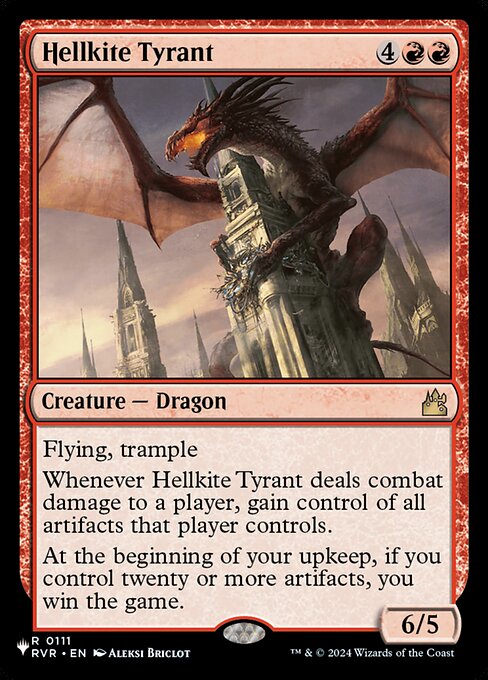
- Card Kingdom $3.99
- Cardmarket €3.68
- Mana Pool $3.65
- TCGplayer $5.37
-

- Card Kingdom $18.99
- Cardmarket €11.50
- Mana Pool $12.76
- TCGplayer $13.44
-

- Card Kingdom $0.35
- Cardmarket €0.33
- Mana Pool $0.15
- TCGplayer $0.20
-

- Card Kingdom $6.99
- Cardmarket €5.01
- Mana Pool $5.11
- TCGplayer $8.89
-

- Card Kingdom $5.99
- Cardmarket €4.19
- Mana Pool $4.55
- TCGplayer $4.74
-

- Card Kingdom $1.29
- Cardmarket €0.69
- Mana Pool $0.59
- TCGplayer $0.55
-

- Card Kingdom $4.99
- Cardmarket €2.60
- Mana Pool $3.55
- TCGplayer $3.98
-

- Card Kingdom $0.99
- Cardmarket €1.41
- Mana Pool $0.47
- TCGplayer $0.55
-

- Card Kingdom $2.49
- Cardmarket €2.74
- Mana Pool $1.26
- TCGplayer $1.20
-

- Card Kingdom $2.29
- Cardmarket €1.34
- Mana Pool $2.04
- TCGplayer $2.71
-

- Card Kingdom $2.49
- Cardmarket €0.95
- Mana Pool $1.77
- TCGplayer $1.78
-

- Card Kingdom foil $6.99
- Cardmarket foil €5.59
- Mana Pool foil $4.85
- TCGplayer foil $6.13
-

- Card Kingdom $2.99
- Cardmarket €1.90
- Mana Pool $2.81
- TCGplayer $4.41
-

- Card Kingdom $2.99
- Cardmarket €3.41
- Mana Pool $3.14
- TCGplayer $4.84
-

- Card Kingdom $0.69
- Cardmarket €0.28
- Mana Pool $0.15
- TCGplayer $0.21
-

- Card Kingdom $15.99
- Cardmarket €13.41
- Mana Pool $13.43
- TCGplayer $12.48
-

- Card Kingdom $0.35
- Cardmarket €0.14
- Mana Pool $0.15
- TCGplayer $0.16
-
- Card Kingdom $3.99
- Cardmarket €2.29
- Mana Pool $1.54
- TCGplayer $2.38
-

- Card Kingdom $2.99
- Cardmarket €1.68
- Mana Pool $2.29
- TCGplayer $2.52
-

- Card Kingdom $0.35
- Cardmarket €0.34
- Mana Pool $0.22
- TCGplayer $0.32
-

- Card Kingdom $0.49
- Cardmarket €0.15
- Mana Pool $0.15
- TCGplayer $0.13
-

- Card Kingdom $0.49
- Cardmarket €0.74
- Mana Pool $0.29
- TCGplayer $0.51
-

- Card Kingdom $0.35
- Cardmarket €0.19
- Mana Pool $0.16
- TCGplayer $0.20
-

- Card Kingdom $0.99
- Cardmarket €0.42
- Mana Pool $0.44
- TCGplayer $0.52
-

- Card Kingdom $14.99
- Cardmarket €12.11
- Mana Pool $9.87
- TCGplayer $14.17
-

- Card Kingdom foil $44.99
- Cardmarket foil €21.82
- Mana Pool foil $39.36
- TCGplayer foil $38.10
-

- Card Kingdom $0.49
- Cardmarket €0.42
- Mana Pool $0.15
- TCGplayer $0.45
-

- Card Kingdom $4.99
- Cardmarket €4.52
- Mana Pool $3.67
- TCGplayer $3.61
-

- Card Kingdom $2.99
- Cardmarket €2.42
- Mana Pool $0.88
- TCGplayer $1.48
-

- Card Kingdom $21.99
- Cardmarket €13.93
- Mana Pool $17.26
- TCGplayer $18.49
-

- Card Kingdom $0.35
- Cardmarket €0.16
- Mana Pool $0.15
- TCGplayer $0.11
-

- Card Kingdom $2.49
- Cardmarket €1.09
- Mana Pool $1.61
- TCGplayer $2.90
-

- Card Kingdom $0.35
- Cardmarket €0.24
- Mana Pool $0.18
- TCGplayer $0.31
-

- Card Kingdom foil $14.99
- Cardmarket foil €8.02
- Mana Pool foil $10.15
- TCGplayer foil $14.10
-

- Card Kingdom $0.35
- Cardmarket €0.13
- Mana Pool $0.15
- TCGplayer $0.17
-

- Card Kingdom foil $17.99
- Cardmarket foil €16.02
- Mana Pool foil $15.78
- TCGplayer foil $17.13
-

- Card Kingdom $12.99 foil $12.99
- Cardmarket €5.74 foil €7.67
- Mana Pool $8.11 foil $10.12
- TCGplayer $7.78 foil $9.82
-
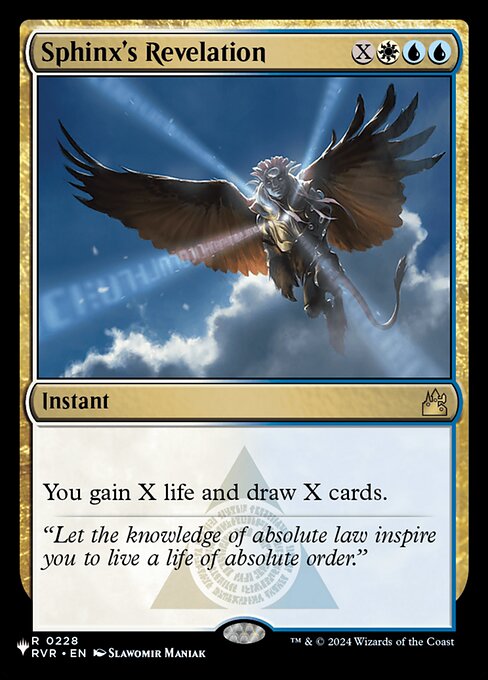
- Card Kingdom $1.29
- Cardmarket €0.35
- Mana Pool $0.23
- TCGplayer $0.38
-

- Card Kingdom $0.99
- Cardmarket €0.48
- Mana Pool $0.22
- TCGplayer $0.32
-

- Card Kingdom $1.29
- Cardmarket €0.34
- Mana Pool $0.19
- TCGplayer $0.33
-

- Card Kingdom $3.49
- Cardmarket €2.56
- Mana Pool $2.22
- TCGplayer $2.98
-

- Card Kingdom $0.79
- Cardmarket €0.87
- Mana Pool $0.67
- TCGplayer $0.61
-

- Card Kingdom $8.49
- Cardmarket €3.60
- Mana Pool $5.21
- TCGplayer $5.57
-

- Card Kingdom $3.99
- Cardmarket €1.41
- Mana Pool $1.28
- TCGplayer $1.43
-
- Card Kingdom $9.49
- Cardmarket €6.60
- Mana Pool $6.48
- TCGplayer $7.33
-

- Card Kingdom $0.35
- Cardmarket €0.13
- Mana Pool $0.18
- TCGplayer $0.22
-

- Card Kingdom $0.59
- Cardmarket €0.99
- Mana Pool $0.15
- TCGplayer $0.34
-

- Card Kingdom $0.99
- Cardmarket €1.37
- Mana Pool $0.79
- TCGplayer $1.09
-

- Card Kingdom $0.49
- Cardmarket €0.35
- Mana Pool $0.19
- TCGplayer $0.37
-

- Card Kingdom foil $12.99
- Cardmarket foil €6.17
- Mana Pool foil $8.75
- TCGplayer foil $10.00
-

- Card Kingdom $9.99
- Cardmarket €4.53
- Mana Pool $7.50
- TCGplayer $7.14
-

- Card Kingdom $20.99
- Cardmarket €11.00
- Mana Pool $15.35
- TCGplayer $14.73
-

- Card Kingdom $0.59
- Cardmarket €0.38
- Mana Pool $0.18
- TCGplayer $0.34
Raining Cats and Dogs 81 cards
-

Rin and Seri, Inseparable // Rin and Seri, Inseparable
- Card Kingdom foil $42.99
- Cardmarket foil €32.11
- Mana Pool foil $46.89
- TCGplayer foil $47.48
-

Jetmir, Nexus of Revels // Jetmir, Nexus of Revels
- Card Kingdom foil $29.99
- Cardmarket foil €22.95
- Mana Pool foil $31.20
- TCGplayer foil $32.74
-

Jinnie Fay, Jetmir's Second // Jinnie Fay, Jetmir's Second
- Card Kingdom foil $13.99
- Cardmarket foil €8.97
- Mana Pool foil $18.53
- TCGplayer foil $18.96
-

Anointed Procession // Anointed Procession
- Card Kingdom foil $99.99
- Cardmarket foil €68.85
- Mana Pool foil $80.18
- TCGplayer foil $80.87
-

- Card Kingdom foil $74.99
- Cardmarket foil €43.64
- Mana Pool foil $70.93
- TCGplayer foil $75.01
-

- Card Kingdom $1.29
- Cardmarket €0.91
- Mana Pool $1.09
- TCGplayer $1.96
-

- Card Kingdom $7.49
- Cardmarket €4.19
- Mana Pool $3.93
- TCGplayer $5.08
-

- Card Kingdom $0.99
- Cardmarket €0.48
- Mana Pool $0.40
- TCGplayer $0.43
-

- Card Kingdom $9.49
- Cardmarket €6.36
- Mana Pool $7.24
- TCGplayer $9.59
-

- Card Kingdom $0.49
- Cardmarket €0.31
- Mana Pool $0.15
- TCGplayer $0.37
-

- Card Kingdom $0.35
- Cardmarket €0.17
- Mana Pool $0.15
- TCGplayer $0.28
-

- Card Kingdom $0.99
- Cardmarket €0.58
- Mana Pool $0.15
- TCGplayer $0.44
-

- Card Kingdom $0.35
- Cardmarket €0.44
- Mana Pool $0.20
- TCGplayer $0.26
-

- Card Kingdom $2.49
- Cardmarket €1.46
- Mana Pool $1.23
- TCGplayer $1.61
-

- Card Kingdom $0.69
- Cardmarket €0.44
- Mana Pool $0.41
- TCGplayer $1.25
-

- Card Kingdom $2.29
- Cardmarket €1.59
- Mana Pool $1.25
- TCGplayer $1.90
-

- Card Kingdom $0.49
- Cardmarket €0.32
- Mana Pool $0.32
- TCGplayer $0.52
-

- Card Kingdom $4.49
- Cardmarket €4.00
- Mana Pool $3.38
- TCGplayer $3.87
-

- Card Kingdom $4.99
- Cardmarket €3.86
- Mana Pool $4.11
- TCGplayer $4.78
-

- Card Kingdom $0.35
- Cardmarket €0.28
- Mana Pool $0.15
- TCGplayer $0.35
-

- Card Kingdom $1.49
- Cardmarket €0.73
- Mana Pool $0.43
- TCGplayer $0.67
-

- Card Kingdom $0.49
- Cardmarket €0.79
- Mana Pool $0.57
- TCGplayer $1.28
-

- Card Kingdom $2.99
- Cardmarket €2.52
- Mana Pool $2.64
- TCGplayer $3.86
-

- Card Kingdom $0.69
- Cardmarket €0.29
- Mana Pool $0.61
- TCGplayer $1.68
-

- Card Kingdom $2.79
- Cardmarket €2.70
- Mana Pool $2.44
- TCGplayer $2.79
-

- Card Kingdom $5.99
- Cardmarket €3.16
- Mana Pool $4.37
- TCGplayer $5.56
-

- Card Kingdom $0.59
- Cardmarket €0.49
- Mana Pool $0.45
- TCGplayer $2.36
-

- Card Kingdom $1.79
- Cardmarket €0.89
- Mana Pool $1.97
- TCGplayer $2.03
-

- Card Kingdom $14.99
- Cardmarket €8.40
- Mana Pool $8.07
- TCGplayer $9.32
-

- Card Kingdom $0.39
- Cardmarket €0.35
- Mana Pool $0.20
- TCGplayer $0.22
-
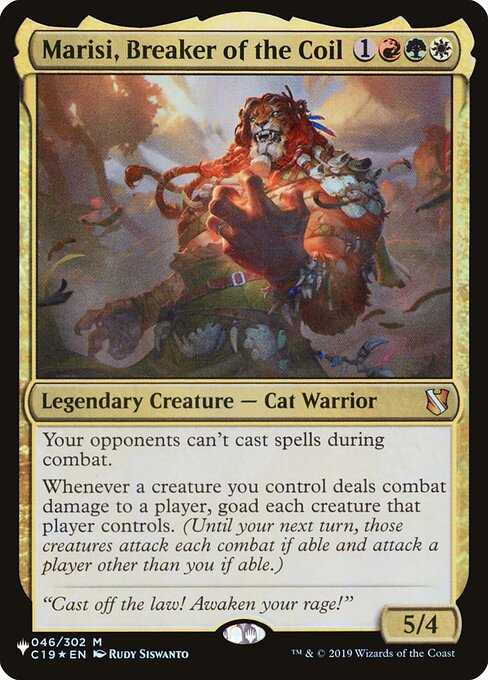
- Card Kingdom $11.99
- Cardmarket €10.15
- Mana Pool $8.83
- TCGplayer $9.81
-

- Card Kingdom $0.79
- Cardmarket €0.57
- Mana Pool $0.38
- TCGplayer $0.40
-

- Card Kingdom $0.99
- Cardmarket €0.82
- Mana Pool $1.22
- TCGplayer $1.30
-

- Card Kingdom $5.49
- Cardmarket €4.68
- Mana Pool $4.32
- TCGplayer $5.33
-

- Card Kingdom $0.35
- Cardmarket €0.23
- Mana Pool $0.17
- TCGplayer $0.29
-

- Card Kingdom $0.35
- Cardmarket €0.26
- Mana Pool $0.31
- TCGplayer $0.39
-

- Card Kingdom $0.99
- Cardmarket €0.41
- Mana Pool $0.35
- TCGplayer $0.39
-

- Card Kingdom $0.39
- Cardmarket €0.55
- Mana Pool $0.45
- TCGplayer $1.99
-

- Card Kingdom $0.99
- Cardmarket €0.97
- Mana Pool $0.82
- TCGplayer $1.31
-

- Card Kingdom $0.69
- Cardmarket €0.47
- Mana Pool $0.15
- TCGplayer $0.31
-

- Card Kingdom $5.49
- Cardmarket €2.89
- Mana Pool $2.71
- TCGplayer $3.17
-

- Card Kingdom $2.49
- Cardmarket €1.18
- Mana Pool $0.36
- TCGplayer $0.82
-

- Card Kingdom $0.59
- Cardmarket €0.41
- Mana Pool $0.31
- TCGplayer $0.27
-

- Card Kingdom $1.29
- Cardmarket €1.50
- Mana Pool $1.25
- TCGplayer $2.36
-
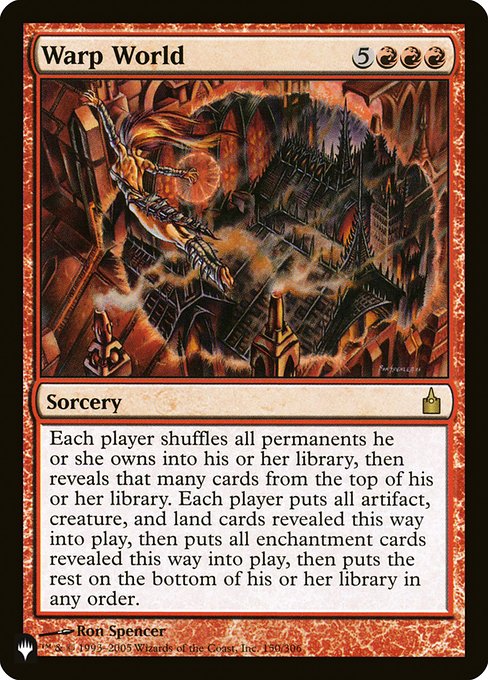
- Card Kingdom $1.29
- Cardmarket €0.76
- Mana Pool $0.97
- TCGplayer $1.64
-

- Card Kingdom $0.79
- Cardmarket €0.47
- Mana Pool $0.62
- TCGplayer $0.76
-

- Card Kingdom $7.49
- Cardmarket €3.84
- Mana Pool $5.88
- TCGplayer $4.80
-

- Card Kingdom $0.69
- Cardmarket €0.36
- Mana Pool $0.38
- TCGplayer $0.44
-

- Card Kingdom $4.99
- Cardmarket €3.32
- Mana Pool $3.23
- TCGplayer $4.49
-

- Card Kingdom $0.99
- Cardmarket €0.29
- Mana Pool $0.40
- TCGplayer $0.38
-

- Card Kingdom $4.99
- Cardmarket €1.24
- Mana Pool $2.52
- TCGplayer $2.33
-
- Card Kingdom $1.99
- Cardmarket €1.18
- Mana Pool $1.87
- TCGplayer $2.20
-
- Card Kingdom $3.49
- Cardmarket €3.76
- Mana Pool $1.32
- TCGplayer $1.67
-
- Card Kingdom $3.99
- Cardmarket €2.94
- Mana Pool $1.88
- TCGplayer $3.02
-

- Card Kingdom $0.35
- Cardmarket €0.24
- Mana Pool $0.15
- TCGplayer $0.31
-

- Card Kingdom $17.99
- Cardmarket €10.51
- Mana Pool $17.89
- TCGplayer $21.55
-

- Card Kingdom $0.99
- Cardmarket €1.42
- Mana Pool $0.51
- TCGplayer $0.62
-

- Card Kingdom $1.29
- Cardmarket €1.28
- Mana Pool $0.39
- TCGplayer $0.78
-

- Card Kingdom $0.49
- Cardmarket €0.89
- Mana Pool $0.15
- TCGplayer $0.34
-

- Card Kingdom $5.49
- Cardmarket €3.06
- Mana Pool $4.62
- TCGplayer $4.89
-

- Card Kingdom $7.49
- Cardmarket €3.14
- Mana Pool $4.16
- TCGplayer $8.96
-

- Card Kingdom $0.69
- Cardmarket €0.51
- Mana Pool $0.28
- TCGplayer $0.42
-

- Card Kingdom $0.79
- Cardmarket €0.53
- Mana Pool $0.31
- TCGplayer $0.36
-
- Card Kingdom $2.99
- Cardmarket €1.76
- Mana Pool $1.79
- TCGplayer $2.63
-

- Card Kingdom $0.79
- Cardmarket €0.69
- Mana Pool $0.21
- TCGplayer $0.80
-
- Card Kingdom $2.29
- Cardmarket €1.34
- Mana Pool $2.04
- TCGplayer $2.71
-

- Cardmarket €2.08
- Mana Pool $3.28
- TCGplayer $4.62
-

- Card Kingdom $0.49
- Cardmarket €0.38
- Mana Pool $0.20
- TCGplayer $0.30
-

- Card Kingdom $0.49
- Cardmarket €0.49
- Mana Pool $0.15
- TCGplayer $0.29
-

- Card Kingdom $22.99
- Cardmarket €16.03
- Mana Pool $15.23
- TCGplayer $17.09
-

- Card Kingdom $8.49
- Cardmarket €5.87
- Mana Pool $5.38
- TCGplayer $6.42
-

- Card Kingdom $7.49
- Cardmarket €5.25
- Mana Pool $4.63
- TCGplayer $5.15
-

- Card Kingdom $7.49
- Cardmarket €6.28
- Mana Pool $6.40
- TCGplayer $9.19
-

- Card Kingdom $0.99
- Cardmarket €0.52
- Mana Pool $0.45
- TCGplayer $0.59
-

- Card Kingdom $1.49
- Cardmarket €1.00
- Mana Pool $0.86
- TCGplayer $1.48
-

- Card Kingdom $0.49
- Cardmarket €0.22
- Mana Pool $0.20
- TCGplayer $0.28
-

- Card Kingdom $0.59
- Cardmarket €0.36
- Mana Pool $0.30
- TCGplayer $0.35
-

- Card Kingdom $0.49
- Cardmarket €0.39
- Mana Pool $0.15
- TCGplayer $0.30
-

- Card Kingdom foil $3.99
- Cardmarket foil €4.00
- Mana Pool foil $4.17
- TCGplayer foil $4.34
-

- Card Kingdom foil $4.99
- Cardmarket foil €2.88
- Mana Pool foil $2.70
- TCGplayer foil $4.94
-

- Card Kingdom foil $8.49
- Cardmarket foil €8.36
- Mana Pool foil $7.54
- TCGplayer foil $7.48
Angels: They're Just Like Us but Cooler and with Wings 74 cards
-

- Card Kingdom foil $89.99
- Cardmarket foil €79.76
- Mana Pool foil $87.61
- TCGplayer foil $88.57
-

- Card Kingdom foil $84.99
- Cardmarket foil €72.26
- Mana Pool foil $76.99
- TCGplayer foil $81.82
-

- Card Kingdom $14.99
- Cardmarket €7.04
- Mana Pool $9.37
- TCGplayer $12.06
-
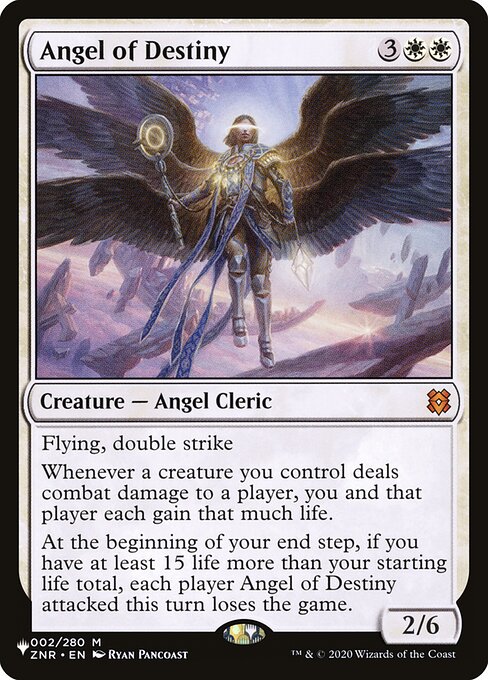
- Cardmarket foil €8.87
- Mana Pool foil $9.58
- TCGplayer foil $11.90
-

- Card Kingdom foil $2.49
- Cardmarket foil €0.68
- Mana Pool foil $1.13
- TCGplayer foil $3.26
-

- Card Kingdom foil $2.79
- Cardmarket foil €1.50
- Mana Pool foil $1.26
- TCGplayer foil $2.95
-

- Card Kingdom foil $1.79
- Cardmarket foil €0.96
- Mana Pool foil $1.52
- TCGplayer foil $3.32
-

- Card Kingdom $0.59 foil $2.49
- Cardmarket €0.17
- Mana Pool $0.15 foil $0.95
- TCGplayer $0.30 foil $1.19
-

- Card Kingdom $2.99
- Cardmarket €1.96
- Mana Pool $2.08
- TCGplayer $4.29
-

- Card Kingdom foil $3.99
- Cardmarket foil €2.70
- Mana Pool foil $2.41
- TCGplayer foil $3.70
-

- Card Kingdom $1.49
- Cardmarket €0.51
- Mana Pool $0.55
- TCGplayer $0.56
-

- Card Kingdom $0.49
- Cardmarket €0.34
- Mana Pool $0.18
- TCGplayer $0.34
-

- Card Kingdom foil $119.99
- Cardmarket foil €99.07
- Mana Pool foil $96.90
- TCGplayer foil $93.13
-

- Card Kingdom foil $9.99
- Cardmarket foil €6.79
- Mana Pool foil $7.73
- TCGplayer foil $8.78
-

- Card Kingdom foil $8.99
- Cardmarket foil €9.36
- Mana Pool foil $6.58
- TCGplayer foil $7.94
-

- Card Kingdom $0.99
- Cardmarket €0.62
- Mana Pool $0.53
- TCGplayer $0.78
-

- Card Kingdom $2.79
- Cardmarket €2.88
- Mana Pool $1.03
- TCGplayer $4.04
-

- Card Kingdom $1.99
- Cardmarket €0.94
- Mana Pool $0.63
- TCGplayer $0.76
-

- Card Kingdom foil $3.99
- Cardmarket foil €1.65
- Mana Pool foil $3.09
- TCGplayer foil $3.81
-

- Card Kingdom $0.49
- Cardmarket €0.51
- Mana Pool $0.52
- TCGplayer $0.63
-

- Card Kingdom foil $74.99
- Cardmarket foil €56.42
- Mana Pool foil $68.57
- TCGplayer foil $69.50
-

- Cardmarket €2.86
- Mana Pool $3.27
- TCGplayer $3.08
-

- Card Kingdom foil $29.99
- Cardmarket foil €19.26
- Mana Pool foil $24.99
- TCGplayer foil $25.98
-

- Card Kingdom $0.79
- Cardmarket €0.58
- Mana Pool $0.46
- TCGplayer $1.06
-

- Card Kingdom foil $2.29
- Cardmarket foil €1.02
- Mana Pool foil $1.65
- TCGplayer foil $1.99
-

- Card Kingdom $0.49
- Cardmarket €0.45
- Mana Pool $0.56
- TCGplayer $0.78
-

- Card Kingdom foil $5.49
- Cardmarket foil €4.38
- Mana Pool foil $5.47
- TCGplayer foil $7.86
-

- Card Kingdom $9.49
- Cardmarket €6.95
- Mana Pool $8.15
- TCGplayer $8.07
-

- Card Kingdom $1.99
- Cardmarket €1.59
- Mana Pool $1.92
- TCGplayer $2.01
-

- Card Kingdom foil $1.49
- Cardmarket foil €0.91
- Mana Pool foil $0.81
- TCGplayer foil $0.79
-

- Cardmarket €0.48
- Mana Pool $0.35
- TCGplayer $0.42
-

- Card Kingdom $1.29
- Cardmarket €0.69
- Mana Pool $0.55
- TCGplayer $1.15
-

- Card Kingdom $0.39
- Cardmarket €0.15
- Mana Pool $0.20
- TCGplayer $0.21
-

- Card Kingdom $0.35
- Cardmarket €0.31
- Mana Pool $0.21
- TCGplayer $0.27
-

- Card Kingdom $0.35
- Cardmarket €0.20
- Mana Pool $0.15
- TCGplayer $0.32
-

- Card Kingdom $0.79
- Cardmarket €0.38
- Mana Pool $0.15
- TCGplayer $0.30
-

- Cardmarket €0.62
- Mana Pool $0.55
- TCGplayer $0.83
-

- Card Kingdom $1.79
- Cardmarket €0.56
- Mana Pool $0.58
- TCGplayer $0.58
-

- Card Kingdom $5.99
- Cardmarket €3.49
- Mana Pool $4.40
- TCGplayer $5.45
-

- Card Kingdom $0.79
- Cardmarket €0.34
- Mana Pool $0.26
- TCGplayer $0.54
-

- Card Kingdom $0.49
- Cardmarket €0.45
- Mana Pool $0.30
- TCGplayer $0.30
-

- Card Kingdom $1.29
- Cardmarket €0.42
- Mana Pool $0.45
- TCGplayer $0.43
-

- Card Kingdom $0.59
- Cardmarket €0.41
- Mana Pool $0.30
- TCGplayer $0.37
-
- Cardmarket €0.45
- Mana Pool $0.67
- TCGplayer $0.64
-

- Card Kingdom $84.99
- Cardmarket €48.56
- Mana Pool $56.76
- TCGplayer $57.39
-
- Card Kingdom $7.49
- Cardmarket €3.14
- Mana Pool $4.16
- TCGplayer $8.96
-
- Card Kingdom $0.35
- Cardmarket €0.23
- Mana Pool $0.17
- TCGplayer $0.29
-
- Card Kingdom $2.49
- Cardmarket €1.46
- Mana Pool $1.23
- TCGplayer $1.61
-

- Cardmarket €6.04
- Mana Pool $8.96
- TCGplayer $9.99
-

- Card Kingdom foil $0.49
- Mana Pool foil $0.35
- TCGplayer foil $0.42
-

- Card Kingdom foil $0.49
- Mana Pool foil $0.41
- TCGplayer foil $0.54
-

- Card Kingdom foil $0.49
- Mana Pool foil $0.40
- TCGplayer foil $0.40
-

- Card Kingdom foil $0.49
- Mana Pool foil $0.38
- TCGplayer foil $0.42
-

- Card Kingdom foil $8.99
- Cardmarket foil €6.09
- Mana Pool foil $4.83
- TCGplayer foil $5.56
-

- Card Kingdom $1.49
- Cardmarket €1.11
- Mana Pool $0.98
- TCGplayer $1.01
-

- Card Kingdom foil $6.49
- Cardmarket foil €3.67
- Mana Pool foil $4.75
- TCGplayer foil $6.54
-

- Card Kingdom $1.99
- Cardmarket €3.56
- Mana Pool $2.06
- TCGplayer $2.22
-

- Card Kingdom $37.99
- Cardmarket €22.30
- Mana Pool $28.35
- TCGplayer $28.49
-

- Card Kingdom $1.29
- Cardmarket €0.90 foil €0.72
- Mana Pool $0.15 foil $1.56
- TCGplayer $0.54 foil $1.66
-

- Card Kingdom $2.79
- Cardmarket €0.94
- Mana Pool $1.91
- TCGplayer $3.25
-
- Card Kingdom $0.49
- Cardmarket €0.51
- Mana Pool $0.15
- TCGplayer $0.73
-

- Card Kingdom $7.99
- Cardmarket €8.16
- Mana Pool $5.72
- TCGplayer $8.92
-

- Card Kingdom foil $1.49
- Cardmarket foil €1.10
- Mana Pool foil $1.09
- TCGplayer foil $7.42
-

- Card Kingdom $3.49
- Cardmarket €2.23
- Mana Pool $2.59
- TCGplayer $2.75
-

- Card Kingdom $6.99
- Cardmarket €4.29
- Mana Pool $4.39
- TCGplayer $6.44
-

- Card Kingdom $3.99
- Cardmarket €1.62
- Mana Pool $1.66
- TCGplayer $1.79
-

- Card Kingdom $0.49
- Cardmarket €0.53
- Mana Pool $0.30
- TCGplayer $0.77
-

- Card Kingdom $13.99
- Cardmarket €9.23
- Mana Pool $8.33
- TCGplayer $9.09
-

- Card Kingdom $1.49
- Cardmarket €0.77
- Mana Pool $0.95
- TCGplayer $1.09
-

- Card Kingdom $29.99
- Cardmarket €17.67
- Mana Pool $21.66
- TCGplayer $20.73
-

- Cardmarket foil €3.98
- Mana Pool foil $4.89
- TCGplayer foil $4.49
-
- Card Kingdom $7.49
- Cardmarket €5.25
- Mana Pool $4.63
- TCGplayer $5.15
-

- Card Kingdom $4.99
- Cardmarket €3.70
- Mana Pool $4.57
- TCGplayer $5.49
-

- Card Kingdom $3.99
- Cardmarket €1.48
- Mana Pool $2.03
- TCGplayer $1.93
From Cute to Brute 100 cards
-

Esika, God of the Tree // The Prismatic Bridge
- Card Kingdom foil $39.99
- Cardmarket foil €27.30
- Mana Pool foil $40.72
- TCGplayer foil $41.95
-

Archangel Avacyn // Avacyn, the Purifier
- Cardmarket foil €11.59
- Mana Pool foil $20.84
- TCGplayer foil $26.08
-

Bloodline Keeper // Lord of Lineage
- Card Kingdom foil $23.99
- Cardmarket foil €17.31
- Mana Pool foil $19.49
- TCGplayer foil $20.25
-

Nicol Bolas, the Ravager // Nicol Bolas, the Arisen
- Cardmarket foil €38.19
- Mana Pool foil $59.50
- TCGplayer foil $60.16
-

Westvale Abbey // Ormendahl, Profane Prince
- Card Kingdom foil $21.99
- Cardmarket foil €14.02
- Mana Pool foil $18.92
- TCGplayer foil $21.06
-

- Card Kingdom $0.35
- Cardmarket €0.27
- Mana Pool $0.17
- TCGplayer $0.32
-

- Card Kingdom $2.99
- Cardmarket €1.94
- Mana Pool $2.26
- TCGplayer $3.65
-

- Card Kingdom $0.39
- Cardmarket €0.33
- Mana Pool $0.15
- TCGplayer $0.21
-
- Card Kingdom $0.59
- Cardmarket €0.41
- Mana Pool $0.31
- TCGplayer $0.27
-

- Card Kingdom $0.59
- Cardmarket €0.48
- Mana Pool $0.25
- TCGplayer $0.40
-

Arlinn Kord // Arlinn, Embraced by the Moon
- Card Kingdom $1.79
- Cardmarket €1.02
- Mana Pool $1.00
- TCGplayer $1.17
-

Voldaren Pariah // Abolisher of Bloodlines
- Card Kingdom $0.79
- Cardmarket €0.54
- Mana Pool $0.52
- TCGplayer $1.14
-

- Card Kingdom $17.99
- Cardmarket €17.95
- Mana Pool $13.81
- TCGplayer $14.20
-

- Card Kingdom $10.99
- Cardmarket €8.03
- Mana Pool $6.38
- TCGplayer $8.42
-

- Card Kingdom $1.79
- Cardmarket €0.93
- Mana Pool $1.18
- TCGplayer $1.88
-

- Card Kingdom $0.79
- Cardmarket €0.38
- Mana Pool $0.30
- TCGplayer $1.12
-
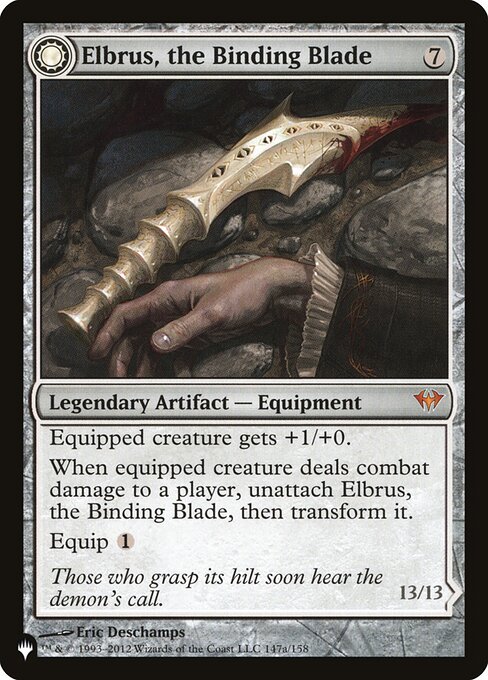
Elbrus, the Binding Blade // Withengar Unbound
- Card Kingdom $4.99
- Cardmarket €2.98
- Mana Pool $4.62
- TCGplayer $4.98
-

- Card Kingdom $2.99
- Cardmarket €1.84
- Mana Pool $2.18
- TCGplayer $2.85
-

- Card Kingdom $3.99
- Cardmarket €1.42
- Mana Pool $1.86
- TCGplayer $1.93
-
- Card Kingdom $0.49
- Cardmarket €0.38
- Mana Pool $0.20
- TCGplayer $0.30
-
- Card Kingdom $0.49
- Cardmarket €0.49
- Mana Pool $0.15
- TCGplayer $0.29
-

- Card Kingdom $0.35
- Cardmarket €0.40
- Mana Pool $0.20
- TCGplayer $0.27
-

- Card Kingdom $0.49
- Cardmarket €0.13
- Mana Pool $0.52
- TCGplayer $3.37
-

- Card Kingdom $21.99
- Cardmarket €13.34
- Mana Pool $15.04
- TCGplayer $15.72
-

- Card Kingdom $3.99
- Cardmarket €2.01
- Mana Pool $2.17
- TCGplayer $2.09
-

Chandra, Fire of Kaladesh // Chandra, Roaring Flame
- Card Kingdom $2.49
- Cardmarket €1.38
- Mana Pool $1.51
- TCGplayer $1.96
-

Jace, Vryn's Prodigy // Jace, Telepath Unbound
- Cardmarket €5.33
- Mana Pool $7.07
- TCGplayer $7.33
-

Kytheon, Hero of Akros // Gideon, Battle-Forged
- Card Kingdom $2.79
- Cardmarket €1.77
- Mana Pool $1.03
- TCGplayer $1.91
-

Liliana, Heretical Healer // Liliana, Defiant Necromancer
- Card Kingdom $7.99
- Cardmarket €3.27
- Mana Pool $6.53
- TCGplayer $6.60
-

Nissa, Vastwood Seer // Nissa, Sage Animist
- Card Kingdom $4.49
- Cardmarket €3.75
- Mana Pool $3.64
- TCGplayer $4.13
-

- Card Kingdom $0.59
- Cardmarket €0.54
- Mana Pool $0.15
- TCGplayer $0.25
-

Azor's Gateway // Sanctum of the Sun
- Card Kingdom $2.99
- Cardmarket €2.28
- Mana Pool $2.44
- TCGplayer $2.61
-

Hadana's Climb // Winged Temple of Orazca
- Card Kingdom $3.49
- Cardmarket €2.62
- Mana Pool $1.80
- TCGplayer $3.18
-

Journey to Eternity // Atzal, Cave of Eternity
- Card Kingdom $5.99
- Cardmarket €5.99
- Mana Pool $4.91
- TCGplayer $5.56
-

- Card Kingdom $6.99
- Cardmarket €7.32
- Mana Pool $5.58
- TCGplayer $5.90
-

Legion's Landing // Adanto, the First Fort
- Card Kingdom $5.49
- Cardmarket €3.81
- Mana Pool $2.55
- TCGplayer $3.62
-

Search for Azcanta // Azcanta, the Sunken Ruin
- Card Kingdom $3.99
- Cardmarket €2.91
- Mana Pool $1.79
- TCGplayer $2.13
-

Thaumatic Compass // Spires of Orazca
- Card Kingdom $2.49
- Cardmarket €1.70
- Mana Pool $1.07
- TCGplayer $1.82
-

- Card Kingdom $1.29
- Cardmarket €0.61
- Mana Pool $0.52
- TCGplayer $0.57
-

- Card Kingdom $2.29
- Cardmarket €1.13
- Mana Pool $1.21
- TCGplayer $1.67
-

- Card Kingdom $1.49
- Cardmarket €1.29
- Mana Pool $0.83
- TCGplayer $1.10
-

Garruk Relentless // Garruk, the Veil-Cursed
- Card Kingdom $1.29
- Cardmarket €0.71
- Mana Pool $0.83
- TCGplayer $0.82
-

- Card Kingdom $0.59
- Cardmarket €0.37
- Mana Pool $0.29
- TCGplayer $0.35
-

Brightclimb Pathway // Grimclimb Pathway
- Card Kingdom $5.99
- Cardmarket €4.76
- Mana Pool $4.41
- TCGplayer $4.52
-

Branchloft Pathway // Boulderloft Pathway
- Card Kingdom $5.99
- Cardmarket €3.60
- Mana Pool $3.50
- TCGplayer $3.72
-

Cragcrown Pathway // Timbercrown Pathway
- Card Kingdom $3.99
- Cardmarket €3.49
- Mana Pool $3.01
- TCGplayer $3.46
-

Needleverge Pathway // Pillarverge Pathway
- Card Kingdom $7.49
- Cardmarket €4.69
- Mana Pool $4.41
- TCGplayer $4.75
-

Riverglide Pathway // Lavaglide Pathway
- Card Kingdom $6.99
- Cardmarket €5.32
- Mana Pool $5.75
- TCGplayer $5.66
-

Valakut Awakening // Valakut Stoneforge
- Card Kingdom $32.99
- Cardmarket €14.85
- Mana Pool $15.93
- TCGplayer $16.59
-

Bala Ged Recovery // Bala Ged Sanctuary
- Card Kingdom $10.99
- Cardmarket €6.94
- Mana Pool $6.98
- TCGplayer $7.85
-

Clearwater Pathway // Murkwater Pathway
- Card Kingdom $7.49
- Cardmarket €5.83
- Mana Pool $4.86
- TCGplayer $4.92
-

Hagra Mauling // Hagra Broodpit
- Card Kingdom $2.79
- Cardmarket €1.83
- Mana Pool $1.58
- TCGplayer $1.77
-

Ondu Inversion // Ondu Skyruins
- Cardmarket €1.28
- Mana Pool $1.09
- TCGplayer $1.13
-

- Card Kingdom $0.49
- Cardmarket €0.20
- Mana Pool $0.20
- TCGplayer $0.20
-

- Card Kingdom $7.49
- Cardmarket €3.32
- Mana Pool $10.55
- TCGplayer $5.44
-

- Card Kingdom $0.35
- Cardmarket €0.22
- Mana Pool $0.15
- TCGplayer $0.21
-

- Card Kingdom $0.35
- Cardmarket €0.20
- Mana Pool $0.15
- TCGplayer $0.24
-

Blightstep Pathway // Searstep Pathway
- Card Kingdom $8.99
- Cardmarket €5.79
- Mana Pool $5.68
- TCGplayer $5.66
-

Hengegate Pathway // Mistgate Pathway
- Card Kingdom $7.49
- Cardmarket €5.75
- Mana Pool $5.05
- TCGplayer $4.91
-

Barkchannel Pathway // Tidechannel Pathway
- Card Kingdom $8.99
- Cardmarket €5.75
- Mana Pool $4.86
- TCGplayer $4.87
-

Darkbore Pathway // Slitherbore Pathway
- Card Kingdom $9.49
- Cardmarket €7.08
- Mana Pool $6.18
- TCGplayer $6.42
-

Valki, God of Lies // Tibalt, Cosmic Impostor
- Card Kingdom $3.99
- Cardmarket €3.90
- Mana Pool $3.42
- TCGplayer $3.66
-

- Card Kingdom $0.99
- Cardmarket €0.93
- Mana Pool $0.15
- TCGplayer $0.32
-

- Card Kingdom $0.79
- Cardmarket €0.87
- Mana Pool $0.56
- TCGplayer $0.58
-

Kolvori, God of Kinship // The Ringhart Crest
- Card Kingdom $0.49
- Cardmarket €0.35
- Mana Pool $0.15
- TCGplayer $0.32
-

Cosima, God of the Voyage // The Omenkeel
- Card Kingdom $1.29
- Cardmarket €1.04
- Mana Pool $0.77
- TCGplayer $0.79
-

Plargg, Dean of Chaos // Augusta, Dean of Order
- Card Kingdom $0.49
- Cardmarket €0.24
- Mana Pool $0.20
- TCGplayer $0.38
-

Valentin, Dean of the Vein // Lisette, Dean of the Root
- Card Kingdom $1.49
- Cardmarket €0.75
- Mana Pool $0.93
- TCGplayer $1.42
-

Shaile, Dean of Radiance // Embrose, Dean of Shadow
- Card Kingdom $0.49
- Cardmarket €0.40
- Mana Pool $0.33
- TCGplayer $0.34
-

Mila, Crafty Companion // Lukka, Wayward Bonder
- Card Kingdom $3.49
- Cardmarket €1.86
- TCGplayer $1.31
-
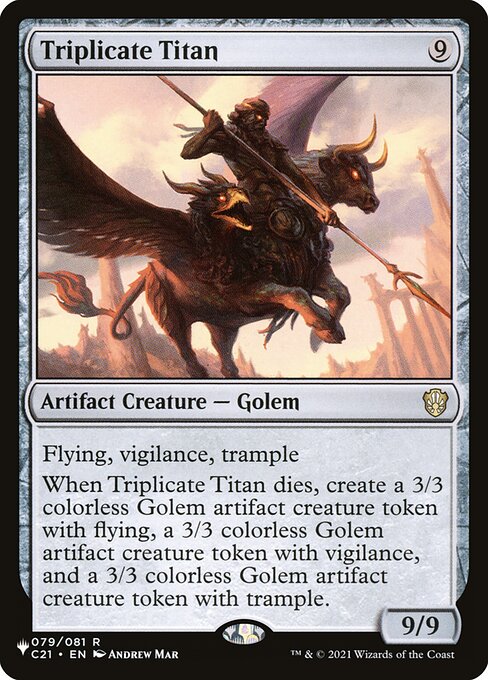
- Card Kingdom $1.49
- Cardmarket €1.18
- Mana Pool $0.63
- TCGplayer $1.09
-

- Card Kingdom $0.79
- Cardmarket €0.49
- Mana Pool $0.52
- TCGplayer $0.50
-

- Card Kingdom $0.49
- Cardmarket €0.53
- Mana Pool $0.18
- TCGplayer $0.37
-

Arlinn, the Pack's Hope // Arlinn, the Moon's Fury
- Card Kingdom $3.49
- Cardmarket €2.89
- Mana Pool $1.87
- TCGplayer $3.32
-

Ludevic, Necrogenius // Olag, Ludevic's Hubris
- Card Kingdom $0.49
- Cardmarket €0.26
- Mana Pool $0.15
- TCGplayer $0.20
-

Dennick, Pious Apprentice // Dennick, Pious Apparition
- Card Kingdom $0.59
- Cardmarket €0.28
- Mana Pool $0.31
- TCGplayer $0.32
-

Tovolar's Huntmaster // Tovolar's Packleader
- Card Kingdom $0.69
- Cardmarket €0.31
- Mana Pool $0.27
- TCGplayer $0.37
-

- Card Kingdom $0.99
- Cardmarket €0.57
- Mana Pool $0.41
- TCGplayer $0.31
-
- Card Kingdom $0.35
- Cardmarket €0.23
- Mana Pool $0.17
- TCGplayer $0.29
-

- Card Kingdom $0.39
- Cardmarket €0.60
- Mana Pool $0.15
- TCGplayer $0.30
-

- Card Kingdom $3.99
- Cardmarket €2.55
- Mana Pool $2.34
- TCGplayer $2.68
-

- Card Kingdom $1.79
- Cardmarket €1.41
- Mana Pool $1.27
- TCGplayer $1.58
-

- Card Kingdom $1.99
- Cardmarket €0.83
- Mana Pool $1.71
- TCGplayer $1.82
-

- Card Kingdom $0.59
- Cardmarket €0.51
- Mana Pool $0.34
- TCGplayer $0.38
-

- Card Kingdom $0.35
- Cardmarket €0.29
- Mana Pool $0.20
- TCGplayer $0.36
-
- Card Kingdom $1.49
- Cardmarket €0.51
- Mana Pool $0.55
- TCGplayer $0.56
-

- Card Kingdom $0.49
- Cardmarket €0.23
- Mana Pool $0.15
- TCGplayer $0.30
-

- Card Kingdom $0.49
- Cardmarket €0.35
- Mana Pool $0.19
- TCGplayer $0.37
-

- Card Kingdom $0.49
- Cardmarket €0.33
- Mana Pool $0.38
- TCGplayer $0.54
-

- Card Kingdom $0.49
- Cardmarket €0.48
- Mana Pool $0.36
- TCGplayer $0.34
-

- Card Kingdom $0.49
- Cardmarket €0.32
- Mana Pool $0.36
- TCGplayer $0.60
-

- Card Kingdom $0.49
- Cardmarket €0.33
- Mana Pool $0.36
- TCGplayer $0.59
-

- Card Kingdom $0.49
- Cardmarket €0.29
- Mana Pool $0.36
- TCGplayer $0.89
-

- Card Kingdom $0.49
- Cardmarket €0.21
- Mana Pool $0.26
- TCGplayer $0.40
-

- Card Kingdom $0.49
- Cardmarket €0.32
- Mana Pool $0.35
- TCGplayer $0.39
-

- Card Kingdom $0.79
- Cardmarket €0.59
- Mana Pool $0.31
- TCGplayer $0.37
-

- Card Kingdom $1.29
- Cardmarket €0.49
- Mana Pool $0.23
- TCGplayer $0.36
-

- Card Kingdom $0.49
- Cardmarket €0.25
- Mana Pool $0.15
- TCGplayer $0.34
-

- Card Kingdom $0.49
- Cardmarket €0.24
- Mana Pool $0.16
- TCGplayer $0.23
-
- Card Kingdom $9.49
- Cardmarket €6.60
- Mana Pool $6.48
- TCGplayer $7.33
Heads I Win, Tails You Lose 87 cards
-

Zndrsplt, Eye of Wisdom // Zndrsplt, Eye of Wisdom
- Card Kingdom foil $39.99
- Cardmarket foil €29.28
- Mana Pool foil $36.25
- TCGplayer $25.83 foil $38.08
-

Okaun, Eye of Chaos // Okaun, Eye of Chaos
- Card Kingdom foil $27.99
- Cardmarket foil €28.80
- Mana Pool foil $31.73
- TCGplayer $26.11 foil $34.07
-

- Card Kingdom foil $1.99
- Cardmarket foil €1.70
- Mana Pool foil $1.31
- TCGplayer foil $1.37
-

- Card Kingdom foil $1.79
- Cardmarket foil €1.15
- Mana Pool foil $0.71
- TCGplayer foil $0.92
-

- Card Kingdom foil $0.99
- Cardmarket foil €1.00
- Mana Pool foil $0.65
- TCGplayer foil $0.67
-

- Card Kingdom foil $3.49
- Cardmarket foil €2.05
- Mana Pool $1.02 foil $2.30
- TCGplayer foil $3.27
-

- Card Kingdom foil $7.99
- Cardmarket foil €5.49
- Mana Pool foil $7.39
- TCGplayer foil $7.72
-

- Card Kingdom foil $11.99
- Cardmarket foil €9.20
- Mana Pool foil $9.89
- TCGplayer foil $10.50
-

- Card Kingdom $0.35 foil $0.79
- Cardmarket €0.28
- Mana Pool $0.15 foil $0.67
- TCGplayer $0.23 foil $1.91
-

- Card Kingdom foil $0.79
- Cardmarket foil €0.84
- Mana Pool foil $0.95
- TCGplayer foil $1.85
-

- Card Kingdom foil $8.49
- Cardmarket foil €4.34
- Mana Pool foil $5.37
- TCGplayer foil $5.43
-

- Card Kingdom foil $1.99
- Cardmarket foil €0.67
- Mana Pool foil $1.12
- TCGplayer foil $3.44
-

- Card Kingdom foil $3.49
- Cardmarket foil €2.61
- Mana Pool foil $2.24
- TCGplayer foil $2.40
-

- Card Kingdom $0.49
- Cardmarket €0.57
- Mana Pool $0.39
- TCGplayer $0.89
-

- Card Kingdom $10.99
- Cardmarket €11.49
- Mana Pool $9.10
- TCGplayer $9.93
-

- Card Kingdom $8.99
- Cardmarket €7.09
- Mana Pool $6.93
- TCGplayer $7.68
-

- Card Kingdom $0.49
- Cardmarket €0.31
- Mana Pool $0.23
- TCGplayer $0.24
-

- Card Kingdom $1.49
- Cardmarket €2.69
- Mana Pool $1.04
- TCGplayer $1.12
-

- Card Kingdom $21.99
- Cardmarket €14.07
- Mana Pool $12.24
- TCGplayer $13.20
-

Stitch in Time // Stitch in Time
- Card Kingdom foil $8.49
- Cardmarket foil €9.53
- Mana Pool foil $6.56
- TCGplayer foil $8.12
-

- Card Kingdom foil $3.99
- Cardmarket foil €3.12
- Mana Pool foil $2.66
- TCGplayer foil $2.71
-

- Card Kingdom $10.99 foil $9.99
- Cardmarket €5.53 foil €6.63
- Mana Pool $7.71 foil $8.70
- TCGplayer $7.50 foil $10.39
-

- Card Kingdom foil $3.49
- Cardmarket foil €2.01
- Mana Pool foil $2.91
- TCGplayer foil $3.37
-

- Card Kingdom $9.99
- Cardmarket €3.36
- Mana Pool $5.72
- TCGplayer $9.19
-

- Card Kingdom $23.99
- Cardmarket €17.27
- Mana Pool $17.71
- TCGplayer $20.36
-

- Card Kingdom $5.99
- Cardmarket €3.15
- Mana Pool $3.42
- TCGplayer $3.73
-

- Card Kingdom $9.99
- Cardmarket €8.79
- Mana Pool $6.74
- TCGplayer $14.31
-

- Card Kingdom $4.99
- Cardmarket €2.95
- Mana Pool $2.61
- TCGplayer $3.86
-

- Cardmarket €1.05
- Mana Pool $0.76
- TCGplayer $0.84
-

- Card Kingdom $1.99
- Cardmarket €0.67
- Mana Pool $0.61
- TCGplayer $1.15
-

- Card Kingdom $9.99
- Cardmarket €3.16
- Mana Pool $8.50
- TCGplayer $13.29
-

- Card Kingdom $1.29
- Cardmarket €1.82
- Mana Pool $0.63
- TCGplayer $0.91
-

- Card Kingdom $5.99
- Cardmarket €2.44
- Mana Pool $3.06
- TCGplayer $5.70
-

- Card Kingdom foil $1.29
- Cardmarket foil €0.65
- Mana Pool foil $0.67
- TCGplayer foil $0.69
-

- Card Kingdom $0.69
- Cardmarket €0.60
- Mana Pool $0.62
- TCGplayer $0.68
-

- Card Kingdom $8.99
- Cardmarket €5.58
- Mana Pool $5.03
- TCGplayer $5.98
-

- Card Kingdom $4.49
- Cardmarket €2.82
- Mana Pool $2.98
- TCGplayer $3.01
-

- Card Kingdom $5.49
- Cardmarket €2.96
- Mana Pool $4.98
- TCGplayer $5.59
-

- Card Kingdom $3.99
- Cardmarket €2.04
- Mana Pool $1.82
- TCGplayer $2.47
-

- Card Kingdom $0.79
- Cardmarket €0.45
- Mana Pool $0.37
- TCGplayer $0.38
-

Krark's Thumb // Krark's Thumb
- Card Kingdom foil $27.99
- Cardmarket foil €20.31
- Mana Pool foil $21.73
- TCGplayer foil $26.35
-

- Card Kingdom foil $2.99
- Cardmarket foil €1.80
- Mana Pool foil $1.66
- TCGplayer foil $2.55
-

- Card Kingdom foil $7.49
- Cardmarket foil €5.75
- Mana Pool foil $5.21
- TCGplayer foil $4.90
-

- Card Kingdom foil $1.79
- Cardmarket foil €0.46
- Mana Pool foil $0.32
- TCGplayer foil $0.33
-

- Card Kingdom $3.49 foil $5.49
- Cardmarket €0.96 foil €3.00
- Mana Pool $2.60 foil $2.91
- TCGplayer $2.85 foil $3.46
-

- Card Kingdom $1.99 foil $3.99
- Cardmarket €0.61 foil €1.82
- Mana Pool $1.22 foil $3.01
- TCGplayer $1.81 foil $4.26
-

- Card Kingdom foil $5.49
- Cardmarket foil €2.95
- Mana Pool foil $2.88
- TCGplayer foil $2.92
-

- Card Kingdom foil $4.99
- Cardmarket foil €3.66
- Mana Pool foil $3.64
- TCGplayer foil $4.36
-

- Card Kingdom $0.69
- Cardmarket €0.70
- Mana Pool $1.18
- TCGplayer $1.49
-

- Card Kingdom $49.99
- Cardmarket €39.01
- Mana Pool $41.68
- TCGplayer $47.81
-

- Card Kingdom $11.99
- Cardmarket €7.77
- Mana Pool $6.80
- TCGplayer $11.02
-

- Card Kingdom $44.99
- Cardmarket €26.35
- Mana Pool $33.71
- TCGplayer $35.38
-

- Card Kingdom $1.49
- Cardmarket €0.61
- Mana Pool $0.85
- TCGplayer $0.87
-

- Card Kingdom $0.49
- Cardmarket €1.10
- Mana Pool $0.91
- TCGplayer $0.93
-

- Card Kingdom $2.79
- Cardmarket €1.42
- Mana Pool $1.86
- TCGplayer $1.91
-

- Card Kingdom $2.99
- Cardmarket €3.15
- Mana Pool $3.16
- TCGplayer $4.36
-

- Card Kingdom foil $57.99
- Cardmarket foil €36.76
- Mana Pool foil $41.57
- TCGplayer foil $41.88
-

- Card Kingdom $2.99
- Cardmarket €1.47
- Mana Pool $1.82
- TCGplayer $2.79
-

- Cardmarket €0.46
- Mana Pool $0.51
- TCGplayer $0.96
-

- Card Kingdom $0.49
- Cardmarket €0.13
- Mana Pool $0.15
- TCGplayer $0.29
-

- Cardmarket €2.93
- Mana Pool $3.50
- TCGplayer $5.00
-

- Card Kingdom $3.99
- Cardmarket €3.51
- Mana Pool $3.89
- TCGplayer $6.85
-

- Card Kingdom $2.29
- Cardmarket €1.53
- Mana Pool $2.59
- TCGplayer $3.90
-

- Card Kingdom foil $0.49
- Cardmarket foil €0.50
- Mana Pool foil $0.27
- TCGplayer foil $0.40
-

- Card Kingdom foil $0.49
- Cardmarket foil €0.51
- Mana Pool foil $0.34
- TCGplayer foil $0.38
-

- Card Kingdom foil $3.49
- Cardmarket foil €2.06
- Mana Pool foil $2.80
- TCGplayer foil $3.91
-

- Card Kingdom $4.49 foil $14.99
- Cardmarket €3.08 foil €13.25
- Mana Pool $2.67 foil $7.81
- TCGplayer $2.76 foil $8.93
-

- Card Kingdom foil $0.69
- Cardmarket foil €0.34
- Mana Pool foil $0.40
- TCGplayer foil $0.40
-

- Cardmarket foil €1.05
- Mana Pool foil $0.68
- TCGplayer foil $0.77
-

- Card Kingdom foil $1.29
- Cardmarket foil €0.51
- Mana Pool foil $0.27
- TCGplayer foil $0.36
-

- Card Kingdom foil $2.49
- Cardmarket foil €2.18
- Mana Pool foil $2.27
- TCGplayer foil $2.51
-

- Card Kingdom foil $0.49
- Cardmarket foil €0.16
- Mana Pool foil $0.15
- TCGplayer foil $0.25
-

- Card Kingdom foil $0.49
- Cardmarket foil €0.14
- Mana Pool foil $0.26
- TCGplayer foil $0.22
-

- Card Kingdom $9.49
- Cardmarket €4.75
- Mana Pool $8.17
- TCGplayer $9.81
-

- Card Kingdom $0.79
- Cardmarket €0.79
- Mana Pool $1.02
- TCGplayer $1.13
-

- Card Kingdom $0.49
- Cardmarket €0.22
- Mana Pool $0.15
- TCGplayer $0.35
-

- Card Kingdom $1.29
- Cardmarket €0.46
- Mana Pool $0.26
- TCGplayer $0.35
-

- Card Kingdom $0.79
- Cardmarket €0.74
- Mana Pool $0.41
- TCGplayer $0.69
-

- Card Kingdom $22.99
- Cardmarket €15.31
- Mana Pool $16.80
- TCGplayer $18.21
-

- Card Kingdom $0.69
- Cardmarket €0.36
- Mana Pool $0.79
- TCGplayer $0.95
-

- Card Kingdom $1.49
- Cardmarket €1.05
- Mana Pool $1.19
- TCGplayer $2.27
-

- Card Kingdom $0.49
- Cardmarket €0.33
- Mana Pool $0.58
- TCGplayer $1.46
-

- Card Kingdom $1.49
- Cardmarket €1.88
- Mana Pool $1.25
- TCGplayer $1.33
-

- Card Kingdom $23.99
- Cardmarket €21.29
- Mana Pool $17.34
- TCGplayer $19.00
-

- Card Kingdom $0.59
- Cardmarket €0.37
- Mana Pool $0.42
- TCGplayer $0.43
-

- Card Kingdom $6.49
- Cardmarket €4.14
- Mana Pool $4.45
- TCGplayer $4.57
-

- Card Kingdom $0.35
- Cardmarket €0.27
- Mana Pool $0.15
- TCGplayer $0.36
When It Was on Sale
What the Secret Lair store listed for each version, and when it sold out.
| Drop | Version | Price | Status | On Sale | Sold Out |
|---|---|---|---|---|---|
| Secret Lair Commander Deck: Odds and Ends | $149.99 | Sold out | |||
| Hatsune Miku | $149.99 | Sold out | |||
| Goblin Storm | $149.99 | Sold out |
Rulings for the Cards on This Page
explain how a card works in tricky situations. They come from Wizards of the Coast, the company that makes Magic.RulingThe official answer to how a card works in a tricky situation. Most rulings are written by Wizards of the Coast, the company that makes Magic, and a few are notes from Scryfall, the card database Magic players use. A ruling explains a card. It does not change what the card says.Open the full glossary
2190 rulings for 498 cards
Aboleth Spawn
Triggered abilities use the words "when," "whenever," or "at." They're often written as "[Trigger condition],[effect]."
The copy will have the same targets as the ability it's copying unless you choose new ones. You may change any number of the targets, including all of them or none of them. If, for one of the targets, you can't choose a new legal target, then it remains unchanged (even if the current target is illegal).
Effects that modify how a creature enters the battlefield are not triggered abilities and are not affected by Aboleth Spawn's ability. These include (but aren't limited to) entering the battlefield as a copy of another permanent, entering the battlefield with counters, and entering the battlefield tapped.
If the ability is modal (that is, it has a bulleted list of choices), the copy will have the same mode(s). You can't choose new ones.
Aboleth Spawn's ability cares only about triggered abilities of the creature that's entering, not abilities of other permanents that trigger when that creature enters the battlefield.
Aboleth Spawn's ability will always go on the stack on top of the entering creature's triggered ability that caused it to trigger. The copy it creates will be created on the stack on top of the entering creature's triggered ability and the copy will resolve before that ability.
Aeon Engine
This effect reverses the turn order for players established at the beginning of the game. While the order is reversed, anything that cares about this order (such as determining in what order choices are made) will use the new order.
If the game’s turn order is reversed again, it will return to the default order used at the beginning of the game.
If the turn order is reversed during a two-player game, or during a multiplayer game that only has two players left, it has no noticeable effect on the game.
If the turn order is reversed during an extra turn, the next non-extra turn will be taken by the next player in turn order from the last player who took a non-extra turn. The order of any pending extra turns isn’t affected.
Aetherflux Reservoir
The first ability counts spells you cast earlier in the turn even if you didn't control Aetherflux Reservoir as you cast them, and even if those spells were countered.
Aetherflux Reservoir's first ability doesn't trigger when you cast Aetherflux Reservoir itself.
The number of spells you've cast is counted only as Aetherflux Reservoir's triggered ability resolves. For example, if you cast a spell, then respond to the triggered ability with a second spell, you'll gain 4 life total.
The first ability counts the spell that caused it to trigger plus any other spells you cast earlier in the turn.
Ajani, Strength of the Pride
The ability of Ajani's Pridemate triggers just once for each life-gaining event, whether it's 1 life from Impassioned Orator or 4 life from Dawning Angel. If you gain an amount of life "for each" of something or "equal to the number" of something, that life is gained as one event and the ability of Ajani's Pridemate triggers only once.
Whether you have at least 15 life more than your starting life total is determined as Ajani's last ability resolves.
In a Two-Headed Giant game, Ajani's last ability exiles permanents as long as your team's life total is greater than your team's starting life total by 15 or more life.
If Ajani's Pridemate is dealt lethal damage at the same time that you gain life, it won't receive a counter from its ability in time to save it.
In a Two-Headed Giant game, life gained by your teammate won't cause Ajani's Pridemate's ability to trigger, even though it will cause your team's life total to increase.
The tokens created by Ajani's second ability are similar to the card Ajani's Pridemate, but they have no mana cost and their mana value is 0.
Each creature with lifelink dealing combat damage causes a separate life-gaining event. For example, if two creatures you control with lifelink deal combat damage at the same time, Ajani's Pridemate's ability will trigger twice. However, if a single creature you control with lifelink deals combat damage to multiple creatures, players, and/or planeswalkers at the same time (perhaps because it has trample or was blocked by more than one creature), the ability will trigger only once.
If a planeswalker you control is also a creature (most likely because it's Gideon), it will be counted twice as Ajani's first ability resolves.
Ajani's Pridemate
If you gain an amount of life "for each" of something or "equal to the number" of something, that life is gained as one event and Ajani's Pridemate's ability triggers only once.
Each creature with lifelink dealing combat damage causes a separate life-gaining event. For example, if two creatures you control with lifelink deal combat damage at the same time, Ajani's Pridemate's ability will trigger twice. However, if a single creature you control with lifelink deals combat damage to multiple creatures, players, planeswalkers, and/or battles at the same time (perhaps because it has trample or was blocked by more than one creature), the ability will trigger only once.
In a Two-Headed Giant game, life gained by your teammate won't cause Ajani's Pridemate's ability to trigger, even though it caused your team's life total to increase.
If Ajani's Pridemate is dealt lethal damage at the same time that you gain life, it won't receive a counter from its ability in time to save it.
The ability of Ajani's Pridemate triggers just once for each life-gaining event, whether it's 1 life from Dazzling Angel or 4 life from Apothecary Stomper.
Alms Collector
Once a replacement effect has been applied to an event, it can’t be applied again to the resulting events. For example, once Alms Collector’s replacement effect has modified the effect of a player’s Divination, Thought Reflection can double that player’s resulting card draw without Alms Collector’s replacement effect applying again.
Alms Collector’s replacement effect applies to an instruction to draw more than one card before any replacement effects apply to individual cards drawn. For example, if you have a card with dredge in your graveyard, you can’t dredge it before the effect of Divination is modified by Alms Collector’s replacement effect.
If an effect puts cards into a player’s hand without using the word “draw” at all, Alms Collector’s replacement effect doesn’t apply.
If two players each control an Alms Collector and a third player would draw two or more cards, the third player chooses which Alms Collector’s replacement effect will apply, and therefore which of the first two players draws a card.
If two players each control an Alms Collector and an effect instructs them to each draw two or more cards, the replacement effect of each Alms Collector is applied and both players end up drawing two cards.
To determine whether a player is instructed to draw multiple once or instructed multiple times to draw one card, count how many times the word “draw” is used. Alms Collector’s replacement effect watches for one “draw” that instructs a player to draw multiple cards (including instructions to “draw a card for each. . .”).
Altar of the Pantheon
If Altar of the Pantheon loses its abilities, you'll still get a bonus to your devotion. This is because its effect is applied before any effect that would make it lose its abilities.
You gain just 1 life, no matter how many Gods, Demigods, and/or legendary enchantments you control beyond the first.
Your devotion to two colors (for example, your devotion to red and green) is increased by one, not by two or three.
The last ability of Altar of the Pantheon is a mana ability. It doesn't use the stack and can't be responded to. You'll immediately add mana and gain 1 life, if applicable.
Aminatou, the Fateshifter
You draw a card and put one back all while Aminatou's first ability is resolving. Nothing can happen between the two, and no player may choose to take actions.
The effect of Aminatou's third ability lasts indefinitely. It continues to apply after Aminatou (or her controller) leaves the game.
Once the exiled permanent returns, it's considered a new object with no relation to the object that it was. Auras attached to the exiled permanent will be put into their owners' graveyards. Equipment attached to the exiled permanent will become unattached and remain on the battlefield. Any counters on the exiled permanent will cease to exist.
As Aminatou's third ability resolves, you choose a direction, then each player takes control of their new permanents at the same time.
In a multiplayer game, if a player leaves the game, all cards that player owns leave as well. The effect of Aminatou's third ability stops applying to all permanents that player controlled and control of them reverts to their previous controller.
Aminatou's second ability can target any permanent you own, including those another player controls.
In a two-player game, each player gains control of each permanent the other controls (aside from Aminatou) no matter which direction you choose.
If a token is exiled this way, it will cease to exist and won't return to the battlefield.
Amoeboid Changeling
If a creature loses all creature types but then gains a new creature type later in the turn, it will be that new creature type.
Ancestors' Aid
If the target of Ancestors' Aid is illegal as the spell tries to resolve, it won't resolve and none of its effects will happen. You won't create a Treasure token.
Ancient Cornucopia
Ancient Cornucopia’s triggered ability resolves before the spell that caused it to trigger. The ability will resolve even if that spell is countered. If that spell is countered, use its last known information to determine what colors it was.
Once you choose to gain life using Ancient Cornucopia’s triggered ability, that ability won’t trigger again that turn.
Ancient Cornucopia’s triggered ability counts the number of colors the spell has (from one to five), not how many colored mana symbols there are in its mana cost or how many colors of mana you spent.
Angel of Destiny
If a creature you control somehow deals combat damage to you (most likely because its combat damage was redirected), you gain twice that much life as a single life-gaining event.
All first-strike combat damage is dealt at the same time, and, separately, all regular combat damage is dealt at the same time. If one of those amounts of combat damage is enough to cause the player being dealt damage to lose the game, Angel of Destiny's first triggered ability has you gain life, but the other player has already lost the game and can't gain life.
If Angel of Destiny leaves the battlefield before your end step, its last ability won't trigger and won't cause a player to lose the game, even if Angel of Destiny attacked that player earlier.
In a Two-Headed Giant game, Angel of Destiny's last ability can trigger as long as your team's life total is greater than your team's starting life total by 15 or more life.
Angel of Indemnity
If one of the tokens somehow is under another player's control as the delayed triggered ability resolves, you can't sacrifice that token. It remains on the battlefield indefinitely, even if you regain control of it later.
If you return an Aura this way, you choose what the Aura will enchant just before it enters the battlefield. An Aura returning to the battlefield this way doesn't target the player or permanent it will enchant, so permanents or players with hexproof may be chosen; however, the chosen recipient must be able to legally be enchanted by the Aura, so a player or permanent with protection from one of the Aura's qualities can't be chosen this way. If there's nothing legal for the Aura to enchant, it stays in the graveyard.
Each token must attack the appropriate player if able.
The tokens copy only what's on the original card. Effects that modified that creature when it was previously on the battlefield won't be copied.
Exiling the card with encore is a cost to activate the ability. Once you announce that you're activating it, no player may take actions until you've finished. They can't try to remove the card from your graveyard to stop you from paying the cost.
If one of the tokens can't attack for any reason (such as being tapped), then it doesn't attack. If there's a cost associated with having it attack, you aren't forced to pay that cost, so it doesn't have to attack in that case either.
If an effect stops a token from attacking a specific player, that token can attack any player, planeswalker, or battle, or not attack at all. If the effect stops the token from attacking a specific player unless a cost is paid, you don't have to pay that cost unless you want to attack that player.
If the mana cost of a card in your graveyard includes {X}, X is 0 for the purpose of determining its mana value.
A permanent card is an artifact, battle, creature, enchantment, land, or planeswalker card.
Opponents who have left the game aren't counted when determining how many tokens to create.
Angel of Serenity
If a creature targeted by the "enters" ability dies before that ability resolves, it will become an illegal target even though it may be a creature card in a graveyard when the ability resolves. It won't be exiled.
You choose up to three total targets from among other creatures on the battlefield and creature cards in graveyards. You may choose zero targets.
You choose the targets as part of putting the "enters" trigger on the stack. Because that ability includes "you may," you choose whether to exile the targets when the ability resolves.
If Angel of Serenity leaves the battlefield before its "enters" ability has resolved, its leaves-the-battlefield ability will trigger and do nothing. Then the "enters" ability will resolve and exile the targeted creatures and/or creature cards indefinitely.
Angel of Vitality
In a Two-Headed Giant game, Angel of Vitality's last ability applies as long as your team's life total is 25 or more.
If Angel of Vitality is dealt damage and your life total is increased above 25 before state-based actions are performed (most likely because Angel of Vitality is dealt combat damage at the same time that a creature you control with lifelink deals combat damage), Angel of Vitality's last ability applies before checking whether it's destroyed for having lethal damage marked on it.
The middle ability of Angel of Vitality applies just once to each life-gaining event, whether it's 1 life from Dazzling Angel or 4 life from Apothecary Stomper.
If you gain an amount of life "for each" of something or "equal to the number" of something, that life is gained as one event and the second ability of Angel of Vitality applies only once.
Because damage remains marked on a creature until it's removed as the turn ends, nonlethal damage dealt to Angel of Vitality may become lethal if your life total drops below 25 during that turn.
Each creature with lifelink dealing combat damage causes a separate life-gaining event. For example, if two creatures you control with lifelink deal combat damage at the same time, Angel of Vitality's second ability will apply twice. However, if a single creature you control with lifelink deals combat damage to multiple creatures, players, planeswalkers, and/or battles at the same time (perhaps because it has trample or was blocked by more than one creature), the ability will apply only once.
If you control two Angels of Vitality and you would gain life, you gain that much life plus 2. A third Angel of Vitality has you gain that much life plus 3, and so on.
In a Two-Headed Giant game, life gained by your teammate won't cause Angel of Vitality's second ability to apply, even though it will cause your team's life total to increase.
In formats where your life total doesn't start at 20, Angel of Vitality's last ability still applies if your life total is 25 or more.
Angelic Accord
Angelic Accord’s ability checks how much life you’ve gained during the turn, not what your life total is compared to what it was when the turn began. For example, if you start the turn at 10 life, gain 6 life during the turn, then lose 6 life later that turn, the ability will trigger.
In a Two-Headed Giant game, life gained by your teammate isn’t considered, even though it causes your team’s life total to increase.
If you haven’t gained 4 or more life during the turn when the end step begins, the ability won’t trigger at all. Gaining life during the end step won’t cause the ability to trigger.
Angelic Chorus
This does not trigger on a permanent being turned into a creature. That is just a permanent changing type, not something entering.
Angelic Chorus does not trigger when creatures phase in or change controllers.
Angelic Field Marshal
If you lose control of your commander, lieutenant abilities of creatures you control will immediately stop applying. If this causes a creature’s toughness to become less than or equal to the amount of damage marked on it, the creature will be destroyed.
Lieutenant abilities refer only to whether you control your commander, not any other player’s commander.
Lieutenant abilities apply only if your commander is on the battlefield and under your control.
If you gain control of a creature with a lieutenant ability owned by another player, that ability will check to see if you control your commander and will apply if you do. It won’t check whether its owner controls their commander.
If a triggered ability granted by a lieutenant ability triggers, and in response to that trigger you lose control of your commander (causing the lieutenant to lose that ability), that triggered ability will still resolve.
Anointed Procession // Anointed Procession
There are many important moments in the story, but the most crucial—called “story spotlights”—are shown on cards. These cards have the Planeswalker symbol in their text box; this symbol has no effect on gameplay. You can read more about these events in the official Magic fiction at http://www.mtgstory.com.
If an effect creates more than one kind of token, it’ll create twice as many of each kind. For example, if you cast Bestial Menace while controlling Anointed Procession, you’ll create two Snake tokens, two Wolf tokens, and two Elephant tokens.
All of the tokens enter the battlefield simultaneously. They’ll be created with the same name, color, type and subtype, abilities, power, toughness, and so on.
If the token you create has any “as [this permanent] enters the battlefield” or “[this permanent] enters the battlefield with” abilities, first determine how many tokens are being created, then apply those abilities individually for each one. For example, if a token with “You may have [this permanent] enter the battlefield as a copy of any creature on the battlefield” would be created (such as an embalmed Vizier of Many Faces), the resulting two tokens can each copy a different creature.
If the effect creating the tokens instructs you to do something with those tokens at a later time, like exiling them at the end of combat, you’ll do that for all the tokens.
If you control two Anointed Processions, then the number of tokens created is four times the original number. If you control three, then the number of tokens created is eight times the original number, and so on.
Approach of the Second Sun
Approach of the Second Sun has no effect until it's resolving. If the second one you cast is countered, you won't win the game.
A card that changes zones is considered a new object, so casting the same Approach of the Second Sun card on a later turn is “another spell” named Approach of the Second Sun.
If you have fewer than six cards in your library, you'll put Approach of the Second Sun on the bottom of your library. Otherwise, you'll lift up the top six cards without looking at them and place Approach of the Second Sun just under them.
The second Approach of the Second Sun that you cast must be cast from your hand, but first may have been cast from anywhere.
A copy of a spell isn't cast, so it won't count as the first nor as the second Approach of the Second Sun.
As your second Approach of the Second Sun resolves, it checks only whether the first one was cast, not whether the first one resolved. If your first Approach of the Second Sun was countered, you'll still win the game as your second one resolves.
Arasta of the Endless Web
An ability that triggers when a player casts a spell resolves before the spell that caused it to trigger. It resolves even if that spell is countered.
Arcane Adaptation
To choose a creature type, you must choose an existing creature type, such as Vampire or Knight. You can’t choose multiple creature types, such as “Vampire Knight.” Card types such as artifact can’t be chosen, nor can subtypes that aren’t creature types, such as Jace, Vehicle, or Treasure.
Replacement effects that modify creatures of a certain type as they enter the battlefield will apply after you apply Arcane Adaptation’s effect. This is a change from previous rules. If you control Arcane Adaptation and the Aether Revolt card Metallic Mimic, with the same creature type chosen for both, then any creature you control will enter the battlefield with an additional +1/+1 counter on it.
Arcane Denial
The controller of the countered spell doesn't choose how many cards to draw until the relevant ability resolves. The player may draw 0, 1, or 2 cards. They choose the number before drawing any cards.
Arcane Signet
If your commander is a card that has no colors in its color identity, Arcane Signet's ability produces no mana. It doesn't produce {C}.
If you have two commanders, the ability adds one mana of any color in their combined color identities.
If you don't have a commander, Arcane Signet's ability produces no mana.
Arch of Orazca
If your tenth permanent enters the battlefield and then a permanent leaves the battlefield immediately afterwards (most likely due to the "Legend Rule" or due to being a creature with 0 toughness), you get the city's blessing before it leaves the battlefield.
If you control ten permanents but don't control a permanent or resolving spell with ascend, you don't get the city's blessing. For example, if you control ten permanents, lose control of one, then cast Golden Demise, you won't have the city's blessing and the spell will affect creatures you control.
Once you have the city's blessing, you have it for the rest of the game, even if you lose control of some or all of your permanents. The city's blessing isn't a permanent itself and can't be removed by any effect.
If you cast a spell with ascend, you don't get the city's blessing until it resolves. Players may respond to that spell by trying to change whether you get the city's blessing.
A permanent is any object on the battlefield, including tokens and lands. Spells and emblems aren't permanents.
Ascend on a permanent isn't a triggered ability and doesn't use the stack. Players can respond to a spell that will give you your tenth permanent, but they can't respond to getting the city's blessing once you control that tenth permanent. This means that if your tenth permanent is a land you play, players can't respond before you get the city's blessing.
Archangel Avacyn // Avacyn, the Purifier
Archangel Avacyn's delayed triggered ability triggers at the beginning of the next upkeep regardless of whose turn it is.
Archangel Avacyn's delayed triggered ability won't cause it to transform back into Archangel Avacyn if it has already transformed into Avacyn, the Purifier, perhaps because several creatures died in one turn.
Archangel of Thune
In a Two-Headed Giant game, life gained by your teammate won't cause the ability to trigger, even though it caused your team's life total to increase.
If you gain an amount of life “for each” of something, that life is gained as one event and the ability triggers only once.
If a creature you control is dealt lethal damage at the same time that you gain life, it won't receive a counter from Archangel of Thune's ability in time to save it.
Each creature with lifelink dealing combat damage causes a separate life-gaining event. For example, if two creatures you control with lifelink deal combat damage at the same time, the ability will trigger twice. However, if a single creature you control with lifelink deals combat damage to multiple creatures, players, and/or planeswalkers at the same time (perhaps because it has trample or was blocked by more than one creature), the ability will trigger only once.
Archangel of Tithes
If you control an untapped Archangel of Tithes, your opponents can choose to not attack with a creature that must attack if able. The same is true with respect to an attacking Archangel of Tithes and a creature that must block if able.
Arena of Glory
If the mana generated with Arena of Glory's last ability is spent on two different creature spells, each of those spells (and resulting creatures) will gain haste until end of turn.
If you gain control of another player's permanent until end of turn and exert it, and then that player regains control of it, it will untap during that player's untap step.
If an exerted permanent is already untapped during your next untap step (most likely because an effect untapped it), exert's effect preventing it from untapping expires without having done anything.
The mana generated with Arena of Glory's last ability can be spent on anything, not just creature spells.
If mana generated with Arena of Glory's last ability is spent to cast a noncreature spell that creates tokens, those tokens won't gain haste.
If mana generated with Arena of Glory's last ability is spent to pay any part of a creature spell's cost, including an alternative or additional cost, that creature spell (and the resulting creature) will gain haste until end of turn.
If mana generated with Arena of Glory's last ability is spent on a noncreature spell that becomes a creature later in the turn, that creature won't have haste.
You must already control a Mountain as Arena of Glory enters the battlefield for it to enter untapped. If it enters the battlefield at the same time as a Mountain when you control no other Mountains, it will enter tapped.
Arlinn Kord // Arlinn, Embraced by the Moon
When the ability that transforms Arlinn Kord into Arlinn, Embraced by the Moon (or vice versa) resolves, the number of loyalty counters on her doesn’t change.
Arlinn, Embraced by the Moon is not a Werewolf card; that is, she doesn’t have the creature type Werewolf. Spells and abilities that refer to Werewolf cards or Werewolves don’t apply to Arlinn.
The set of creatures affected by the first ability of Arlinn, Embraced by the Moon is determined as the ability resolves. Creatures you begin to control later in the turn won’t get +1/+1 or gain trample.
You can control two of this permanent, one front-face up and the other back-face up, at the same time.
The emblem grants the activated ability to your creatures. Use the power of the creature as the activated ability resolves to determine how much damage is dealt. If the creature isn’t on the battlefield at that time, use its power as it last existed on the battlefield. Note that this works differently than the fight keyword action, which requires both creatures to be on the battlefield for any damage to be dealt.
You can’t activate a loyalty ability of Arlinn Kord and later that turn after she transforms activate a loyalty ability of Arlinn, Embraced by the Moon (or vice versa).
You can control two of this permanent, one front-face up and the other back-face up, at the same time.
Arlinn, the Pack's Hope // Arlinn, the Moon's Fury
If it's neither day nor night, and a creature with daybound and a creature with nightbound somehow appear on the battlefield at the same time, it becomes day. The creature with nightbound will transform.
If you cast a spell with daybound during night, that spell will be front face up (that is, daybound face up) on the stack. However, it will enter the battlefield with its back face up (that is, with its nightbound face up). It won't enter with its daybound face up and then transform.
Before a player untaps their permanents during the untap step, the game checks to see if the day/night designation should change.
If it is day, and the active player of the previous turn cast no spells during their turn, it becomes night.
Permanents with daybound and nightbound can't transform via any means other than their daybound and nightbound abilities. Notably, older cards such as Moonmist that instruct a player to transform permanents don't affect permanents with daybound or nightbound.
If it is night, permanents with daybound that enter the battlefield without being cast will enter with their nightbound faces up.
Double-faced permanents with daybound transform to their nightbound faces as it becomes night. Similarly, double-faced permanents with nightbound transform to their daybound faces as it becomes day. This happens immediately and is not a state-based action. It happens any time it becomes day or night, not just during the untap step.
If it is night, and the active player of the previous turn cast two or more spells during their turn, it becomes day.
Day and night are designations that the game itself can have. The game starts as neither. Once the game becomes day (or less commonly, night), the game will be exactly one of them—day or night—going back and forth for the rest of the game.
Atla Palani, Nest Tender
If there are no creature cards in your library as Atla Palani's last ability resolves, you reveal your library then put it back in a random order.
If Atla Palani dies at the same time as one or more Eggs you control, its last ability triggers for each of those Eggs.
Augur of Autumn
If the top card of your library changes during the process of casting a spell or activating an ability, you can't look at the new top card until the process of casting the spell or activating the ability ends (all targets are chosen, all costs are paid, and so on).
Essentially, Augur of Autumn lets you play with the top card of your library revealed only to you. Knowing what that card is becomes part of the information you have access to, just like you can look at the cards in your hand. You may look at the top card of your library whenever you want, even if you don't have priority. This action doesn't use the stack.
A creature has different power from another if their powers are different numbers. For example, a 1/1 creature and a 2/1 creature have different powers.
Many coven abilities, such as that of Dawnhart Wardens above, are triggered abilities with intervening if clauses. You must control three or more creatures with different powers at the time the ability triggers and at the time the ability tries to resolve. They do not, however, need to be the same set of creatures in both cases.
You still pay all costs for that spell, including additional costs. You may also pay alternative costs.
For three creatures to have different powers from one another, each of their powers needs to be different. A 1/1 creature, a 2/1 creature, and another 2/1 creature aren't three creatures with different powers, even though both 2/1 creatures have different power than the 1/1 creature.
While you have three creatures with different powers, Augur of Autumn allows you to cast the top card of your library if it's a creature card, it's your main phase, and the stack is empty. If that creature card has flash, you'll be able to cast it any time you could cast an instant, even on an opponent's turn.
Augur of Autumn doesn't change the times when you can play a land card from the top of your library. You can play a land only during your main phase when you have priority and the stack is empty. Doing so counts as your land play for the turn.
The top card of your library isn't in your hand, so you can't suspend it, cycle it, discard it, or activate any of its activated abilities.
Auriok Champion
Gaining life when a creature enters is optional.
Austere Command
If a card is exiled "until" another permanent leaves the battlefield, the exiled card returns to the battlefield immediately after that permanent leaves the battlefield during Austere Command's resolution, and it may be destroyed by a later mode.
If the first and last modes are chosen, an artifact creature with mana value 4 or greater will have to be regenerated twice to survive. This is because the modes happen sequentially, and the regeneration "shield" is used up by the first one. The same is true with any other combination of modes that covers one permanent twice.
Each of the chosen modes happens sequentially. If a permanent has an ability that triggers whenever it or another permanent is destroyed, it will see permanents destroyed at the same time as it or before it, but not permanents destroyed by later modes.
Avenger of Zendikar
A landfall ability triggers whenever a land you control enters for any reason. It triggers whenever you play a land, as well as whenever a spell or ability puts a land onto the battlefield under your control.
Whenever a land you control enters, each landfall ability of the permanents you control will trigger. You can put them on the stack in any order. The last ability you put on the stack will be the first one to resolve (As a result, you can have those abilities resolve in the order of your choosing.).
A landfall ability doesn't trigger if a permanent already on the battlefield becomes a land.
Azor's Gateway // Sanctum of the Sun
The mana value of a split card, such as a card with aftermath from the Amonkhet block, is based on the combined mana cost of its two halves. A split card doesn't have two mana values.
If an object has no mana cost, its mana value is 0. A mana value of 0 can still help unlock Azor's Gateway.
The ability of Sanctum of the Sun is a mana ability. It doesn't use the stack and can't be responded to.
The cards you exile from your hand are exiled face up.
If a card in exile has {X} in its mana cost, X is considered to be 0.
Azorius Guildgate
Gate is not a basic land type.
The subtype Gate has no special rules significance, but other spells and abilities may refer to it.
Bala Ged Recovery // Bala Ged Sanctuary
There is a single triangle icon in the top left corner of the front face. There is a double triangle icon in the top left corner of the back face.
If an effect allows you to play a specific modal double-faced card, you may cast it as a spell or play it as a land, as determined by which face you choose to play. If an effect allows you to cast (rather than “play”) a specific modal double-faced card, you can’t play it as a land.
To determine whether it is legal to play a modal double-faced card, consider only the characteristics of the face you’re playing and ignore the other face’s characteristics.
If an effect allows you to play a land or cast a spell from among a group of cards, you may play or cast a modal double-faced card with any face that fits the criteria of that effect.
In the Commander variant, a double-faced card’s color identity is determined by the mana costs and mana symbols in the rules text of both faces combined. If either face has a color indicator or basic land type, those are also considered.
A modal double-faced card can’t be transformed or be put onto the battlefield transformed. Ignore any instruction to transform a modal double-faced card or to put one onto the battlefield transformed.
If an effect puts a double-faced card onto the battlefield, it enters with its front face up. If that front face can’t be put onto the battlefield, it doesn’t enter the battlefield.
If an effect instructs a player to choose a card name, the name of either face may be chosen. If that effect or a linked ability refers to a spell with the chosen name being cast and/or a land with the chosen name being played, it considers only the chosen name, not the other face’s name.
The mana value of a modal double-faced card is based on the characteristics of the face that’s being considered. On the stack and battlefield, consider whichever face is up. In all other zones, consider only the front face. This is different than how the mana value of a transforming double-faced card is determined.
Barkchannel Pathway // Tidechannel Pathway
There is a single triangle icon in the top left corner of the front face. There is a double triangle icon in the top left corner of the back face.
If an effect allows you to play a specific modal double-faced card, you may cast it as a spell or play it as a land, as determined by which face you choose to play. If an effect allows you to cast (rather than “play”) a specific modal double-faced card, you can’t play it as a land.
To determine whether it is legal to play a modal double-faced card, consider only the characteristics of the face you’re playing and ignore the other face’s characteristics.
If an effect allows you to play a land or cast a spell from among a group of cards, you may play or cast a modal double-faced card with any face that fits the criteria of that effect.
In the Commander variant, a double-faced card’s color identity is determined by the mana costs and mana symbols in the rules text of both faces combined. If either face has a color indicator or basic land type, those are also considered.
A modal double-faced card can’t be transformed or be put onto the battlefield transformed. Ignore any instruction to transform a modal double-faced card or to put one onto the battlefield transformed.
If an effect puts a double-faced card onto the battlefield, it enters with its front face up. If that front face can’t be put onto the battlefield, it doesn’t enter the battlefield.
If an effect instructs a player to choose a card name, the name of either face may be chosen. If that effect or a linked ability refers to a spell with the chosen name being cast and/or a land with the chosen name being played, it considers only the chosen name, not the other face’s name.
The mana value of a modal double-faced card is based on the characteristics of the face that’s being considered. On the stack and battlefield, consider whichever face is up. In all other zones, consider only the front face. This is different than how the mana value of a transforming double-faced card is determined.
Battle Hymn
Battle Hymn uses the stack and can be responded to. The amount of mana produced is based on the number of creatures you control when Battle Hymn resolves.
Beast Whisperer
An ability that triggers when a player casts a spell resolves before the spell that caused it to trigger. It resolves even if that spell is countered.
Beast Within
If the target permanent is an illegal target by the time Beast Within tries to resolve, the spell won't resolve. No player creates a Beast token. If the target is legal but not destroyed (most likely because it has indestructible), its controller does create a Beast token.
Beastmaster Ascension
If you attack with multiple creatures, Beastmaster Ascension's first ability triggers multiple times.
Biovisionary
If you don’t control four or more creatures named Biovisionary at the beginning of the end step, the ability won’t trigger.
Token creatures that are a copy of Biovisionary will count.
If the ability does trigger, but you don’t control four or more creatures named Biovisionary when the ability tries to resolve, the ability will do nothing.
Bishop of Wings
If an effect (such as that of Arcane Adaptation) causes Bishop of Wings to be an Angel, its first ability triggers as it enters the battlefield and its last ability triggers as it dies.
If Bishop of Wings dies at the same time as one or more Angels you control, its last ability triggers for each of those Angels.
Bitterblossom
While it appears only on cards that already have other card types, kindred is a card type and will be counted by effects that refer to the number of card types among cards in a zone.
This cards was originally printed with the "tribal" card type. That card type has been replaced with "kindred". This change does not affect the gameplay function of this card.
Kindred is a card type that allows noncreature cards to have creature types. For example, Echoes of Eternity is an Eldrazi (although not a creature) while on the battlefield and an Eldrazi card (although not a creature card) in zones other than the battlefield.
The effect is mandatory. You'll lose 1 life even if you have only 1 life left.
The life loss isn't a payment. You'll get a token even if you had 0 life (and another effect is stopping you from losing the game).
Blasphemous Act
The total cost to cast Blasphemous Act is locked in before you pay that cost. For example, if there are three creatures on the battlefield, including one you can sacrifice to add {C}, the total cost of Blasphemous Act is {5}{R}. Then you can sacrifice the creature when you activate mana abilities just before paying the cost.
To determine the total cost of a spell, start with the mana cost or alternative cost you're paying, add any cost increases, then apply any cost reductions (such as that of Blasphemous Act). The mana value of the spell is determined only by its mana cost, no matter what the total cost to cast the spell was.
Blasphemous Act's ability can't reduce the total cost to cast the spell below {R}.
Although players may respond to Blasphemous Act once it's been cast, once it's announced, they can't respond before the cost is calculated and paid.
Blightstep Pathway // Searstep Pathway
There is a single triangle icon in the top left corner of the front face. There is a double triangle icon in the top left corner of the back face.
If an effect allows you to play a specific modal double-faced card, you may cast it as a spell or play it as a land, as determined by which face you choose to play. If an effect allows you to cast (rather than “play”) a specific modal double-faced card, you can’t play it as a land.
To determine whether it is legal to play a modal double-faced card, consider only the characteristics of the face you’re playing and ignore the other face’s characteristics.
If an effect allows you to play a land or cast a spell from among a group of cards, you may play or cast a modal double-faced card with any face that fits the criteria of that effect.
In the Commander variant, a double-faced card’s color identity is determined by the mana costs and mana symbols in the rules text of both faces combined. If either face has a color indicator or basic land type, those are also considered.
A modal double-faced card can’t be transformed or be put onto the battlefield transformed. Ignore any instruction to transform a modal double-faced card or to put one onto the battlefield transformed.
If an effect puts a double-faced card onto the battlefield, it enters with its front face up. If that front face can’t be put onto the battlefield, it doesn’t enter the battlefield.
If an effect instructs a player to choose a card name, the name of either face may be chosen. If that effect or a linked ability refers to a spell with the chosen name being cast and/or a land with the chosen name being played, it considers only the chosen name, not the other face’s name.
The mana value of a modal double-faced card is based on the characteristics of the face that’s being considered. On the stack and battlefield, consider whichever face is up. In all other zones, consider only the front face. This is different than how the mana value of a transforming double-faced card is determined.
Bloodline Keeper // Lord of Lineage
For more information on double-faced cards, see the Shadows over Innistrad mechanics article (http://magic.wizards.com/en/articles/archive/feature/shadows-over-innistrad-mechanics).
Bloodline Pretender
If Bloodline Pretender enters the battlefield at the same time as another creature, you can choose one of that creature's creature types and have Bloodline Pretender's last ability trigger for that other creature.
You must choose an existing creature type, such as Vampire or Druid. You can't choose card types (e.g., artifact) or supertypes (e.g., snow).
If Bloodline Pretender is somehow on the battlefield without a chosen creature type, its last ability can't trigger, even if a creature with no creature types enters the battlefield.
If an effect causes a creature with changeling to lose all abilities, it will remain all creature types, even though it will no longer have changeling. This is because changeling applies before the effect that removes it.
Changeling is a characteristic-defining ability. It functions in all zones, not only while a card that has it is on the battlefield.
If an effect causes a creature with changeling to become a new creature type, it will be only that new creature type. It will still have changeling; the effect making it all creature types will simply be overwritten.
The subtype Shapeshifter that appears on the type line is mostly there to reinforce the flavor. A creature card with changeling is just as much an Elf, a Dwarf, a Sliver, a Goat, a Coward, and a Zombie as it is a Shapeshifter.
Blossoming Bogbeast
This ability counts the total amount of life gained without considering any life you lost during that turn. For example, if you lost 3 life and gained 3 life earlier in the turn, you'll gain 2 more life from Blossoming Bogbeast and creatures you control will get +5/+5.
Boggart Shenanigans
While it appears only on cards that already have other card types, kindred is a card type and will be counted by effects that refer to the number of card types among cards in a zone.
This cards was originally printed with the "tribal" card type. That card type has been replaced with "kindred". This change does not affect the gameplay function of this card.
Kindred is a card type that allows noncreature cards to have creature types. For example, Echoes of Eternity is an Eldrazi (although not a creature) while on the battlefield and an Eldrazi card (although not a creature card) in zones other than the battlefield.
Bonders' Enclave
Once you announce that you're activating the last ability of Bonders' Enclave, no player may take actions until you've finished activating it. Notably, opponents can't try to change whether you control a creature with power 4 or greater.
Once you've activated the last ability of Bonders' Enclave, it doesn't check again at any point whether you control a creature with power 4 or greater.
Boompile
You flip a coin as Boompile’s ability resolves. No player may take actions between seeing the result of the flip and all nonland permanents being destroyed.
If you win the flip, Boompile is destroyed along with all the other nonland permanents.
Boon Reflection
If an effect would set your life total to a specific number that's higher than your current life total, that effect would cause you to gain life equal to the difference. Boon Reflection will then double the amount of life that effect would cause you to gain. For example, if you have 3 life and an effect says that your life total “becomes 10,” your life total will actually become 17.
The effects of multiple Boon Reflections are cumulative. For example, if you control two Boon Reflections, you'll gain four times the original amount of life. If you control three Boon Reflections, you'll gain eight times the original amount, and so on.
In a Two-Headed Giant game, only Boon Reflection's controller is affected by it. If that player's teammate gains life, Boon Reflection will have no effect, even when that life gain is applied to the shared team life total.
Boros Guildgate
Gate is not a basic land type.
The subtype Gate has no special rules significance, but other spells and abilities may refer to it.
Bountiful Promenade
If you began the game with two or more opponents but now only have one opponent left, these lands enter the battlefield tapped.
Brainstorm
You draw three cards and put two cards back all while Brainstorm is resolving. Nothing can happen between the two, and no player may choose to take actions.
Bramble Sovereign
If the copied creature has {X} in its mana cost, X is 0.
The token copies exactly what is printed on the creature and nothing else (unless that creature is copying something else; see below). It doesn't copy whether that creature is tapped or untapped, whether it has any counters on it or Auras and/or Equipment attached to it, or any non-copy effects that changed its power, toughness, types, color, and so on.
If the copied creature is copying something else, the token enters the battlefield as whatever that creature is copying.
While resolving the triggered ability of Bramble Sovereign, you can't pay {1}{G} multiple times to have a player create more tokens.
If the entering creature leaves the battlefield before Bramble Sovereign's ability resolves, use that creature's last known existence on the battlefield to determine the token's characteristics.
Any enters-the-battlefield abilities of the copied creature will trigger when the token enters the battlefield. Any “As [this creature] enters the battlefield” or “[This creature] enters the battlefield with” abilities of the copied creature will also work.
Branchloft Pathway // Boulderloft Pathway
In the Commander variant, a double-faced card's color identity is determined by the mana costs and mana symbols in the rules text of both faces combined. If either face has a color indicator or basic land type, those are also considered.
There is a single triangle icon in the top left corner of the front face. There is a double triangle icon in the top left corner of the back face.
If an effect allows you to play a land or cast a spell from among a group of cards, you may play or cast a modal double-faced card with any face that fits the criteria of that effect.
The mana value of a modal double-faced card is based on the characteristics of the face that's being considered. On the stack and battlefield, consider whichever face is up. In all other zones, consider only the front face. This is different than how the mana value of a transforming double-faced card is determined.
A modal double-faced card can't be transformed or be put onto the battlefield transformed. Ignore any instruction to transform a modal double-faced card or to put one onto the battlefield transformed.
If an effect puts a double-faced card onto the battlefield, it enters with its front face up. If that front face can't be put onto the battlefield, it doesn't enter the battlefield.
To determine whether it is legal to play a modal double-faced card, consider only the characteristics of the face you're playing and ignore the other face's characteristics.
If an effect instructs a player to choose a card name, the name of either face may be chosen. If that effect or a linked ability refers to a spell with the chosen name being cast and/or a land with the chosen name being played, it considers only the chosen name, not the other face's name.
If an effect allows you to play a specific modal double-faced card, you may cast it as a spell or play it as a land, as determined by which face you choose to play. If an effect allows you to cast (rather than "play") a specific modal double-faced card, you can't play it as a land.
Breach the Multiverse
The creatures you control will be Phyrexians until they leave the battlefield. Any of them that stops being a creature will also stop being a Phyrexian until it becomes a creature again, if applicable.
The cards you choose can be ones that were just milled or ones that were already in the graveyard.
Break Down
You pay all costs and follow all normal timing rules for the card played from exile with a Junk token's ability. For example, if the exiled card is a land card, you may play it only during your main phase while the stack is empty.
Some spells and abilities that create Junk tokens may require targets. If each target chosen is illegal as that spell or ability tries to resolve, it won't resolve and none of its effects happen. You won't create any Junk tokens.
You can't sacrifice a Junk token to pay multiple costs. For example, you can't sacrifice a Junk token to activate its own ability and also to activate the second ability of Junk Jet.
Breena, the Demagogue
Breena's triggered ability will trigger even if you control no creatures.
If the attacking player is one of your opponents and has less life than the player being attacked, then the condition is satisfied.
You choose which creature to put +1/+1 counters on as the ability is resolving. Once you make the choice, no player may take actions until the counters are placed.
Brenard, Ginger Sculptor
Food is an artifact type. Even though it appears on some creatures, it's never a creature type.
If an effect refers to a Food, it means any Food artifact, not just a Food artifact token. For example, you can sacrifice Tough Cookie (an Artifact Creature — Food Golem) to activate Maraleaf Rider's ability (an ability with "Sacrifice a Food" in its cost).
You can't sacrifice a Food to pay multiple costs. For example, you can't sacrifice a Food token to activate its own ability and also to activate Maraleaf Rider's ability.
Whatever you do, don't eat the delicious cards.
If the copied creature was copying something else, then the token enters the battlefield as whatever that creature copied, with the stated exceptions.
If the copied creature had {X} in its mana cost, X is 0.
Any enters-the-battlefield abilities of the copied creature will trigger when the token enters the battlefield. Any "as [this creature] enters the battlefield" or "[this creature] enters the battlefield with" abilities of the creature will also work.
Except for the listed exceptions, the token copies exactly what was printed on the original creature and nothing else (unless that creature was itself copying something else; see below). It doesn't copy whether that permanent was tapped or untapped, whether it had any counters on it or Auras attached to it, or any non-copy effects that changed its power, toughness, types, color, and so on.
If something becomes a copy of the token, the copy also has base power and toughness 1/1, is a Food Golem artifact creature in addition to its other types, and has "{2}, {T}, Sacrifice this artifact: You gain 3 life."
Brightclimb Pathway // Grimclimb Pathway
There is a single triangle icon in the top left corner of the front face. There is a double triangle icon in the top left corner of the back face.
If an effect allows you to play a specific modal double-faced card, you may cast it as a spell or play it as a land, as determined by which face you choose to play. If an effect allows you to cast (rather than “play”) a specific modal double-faced card, you can’t play it as a land.
To determine whether it is legal to play a modal double-faced card, consider only the characteristics of the face you’re playing and ignore the other face’s characteristics.
If an effect allows you to play a land or cast a spell from among a group of cards, you may play or cast a modal double-faced card with any face that fits the criteria of that effect.
In the Commander variant, a double-faced card’s color identity is determined by the mana costs and mana symbols in the rules text of both faces combined. If either face has a color indicator or basic land type, those are also considered.
A modal double-faced card can’t be transformed or be put onto the battlefield transformed. Ignore any instruction to transform a modal double-faced card or to put one onto the battlefield transformed.
If an effect puts a double-faced card onto the battlefield, it enters with its front face up. If that front face can’t be put onto the battlefield, it doesn’t enter the battlefield.
If an effect instructs a player to choose a card name, the name of either face may be chosen. If that effect or a linked ability refers to a spell with the chosen name being cast and/or a land with the chosen name being played, it considers only the chosen name, not the other face’s name.
The mana value of a modal double-faced card is based on the characteristics of the face that’s being considered. On the stack and battlefield, consider whichever face is up. In all other zones, consider only the front face. This is different than how the mana value of a transforming double-faced card is determined.
Brimaz, King of Oreskos
For the first triggered ability, you declare which player, planeswalker, or battle the token is attacking as you put it onto the battlefield. It doesn't have to be the same player or planeswalker Brimaz is attacking.
Although the tokens enter the battlefield attacking or blocking, they were never declared as attacking or blocking creatures. Abilities that trigger whenever a creature attacks or blocks won't trigger.
If Brimaz somehow blocks two or more creatures (note it can't naturally do this), its last ability will trigger that many times.
Broadside Bombardiers
If it's not your turn and you gain control of a creature with a boast ability after that creature attacked, you can activate that creature's boast ability if it hasn't been activated yet that turn.
If an effect adds additional combat phases to a turn and a creature with a boast ability attacks more than once during that turn, its boast ability can still be activated only once.
The back face of a double-faced card doesn't have a mana cost. A double-faced permanent with its back face up has a mana value equal to the mana value of its front face.
If a creature with a boast ability is put onto the battlefield attacking, it was never declared as an attacker. Its boast ability can't be activated that turn.
A boast ability can be activated at any point after the creature with that ability has been declared as an attacker. This can be before blockers are declared, after blockers are declared but before combat damage is dealt, during combat after combat damage is dealt, during the postcombat main phase, during the end step, or, in some unusual cases, during the cleanup step.
Bruna, the Fading Light
For more information on meld cards, see the Eldritch Moon mechanics article (https://magic.wizards.com/en/articles/archive/feature/eldritch-moon-mechanics-2016-06-27).
Bruse Tarl, Roving Rancher
If Bruse Tarl leaves the battlefield after other Oxen you control have dealt first-strike damage but before regular combat damage, those Oxen won't deal regular combat damage (unless they still have double strike for some other reason) .
You pay all costs and follow all normal timing rules for spells cast from exile with Bruse Tarl's last ability. For example, if you exile a creature card this way, you must wait until your main phase to cast it.
Bruse Tarl's ability doesn't allow you to play land cards that it exiles. But hey, free Oxen.
Butcher of Malakir
If you control more than one Butcher of Malakir and a creature you control is put into a graveyard, each of those Butchers' abilities will trigger. Each opponent will sacrifice a creature each time one of those abilities resolves.
When the triggered ability resolves, first the player whose turn it is (if that player is an opponent) chooses which creature they will sacrifice, then each other opponent in turn order does the same, then all chosen creatures are sacrificed at the same time.
If multiple creatures you control (possibly including Butcher of Malakir itself) are put into their owners' graveyards at the same time, Butcher of Malakir's triggered ability will trigger that many times.
If you and an opponent each control a Butcher of Malakir and a creature is put into a graveyard, a chain reaction happens. First the ability of one player's Butcher will trigger, causing each opponent to sacrifice a creature. That sacrifice causes the ability of the other player's Butcher to trigger, and so on.
Camaraderie
The second part of Camaraderie's effect affects only creatures you control at the time it resolves. Creatures you begin to control later in the turn won't get +1/+1.
Canopy Vista
However, because these cards have basic land types, effects that specify a basic land type without also specifying that the land be basic can affect them. For example, a spell or ability that reads "Destroy target Forest" can target Canopy Vista, while one that reads "Destroy target basic Forest" cannot.
Even though these lands have basic land types, they are not basic lands because "basic" doesn't appear on their type line. Notably, controlling two or more of them won't allow others to enter the battlefield untapped.
If one of these lands enters the battlefield at the same time as any number of basic lands, those other lands are not counted when determining if this land enters the battlefield tapped or untapped.
Cast Out
Auras attached to the exiled permanent will be put into their owners' graveyards. Any Equipment will become unattached and remain on the battlefield. Any counters on the exiled permanent will cease to exist.
In a multiplayer game, if Cast Out's owner leaves the game, the exiled card will return to the battlefield. Because the one-shot effect that returns the card isn't an ability that goes on the stack, it won't cease to exist along with the leaving player's spells and abilities on the stack.
If Cast Out leaves the battlefield before its triggered ability resolves, the target permanent won't be exiled.
If a token is exiled this way, it will cease to exist and won't return to the battlefield.
The exiled card returns to the battlefield immediately after Cast Out leaves the battlefield. Nothing happens between the two events, including state-based actions.
Castle Embereth
Although the common lands have basic land types, they aren't basic lands.
Once the common lands (such as Mystic Sanctuary) enter the battlefield tapped, there's no way to untap them with a spell or ability to make their last ability trigger.
Caves of Koilos
Like most lands, each land in this cycle is colorless. The damage dealt to you is dealt by a colorless source.
The damage dealt to you is part of the second mana ability. It doesn't use the stack and can't be responded to.
Chance Encounter
You can only win a coin flip if you are the player flipping the coin. Your opponent losing a flip does not count as you winning one.
Chandra, Fire of Kaladesh // Chandra, Roaring Flame
You can control two of this permanent, one front-face up and the other back-face up, at the same time.
The back face of a double-faced card doesn't have a mana cost. A double-faced permanent with its back face up has a mana value equal to the mana value of its front face. Each back face has a color indicator that defines its color.
If a double-faced card is manifested, it will be put onto the battlefield face down (this is also true if it's put onto the battlefield face down some other way). Note that "face down" is not synonymous with "with its back face up." A manifested double-faced card is a 2/2 creature with no name, mana cost, creature types, or abilities. While face down, it can't transform. If the front face of a manifested double-faced card is a creature card, you can turn it face up by paying its mana cost. If you do, its front face will be up. A double-faced card on the battlefield can't be turned face down.
A Magic Origins planeswalker that enters the battlefield because of the ability of its front face will enter with loyalty counters as normal.
Chandra, Fire of Kaladesh's activated ability will count any damage Chandra has dealt during the turn to any permanent or player, including combat damage.
Each face of a double-faced card has its own set of characteristics: name, types, subtypes, power and toughness, loyalty, abilities, and so on. While a double-faced card is on the battlefield, consider only the characteristics of the face that's currently up. The other set of characteristics is ignored. While a double-faced card isn't on the battlefield, consider only the characteristics of its front face.
The emblem created by Chandra, Roaring Flame is colorless. The damage it deals is from a colorless source.
The back face of a double-faced card (in the case of Magic Origins, the planeswalker face) can't be cast.
The mana value of a double-faced card not on the battlefield is the mana value of its front face.
Only players actually dealt damage by the third ability of Chandra, Roaring Flame will get an emblem. If all of that damage to a player is prevented, that player won't get an emblem. If any of that damage is redirected to Chandra's controller, that player will get an emblem.
In some rare cases, a spell or ability may cause one of these five cards to transform while it's a creature (front face up) on the battlefield. If this happens, the resulting planeswalker won't have any loyalty counters on it and will subsequently be put into its owner's graveyard.
Each player who gets Chandra's emblem is the owner of that emblem. In multiplayer games, that emblem will remain in the game as long as its owner does, even if Chandra's owner leaves the game.
The last sentence of Chandra, Fire of Kaladesh's activated ability isn't a separate ability. The check happens only as that activated ability resolves. You must activate the ability in order to exile Chandra and return her to the battlefield transformed, even if Chandra has already dealt 3 or more damage during the turn.
A double-faced card enters the battlefield with its front face up by default, unless a spell or ability instructs you to put it onto the battlefield transformed, in which case it enters with its back face up.
You can activate one of the planeswalker's loyalty abilities the turn it enters the battlefield. However, you may do so only during one of your main phases when the stack is empty. For example, if the planeswalker enters the battlefield during combat, there will be an opportunity for your opponent to remove it before you can activate one of its abilities.
Chandra's Ignition
If the creature becomes an illegal target by the time Chandra's Ignition tries to resolve (perhaps because another player controls it or it's left the battlefield), Chandra's Ignition won't resolve and none of its effects will happen. No damage will be dealt.
Use the power of the target creature as Chandra's Ignition resolves to determine how much damage it deals to each other creature and each opponent.
The creature is the source of the damage, not Chandra's Ignition. For example, Chandra's Ignition can have a white creature deal damage to a creature with protection from red.
Chaos Wand
If the exiled card has {X} in its mana cost, you must choose 0 as the value of X when casting it without paying its mana cost.
If the opponent exiles their entire library without exiling an instant or sorcery card, that player stops exiling cards, and the exiled cards are put into their library in a random order.
The opponent stops exiling cards as soon as they exile any instant or sorcery card. You don't choose which card type to look for.
If you don't cast the exiled instant or sorcery card, it's put on the bottom of that library with the other cards.
If you cast a card "without paying its mana cost," you can't choose to cast it for any alternative costs. You can, however, pay additional costs. If the card has any mandatory additional costs, such as that of Tormenting Voice, those must be paid to cast the card.
If you wish to cast the exiled card, you must cast it while Chaos Wand's ability is resolving. You can't cast it later in the turn. A spell cast this way may be cast at a time you normally wouldn't be able to cast a spell of that type, but other restrictions (such as "Cast this spell only during combat") are enforced.
Chaos Warp
The owner of a token is the player under whose control the token was put onto the battlefield. If a token is shuffled into a player's library this way, that player shuffles before revealing the top card of that library.
If the revealed card is not a permanent card, it remains on top of that library.
If the revealed card is a permanent card but can't enter (perhaps because it's an Aura with nothing to enchant), it remains on top of that library.
If the permanent is an illegal target by the time Chaos Warp tries to resolve, it won't resolve and none of its effects will occur. No library will be shuffled and no card will be revealed.
A permanent card is a card with one or more of the following card types: artifact, creature, enchantment, land, or planeswalker.
Chromatic Lantern
Lands you control won't lose any other abilities they had. They also won't gain or lose any land types.
Cinder Glade
However, because these cards have basic land types, effects that specify a basic land type without also specifying that the land be basic can affect them. For example, a spell or ability that reads "Destroy target Forest" can target Canopy Vista, while one that reads "Destroy target basic Forest" cannot.
Even though these lands have basic land types, they are not basic lands because "basic" doesn't appear on their type line. Notably, controlling two or more of them won't allow others to enter the battlefield untapped.
If one of these lands enters the battlefield at the same time as any number of basic lands, those other lands are not counted when determining if this land enters the battlefield tapped or untapped.
Claim Jumper
For example, say you control three lands, one opponent controls four lands, and another opponent controls five lands. As Claim Jumper's ability resolves, at least one opponent controls more lands than you, so you search for a Plains card and put it onto the battlefield tapped. Now you control four lands, but there's still an opponent who controls more lands than you, so you repeat the process once, searching for another Plains. You end up controlling five lands (two tapped Plains plus your original three, which you probably tapped to cast Claim Jumper in the first place).
When Claim Jumper enters the battlefield, its triggered ability will check to see if at least one opponent controls more lands than you. If none do, the ability won't trigger at all. If the ability does trigger, it will check again as it tries to resolve. If there's no longer an opponent that controls more lands than you, the ability won't do anything.
Clearwater Pathway // Murkwater Pathway
There is a single triangle icon in the top left corner of the front face. There is a double triangle icon in the top left corner of the back face.
If an effect allows you to play a specific modal double-faced card, you may cast it as a spell or play it as a land, as determined by which face you choose to play. If an effect allows you to cast (rather than “play”) a specific modal double-faced card, you can’t play it as a land.
To determine whether it is legal to play a modal double-faced card, consider only the characteristics of the face you’re playing and ignore the other face’s characteristics.
If an effect allows you to play a land or cast a spell from among a group of cards, you may play or cast a modal double-faced card with any face that fits the criteria of that effect.
In the Commander variant, a double-faced card’s color identity is determined by the mana costs and mana symbols in the rules text of both faces combined. If either face has a color indicator or basic land type, those are also considered.
A modal double-faced card can’t be transformed or be put onto the battlefield transformed. Ignore any instruction to transform a modal double-faced card or to put one onto the battlefield transformed.
If an effect puts a double-faced card onto the battlefield, it enters with its front face up. If that front face can’t be put onto the battlefield, it doesn’t enter the battlefield.
If an effect instructs a player to choose a card name, the name of either face may be chosen. If that effect or a linked ability refers to a spell with the chosen name being cast and/or a land with the chosen name being played, it considers only the chosen name, not the other face’s name.
The mana value of a modal double-faced card is based on the characteristics of the face that’s being considered. On the stack and battlefield, consider whichever face is up. In all other zones, consider only the front face. This is different than how the mana value of a transforming double-faced card is determined.
Cleric Class
Gaining a level won't remove abilities that a Class had at a previous level.
Gaining a level is a normal activated ability. It uses the stack and can be responded to.
Each Class starts with only the first of three class abilities. As the first level ability resolves, the Class becomes level 2 and gains the second class ability. As the second level ability resolves, the Class becomes level 3 and gains the third class ability.
Each Class has five abilities. The three in the major sections of its text box are class abilities. Class abilities can be static, activated, or triggered abilities. The other two are level abilities, one activated ability to advance the Class to level 2 and another to advance the Class to level 3.
You can't activate the first level ability of a Class unless that Class is level 1. Similarly, you can't activate the second level ability of a Class unless that Class is level 2.
An ability that triggers “whenever you gain life” triggers just once for each life gain event, no matter how much life you gain.
Each creature with lifelink dealing combat damage causes a separate life gain event. For example, if two creatures you control with lifelink deal combat damage at the same time, you will gain 2 additional life from Cleric Class's first ability and its level 2 ability will trigger twice. However, if a single creature you control with lifelink deals combat damage to multiple creatures, players, and/or planeswalkers at the same time (perhaps because it has trample or was blocked by more than one creature), you will only gain 1 additional life and the ability will trigger only once.
You can multiclass or even control multiple Class enchantments of the same class. Each Class permanent tracks its own level separately.
If you gain life at the same time a creature is dealt lethal damage, it dies before Cleric Class's level 2 ability can put a +1/+1 counter on it.
When Cleric Class's level 3 ability resolves, you gain life equal to the creature's toughness as it exists on battlefield, which may be different than its toughness in the graveyard.
If you gain an amount of life “for each” of something, that life is gained as one event and the ability will trigger only once.
Some Class cards have an effect that increases when more are under your control. For example, if you have multiple Barbarian Class cards, you roll that many additional dice and ignore that many of the lowest rolls.
Clever Concealment
If a creature you control has a mana ability with {T} in the cost, activating that ability while casting a spell with convoke will result in the creature being tapped before you pay the spell's costs. You won't be able to tap it again for convoke. Similarly, if you sacrifice a creature to activate a mana ability while casting a spell with convoke, that creature won't be on the battlefield when you pay the spell's costs, so you won't be able to tap it for convoke.
You can tap any untapped creature you control to convoke a spell, even one you haven't controlled continuously since the beginning of your most recent turn.
Tapping an untapped creature that's attacking or blocking to convoke a spell won't cause that creature to stop attacking or blocking.
Tapping a multicolored creature using convoke will pay for {1} or one mana of your choice of any of that creature's colors.
When calculating a spell's total cost, include any alternative costs, additional costs, or anything else that increases or reduces the cost to cast the spell. Convoke applies after the total cost is calculated. Convoke doesn't change a spell's mana cost or mana value.
Because convoke isn't an alternative cost, it can be used in conjunction with alternative costs.
Phased out permanents are treated as though they don't exist. They can't be the target of spells or abilities, their static abilities have no effect on the game, their triggered abilities can't trigger, they can't attack or block, and so on.
Choices made for permanents as they entered the battlefield are remembered when they phase in.
As a permanent is phased out, Auras and Equipment attached to it also phase out at the same time. Those Auras and Equipment will phase in at the same time that permanent does, and they'll phase in still attached to that permanent.
Permanents phase back in during their controller's untap step, immediately before that player untaps their permanents. Creatures that phase in this way are able to attack and pay a cost of {T} during that turn. If a permanent had counters on it when it phased out, it will have those counters when it phases back in.
Any continuous effects with a "for as long as" duration, such as that of Mind Flayer, ignore phased-out objects. If ignoring those objects causes the effect's conditions to no longer be met, the duration will expire.
Phasing out doesn't cause permanents to leave or re-enter the battlefield, so no "leaves the battlefield" or "enters the battlefield" abilities will trigger.
An attacking or blocking creature that phases out is removed from combat.
Cloudshredder Sliver
If Cloudshredder Sliver leaves the battlefield during combat, any attacking Slivers that came under your control this turn will continue to attack, even though they will no longer have haste.
Coalition Relic
If you remove multiple charge counters from Coalition Relic at once, you may add a different color of mana for each one.
Only the first main phase each turn is considered a precombat main phase, even if additional main phases or combat phases are created.
Coat of Arms
Sharing multiple creature types doesn't give an additional bonus. Coat of Arms counts creatures, not creature types.
If you have a creature with more than one creature type, count all creatures which have either creature type.
If a creature has more than one creature type, and one of those types matches the creature you are calculating for, then count that creature. Only one type needs to match in order to get counted.
Command Beacon
If you have two commanders with the partner ability in the command zone, Command Beacon's effect puts one of your choice into your hand, not both.
If your commander isn't in the command zone (or you don't have a commander) as the last ability resolves, nothing happens.
If you cast a commander from your hand, the commander tax doesn't apply. Additionally, that casting won't add to commander tax if you later cast the commander from the command zone.
If you have two commanders with the partner ability in the command zone, Command Beacon's effect puts one of your choice into your hand, not both.
If your commander isn't in the command zone (or you're not playing Commander) as the last ability resolves, nothing happens.
If you cast a commander from your hand, the additional cost based on the number of times you've cast it from your command zone (sometimes referred to as the "commander tax") doesn't apply. Additionally, that casting won't add to the tax if you later cast the commander from the command zone.
Command Tower
If you have two commanders, the ability adds one mana of any color in their combined color identities.
If you don't have a commander, Command Tower's ability produces no mana.
If your commander is a card that has no colors in its color identity, Command Tower's ability produces no mana. It doesn't produce {C}.
Commander's Plate
If your commander is a card that has no colors in its color identity, Commander's Plate gives it protection from each color.
If you have two commanders and attach Commander's Plate to one, it has protection from each color not in your two commanders' combined color identity.
If you have no commander, Commander's Plate grants no protection abilities. The equipped creature still gets +3/+3.
Commander's Sphere
If you have two commanders, the ability adds one mana of any color in their combined color identities.
If your commander is a card that has no colors in its color identity, Commander's Sphere's first ability produces no mana. It doesn't produce {C}.
If you don't have a commander, Commander's Sphere's first ability produces no mana.
Conclave Evangelist
Although the tokens enter the battlefield attacking, they were never declared as attackers. Abilities that trigger whenever a creature attacks won't trigger, including the myriad ability of the tokens. If there are any costs to have a creature attack, those costs won't apply to the tokens.
Any enters-the-battlefield abilities of the copied creature will trigger when the token enters the battlefield. Any "as [this permanent] enters the battlefield" or "[this permanent] enters the battlefield with" abilities of the copied creature will also work.
If a token created by Conclave Evangelist's myriad ability deals combat damage to a player, the token created by its last ability will not be exiled at end of combat.
You choose whether each token is attacking the player or a planeswalker they control as the token is created.
If the defending player is your only opponent, no tokens are put onto the battlefield.
The token creatures all enter the battlefield at the same time.
The term "defending player" in the myriad rules (or any other ability of an attacking creature) refers to the player the creature with myriad was attacking at the time it became an attacking creature this combat, the controller of the planeswalker the creature was attacking at the time it became an attacking creature this combat, or the protector of the battle this creature was attacking at the time it became an attacking creature this combat.
If myriad creates more than one token for any given player (due to an effect such as the one Doubling Season creates), you may choose separately for each token whether it's attacking the player or a planeswalker they control.
Each token copies exactly what was printed on the original creature and nothing else. It doesn't copy whether that creature is tapped or untapped, whether it has any counters on it or Auras and Equipment attached to it, or any non-copy effects that have changed its power, toughness, types, color, and so on.
Congregate
Count the number of creatures as Congregate resolves to determine how much life is gained.
Conspicuous Snoop
If Conspicuous Snoop gains a set of linked activated abilities (for example, one ability that exiles a card and another that refers to the card “exiled with” the object), that link only lasts as long as Conspicuous Snoop has those abilities. If it loses the abilities and then regains them, the link is lost.
Activated abilities contain a colon. They're generally written “[Cost]: [Effect].” Some keyword abilities are activated abilities and will have colons in their reminder text.
If the top card of your library changes while you're casting a spell, playing a land, or activating an ability, you don't reveal the new top card until you finish doing so. This means that if you cast the top card of your library, you can't look at the next one until you're done paying for that spell. While the top card isn't revealed, Conspicuous Snoop doesn't have any abilities of that card.
You must follow the normal timing permissions and restrictions of the Goblin spells you cast from your library.
If an activated ability of Goblin card on top of your library references the card it's printed on by name, treat Conspicuous Snoop's instance of that ability as though it referenced Conspicuous Snoop by name instead. For instance, if Conspicuous Snoop has Brash Taunter's ability, Conspicuous Snoop fights, not Brash Taunter.
You still pay all costs for a Goblin spell you cast from your library, including additional costs. You may also pay alternative costs.
Cosima, God of the Voyage // The Omenkeel
In the Commander variant, a double-faced card's color identity is determined by the mana costs and mana symbols in the rules text of both faces combined. If either face has a color indicator or basic land type, those are also considered.
The Omenkeel doesn't allow you to play additional lands during your turn, nor does it allow you to play lands at times you normally can't. In most cases, you'll be able to play only one land from among cards exiled with The Omenkeel during each of your turns.
There is a single triangle icon in the top left corner of the front face. There is a double triangle icon in the top left corner of the back face.
You can play lands from among cards exiled with The Omenkeel for as long as they remain exiled, even if The Omenkeel leaves the battlefield or another player gains control of it.
If an effect allows you to play a land or cast a spell from among a group of cards, you may play or cast a modal double-faced card with any face that fits the criteria of that effect.
If a land enters the battlefield under your control while Cosima is exiled and has the added triggered ability, that ability will trigger. As the ability tries to resolve, it will check to see if Cosima is still in exile. If Cosima has left exile before the ability tries to resolve, it won't resolve and none of its effects will happen. This is true even if Cosima returns to exile before that ability tries to resolve.
The mana value of a modal double-faced card is based on the characteristics of the face that's being considered. On the stack and battlefield, consider whichever face is up. In all other zones, consider only the front face. This is different than how the mana value of a transforming double-faced card is determined.
A modal double-faced card can't be transformed or be put onto the battlefield transformed. Ignore any instruction to transform a modal double-faced card or to put one onto the battlefield transformed.
If an effect puts a double-faced card onto the battlefield, it enters with its front face up. If that front face can't be put onto the battlefield, it doesn't enter the battlefield.
Cosima's ability triggers only if Cosima is on the battlefield at the beginning of your upkeep, and you may exile Cosima only if it is still on the battlefield as the ability resolves.
While the triggered ability Cosima gains is resolving, if you don't put a voyage counter on Cosima, you'll immediately return it to the battlefield and draw cards equal to the number of voyage counters Cosima had on it in exile. Players can't respond to this choice, and no player may take actions during this process.
To determine whether it is legal to play a modal double-faced card, consider only the characteristics of the face you're playing and ignore the other face's characteristics.
If an effect instructs a player to choose a card name, the name of either face may be chosen. If that effect or a linked ability refers to a spell with the chosen name being cast and/or a land with the chosen name being played, it considers only the chosen name, not the other face's name.
You may choose to return Cosima to the battlefield even if it doesn't have any voyage counters on it. If you do, it won't enter with any +1/+1 counters on it and you won't draw any cards.
If an effect allows you to play a specific modal double-faced card, you may cast it as a spell or play it as a land, as determined by which face you choose to play. If an effect allows you to cast (rather than "play") a specific modal double-faced card, you can't play it as a land.
Cosmos Elixir
You compare your current life total to your starting life total as Cosmos Elixir’s ability resolves to determine whether you draw a card or gain 2 life. There are no situations in which you’ll do both.
Court of Grace
The game starts with no monarch. Once an effect makes one player the monarch, the game will have exactly one monarch from that point forward. As a player becomes the monarch, the current monarch (if any) ceases being the monarch.
If the monarch leaves the game during another player's turn, that player becomes the monarch. If the monarch leaves the game during their turn, the next player in turn order becomes the monarch.
There are two inherent triggered abilities associated with being the monarch. These triggered abilities have no source and are controlled by the player who was the monarch at the time the abilities triggered. The full texts of these abilities are "At the beginning of the monarch's end step, that player draws a card" and "Whenever a creature deals combat damage to the monarch, its controller becomes the monarch."
If the triggered ability that causes the monarch to draw a card goes on the stack and a different player becomes the monarch before that ability resolves, the first player will still draw the card.
If combat damage dealt to the monarch causes that player to lose the game, the triggered ability that causes the controller of the attacking creature to become the monarch doesn't resolve. In most cases, the controller of the attacking creature will still become the monarch as it is likely their turn.
Cragcrown Pathway // Timbercrown Pathway
In the Commander variant, a double-faced card's color identity is determined by the mana costs and mana symbols in the rules text of both faces combined. If either face has a color indicator or basic land type, those are also considered.
There is a single triangle icon in the top left corner of the front face. There is a double triangle icon in the top left corner of the back face.
If an effect allows you to play a land or cast a spell from among a group of cards, you may play or cast a modal double-faced card with any face that fits the criteria of that effect.
The mana value of a modal double-faced card is based on the characteristics of the face that's being considered. On the stack and battlefield, consider whichever face is up. In all other zones, consider only the front face. This is different than how the mana value of a transforming double-faced card is determined.
A modal double-faced card can't be transformed or be put onto the battlefield transformed. Ignore any instruction to transform a modal double-faced card or to put one onto the battlefield transformed.
If an effect puts a double-faced card onto the battlefield, it enters with its front face up. If that front face can't be put onto the battlefield, it doesn't enter the battlefield.
To determine whether it is legal to play a modal double-faced card, consider only the characteristics of the face you're playing and ignore the other face's characteristics.
If an effect instructs a player to choose a card name, the name of either face may be chosen. If that effect or a linked ability refers to a spell with the chosen name being cast and/or a land with the chosen name being played, it considers only the chosen name, not the other face's name.
If an effect allows you to play a specific modal double-faced card, you may cast it as a spell or play it as a land, as determined by which face you choose to play. If an effect allows you to cast (rather than "play") a specific modal double-faced card, you can't play it as a land.
Crested Sunmare
Crested Sunmare’s triggered ability cares only whether you gained life in the turn, even if Crested Sunmare wasn’t on the battlefield when that happened. It doesn’t care how much you gained, whether you also lost life, or even whether you lost more life than you gained.
If a creature has been dealt damage, that damage remains marked on it until the cleanup step. If another Horse you control has been dealt lethal damage, and later in the turn Crested Sunmare leaves the battlefield, that Horse will be destroyed.
Crested Sunmare’s triggered ability won’t trigger unless you’ve gained life in the turn before the end step began. It can’t be satisfied by another triggered ability causing you to gain life during that end step.
Crib Swap
Some older cards were originally printed with the "tribal" card type. That card type has been replaced with "kindred." This change does not affect the gameplay function of these cards.
While it appears only on cards that already have other card types, kindred is a card type and will be counted by effects that refer to the number of card types among cards in a zone.
The subtype Shapeshifter that appears on the type line is mostly there to reinforce the flavor. A creature card with changeling is just as much a Kithkin, a Goblin, a Merfolk, and a Brushwagg as it is a Shapeshifter.
If an effect causes a creature with changeling to lose all abilities, it will remain all creature types, even though it will no longer have changeling. This is because changeling applies before the effect that removes it.
Changeling is a characteristic-defining ability. It functions in all zones, not only while a card that has it is on the battlefield.
If an effect causes a creature with changeling to become a new creature type, it will be only that new creature type (unless the effect says "in addition" or similar). It will still have changeling; the effect making it all creature types will simply be overwritten.
Kindred is a card type that allows noncreature cards to have creature types. For example, Morcant's Eyes is an Elf (although not a creature) while on the battlefield and an Elf card (although not a creature card) in zones other than the battlefield.
Kindred is a card type that allows noncreature cards to have creature types. For example, Echoes of Eternity is an Eldrazi (although not a creature) while on the battlefield and an Eldrazi card (although not a creature card) in zones other than the battlefield.
This card was originally printed with the "tribal" card type. That card type has been replaced with "kindred". This change does not affect the gameplay function of this card.
Kindred is a card type (like creature or instant), not a supertype (like legendary).
Changeling applies in all zones, not just the battlefield.
If the target creature is an illegal target by the time Crib Swap tries to resolve, the spell won't resolve. No player will create a Shapeshifter token.
Crimson Wisps
Changing a permanent's color won't change its text. If you turn Wilt-Leaf Liege blue, it will still affect green creatures and white creatures.
An effect that changes a permanent's colors overwrites all its old colors unless it specifically says "in addition to its other colors." For example, after Cerulean Wisps resolves, the affected creature will just be blue. It doesn't matter what colors it used to be (even if, for example, it used to be blue and black).
Colorless is not a color.
Crooked Scales
If you pay the {3}, you do not choose a new pair of targets when it repeats. This means that if you lose the flip, you have the choice of having your creature destroyed or paying {3} to try again to win the flip. If you lose again, you get the same choice, and so on. You can keep trying to destroy your opponent’s creature as long as you have mana to pay.
You choose both targets on activation, so you can only activate this when you can legally choose both targets.
Cultivate
If you choose to find only one basic land card, you put it onto the battlefield tapped.
Cursed Mirror
If the copied creature is a token, Cursed Mirror copies the original characteristics of that token as stated by the effect that created the token. Copying a token doesn't make Cursed Mirror a token. Similarly, if Cursed Mirror itself is a token, copying a nontoken permanent doesn't make it stop being a token.
If the copied creature is copying something else, then Cursed Mirror enters the battlefield as a copy of whatever that creature is copying.
Any enters-the-battlefield abilities of the copied creature will trigger when Cursed Mirror enters the battlefield. Any "As [this creature] enters the battlefield" or "[This creature] enters the battlefield with" abilities of the copied creature will also work.
If something else becomes a copy of Cursed Mirror while Cursed Mirror is a copy of a creature, the duration of the effect is not copied. The new copy will still be a creature (with haste) after Cursed Mirror stops being a copy at the end of the turn.
If Cursed Mirror somehow enters the battlefield at the same time as a creature, it can't become a copy of that creature. You may choose only a creature that's already on the battlefield.
If the copied creature has {X} in its mana cost, X is considered to be 0.
Cursed Mirror copies exactly what was printed on the original creature (unless that creature is copying something else or is a token; see below). It doesn't copy whether that creature is tapped or untapped, whether it has any counters on it or any Auras or Equipment attached to it, or any non-copy effects that have changed its types, color, power and toughness, and so on.
While it is copying a creature, Cursed Mirror does not have "{T}: Add {R}" (unless the creature it's copying also has that ability).
Daretti, Scrap Savant
The ability of Daretti’s emblem will return the artifact card only if it’s still in your graveyard when the delayed triggered ability resolves at the beginning of the next end step. If the artifact card left your graveyard before that point (even if it was put back into your graveyard), the ability won’t return it to the battlefield.
You may choose to discard zero cards as the first ability resolves. In that case, you won’t draw any cards.
You choose which artifact to sacrifice as the second ability resolves. You must sacrifice an artifact if you control at least one at that time. For example, if you control two artifacts when you activate the second ability, but the artifact you intended to sacrifice is destroyed in response, you must sacrifice the other artifact as the ability resolves.
Daring Discovery
A spell's mana value is determined only by its mana cost. Ignore any alternative costs, additional costs, cost increases, or cost reductions.
Some spells and abilities that cause you to discover may require targets. If each target chosen is an illegal target as that spell or ability tries to resolve, it won't resolve and you won't discover.
If you can't cast the discovered card (perhaps because there are no legal targets for the spell), you'll put it into your hand.
The mana value of a split card is determined by the combined mana cost of its two halves. If discover allows you to cast a split card, you may cast either half (as long as its mana value is less than or equal to the effect's discover value) but not both halves.
If you cast a spell "without paying its mana cost", you can't choose to cast it for any alternative costs. You can, however, pay additional costs. If the spell has any mandatory additional costs, you must pay those to cast it.
You can cast Daring Discovery with no targets and just discover 4. However, if you choose any targets, and all of those targets are illegal by the time Daring Discovery tries to resolve, it won't resolve and none of its effects will happen. You won't discover 4. As long as one target remains legal, any legal targets won't be able to block this turn, any illegal targets won't be affected, and you'll discover 4.
If you discover an adventurer card, split card, or modal double-faced card, you might be able to cast that card with either set of characteristics depending on the effect's discover value. For example, if you discover 4 and reveal Galvanic Giant (an adventurer card from Wilds of Eldraine with a mana value of 4), you could cast Galvanic Giant, but not Storm Reading (its Adventure, which has a mana value of 7). If you discover 7 and reveal Galvanic Giant, you could cast either Galvanic Giant or Storm Reading.
If the discovered card has {X} in its mana cost, you must choose 0 as the value of X when casting it without paying its mana cost.
You exile the cards face up. All players will be able to see them.
When you discover, you must exile cards. The only optional part of the ability is whether you cast the exiled card or put it into your hand.
Darkbore Pathway // Slitherbore Pathway
In the Commander variant, a double-faced card's color identity is determined by the mana costs and mana symbols in the rules text of both faces combined. If either face has a color indicator or basic land type, those are also considered.
There is a single triangle icon in the top left corner of the front face. There is a double triangle icon in the top left corner of the back face.
If an effect allows you to play a land or cast a spell from among a group of cards, you may play or cast a modal double-faced card with any face that fits the criteria of that effect.
The mana value of a modal double-faced card is based on the characteristics of the face that's being considered. On the stack and battlefield, consider whichever face is up. In all other zones, consider only the front face. This is different than how the mana value of a transforming double-faced card is determined.
A modal double-faced card can't be transformed or be put onto the battlefield transformed. Ignore any instruction to transform a modal double-faced card or to put one onto the battlefield transformed.
If an effect puts a double-faced card onto the battlefield, it enters with its front face up. If that front face can't be put onto the battlefield, it doesn't enter the battlefield.
To determine whether it is legal to play a modal double-faced card, consider only the characteristics of the face you're playing and ignore the other face's characteristics.
If an effect instructs a player to choose a card name, the name of either face may be chosen. If that effect or a linked ability refers to a spell with the chosen name being cast and/or a land with the chosen name being played, it considers only the chosen name, not the other face's name.
If an effect allows you to play a specific modal double-faced card, you may cast it as a spell or play it as a land, as determined by which face you choose to play. If an effect allows you to cast (rather than "play") a specific modal double-faced card, you can't play it as a land.
Darksteel Citadel
Although Darksteel Citadel is an artifact, it can't be cast as a spell. Playing it follows the normal rules for playing a land.
Darksteel Mutation
The creature will keep any supertypes it previously had. Notably, if Darksteel Mutation is enchanting a legendary creature, that creature will continue to be legendary. Also, if it's enchanting a commander, that creature will continue to be a commander.
However, Darksteel Mutation does not overwrite effects that change the enchanted creature's power or toughness without setting it to a specific value (such as the ones created by Giant Growth or Glorious Anthem). It also won't overwrite the effect of counters.
The enchanted creature will be only an artifact and a creature, not any other card types. It will be only an Insect, not any other creature types.
Darksteel Mutation causes the enchanted creature to lose all abilities except indestructible at the time it becomes enchanted. Any abilities the creature gains after that point will work normally.
Darksteel Mutation overwrites the printed power and toughness of the enchanted creature, as well as any characteristic-defining abilities that define power and/or toughness.
In some rare cases, the creature may have subtypes other than creature types before becoming enchanted with Darksteel Mutation. If it had any other artifact subtypes (such as Equipment), it will retain those. If it had any subtypes other than artifact types and creature types (such as Shrine), it won't retain those.
Darksteel Mutation overwrites any previous effects that set the enchanted creature's power or toughness to a specific value. Any such effects that start to apply after Darksteel Mutation entered the battlefield will work normally.
Darksteel Mutation doesn't affect the enchanted creature's colors, if any. It will continue to be whatever color or colors it was before Darksteel Mutation entered the battlefield.
Dawn of Hope
Each creature with lifelink dealing combat damage causes a separate life-gaining event. For example, if two creatures you control with lifelink deal combat damage at the same time, Dawn of Hope's ability will trigger twice. However, if a single creature you control with lifelink deals combat damage to multiple creatures, players, planeswalkers, and/or battles at the same time (perhaps because it has trample or was blocked by more than one creature), the ability will trigger only once.
Dawn of Hope's first ability triggers just once for each life-gaining event, whether it's 1 life from Vicious Rumors or 3 life from Creeping Chill.
In a Two-Headed Giant game, life gained by your teammate won't cause the ability to trigger, even though it caused your team's life total to increase.
If you gain an amount of life "for each" of something, that life is gained as one event and Dawn of Hope's first ability triggers only once.
You can't pay {2} multiple times to draw more than one card each time you resolve Dawn of Hope's triggered ability.
Dawnbreak Reclaimer
If there are no creature cards in any opponent’s graveyard as Dawnbreak Reclaimer’s ability resolves, you’ll still have the option to return a creature card from your graveyard to the battlefield. You choose which opponent will choose a creature card in your graveyard.
If any opponent has a creature card in their graveyard as Dawnbreak Reclaimer’s ability resolves, then you must choose one of those cards. You can’t choose a different opponent with no creature cards in their graveyard to avoid returning one of those cards.
Dazzling Sphinx
You may choose not to cast the instant or sorcery card that you exiled. In that case, it will be put on the bottom of the library with the rest of the exiled cards.
Dazzling Sphinx's triggered ability lets you cast the exiled card during the resolution of the ability. It doesn't allow you to wait and cast the card later.
If the exiled instant or sorcery card has an {X} in its mana cost, you must choose 0 as the value of {X}.
Dazzling Theater // Prop Room
If a creature you control has a mana ability with {T} in the cost, activating that ability while casting a spell with convoke will result in the creature being tapped before you pay the spell's costs. You won't be able to tap it again for convoke. Similarly, if you sacrifice a creature to activate a mana ability while casting a spell with convoke, that creature won't be on the battlefield when you pay the spell's costs, so you won't be able to tap it for convoke.
Some doors have abilities that trigger whenever you unlock that door and require one or more targets. You can unlock that door even if there would be insufficient legal targets for that triggered ability. The triggered ability won't go on the stack.
Each Room card is a single card. For example, if you discard a Room card, you've discarded one card, not two. If an effect counts the number of enchantment cards in your graveyard, Bottomless Pool // Locker Room counts once, not twice.
Some effects can prevent creatures from untapping during an untap step. However, effects that stop a creature from untapping "during your untap step" or "during its controller's untap step" won't stop that creature from untapping during another player's untap step, and as such, Prop Room's ability will cause that creature to untap.
Room cards have two card faces with a shared type line on a single card. The characteristics of the door you didn't cast are ignored while the spell is on the stack.
An ability that triggers "when you unlock this door" triggers when that door becomes unlocked. This can happen one of two ways: (1) the door becomes unlocked on the battlefield or (2) the door becomes unlocked as the Room enters the battlefield because you cast the corresponding half. In the latter case, since the door becoming unlocked is what causes the ability to trigger, effects that cause abilities that trigger when a permanent enters to trigger an additional time (such as that of Panharmonicon) won't apply.
If you sacrifice Dazzling Theater while casting a creature spell (to activate a mana ability, for example), the spell won't have convoke when you pay its costs unless it has convoke some other way.
You can tap any untapped creature you control to convoke a spell, even one you haven't controlled continuously since the beginning of your most recent turn.
Any time you have priority during a main phase of your turn and the stack is empty, you may pay the mana cost of a locked door (also called its "unlock cost"). That door becomes unlocked. This is a special action. It doesn't use the stack and can't be responded to.
If neither door of a Room is unlocked, it's a Room enchantment with no name and no abilities.
If a spell or ability would create a copy of a Room spell on the stack, the copy retains the choice of which door was cast but also retains the full characteristics of the spell. The characteristics of the door that wasn't cast are still ignored while the copy is on the stack, and when the copy resolves, the token it becomes will enter with the appropriate door unlocked.
To cast a Room spell, choose a half (or "door") to cast. There's no way to cast both halves of a Room card. When the Room spell resolves, the corresponding door becomes unlocked as the Room enters.
Some abilities allow you to unlock a door of a Room you control. You can't choose to unlock a door that's already unlocked with such an ability. If such an ability requires a target, you can target a Room even if both of its doors are unlocked, but the ability won't do anything when it resolves.
An ability that triggers "whenever you fully unlock a Room" triggers when a door becomes unlocked and the other door of that Room is already unlocked, or when both doors of that Room become unlocked simultaneously.
Some abilities allow you to lock a door of a Room you control. You can't choose to lock a door that's already locked with such an ability. If such an ability requires a target, you can target a Room even if both of its doors are locked, but the ability won't do anything when it resolves.
When calculating a spell's total cost, include any alternative costs, additional costs, or anything else that increases or reduces the cost to cast the spell. Convoke applies after the total cost is calculated. Convoke doesn't change a spell's mana cost or mana value.
All of your creatures untap during each other player's untap step if Prop Room is unlocked. You have no choice about what untaps unless another effect says otherwise.
If an effect allows you to cast a spell with certain characteristics, consider only the characteristics of the door you're casting. For example, if an effect allows you to cast a permanent spell with mana value 3 or less from among cards in your graveyard, you could cast Bottomless Pool this way, but not Locker Room.
While on the battlefield, a Room's characteristics are a combination of the characteristics of its unlocked doors. For example, if Bottomless Pool // Locker Room is on the battlefield with both doors unlocked, its names are Bottomless Pool and Locker Room, its mana value is 6, it's a Room Enchantment, and it has the abilities in each door's text box.
Each Room card has two names. If an effect instructs you to choose a card name, you may choose one of those names, but not both.
If a Room enters from any zone other than the stack, it will enter with both halves locked.
While in any zone other than the stack or the battlefield, a Room card's characteristics are a combination of its two doors. For example, Bottomless Pool // Locker Room has a mana value of 6 while it's in your library. If an effect allows you to search your library for a card with mana value 4 or less, you can't find Bottomless Pool // Locker Room.
Den of the Bugbear
If you turn Den of the Bugbear into a creature but haven't controlled it continuously since your most recent turn began, you won't be able to activate its mana ability or attack with it.
If Den of the Bugbear's last ability is activated multiple times in one turn, it will have multiple instances of the triggered ability that it grants. For example, if you activate it twice and attack, you will create two 1/1 red Goblin creature tokens that are tapped and attacking.
If Den of the Bugbear enters the battlefield at the same time as one or more other lands, it doesn't take those lands into consideration when determining how many other lands you control.
Dennick, Pious Apprentice // Dennick, Pious Apparition
To determine the total cost of a spell, start with the mana cost or alternative cost (such as a disturb cost) you're paying, add any cost increases, then apply any cost reductions. The mana value of a spell cast using disturb is determined by the mana cost on the front face of the card, no matter what the total cost to cast the spell was. (This is a special rule that applies only to nonmodal double faced-cards, including ones with disturb.)
If you copy a permanent spell cast this way (perhaps with a card like Double Major), the copy becomes a token that's a copy of the card's back face, even though it isn't itself a double-faced card.
"Disturb [cost]" means "You may cast this card transformed from your graveyard by paying [cost] rather than its mana cost."
The second ability of Dennick, Pious Apprentice affects only spells and abilities that actually target cards in graveyards. Spells and abilities that affect cards in graveyards without targeting them may still affect them, move them to other zones, and so on.
A spell cast this way enters the battlefield with its back face up.
The back face of each card with disturb has an ability that instructs its controller to exile if it would be put into a graveyard from anywhere. This includes going to the graveyard from the stack, so if the spell is countered after you cast it using the disturb ability, it will be put into exile.
Disturb is found only on the front faces of some double-faced cards.
When you cast a spell using a card's disturb ability, the card is put onto the stack with its back face up. The resulting spell has all the characteristics of that face.
Diluvian Primordial
If you can't cast one of the target instant or sorcery cards, perhaps because there are no legal targets available, or if you choose not to cast one, it will remain in its owner's graveyard.
You cast the cards one at a time, choosing modes, targets and so on. The last card you cast will be the first one to resolve.
If you cast an instant or sorcery spell with cipher this way, you may exile the card encoded on a creature you control. If you can't, or if you choose not to, the card will end up exiled but not encoded on a creature.
If an instant or sorcery card you cast this way goes to a zone other than exile or a graveyard, perhaps because one of its abilities says to put it into its owner's hand, it won't be exiled. This is true even if the card would be put into a graveyard later that turn.
When casting an instant or sorcery card this way, ignore timing restrictions based on the card's type. Other timing restrictions, such as "Cast [this card] only during combat," must be followed.
If you cast a card "without paying its mana cost," you can't pay alternative costs such as overload costs. You can pay additional costs such as kicker costs. If the card has mandatory additional costs, you must pay those.
If an instant or sorcery card you cast this way is countered, it will still be exiled.
You can choose a number of targets up to the number of opponents you have, one target per opponent.
If a card has {X} in its mana cost, you must choose 0 as its value.
Dimir Guildgate
Gate is not a basic land type.
The subtype Gate has no special rules significance, but other spells and abilities may refer to it.
Dismantling Wave
Triggered abilities from cycling a card and the cycling ability itself aren't spells. Effects that interact with spells (such as that of Cancel) won't affect them.
You can cycle a card even if it has a triggered ability from cycling that won't have a legal target. This is because the cycling ability and the triggered ability are separate. This also means that if either ability is countered (with Disallow, for example), the other ability will still resolve.
Some cards with cycling have an ability that triggers when you cycle them, and some cards have an ability that triggers whenever you cycle any card. These triggered abilities resolve before you draw from the cycling ability.
Distant Melody
Note that this spell counts the number of permanents you control of the chosen type, not just the number of creatures you control. It will also take your kindred permanents of the chosen type into account.
Doom Whisperer
When you surveil, you may put all the cards you look at back on top of your library, you may put all of those cards into your graveyard, or you may put some of those cards on top and the rest of them into your graveyard.
You perform the actions stated on a card in sequence. For some spells and abilities, you'll surveil last. For others, you'll surveil and then perform other actions.
Double Down
Double Down's ability and the copy it creates will resolve before the spell that caused it to trigger. They resolve even if that spell is countered.
As a copy of a permanent spell resolves, it's put onto the battlefield as a token rather than putting a copy of the spell onto the battlefield. The rules that apply to a permanent spell becoming a permanent apply to a copy of a spell becoming a token.
If an ability refers to an outlaw or whether a player controls an outlaw, it's referring only to permanents with one or more of the creature types specified above. Notably, it's not referring to any spell or card not on the battlefield. However, other abilities may refer to an "outlaw spell" or "outlaw card" in a zone other than the battlefield. Those abilities refer to spells and cards with one or more of the specified creature types.
If a spell has the kindred card type and one of the outlaw creature types, Double Down will copy it.
A card, spell, or permanent is an outlaw if it has the Assassin, Mercenary, Pirate, Rogue, or Warlock creature type. It doesn't matter if it has more than one of those creature types; as long as it has at least one, it's an outlaw.
Outlaw is not a creature type. If an effect asks you to choose a creature type, you can't choose outlaw.
The token that a resolving copy of a permanent spell becomes isn't "created." Abilities that refer to a token being created won't interact with the copy resolving.
Double Down's ability doesn't trigger if an outlaw permanent is put onto the battlefield without being cast.
Dowsing Dagger // Lost Vale
Attacking with an equipped creature doesn't cause Equipment attached to it to become tapped. Dowsing Dagger will normally be untapped when it transforms into Lost Vale.
Drown in Dreams
You may target the same player with both modes or target different players. The effects happen in the order they're listed on the card.
Controlling a commander means that you control a permanent on the battlefield that is someone's commander. It can be yours or another player's. Controlling a commander spell on the stack will not allow you to choose both modes.
Drowned Catacomb
This checks for lands you control with the land type Island or Swamp, not for lands named Island or Swamp. The lands it checks for don't have to be basic lands. For example, if you control Blood Crypt (a nonbasic land with the land types Swamp and Mountain), Drowned Catacomb will enter untapped.
As this is entering, it checks for lands that are already on the battlefield. It won't see lands that are entering at the same time (due to Warp World, for example).
Dryad of the Ilysian Grove
Dryad of the Ilysian Grove’s first ability is cumulative if you control more than one. It’s also cumulative with other effects that let you play additional lands, such as the one from Escape to the Wilds.
Each land you control will have the land types Plains, Island, Swamp, Mountain, and Forest. They’ll also have the mana ability of each basic land type (for example, Forests have “{T}: Add {G}.”). They’ll still have their other subtypes and abilities.
Giving a land additional basic land types doesn’t change its name or whether it’s legendary or basic.
Dusk // Dawn
Once you've started to cast a spell with aftermath from your graveyard, the card is immediately moved to the stack. Opponents can't try to stop the ability by exiling the card with an effect such as that of Crook of Condemnation.
If another effect allows you to cast a split card with aftermath from any zone other than a graveyard, you can't cast the half with aftermath.
All split cards have two card faces on a single card, and you put a split card onto the stack with only the half you're casting. The characteristics of the half of the card you didn't cast are ignored while the spell is on the stack. For example, if an effect prevents you from casting green spells, you can cast Destined of Destined // Lead, but not Lead.
If you cast the first half of a split card with aftermath during your turn, you'll have priority immediately after it resolves. You can cast the half with aftermath from your graveyard before any player can take any other action if it's legal for you to do so.
A spell with aftermath cast from a graveyard will always be exiled afterward, whether it resolves, it's countered, or it leaves the stack in some other way.
Split cards with aftermath have a new frame treatment—the half you can cast from your hand is oriented the same as other cards you'd cast from your hand, while the half you can cast from your graveyard is a traditional split card half. This frame treatment is for your convenience and has no rules significance.
While not on the stack, the characteristics of a split card are the combination of its two halves. For example, Destined // Lead is a green and black card, it is both an instant card and a sorcery card, and its mana value is 6. This means that if an effect allows you to cast a card with mana value 2 from your hand, you can't cast Destined. This is a change from the previous rules for split cards.
Each split card is a single card. For example, if you discard one, you've discarded one card, not two. If an effect counts the number of instant and sorcery cards in your graveyard, Destined // Lead counts once, not twice.
Each split card has two names. If an effect instructs you to choose a card name, you may choose one, but not both.
If another effect allows you to cast a split card with aftermath from a graveyard, you may cast either half. If you cast the half that has aftermath, you'll exile the card if it would leave the stack.
Dwarven Mine
If another effect puts these lands onto the battlefield tapped, they enter tapped, even if you control enough lands with the appropriate basic land type.
As these lands are entering the battlefield, they check for lands that are already on the battlefield. They won't see lands that are entering the battlefield at the same time (due to Scapeshift, for example).
Eerie Ultimatum
You choose which permanent cards to return while Eerie Ultimatum is resolving. No player may take actions between the time you choose and the time those cards return to the battlefield.
If an Aura is put onto the battlefield without being cast, the Aura’s controller-to-be chooses what it will enchant as it enters the battlefield. An Aura put onto the battlefield this way doesn’t target anything (so it could be attached to an opponent’s permanent with hexproof, for example), but the Aura’s enchant ability restricts what it can be attached to. If the Aura can’t legally be attached to anything, it remains in its current zone.
An Aura being put onto the battlefield this way can’t enchant anything else that is being put onto the battlefield at the same time.
You may choose to return just one permanent card, regardless of its name.
Elbrus, the Binding Blade // Withengar Unbound
In a multiplayer game using the limited range of influence option (such as a Grand Melee game), if a spell or ability says that you win the game, it instead causes all of your opponents within your range of influence to lose the game. This is another way by which Withengar's ability can trigger.
Elbrus will transform even if you are unable to unattach it (most likely because the equipped creature died).
Withengar's triggered ability will trigger no matter how a player loses the game: due to a state-based action (as a result of having a life total of 0 or less, trying to draw a card from an empty library, or having ten poison counters), a spell or ability that says that player loses the game, a concession, or a game loss awarded by a judge.
The "legend rule" checks only for permanents with exactly the same name. Elbrus, the Binding Blade and Withengar Unbound can be on the battlefield at the same time without either going to its owner's graveyard.
Elenda's Hierophant
If you gain an amount of life "for each" of something, that life is gained as one event and the second ability of Elenda's Hierophant triggers only once.
Each creature with lifelink dealing combat damage causes a separate life-gaining event. For example, if two creatures you control with lifelink deal combat damage at the same time, Elenda's Hierophant's second ability will trigger twice. However, if a single creature you control with lifelink deals combat damage to multiple creatures, players, and/or planeswalkers at the same time (perhaps because it has trample or was blocked by more than one creature), the ability will trigger only once.
The second ability of Elenda's Hierophant triggers just once for each life-gaining event, no matter how much life was gained.
In a Two-Headed Giant game, life gained by your teammate won't cause the second ability of Elenda's Hierophant to trigger even though it caused your team's life total to increase.
If Elenda's Hierophant is dealt lethal damage at the same time that you gain life, it won't receive a counter from its second ability in time to save it.
Embercleave
Once you announce that you're casting a spell, no player may take actions until the spell has been paid for. Notably, opponents can't try to increase Embercleave's cost by removing attacking creatures you control.
Embercleave's second ability can't reduce its cost below {R}{R}.
To determine the total cost of a spell, start with the mana cost or alternative cost you're paying, add any cost increases, then apply any cost reductions. The mana value of the spell remains unchanged, no matter what the total cost to cast it was.
Emeria Shepherd
A landfall ability triggers whenever a land you control enters for any reason. It triggers whenever you play a land, as well as whenever a spell or ability puts a land onto the battlefield under your control.
Whenever a land you control enters, each landfall ability of the permanents you control will trigger. You can put them on the stack in any order. The last ability you put on the stack will be the first one to resolve (As a result, you can have those abilities resolve in the order of your choosing.).
A landfall ability doesn't trigger if a permanent already on the battlefield becomes a land.
A "nonland permanent card" is an artifact, creature, enchantment, or planeswalker card.
If you return an Aura to the battlefield this way, you choose what it will enchant as it enters the battlefield. This doesn't target any player or permanent, so you could attach an Aura to a permanent with hexproof controlled by an opponent, for example. If there's nothing the Aura can legally enchant, it stays in the graveyard.
Emeria, the Sky Ruin
Emeria, the Sky Ruin's triggered ability has an "intervening 'if' clause." That means (1) the ability won't trigger at all unless you control seven or more Plains as your upkeep starts, and (2) the ability will do nothing if you control fewer than seven Plains by the time it resolves.
Emmara, Soul of the Accord
For the ability to trigger, Emmara has to actually change from untapped to tapped. If an effect attempts to tap Emmara, but it was already tapped at the time, this ability won't trigger.
Emmara's ability is a triggered ability, not an activated ability. It doesn't allow you to tap Emmara whenever you want; rather, you need some other way of tapping it, such as by attacking.
Empty the Warrens
Spells cast from zones other than a player's hand and spells that were countered are counted by the storm ability.
The triggered ability that creates the copies can itself be countered by anything that can counter a triggered ability. If it is countered, no copies will be put onto the stack.
A copy of a spell can be countered like any other spell, but it must be countered individually. Countering a spell with storm won't affect the copies.
The copies are put directly onto the stack. They aren't cast and won't be counted by other spells with storm cast later in the turn.
Enigma Sphinx
A spell's mana value is determined only by its mana cost. Ignore any alternative costs, additional costs, cost increases, or cost reductions.
If a spell with cascade is countered, the cascade ability will still resolve normally.
When the cascade ability resolves, you must exile cards. The only optional part of the ability is whether or not you cast the last card exiled.
Cascade triggers when you cast the spell, meaning that it resolves before that spell. If you end up casting the exiled card, it will go on the stack above the spell with cascade.
The mana value of a split card is determined by the combined mana cost of its two halves. If cascade allows you to cast a split card, you may cast either half but not both halves.
Due to a 2021 rules change to cascade, not only do you stop exiling cards if you exile a nonland card with lesser mana value than the spell with cascade, but the resulting spell you cast must also have lesser mana value. Previously, in cases where a card's mana value differed from the resulting spell, such as with some modal double-faced cards or cards with an Adventure, you could cast a spell with a higher mana value than the exiled card.
If you cast a card "without paying its mana cost," you can't choose to cast it for any alternative costs. You can, however, pay additional costs. If the card has any mandatory additional costs, you must pay those to cast the card.
You exile the cards face up. All players will be able to see them.
If the card has {X} in its mana cost, you must choose 0 as the value of X when casting it without paying its mana cost.
If you control an Enigma Sphinx that's owned by another player, it's put into that player's graveyard from the battlefield, so Enigma Sphinx's middle ability won't trigger.
After Enigma Sphinx's middle ability triggers, if Enigma Sphinx is removed from your graveyard in response, it won't be put into your library.
If you have zero or one card left in your library when Enigma Sphinx's middle ability resolves, Enigma Sphinx is put on the bottom of your library.
Entreat the Angels
Multiple card draws are always treated as a sequence of individual card draws. For example, if you haven't drawn any cards yet during a turn and cast a spell that instructs you to draw three cards, you'll draw them one at a time. Only the first card drawn this way may be revealed and cast using its miracle ability.
Miracle is an alternative cost to cast the spell with miracle. It can't be combined with other alternative costs, such as casting a spell "without paying its mana cost."
You can cast a card for its miracle cost only as the miracle triggered ability resolves. If you don't want to cast it at that time (or you can't cast it, perhaps because there are no legal targets available), you won't be able to cast it later for the miracle cost.
You still draw the card, whether you use the miracle ability or not. Any ability that triggers whenever you draw a card, for example, will trigger. If you don't cast the card using its miracle ability, it will remain in your hand.
To determine the total cost of a spell, start with the mana cost or alternative cost (such as a miracle cost) you're paying, add any cost increases, then apply any cost reductions. The mana value of the spell remains unchanged, no matter what the total cost to cast it was.
You can reveal and cast a card with miracle on any turn, not just your own, if it's the first card you've drawn that turn.
If an effect puts a card into your hand without using the word "draw," the card wasn't drawn.
You don't have to reveal a drawn card with miracle if you don't wish to cast it at that time.
It's important to reveal a card with miracle before it is mixed with the other cards in your hand.
You cast the card with miracle during the resolution of the triggered ability. Ignore any timing rules based on the card's type.
If the card with miracle leaves your hand before the triggered ability resolves, you won't be able to cast it using its miracle ability.
Entreat the Angels's mana value is based on its mana cost of {X}{X}{W}{W}{W}, even if you're casting it for its miracle cost. For example, if you cast Entreat the Angels for its miracle cost and choose 4 for X, its mana value is 11.
A mana cost of {X}{X} means that you pay twice X. If you want X to be 3, you pay {6}{W}{W}{W} to cast Entreat the Angels.
Esika, God of the Tree // The Prismatic Bridge
In the Commander variant, a double-faced card's color identity is determined by the mana costs and mana symbols in the rules text of both faces combined. If either face has a color indicator or basic land type, those are also considered.
There is a single triangle icon in the top left corner of the front face. There is a double triangle icon in the top left corner of the back face.
If an effect allows you to play a land or cast a spell from among a group of cards, you may play or cast a modal double-faced card with any face that fits the criteria of that effect.
If you reveal a double-faced card whose front face is a creature or planeswalker, you'll put it onto the battlefield with its front face up.
The mana value of a modal double-faced card is based on the characteristics of the face that's being considered. On the stack and battlefield, consider whichever face is up. In all other zones, consider only the front face. This is different than how the mana value of a transforming double-faced card is determined.
A modal double-faced card can't be transformed or be put onto the battlefield transformed. Ignore any instruction to transform a modal double-faced card or to put one onto the battlefield transformed.
If an effect puts a double-faced card onto the battlefield, it enters with its front face up. If that front face can't be put onto the battlefield, it doesn't enter the battlefield.
While resolving the triggered ability of The Prismatic Bridge, if there are no creature or planeswalker cards in your library, you'll simply reveal your entire library, randomize it, and continue playing.
To determine whether it is legal to play a modal double-faced card, consider only the characteristics of the face you're playing and ignore the other face's characteristics.
If a creature loses vigilance after it attacks (perhaps because Esika leaves the battlefield), that creature will continue attacking. It won't become tapped.
If an effect instructs a player to choose a card name, the name of either face may be chosen. If that effect or a linked ability refers to a spell with the chosen name being cast and/or a land with the chosen name being played, it considers only the chosen name, not the other face's name.
If an effect allows you to play a specific modal double-faced card, you may cast it as a spell or play it as a land, as determined by which face you choose to play. If an effect allows you to cast (rather than "play") a specific modal double-faced card, you can't play it as a land.
Esper Sentinel
This ability checks Esper Sentinel's power when it resolves, not when the ability goes on the stack. If Esper Sentinel is no longer on the battlefield when it resolves, use the power it had the last time it was on the battlefield.
If Esper Sentinel's has negative power when this ability resolves, then {X} is {0}. The opponent may still choose not to pay the cost if they want you to draw a card.
If a noncreature spell was already cast by an opponent the turn Esper Sentinel enters the battlefield, that opponent already cast their first noncreature spell this turn, and Esper Sentinel's ability won't trigger for that opponent that turn.
Ethersworn Sphinx
A spell's mana value is determined only by its mana cost. Ignore any alternative costs, additional costs, cost increases, or cost reductions.
If a spell with cascade is countered, the cascade ability will still resolve normally.
When the cascade ability resolves, you must exile cards. The only optional part of the ability is whether or not you cast the last card exiled.
Cascade triggers when you cast the spell, meaning that it resolves before that spell. If you end up casting the exiled card, it will go on the stack above the spell with cascade.
The mana value of a split card is determined by the combined mana cost of its two halves. If cascade allows you to cast a split card, you may cast either half but not both halves.
The cost reduction is set before you pay any of the spell's costs. Specifically, you could lock in a discount for an artifact you control and then sacrifice that artifact to activate a mana ability.
Due to a 2021 rules change to cascade, not only do you stop exiling cards if you exile a nonland card with lesser mana value than the spell with cascade, but the resulting spell you cast must also have lesser mana value. Previously, in cases where a card's mana value differed from the resulting spell, such as with some modal double-faced cards or cards with an Adventure, you could cast a spell with a higher mana value than the exiled card.
If you cast a card "without paying its mana cost," you can't choose to cast it for any alternative costs. You can, however, pay additional costs. If the card has any mandatory additional costs, you must pay those to cast the card.
You exile the cards face up. All players will be able to see them.
If there are any additional costs or cost increases that would apply to Ethersworn Sphinx, apply those before applying any cost reductions.
If the card has {X} in its mana cost, you must choose 0 as the value of X when casting it without paying its mana cost.
Affinity can reduce only the generic mana in a spell's total cost. It can't reduce colored mana requirements.
Everflowing Chalice
If a card or token enters as a copy of a permanent, the new permanent isn't kicked, even if the original was.
If you copy a kicked spell on the stack, the copy is also kicked. If the copied spell is a permanent spell, the token the copy of that spell becomes when it enters is also kicked.
If a spell's kicker cost was paid, the spell is "kicked."
If you put a permanent with a kicker ability onto the battlefield without casting it, you can't kick it.
To determine a spell's total cost, start with the mana cost (or an alternative cost if another card's effect allows you to pay one instead), add any cost increases (such as kicker), then apply any cost reductions. The spell's mana value remains unchanged, no matter what the total cost to cast it was.
The kicker ability doesn't let you pay a kicker cost more than once.
You can cast Everflowing Chalice without kicking it at all if you wish. However, if Everflowing Chalice has no charge counters on it, activating its last ability won't produce any mana.
Excavation Technique
If you copy a spell with demonstrate, you then immediately choose an opponent. If they copy the spell, it goes on top of the stack.
This means that if you cast a spell with demonstrate and both you and an opponent copy it, the opponent’s copy will resolve first, then your copy will resolve, and finally the original spell will resolve.
If you cast the spell and choose not to copy it, no opponent will get to copy it either.
If the spell requires targets, you choose the target of the original spell as you cast it. If you create a copy of the spell, you may choose new targets for the copy as you create that copy. Similarly, the opponent you chose to create a copy may choose new targets for that copy as it’s created. In other words, your opponent will know the targets of your original spell and your copy when choosing the new targets, if any, for their copy.
You choose whether to make a copy as the demonstrate ability resolves. This happens before the original spell resolves. Your copy goes on the stack above the original spell.
Exchange of Words
If Exchange of Words has lost its own abilities (or perhaps its text box), the effect will still only end once it is no longer on the battlefield.
Notably, ability stickers (and other granted abilities) aren’t part of the rules text that get exchanged. Any ability stickers on either of the two permanents continue to apply to the permanent they are on.
Once the exchange has happened, either of the two creatures leaving the battlefield has no effect on the other creature’s text box. The exchange will only end once Exchange of Words is no longer on the battlefield. Similarly, further changes to either creature’s text box won’t change the other’s text box.
Exchanging two creatures’ text boxes means that each one loses its rules text and replaces it with the rules text the other one had. In Un- games, this also means the text boxes themselves are exchanged, including the flavor text and watermarks in those text boxes. In both cases, this is a text-changing effect.
If Exchange of Words leaves the battlefield before its enters-the-battlefield ability resolves, the text boxes are never exchanged. Neither creature is ever affected. The same is true if either of the two creatures becomes an illegal target before the enters-the-battlefield ability resolved.
Exotic Orchard
Exotic Orchard checks the effects of all mana-producing abilities of lands your opponents control, but it doesn't check their costs. For example, Vivid Crag has the ability "{T}, Remove a charge counter from Vivid Crag: Add one mana of any color." If an opponent controls Vivid Crag and you control Exotic Orchard, you can tap Exotic Orchard for any color of mana. It doesn't matter whether Vivid Crag has a charge counter on it, and it doesn't matter whether it's untapped.
Lands that produce mana based only on what other lands "could produce" won't help each other unless some other land allows one of them to actually produce some type of mana. For example, if you control an Exotic Orchard and your opponent controls an Exotic Orchard and a Reflecting Pool, none of those lands would produce mana if their mana abilities were activated. On the other hand, if you control a Forest and an Exotic Orchard, and your opponent controls an Exotic Orchard and a Reflecting Pool, then each of those lands can be tapped to produce {G}. Your opponent's Exotic Orchard can produce {G} because you control a Forest. Your Exotic Orchard and your opponent's Reflecting Pool can each produce {G} because your opponent's Exotic Orchard can produce {G}.
When determining what colors of mana your opponents' lands could produce, Exotic Orchard takes into account any applicable replacement effects that would apply to those lands' mana abilities (such as Contamination's effect, for example). If there are more than one, consider them in any possible order.
The colors of mana are white, blue, black, red, and green. Exotic Orchard can't be tapped for colorless mana, even if a land an opponent controls could produce colorless mana.
Exotic Orchard doesn't care about any restrictions or riders your opponents' lands (such as Ancient Ziggurat or Hall of the Bandit Lord) put on the mana they produce. It just cares about colors of mana.
Explore
The effects of multiple Explores in the same turn are cumulative. They're also cumulative with other effects that let you play additional lands, such as the one from Urban Evolution.
If you somehow manage to cast Explore when it's not your turn, you'll draw a card when it resolves, but you won't be able to play a land that turn.
Explore's effect allows you to play an additional land during your main phase. Doing so follows the normal timing rules for playing lands. In particular, you don't get to play a land as Explore resolves; Explore fully resolves first and you draw a card, perhaps a land you'll play later.
Extinction Event
You choose odd or even while Extinction Event is resolving. Players can't take any actions between the time you make that choice and the time some creatures go extinct.
The mana value of a token that isn't a copy of another object is 0. A token that is a copy of another object has the same mana cost as that object.
If a creature on the battlefield has {X} in its mana cost, X is considered to be 0.
Fabled Passage
If you control four or more lands, the basic land doesn't enter untapped; it enters tapped and then you untap it.
The land that you put onto the battlefield will be counted when determining whether you control four or more lands, but Fabled Passage will not.
Faeburrow Elder
Faeburrow Elder's middle ability can give it at most +5/+5, that is, +1/+1 each for white, blue, black, red, and green. "Gold," "multicolor," and "colorless" aren't colors. Similarly, Faeburrow Elder's last ability can produce at most five mana.
Since Faeburrow Elder is a green and white permanent, its middle ability usually gives it at least +2/+2 and its last ability usually produces at least {G}{W}.
Faithless Looting
A spell cast using flashback will always be exiled afterward, whether it resolves, is countered, or leaves the stack in some other way.
To determine the total cost of a spell, start with the mana cost or alternative cost (such as a flashback cost) you're paying, add any cost increases, then apply any cost reductions. The mana value of the spell is determined only by its mana cost, no matter what the total cost to cast the spell was.
"Flashback [cost]" means "You may cast this card from your graveyard if the resulting spell is an instant or sorcery spell by paying [cost] rather than paying its mana cost" and "If the flashback cost was paid, exile this card instead of putting it anywhere else any time it would leave the stack."
You must still follow any timing restrictions and permissions, including those based on the card's type. For instance, you can cast a sorcery using flashback only when you could normally cast a sorcery.
You can cast a spell using flashback even if it was somehow put into your graveyard without having been cast.
If a card with flashback is put into your graveyard during your turn, you can cast it if it's legal to do so before any other player can take any actions.
You draw two cards and discard two cards all while Faithless Looting is resolving. Nothing can happen between the two, and no player may choose to take actions.
Fanatic of Rhonas
Once you've activated an eternalize ability, the card is immediately exiled. Opponents can't try to stop the ability by exiling the card.
If a creature card with eternalize is put into your graveyard during your main phase, you'll have priority immediately afterward. You can activate its eternalize ability before any player can try to exile it.
The token copies exactly what was printed on the original card and nothing else, except the characteristics specifically modified by eternalize. It doesn't copy any information about the object the card was before it was put into your graveyard.
The token is a Zombie in addition to its other types and is black instead of its other colors. Its base power and toughness are 4/4. It has no mana cost, and thus its mana value is 0. These are copiable values of the token that other effects may copy.
Farseek
Farseek can find any land with any of the listed land types, including nonbasic ones, even if that land is a Forest in addition to one or more of those types.
Fatespinner
If more than one Fatespinner affects you at the start of your upkeep, you can choose the same step or phase for each one.
That opponent skips only the phases or steps that are chosen.
If there are multiple phases with the same name in the turn, your opponent skips them all. This is true even if a new step or phase is added to the turn after the ability resolves.
Felidar Retreat
A landfall ability triggers whenever a land you control enters for any reason. It triggers whenever you play a land, as well as whenever a spell or ability puts a land onto the battlefield under your control.
Whenever a land you control enters, each landfall ability of the permanents you control will trigger. You can put them on the stack in any order. The last ability you put on the stack will be the first one to resolve (As a result, you can have those abilities resolve in the order of your choosing.).
A landfall ability doesn't trigger if a permanent already on the battlefield becomes a land.
Felidar Retreat's second mode affects only creatures you control at the time the ability resolves, including creatures you control but that for some reason didn't get a +1/+1 counter. Creatures you begin to control later in the turn won't gain vigilance or get a +1/+1 counter.
Felidar Sovereign
Felidar Sovereign's triggered ability checks to see if you have 40 or more life as your upkeep begins. If you don't, the ability won't trigger at all. If you do, the ability will check again as it tries to resolve. If you don't have 40 or more life at that time, the ability won't do anything.
In a Two-Headed Giant game, your life total is the same as your team's life total. As such, the ability triggers if your team has 40 or more life.
Feline Sovereign
Because damage remains marked on a creature until the damage is removed as the turn ends, nonlethal damage dealt to a Cat you control may become lethal if Feline Sovereign leaves the battlefield during that turn.
Fellwar Stone
Fellwar Stone doesn't care about any restrictions or riders your opponents' lands (such as Ancient Ziggurat or Hall of the Bandit Lord) put on the mana they produce. It just cares about colors of mana.
Fellwar Stone checks the effects of all mana-producing abilities of lands your opponents control, but it doesn't check their costs. For example, Vivid Crag has the ability "{T}, Remove a charge counter from Vivid Crag: Add one mana of any color." If an opponent controls Vivid Crag and you control Fellwar Stone, you can tap Fellwar Stone for any color of mana. It doesn't matter whether Vivid Crag has a charge counter on it, and it doesn't matter whether it's untapped.
The colors of mana are white, blue, black, red, and green. Fellwar Stone can't be tapped for colorless mana, even if a land an opponent controls could produce colorless mana.
When determining what colors of mana your opponents' lands could produce, take into account any applicable replacement effects that would apply to those lands' mana abilities (such as Contamination's effect, for example). If there is more than one, consider them in any possible order.
The ability can be activated if the opponent has no lands that produce mana, but the effect will not be able to generate any mana.
It only produces one mana even if the land can produce more than one.
This works even if the opponent's lands are tapped. It only checks what kinds of mana can be produced, not if the abilities that produce them are usable right now.
Fiery Gambit
You must choose a target creature when you cast Fiery Gambit. If that target isn’t legal on resolution, Fiery Gambit has no effect and you don’t even flip a coin.
You can flip any number of coins (you can even flip more than three), but Fiery Gambit has no effect if you lose any of the flips. You can’t continue flipping if you lose a flip.
After each flip, you choose whether to continue flipping.
If you win three flips, Fiery Gambit deals 3 damage to the target creature and 6 damage to each opponent, and you draw nine cards and untap all lands you control.
Finale of Devastation
If X is 10 or more, the creature card you just put onto the battlefield will get +X/+X and haste.
If you don't find a creature card with mana value X or less, creatures you control still get +X/+X and gain haste if X is 10 or more.
If a creature card in your library or graveyard has {X} in its mana cost, X is considered to be 0.
No player may take action between the time you reveal which creature card you'll put onto the battlefield and the time it gets +X/+X and haste if X is 10 or more. Any abilities that trigger as it enters the battlefield will be put onto the stack after your creatures get +X/+X and haste.
Fists of Flame
If the target creature is an illegal target by the time Fists of Flame tries to resolve, the spell doesn't resolve. You won't draw a card.
If a spell or ability causes you to put cards into your hand without specifically using the word "draw," Fists of Flame's effect doesn't count them.
The bonus that the target creature receives is locked in as Fists of Flame resolves, counting the card drawn during its first effect. The creature won't get an additional +1/+0 if you draw another card later in the turn.
Fleetfoot Panther
You choose the creature to return on resolution of the triggered ability. This is not targeted.
Forgotten Ancient
Forgotten Ancient's last ability doesn't target any creatures. You choose how many +1/+1 counters will be moved (and onto which creatures) as the ability resolves. Notably, once the ability starts resolving and you make these choices, no player may take actions until the ability has finished resolving.
Forgotten Ancient's first ability will resolve before the spell that caused it to trigger. Putting a +1/+1 counter on Forgotten Ancient is optional.
Fortified Village
If an effect instructs you to put Fortified Village onto the battlefield tapped, it will still enter the battlefield tapped even if you reveal a land card from your hand.
If a Forest or Plains is entering the battlefield from your hand at the same time as Fortified Village, you may reveal the other land to have Fortified Village enter untapped.
Lands don't have a subtype just because they can produce mana of the corresponding color. Fortified Village itself is neither a Forest nor a Plains, even though it produces green and white mana, so you can't reveal one to satisfy the ability of another.
You may reveal any land card with either or both of the appropriate subtypes. It doesn't have to be a basic land. For example, you could reveal Prairie Stream from the Battle for Zendikar set to satisfy the ability of Fortified Village.
Fractured Identity
If the copied permanent is a token, the tokens created by Fractured Identity copy the original characteristics of that token as stated by the effect that put it onto the battlefield.
If the exiled permanent was a commander, the tokens won't be commanders.
The tokens copy exactly what was printed on the permanent and nothing else (unless that permanent was copying something else or was a token; see below). They don't copy whether that permanent was tapped or untapped, whether it had any counters on it or Auras and/or Equipment attached to it, or any non-copy effects that changed its power, toughness, types, color, and so on.
If the copied permanent was copying something else, the tokens enter the battlefield as whatever that permanent was copying.
If the copied permanent had {X} in its mana cost, X is 0.
Any enters-the-battlefield abilities of the copied permanent will trigger when the tokens enter the battlefield. Any "As [this permanent] enters the battlefield" or "[This permanent] enters the battlefield with" abilities of the copied permanent will also work.
Frenetic Sliver
If the creature type of a Sliver changes so it’s no longer a Sliver, it will no longer be affected by its own ability. Its ability will continue to affect other Sliver creatures.
Abilities that Slivers grant, as well as power/toughness boosts, are cumulative. However, for some abilities, like flying, having more than one instance of the ability doesn’t provide any additional benefit.
For any given Sliver, this ability can be activated numerous times in response to itself, but the end result is that only one coin will be flipped for that Sliver.
Frontline Heroism
The copy created by Frontline Heroism's last ability is created on the stack, so it's not "cast". Abilities that trigger when a player casts a spell (like Frontline Heroism's own ability) won't trigger.
If you cast a spell that has multiple targets but all of them are the same creature you control, Frontline Heroism's last ability will trigger. In that case, the copy's targets will all be the token created by the ability.
Any choices made when the spell resolves won't have been made yet when it's copied. Any such choices will be made separately when the copy resolves.
If a permanent spell is copied, the copy is put onto the battlefield as a token as the spell resolves rather than putting the copy of the spell onto the battlefield. The rules that apply to a permanent spell becoming a permanent apply to a copy of a spell becoming a token.
If the spell that's copied has an X whose value was determined as it was cast, the copy will have the same value of X.
The token that a resolving copy of a permanent spell becomes isn't "created" and won't interact with abilities that care about tokens being created, such as the first ability of Doubling Season.
If the spell that's copied is modal (that is, it says "Choose one —" or the like), the copy will have the same mode or modes. You can't choose different ones.
Frontline Heroism's last ability resolves before the spell that caused it to trigger. It resolves even if that spell is countered or otherwise leaves the stack without resolving.
You can't choose to pay any additional costs for the copy. However, effects based on any additional costs that were paid for the original spell are copied as though those same costs were paid for the copy too.
Gamble
You might end up discarding the card you searched for. It's a gamble!
Game Trail
If an effect instructs you to put Game Trail onto the battlefield tapped, it will still enter the battlefield tapped even if you reveal a land card from your hand.
If a Mountain or Forest is entering the battlefield from your hand at the same time as Game Trail, you may reveal the other land to have Game Trail enter untapped.
You may reveal any land card with either or both of the appropriate subtypes. It doesn't have to be a basic land. For example, you could reveal Canopy Vista from the Battle for Zendikar set to satisfy the ability of Game Trail.
Lands don't have a subtype just because they can produce mana of the corresponding color. Game Trail itself is neither a Mountain nor a Forest, even though it produces red and green mana, so you can't reveal one to satisfy the ability of another.
Garruk Relentless // Garruk, the Veil-Cursed
Garruk Relentless's first ability is a state-triggered ability. It triggers once Garruk has two or fewer loyalty counters on him and it can't retrigger while that ability is on the stack.
You don't add or remove loyalty counters from Garruk Relentless when he transforms into Garruk, the Veil-Cursed. In most cases, he'll have one or two loyalty counters on him.
Only creatures you control when the third ability of Garruk, the Veil-Cursed resolves will receive the bonus. Creatures that enter or that you gain control of later in the turn won't be affected.
The second ability of Garruk, the Veil-Cursed doesn't target a creature. However, when that ability resolves, you must sacrifice a creature if you control one.
You can't activate a loyalty ability of Garruk Relentless and later that turn after he transforms activate a loyalty ability of Garruk, the Veil-Cursed.
The number of creature cards in your graveyard is counted when the third ability of Garruk, the Veil-Cursed resolves. Once the ability resolves, the bonus doesn't change if that number changes later in the turn.
Gemhide Sliver
Abilities that Slivers grant, as well as power/toughness boosts, are cumulative. However, for some abilities, like flying, having more than one instance of the ability doesn't provide any additional benefit.
If the creature type of a Sliver changes so it's no longer a Sliver, it will no longer be affected by its own ability. Its ability will continue to affect other Sliver creatures.
Gempalm Incinerator
When you cycle this card, first the cycling ability goes on the stack, then the triggered ability goes on the stack on top of it. The triggered ability will resolve before you draw a card from the cycling ability.
You can cycle this card even if there are no legal targets for the triggered ability.
The cycling ability and the triggered ability are separate. If the triggered ability doesn't resolve (because, for example, it has been countered, or all of its targets have become illegal), the cycling ability will still resolve, and you'll draw a card.
General Kreat, the Boltbringer
You choose which player, planeswalker, or battle the token is attacking. It doesn't need to be the same player, planeswalker, or battle that any of the other Goblins are attacking.
If General Kreat enters at the same time as one or more other creatures you control, its last ability will trigger for each of those creatures.
Although the token created by General Kreat's first ability enters attacking, it was never declared as an attacker. Abilities that trigger whenever a creature attacks won't trigger. If there are any costs to have a creature attack, those costs won't apply to the token.
Ghalta and Mavren
You choose which player, planeswalker, or battle the Dinosaur token is attacking. It doesn’t have to be the same player, planeswalker, or battle that Ghalta and Mavren is attacking.
If you choose the second mode and there are no other attacking creatures, you won’t create any Vampire tokens.
If you choose the first mode and there are no other attacking creatures, you’ll create a 0/0 Dinosaur token. Unless something else is immediately raising its toughness, the token will die. You won’t have time to respond with a spell or ability to try and save it. A similar situation occurs if the greatest power among other attacking creatures is 0 or less.
Although the Dinosaur token enters the battlefield attacking, it was never declared as an attacking creature (for the purposes of abilities that trigger whenever a creature attacks, for example).
For both modes, the value of X is determined as the ability resolves.
Ghostly Prison
Unless some effect explicitly says otherwise, a creature that can't attack you can still attack a planeswalker you control.
In the Two-Headed Giant format, you still only have to pay once per creature.
Ghoulish Impetus
If, during a player's declare attackers step, a creature that player controls that's been goaded is tapped, is affected by a spell or ability that says it can't attack, or hasn't been under that player's control continuously since the turn began (and doesn't have haste), then it doesn't attack. If there's a cost associated with having a creature attack a player, its controller isn't forced to pay that cost, so it doesn't have to attack that player.
Being goaded isn't an ability the creature has. Once it's been goaded, it must attack as detailed above even if it loses all abilities.
If the creature doesn't meet any of the above exceptions and can attack, it must attack a player other than the controller of the spell or ability that goaded it if able. If the creature can't attack any of those players but could otherwise attack, it must attack a planeswalker an opponent controls, a battle an opponent protects, or a player who goaded it.
Attacking with a goaded creature doesn't cause it to stop being goaded. If a creature you control has been goaded by multiple opponents, it must attack one of your opponents that hasn't goaded it, as that fulfills the maximum number of goad requirements. If a creature you control has been goaded by each of your opponents, the creature must attack an opponent (rather than a planeswalker or battle), but you choose which opponent it attacks.
Giada, Font of Hope
"Each Angel you already control" means each Angel you control other than the Angel entering, including Giada. It doesn't matter if some or all of the Angels on the battlefield entered after Giada did.
Gisela, the Broken Blade
In a Commander game, your commander may be Bruna, the Fading Light or Gisela, the Broken Blade, and the other may be in your deck. If they meld into Brisela, Voice of Nightmares, Brisela will also be your commander; but if Brisela leaves the battlefield, only the card chosen as your commander at the start of the game may be put into the command zone.
Glacial Fortress
This checks for lands you control with the land type Plains or Island, not for lands named Plains or Island. The lands it checks for don't have to be basic lands. For example, if you control Watery Grave (a nonbasic land with the land types Island and Swamp), Glacial Fortress will enter untapped.
As this is entering, it checks for lands that are already on the battlefield. It won't see lands that are entering at the same time (due to Warp World, for example).
Glimpse the Impossible
Only the cards that remain in exile are put into your graveyard. For example, a permanent spell cast this way will remain on the battlefield.
You pay all costs and follow all normal timing rules for a card played this way. For example, if one of the exiled cards is a land card, you may play it only during your main phase while the stack is empty.
Go-Shintai of Life's Origin
If a token copy of Go-Shintai of Life's Origin enters the battlefield, it will cause its own triggered ability to trigger.
Goblin Bushwhacker
If a card or token enters as a copy of a permanent, the new permanent isn't kicked, even if the original was.
If you copy a kicked spell on the stack, the copy is also kicked. If the copied spell is a permanent spell, the token the copy of that spell becomes when it enters is also kicked.
If a spell's kicker cost was paid, the spell is "kicked."
If you put a permanent with a kicker ability onto the battlefield without casting it, you can't kick it.
To determine a spell's total cost, start with the mana cost (or an alternative cost if another card's effect allows you to pay one instead), add any cost increases (such as kicker), then apply any cost reductions. The spell's mana value remains unchanged, no matter what the total cost to cast it was.
The kicker ability doesn't let you pay a kicker cost more than once.
Only creatures you control as Goblin Bushwhacker's ability resolves are affected. This includes Goblin Bushwhacker itself, unless it already left the battlefield by then.
Goblin Dark-Dwellers
If you cast a card "without paying its mana cost," you can't pay alternative costs such as surge costs. You can pay additional costs. If the card has mandatory additional costs, you must pay those.
If an instant or sorcery card you cast this way goes to a zone other than exile or a graveyard, perhaps because one of its abilities says to put it into its owner's hand, it won't be exiled. This is true even if the card would be put into a graveyard later that turn.
You cast the card during the resolution of the enters-the-battlefield ability, not later in the turn. If it's a sorcery card, ignore the timing restrictions based on it being a sorcery card. Other timing restrictions, such as "Cast [this card] only during combat," must be followed.
If you can't cast the target instant or sorcery card, perhaps because there are no legal targets available, or if you choose not to cast it, it will remain in your graveyard.
If an instant or sorcery card you cast this way is countered, it will be exiled.
If the instant or sorcery card has {X} in its mana cost, you must choose 0 as its value.
Goblin Engineer
If a card in a player's graveyard has {X} in its mana cost, X is considered to be 0.
Because targets are chosen for activated abilities before costs (such as "Sacrifice an artifact") are paid, Goblin Engineer's second ability can't target the artifact that will be sacrificed to pay its cost.
Goblin Kaboomist
The Land Mine tokens have the ability even if Goblin Kaboomist blows himself up or otherwise leaves the battlefield.
You flip the coin after the Land Mine token is created, not after you sacrifice a Land Mine. The token is created even if you lose the flip.
Goblin Lackey
A Goblin permanent card is an artifact, creature, land, and/or enchantment card with the creature type "Goblin". Usually such cards will be creatures in addition to any other types, but they may be kindred instead. For example, you could put Boggart Shenanigans onto the battlefield with this effect.
Goblin Matron
If an effect refers to a “[subtype] spell” or “[subtype] card,” it refers only to a spell or card that has that subtype. For example, Goblin War Party is a card that references and creates Goblins, but it isn't a Goblin card.
Because the “search” requires you to find a card with certain characteristics, you don't have to find the card if you don't want to.
Goblin Negotiation
Excess damage has been dealt to a creature if the damage dealt to it is greater than lethal damage. Usually, this means damage greater than its toughness, although damage already marked on the creature is taken into account.
In some unusual cases, Goblin Negotiation may have deathtouch. Even 1 damage dealt to a creature from a source with deathtouch is considered lethal damage, so any amount greater than that will cause excess damage to be dealt, even if the total amount of damage isn't greater than the creature's toughness
Goblin Trashmaster
You can sacrifice Goblin Trashmaster to pay the cost for its own ability.
Because damage remains marked on a creature until it’s removed as the turn ends, nonlethal damage dealt to a Goblin you control may become lethal if Goblin Trashmaster leaves the battlefield during that turn.
Goblin Warchief
Goblin Warchief’s effect reduces only generic mana in the cost of Goblin spells you cast. For example, it doesn’t reduce the cost of Skirk Prospector below {R}.
Golgari Guildgate
Gate is not a basic land type.
The subtype Gate has no special rules significance, but other spells and abilities may refer to it.
Grapeshot
Spells cast from zones other than a player's hand and spells that were countered are counted by the storm ability.
The triggered ability that creates the copies can itself be countered by anything that can counter a triggered ability. If it is countered, no copies will be put onto the stack.
A copy of a spell can be countered like any other spell, but it must be countered individually. Countering a spell with storm won't affect the copies.
The copies are put directly onto the stack. They aren't cast and won't be counted by other spells with storm cast later in the turn.
You may choose new targets for any of the copies. You can make different choices for each copy.
Graveshifter
The subtype Shapeshifter that appears on the type line is mostly there to reinforce the flavor. A creature card with changeling is just as much a Kithkin, a Goblin, a Merfolk, and a Brushwagg as it is a Shapeshifter.
If an effect causes a creature with changeling to lose all abilities, it will remain all creature types, even though it will no longer have changeling. This is because changeling applies before the effect that removes it.
Changeling is a characteristic-defining ability. It functions in all zones, not only while a card that has it is on the battlefield.
If an effect causes a creature with changeling to become a new creature type, it will be only that new creature type (unless the effect says "in addition" or similar). It will still have changeling; the effect making it all creature types will simply be overwritten.
Great Train Heist
If all targets for the chosen modes become illegal before a spell with spree resolves, the spell won’t resolve and none of its effects will happen. If at least one target is still legal, the spell will resolve but will have no effect on any illegal targets.
You can’t choose the same mode more than once.
No matter which modes you choose, you always follow the instructions in the order they are written.
If an effect allows you to cast a spell with spree “without paying its mana cost,” you must still choose at least one mode and pay the associated additional costs.
No player can cast spells or activate abilities in between the modes of a resolving spell. Any abilities that trigger won’t be put onto the stack until the spell is done resolving.
You must choose at least one of the listed modes and pay its associated additional cost in order to cast a spell with spree.
You choose the modes as you cast the spell with spree. Once modes are chosen, they can’t be changed.
Notably, Great Train Heist’s first mode doesn’t give you any additional main phases. This means that you will move directly from the end of combat step of one combat phase to the beginning of combat step of the next one.
If a mode requires a target, you can select that mode only if there’s a legal target available. Ignore the targeting requirements for modes you don’t choose.
Spells with spree have a + (plus sign) indicator in the upper right corner of the card frame. This has no rules meaning and serves only to remind players that at least one additional cost is required to cast the spell.
Each additional cost and associated mode in the text box is also preceded with a + indicator. These symbols also have no rules meaning and serve only to remind players that the listed costs are additional costs.
The mana value of a spell with spree is determined only by its mana cost (in the upper right corner of the card). It doesn’t matter which modes you choose or which additional costs you pay, including any additional costs imposed by other effects.
Great Train Heist’s second mode affects only creatures you control at the time Great Train Heist resolves. Creatures you begin to control later in the turn and noncreature permanents that become creatures later in the turn won’t get +1/+0 or first strike.
If a spell with spree is copied, the effect that creates the copy may allow you to choose new targets. You cannot choose new modes.
Greater Tanuki
Discarding the card is part of the cost to activate a channel ability.
If a channel ability requires a target, you may not activate it without a target just to discard the card.
Grenzo, Havoc Raiser
If, during a player's declare attackers step, a creature that player controls that's been goaded is tapped, is affected by a spell or ability that says it can't attack, or hasn't been under that player's control continuously since the turn began (and doesn't have haste), then it doesn't attack. If there's a cost associated with having a creature attack a player, its controller isn't forced to pay that cost, so it doesn't have to attack that player.
If a creature you control has been goaded by multiple opponents, it must attack one of your opponents that hasn't goaded it, as that fulfills the maximum number of goad requirements. If a creature you control has been goaded by each of your opponents, the creature must attack an opponent (rather than a planeswalker or battle), but you choose which opponent it attacks.
If the creature doesn't meet any of the above exceptions and can attack, it must attack a player other than the controller of the spell or ability that goaded it if able. If the creature can't attack any of those players but could otherwise attack, it must attack a planeswalker an opponent controls, a battle an opponent controls, or a player who goaded it.
Being goaded isn't an ability the creature has. Once it's been goaded, it must attack as detailed above even if it loses all abilities.
Attacking with a goaded creature doesn't cause it to stop being goaded. If there is an additional combat phase that turn, or if another player gains control of it before it stops being goaded, it must attack again if able.
If you exile a land card this way, you can't play it.
Casting the exiled card follows the normal rules for casting that card. You must pay its costs, and you must follow all applicable timing rules. For example, if you exile a creature card this way, you must wait until your main phase to cast it.
The card exiled by the second mode is exiled face up.
If you don't cast the card, it will remain in exile.
Griffin Aerie
If you haven't gained 3 life by the time your end step begins, Griffin Aerie's ability won't trigger at all.
You create just one Griffin token, no matter how much life you've gained past 3 life.
Griffin Aerie's ability looks at how much life you've gained in the turn, even if it wasn't on the battlefield when you gained life. It doesn't care if you also lost life, even if you lost more life than you gained.
Grove of the Guardian
You can’t tap Grove of the Guardian to activate both abilities at the same time.
To activate Grove of the Guardian’s second ability you can tap any two untapped creatures you control, including ones you haven’t controlled continuously since the beginning of your most recent turn.
Growing Ranks
Any enters-the-battlefield abilities of the copied token will trigger when the new token enters the battlefield. Any "as [this creature] enters the battlefield" or "[this creature] enters the battlefield with" abilities of the copied token will also work.
If you control no creature tokens when you populate, nothing will happen.
If you choose to copy a creature token that's a copy of another creature, the new creature token will copy the characteristics of whatever the original token is copying.
Populate doesn't target the creature token you're copying. You choose that creature token as you're taking the populate action. You can choose any creature token you control. If a spell or ability causes you to create a creature token and then instructs you to populate, you may choose to copy the token you just created, or you may choose to copy another creature token you control.
The new token doesn't copy whether the original token is tapped or untapped, whether it has any counters on it or Auras and Equipment attached to it, or any noncopy effects that have changed its power, toughness, color, and so on.
The new creature token copies the characteristics of the original token as stated by the effect that created the original token.
Gruul Guildgate
Gate is not a basic land type.
The subtype Gate has no special rules significance, but other spells and abilities may refer to it.
Guardian Gladewalker
If an effect causes a creature with changeling to lose all abilities, it will remain all creature types, even though it will no longer have changeling. This is because changeling applies before the effect that removes it.
Changeling is a characteristic-defining ability. It functions in all zones, not only while a card that has it is on the battlefield.
If an effect causes a creature with changeling to become a new creature type, it will be only that new creature type. It will still have changeling; the effect making it all creature types will simply be overwritten.
The subtype Shapeshifter that appears on the type line is mostly there to reinforce the flavor. A creature card with changeling is just as much an Elf, a Dwarf, a Sliver, a Goat, a Coward, and a Zombie as it is a Shapeshifter.
Guardian Project
A face-down creature has no name, so it can't share a name with anything. This includes other creatures with no name.
If the entering creature leaves the battlefield and returns while Guardian Project's ability is on the stack, that same card will be a new creature you control that shares a name with the creature that was on the battlefield, so you won't draw a card. However, Guardian Project's ability may trigger for the new creature and you may draw a card as that ability resolves.
Whether the entering creature shares a name with a creature you control or a creature card in your graveyard is checked both as that creature enters and as Guardian Project's ability resolves. If the entering creature isn't the first of its name as it enters, the ability doesn't trigger at all; if its name is shared as the ability resolves, you don't draw a card.
If the entering creature is put into your graveyard while Guardian Project's ability is on the stack, that same card will be a creature card in your graveyard that shares a name with the creature that was on the battlefield, so you won't draw a card.
Hadana's Climb // Winged Temple of Orazca
For more information on double-faced cards, see the Ixalan mechanics article (http://magic.wizards.com/en/articles/archive/feature/ixalan-mechanics).
Hagra Mauling // Hagra Broodpit
In the Commander variant, a double-faced card's color identity is determined by the mana costs and mana symbols in the rules text of both faces combined. If either face has a color indicator or basic land type, those are also considered.
There is a single triangle icon in the top left corner of the front face. There is a double triangle icon in the top left corner of the back face.
The opponent who controls no basic lands doesn't have to be the controller of the target creature for Hagra Mauling's cost to be reduced.
If an effect allows you to play a land or cast a spell from among a group of cards, you may play or cast a modal double-faced card with any face that fits the criteria of that effect.
The mana value of a modal double-faced card is based on the characteristics of the face that's being considered. On the stack and battlefield, consider whichever face is up. In all other zones, consider only the front face. This is different than how the mana value of a transforming double-faced card is determined.
A modal double-faced card can't be transformed or be put onto the battlefield transformed. Ignore any instruction to transform a modal double-faced card or to put one onto the battlefield transformed.
If an effect puts a double-faced card onto the battlefield, it enters with its front face up. If that front face can't be put onto the battlefield, it doesn't enter the battlefield.
Hagra Mauling's first ability reduces the cost by only {1}, even if you have two opponents with no basic lands. It reduces the cost even if some opponents control basic lands, as long as one controls no basic lands.
To determine whether it is legal to play a modal double-faced card, consider only the characteristics of the face you're playing and ignore the other face's characteristics.
If an effect instructs a player to choose a card name, the name of either face may be chosen. If that effect or a linked ability refers to a spell with the chosen name being cast and/or a land with the chosen name being played, it considers only the chosen name, not the other face's name.
If an effect allows you to play a specific modal double-faced card, you may cast it as a spell or play it as a land, as determined by which face you choose to play. If an effect allows you to cast (rather than "play") a specific modal double-faced card, you can't play it as a land.
Halo Fountain
Activating mana abilities is done before paying costs when activating an ability. This means that if you control a creature which can be tapped for mana, such as Avacyn's Pilgrim, you may both tap it for mana and untap it to pay costs for Halo Fountain's activated abilities.
Untapping creatures is part of the cost of all of Halo Fountain's abilities. Once you've begun activating an ability, other players can't take actions until you have finished activating it, including paying its costs. Notably, players can't take actions to remove the creatures from the battlefield to prevent you from untapping them to pay for the ability.
Hangarback Walker
The value of each X in Hangarback Walker's mana cost must be equal. For example, if X is 2, you'll pay {4} to cast Hangarback Walker and it will enter the battlefield with two +1/+1 counters on it.
If enough -1/-1 counters are put on Hangarback Walker at the same time to make its toughness 0 or less, the number of +1/+1 counters on it before it got any -1/-1 counters will be used to determine how many Thopter tokens you get. For example, if there are three +1/+1 counters on Hangarback Walker and it gets four -1/-1 counters, you'll get three Thopter tokens. That's because Hangarback Walker's triggered ability checks the creature's existence just before it leaves the battlefield, and it still has all those counters on it at that point.
Happily Ever After
Lands are normally colorless permanents, even if they tap for mana of a certain color.
In a Two-Headed Giant game, Happily Ever After's first ability causes each team to gain 5 life twice.
Players can't take any actions during your turn before your upkeep begins.
The second triggered ability of Happily Ever After has one very long intervening "if" clause. This means that all of the conditions must be true as your upkeep begins—you must control permanents with all five colors, your permanents and graveyard must contain six or more card types, and your life total must be high enough—or the ability won't trigger at all. If they're not all true as the ability resolves, you won't win the game.
The card types that could appear among your permanents and cards in your graveyard are artifact, battle, creature, enchantment, instant, kindred, land, planeswalker, and sorcery. Supertypes, such as legendary and basic, aren't card types.
You could have one permanent that's all five colors, or the five colors could be spread out among any number of permanents.
Ignore the alternative characteristics of an adventurer card in your graveyard. Its alternative card type won't be counted among the card types of cards in your graveyard.
Harabaz Druid
Harabaz Druid’s activated ability is a mana ability, so it doesn’t use the stack and players can’t respond to it.
Haze of Rage
Spells cast from zones other than a player's hand and spells that were countered are counted by the storm ability.
The triggered ability that creates the copies can itself be countered by anything that can counter a triggered ability. If it is countered, no copies will be put onto the stack.
A copy of a spell can be countered like any other spell, but it must be countered individually. Countering a spell with storm won't affect the copies.
The copies are put directly onto the stack. They aren't cast and won't be counted by other spells with storm cast later in the turn.
Each time you cast Haze of Rage in a turn, its storm ability will trigger. Each spell you cast before it will be considered when determining how many copies are created, but previous times you created copies of a spell will not.
Haze of Rage affects only creatures you control at the time it resolves. Creatures you begin to control later in the turn won't get +1/+0.
Healing Technique
If you copy a spell with demonstrate, you then immediately choose an opponent. If they copy the spell, it goes on top of the stack.
This means that if you cast a spell with demonstrate and both you and an opponent copy it, the opponent’s copy will resolve first, then your copy will resolve, and finally the original spell will resolve.
If you cast the spell and choose not to copy it, no opponent will get to copy it either.
If the spell requires targets, you choose the target of the original spell as you cast it. If you create a copy of the spell, you may choose new targets for the copy as you create that copy. Similarly, the opponent you chose to create a copy may choose new targets for that copy as it’s created. In other words, your opponent will know the targets of your original spell and your copy when choosing the new targets, if any, for their copy.
You choose whether to make a copy as the demonstrate ability resolves. This happens before the original spell resolves. Your copy goes on the stack above the original spell.
Heirloom Blade
If Heirloom Blade leaves the battlefield at the same time that the equipped creature dies, its triggered ability triggers.
If you don't reveal a creature card that shares a type with the creature that died, you'll just reveal and randomize your library.
Compare the revealed cards to the creature as it last existed before it died, not to the creature card as it exists in its owner's graveyard, to determine which one you put into your hand.
"Artifact" isn't a creature type.
You'll reveal cards until you find one that shares at least one creature type with the creature that died. For example, if a Cat Wizard dies, you'll stop if you reveal a Human Wizard or Cat Soldier.
If the equipped creature has no creature type, no card can share a creature type with it.
Heliod, Sun-Crowned
Each creature with lifelink dealing combat damage causes a separate life-gaining event. For example, if two creatures you control with lifelink deal combat damage at the same time, Heliod's ability will trigger twice. However, if a single creature you control with lifelink deals combat damage to multiple creatures, players, planeswalkers, and/or battles at the same time (perhaps because it has trample or was blocked by more than one creature), the ability will trigger only once.
Heliod's triggered ability triggers just once for each life-gaining event, whether it's 1 life from Daxos, Blessed by the Sun or 3 life from Cling to Dust. If you gain an amount of life "for each" of something or "equal to the number" of something, that life is gained as one event and Heliod's ability triggers only once.
When a God enters the battlefield, your devotion to its color (including the mana symbols in the mana cost of the God itself) will determine if a creature entered the battlefield or not for abilities that trigger whenever a creature enters the battlefield.
The type-changing ability that can make a God not be a creature functions only on the battlefield. It's always a creature card in other zones, regardless of your devotion to its color. It's always a creature spell while it's on the stack.
Colorless and generic mana symbols ({C}, {0}, {1}, {2}, {X}, and so on) in mana costs of permanents you control don't count toward your devotion to any color.
If an activated ability or triggered ability has an effect that depends on your devotion to a color, you count the number of mana symbols of that color among the mana costs of permanents you control as the ability resolves. The permanent with that ability will be counted if it's still on the battlefield at that time.
In a Two-Headed Giant game, life gained by your teammate won't cause the ability to trigger, even though it caused your team's life total to increase.
Heliod can be the target of its own triggered ability.
If a God stops being a creature, it loses the type creature and the creature type God. It continues to be a legendary enchantment.
Mana symbols in the text boxes of permanents you control don't count toward your devotion to any color.
Hybrid mana symbols, monocolored hybrid mana symbols, and Phyrexian mana symbols do count toward your devotion to their color(s).
The abilities of Gods function as long as they're on the battlefield, regardless of whether they're creatures.
If an effect causes a God to lose all abilities, its ability that causes it to stop being a creature still applies if appropriate.
As a God enters the battlefield, your devotion to its color will determine whether any replacement effects that affect creatures entering the battlefield apply to that God. Because replacement effects are considered before the God is on the battlefield, the mana symbols in its mana cost won't be counted when determining this.
Counters put on a God remain on it while it's not a creature, even if they have no effect.
A noncreature enchantment with a +1/+1 counter on it will be unaffected by that counter until it becomes a creature, at which time it will get +1/+1 for that counter.
If a God is attacking or blocking and it stops being a creature, it will be removed from combat. It won't rejoin combat if it resumes being a creature later during that combat.
If you put an Aura on an opponent's permanent, you still control the Aura, and mana symbols in its mana cost count towards your devotion.
If a creature is dealt lethal damage at the same time that you gain life, it can't receive a counter from Heliod's ability in time to save it.
Multiple instances of lifelink on the same creature are redundant.
Heliod's Intervention
The second mode of Heliod's Intervention causes the player to gain one amount of life equal to twice X. It doesn't cause the player to gain X life then gain X life again.
Helix Pinnacle
Helix Pinnacle’s triggered ability has an “intervening ‘if’ clause.” That means (1) the ability won’t trigger at all unless Helix Pinnacle already has 100 or more tower counters on it as your upkeep begins, and (2) the ability will do nothing if Helix Pinnacle has lost enough counters such that it has fewer than 100 counters on it when the ability resolves.
If Helix Pinnacle leaves the battlefield before its triggered ability resolves, check the number of counters that were on it as it last existed on the battlefield.
Hellkite Tyrant
If you don't control twenty or more artifacts at the beginning of your upkeep, Hellkite Tyrant's last ability won't trigger. If it does trigger, it will check again when it tries to resolve. If you don't control twenty or more artifacts at that time, the ability will do nothing.
Hengegate Pathway // Mistgate Pathway
In the Commander variant, a double-faced card's color identity is determined by the mana costs and mana symbols in the rules text of both faces combined. If either face has a color indicator or basic land type, those are also considered.
There is a single triangle icon in the top left corner of the front face. There is a double triangle icon in the top left corner of the back face.
If an effect allows you to play a land or cast a spell from among a group of cards, you may play or cast a modal double-faced card with any face that fits the criteria of that effect.
The mana value of a modal double-faced card is based on the characteristics of the face that's being considered. On the stack and battlefield, consider whichever face is up. In all other zones, consider only the front face. This is different than how the mana value of a transforming double-faced card is determined.
A modal double-faced card can't be transformed or be put onto the battlefield transformed. Ignore any instruction to transform a modal double-faced card or to put one onto the battlefield transformed.
If an effect puts a double-faced card onto the battlefield, it enters with its front face up. If that front face can't be put onto the battlefield, it doesn't enter the battlefield.
To determine whether it is legal to play a modal double-faced card, consider only the characteristics of the face you're playing and ignore the other face's characteristics.
If an effect instructs a player to choose a card name, the name of either face may be chosen. If that effect or a linked ability refers to a spell with the chosen name being cast and/or a land with the chosen name being played, it considers only the chosen name, not the other face's name.
If an effect allows you to play a specific modal double-faced card, you may cast it as a spell or play it as a land, as determined by which face you choose to play. If an effect allows you to cast (rather than "play") a specific modal double-faced card, you can't play it as a land.
Herald's Horn
You must choose an existing creature type, such as Vampire or Cat. Card types such as "artifact" can't be chosen.
The effect of Herald's Horn reduces only generic mana in a spell's cost. If that cost has no generic mana, the cost isn't reduced.
If you don't put the top card of your library into your hand, you put it back on top of your library without revealing it. You'll draw it in that turn's draw step.
If you somehow control a Herald's Horn with no chosen creature type, no spells will cost less to cast, not even creature spells with no creature type. You'll be able to look at the top card of your library at the beginning of each of your upkeeps, but you can never put it into your hand this way, even if it's a creature card with no creature type.
To determine the total cost of a spell, start with the mana cost or alternative cost you're paying, add any cost increases, then apply any cost reductions. The mana value of the spell remains unchanged, no matter what the total cost to cast it was.
You can't choose multiple creature types, such as "Cat Warrior." A Cat Warrior is both a Cat and a Warrior. It's affected by anything that affects either type and unaffected by things that affect non-Cat or non-Warrior creatures.
Hidden Volcano
A spell's mana value is determined only by its mana cost. Ignore any alternative costs, additional costs, cost increases, or cost reductions.
Some spells and abilities that cause you to discover may require targets. If each target chosen is an illegal target as that spell or ability tries to resolve, it won't resolve and you won't discover.
If you can't cast the discovered card (perhaps because there are no legal targets for the spell), you'll put it into your hand.
The mana value of a split card is determined by the combined mana cost of its two halves. If discover allows you to cast a split card, you may cast either half (as long as its mana value is less than or equal to the effect's discover value) but not both halves.
If you cast a spell "without paying its mana cost", you can't choose to cast it for any alternative costs. You can, however, pay additional costs. If the spell has any mandatory additional costs, you must pay those to cast it.
If you discover an adventurer card, split card, or modal double-faced card, you might be able to cast that card with either set of characteristics depending on the effect's discover value. For example, if you discover 4 and reveal Galvanic Giant (an adventurer card from Wilds of Eldraine with a mana value of 4), you could cast Galvanic Giant, but not Storm Reading (its Adventure, which has a mana value of 7). If you discover 7 and reveal Galvanic Giant, you could cast either Galvanic Giant or Storm Reading.
If the discovered card has {X} in its mana cost, you must choose 0 as the value of X when casting it without paying its mana cost.
You exile the cards face up. All players will be able to see them.
When you discover, you must exile cards. The only optional part of the ability is whether you cast the exiled card or put it into your hand.
Homeward Path
The owner of a token is the player under whose control the token was put onto the battlefield.
The owner of a card is the player who started the game with that card in their deck.
Hour of Reckoning
If a creature you control has a mana ability with {T} in the cost, activating that ability while casting a spell with convoke will result in the creature being tapped before you pay the spell's costs. You won't be able to tap it again for convoke. Similarly, if you sacrifice a creature to activate a mana ability while casting a spell with convoke, that creature won't be on the battlefield when you pay the spell's costs, so you won't be able to tap it for convoke.
You can tap any untapped creature you control to convoke a spell, even one you haven't controlled continuously since the beginning of your most recent turn.
Tapping an untapped creature that's attacking or blocking to convoke a spell won't cause that creature to stop attacking or blocking.
Tapping a multicolored creature using convoke will pay for {1} or one mana of your choice of any of that creature's colors.
When calculating a spell's total cost, include any alternative costs, additional costs, or anything else that increases or reduces the cost to cast the spell. Convoke applies after the total cost is calculated. Convoke doesn't change a spell's mana cost or mana value.
Because convoke isn't an alternative cost, it can be used in conjunction with alternative costs.
Howlsquad Heavy
If an effect needs to know what a player’s speed is and that player doesn’t have a speed, their speed is considered 0.
Mana abilities don’t use the stack, which means that they can’t be responded to. Notably, this means that a player can’t respond to this creature’s last ability by destroying one of your Goblins.
A player “has max speed” if their speed is 4.
Your speed doesn’t change until a spell or ability says so, such as the inherent triggered ability that cares about opponents losing life during your turn. Notably, losing control of permanents with start your engines! doesn’t affect your speed.
“Max speed — [ability]” means “As long as you have max speed, this object has [ability].” If the granted ability functions in a zone other than the battlefield, the max speed ability does too.
Each player tracks their speed (or lack thereof) separately. Increasing your speed has no effect on whether another player has speed.
Start your engines! isn’t a triggered ability. Increasing your speed to 1 is something that happens as a state-based action as soon as you control a permanent with the ability. Notably, this includes gaining control of a permanent with the ability that another player controls.
Hungry Lynx
Nothing other than the specified events is prevented or illegal. Hungry Lynx can’t block a Rat with the ability “This creature can’t be blocked,” for example.
If Hungry Lynx dies at the same time as a Rat, its ability triggers, but Hungry Lynx won't be on the battlefield as that ability resolves. It can’t be saved by the +1/+1 counter that would have been put on it. The same is true of any other Cats you control that die at the same time. Your remaining Cats will each get a +1/+1 counter.
The opponent who creates the Rat token is the owner of that token.
If a permanent has protection from Rats, it means four things: 1) Damage from a source that’s a Rat that would be dealt to that permanent is prevented. 2) Auras and Equipment that are somehow Rats can’t be attached to that permanent. 3) Rats can’t block that permanent. 4) That permanent can’t be the target of abilities of Rats or spells that are somehow Rats.
Hungry Lynx’s last ability puts a +1/+1 counter on each Cat you control, including itself.
Tokens that are sacrificed or destroyed are put into their owner’s graveyard before ceasing to exist. If the token was a Rat, Hungry Lynx’s last ability will trigger.
Idol of Oblivion
You can activate Idol of Oblivion's first ability even if the token you've created was created before Idol of Oblivion entered the battlefield or if the token has left the battlefield.
Impact Tremors
If multiple creatures you control enter at the same time, Impact Tremors will trigger once for each of those creatures. This is true even if Impact Tremors enters at the same time as those creatures.
Imprisoned in the Moon
Becoming a land may cause other Auras to become illegally attached. These are put into their owner's graveyard, and any Equipment attached to the land become unattached and remain on the battlefield. Counters on the land remain on it even if they don't do anything.
If you remove Imprisoned in the Moon from a planeswalker after tapping it for mana, you can still activate a loyalty ability of that planeswalker even though it's tapped.
If the enchanted permanent is a land and has land types, it retains those types even though it loses any intrinsic mana abilities associated with them. For example, a Plains enchanted by Imprisoned in the Moon is still a Plains, but it can't tap for {W}, only for {C}.
The permanent will keep any supertypes it previously had. Notably, if Imprisoned in the Moon is enchanting a legendary permanent, that permanent will continue to be legendary.
At the time the permanent becomes enchanted, Imprisoned in the Moon causes it to lose all abilities except the noted mana ability. Any abilities the permanent gains after that point will work normally.
Impulsive Maneuvers
You flip a coin for each creature that attacks, not once per attack.
Impulsive Pilferer
If an effect stops a token from attacking a specific player, that token can attack any player, planeswalker, or battle, or not attack at all. If the effect stops the token from attacking a specific player unless a cost is paid, you don't have to pay that cost unless you want to attack that player.
If one of the tokens somehow is under another player's control as the delayed triggered ability resolves, you can't sacrifice that token. It remains on the battlefield indefinitely, even if you regain control of it later.
Each token must attack the appropriate player if able.
The tokens copy only what's on the original card. Effects that modified that creature when it was previously on the battlefield won't be copied.
Exiling the card with encore is a cost to activate the ability. Once you announce that you're activating it, no player may take actions until you've finished. They can't try to remove the card from your graveyard to stop you from paying the cost.
If one of the tokens can't attack for any reason (such as being tapped), then it doesn't attack. If there's a cost associated with having it attack, you aren't forced to pay that cost, so it doesn't have to attack in that case either.
Opponents who have left the game aren't counted when determining how many tokens to create.
Inniaz, the Gale Force
In a two-player game, you exchange control of two permanents of your choice with your opponent.
The control-change effect of Inniaz’s last ability lasts indefinitely. It doesn’t wear off during the cleanup step, and it doesn’t expire if Inniaz leaves the battlefield. In a multiplayer game, a player who leaves the game takes back their permanent and gives back the one they took.
If any player controls no nonland permanents, the player to their left doesn’t gain control of anything.
Inniaz’s ability resolves before blockers are chosen.
Inniaz’s ability triggers just once, no matter how many creatures with flying attack beyond the third.
If you give away a creature you control with flying that attacked, it’s removed from combat. It will still be tapped if it was tapped, so it won’t be able to block.
In a Two-Headed Giant game, Inniaz’s ability ignores who’s on which team. The leftmost player on each team gains control of a teammate’s permanent, and the rightmost player gains one from the opposing team’s leftmost player. If your teammate gains control of an attacking creature this way, it’s still removed from combat.
Inniaz’s ability resolves even if some or all of the attacking creatures lose flying or leave combat before it resolves.
You choose the permanents to be blown over to other players while Inniaz’s ability is resolving. No player may take actions between the time you make the choices and the time control changes.
Inventors' Fair
There are many important moments in the story, but the most crucial—called “story spotlights”—are shown on cards. These cards have the Planeswalker symbol in their text box; this symbol has no effect on gameplay. You can read more about these events in the official Magic fiction at http://www.mtgstory.com.
No player may take actions in a turn before Inventors' Fair's triggered ability checks to see if it should trigger. If you don't control three or more artifacts, it won't trigger.
When using Inventors' Fair's activated ability, the number of artifacts you control is checked only as you activate it. It's not checked again as the ability resolves.
If you control three artifacts as the ability resolves, you gain 1 life. The artifacts you control as the ability resolves don't have to be the same ones you controlled as it triggered. If you don't control three artifacts at that time, you won't gain life.
Invincible Hymn
In a Two-Headed Giant game, Invincible Hymn will essentially set your team’s life total to the number of cards in your library. For example, suppose your team has 8 life and you have thirty cards in your library. Your life total (being the same as your team’s life total) changes from 8 life to 30 life, for a net gain of 22 life. Your team’s life total becomes 30 (22 + 8).
For your life total to become the appropriate number, you actually gain or lose the necessary amount of life. For example, if your life total is 20 and your library has thirty-two cards in it when Invincible Hymn resolves, Invincible Hymn will cause you to gain 12 life. Other cards that interact with life gain or life loss will interact with Invincible Hymn accordingly.
Invincible Hymn checks the number of cards in your library just once: when it resolves. It doesn’t continuously modify your life total as your library size changes.
Invoke the Divine
If the target artifact or enchantment is an illegal target as Invoke the Divine tries to resolve, it won’t resolve and none of its effects will happen. You won’t gain 4 life.
If the target artifact or enchantment is an illegal target by the time Invoke the Divine tries to resolve, the spell doesn’t resolve. You won’t gain any life.
Izzet Boilerworks
If this land enters the battlefield and you control no other lands, its ability will force you to return it to your hand.
Izzet Guildgate
Gate is not a basic land type.
The subtype Gate has no special rules significance, but other spells and abilities may refer to it.
Jace, Vryn's Prodigy // Jace, Telepath Unbound
You can control two of this permanent, one front-face up and the other back-face up, at the same time.
The back face of a double-faced card doesn't have a mana cost. A double-faced permanent with its back face up has a mana value equal to the mana value of its front face. Each back face has a color indicator that defines its color.
If you discard a card with madness while resolving the ability of Jace, Vryn's Prodigy, you'll need to already have five other cards in your graveyard to satisfy that ability's condition. You can't choose to put the card directly into your graveyard to satisfy it.
If a double-faced card is manifested, it will be put onto the battlefield face down (this is also true if it's put onto the battlefield face down some other way). Note that "face down" is not synonymous with "with its back face up." A manifested double-faced card is a 2/2 creature with no name, mana cost, creature types, or abilities. While face down, it can't transform. If the front face of a manifested double-faced card is a creature card, you can turn it face up by paying its mana cost. If you do, its front face will be up. A double-faced card on the battlefield can't be turned face down.
A Magic Origins planeswalker that enters the battlefield because of the ability of its front face will enter with loyalty counters as normal.
Each face of a double-faced card has its own set of characteristics: name, types, subtypes, power and toughness, loyalty, abilities, and so on. While a double-faced card is on the battlefield, consider only the characteristics of the face that's currently up. The other set of characteristics is ignored. While a double-faced card isn't on the battlefield, consider only the characteristics of its front face.
If you don't cast the card that turn, nothing happens. It remains in your graveyard.
If you activate the second ability of Jace, Telepath Unbound, you must follow the timing rules for the card's types. For example, if you target a sorcery card, you may cast it during your main phase when the stack is empty. You pay all the spell's costs.
The activated ability of Jace, Vryn's Prodigy checks to see if there are five or more cards in your graveyard after you discard a card. Putting a fifth card into your graveyard at other times won't cause Jace to be exiled, nor will Jace entering the battlefield while there are five or more cards in your graveyard.
The back face of a double-faced card (in the case of Magic Origins, the planeswalker face) can't be cast.
The mana value of a double-faced card not on the battlefield is the mana value of its front face.
In some rare cases, a spell or ability may cause one of these five cards to transform while it's a creature (front face up) on the battlefield. If this happens, the resulting planeswalker won't have any loyalty counters on it and will subsequently be put into its owner's graveyard.
A double-faced card enters the battlefield with its front face up by default, unless a spell or ability instructs you to put it onto the battlefield transformed, in which case it enters with its back face up.
You can activate one of the planeswalker's loyalty abilities the turn it enters the battlefield. However, you may do so only during one of your main phases when the stack is empty. For example, if the planeswalker enters the battlefield during combat, there will be an opportunity for your opponent to remove it before you can activate one of its abilities.
The card is exiled only if it's cast from the graveyard and put back into the graveyard (either by resolving or being countered). If, at any time, the card goes to a hidden zone (such as your hand or your library), the effect loses track of the card. It won't be exiled, even if that card is put into your graveyard later that turn.
Jeskai Infiltrator
A permanent that turns face up or face down changes characteristics but is otherwise the same permanent. Spells and abilities that were targeting that permanent, as well as Auras and Equipment that were attached to the permanent, aren't affected.
At any time, you can look at a face-down permanent you control. You can't look at face-down permanents you don't control unless an effect instructs you to do so.
Because the permanent is on the battlefield both before and after it's turned face up, turning a permanent face up doesn't cause any enters-the-battlefield abilities to trigger.
Because face-down creatures don't have a name, they can't have the same name as any other creature or share any creature types with any other creature, even another face-down creature.
Some previous Magic sets feature double-faced cards, which have a Magic card face on each side rather than a Magic card face on one side and a Magic card back on the other. If a double-faced card is manifested, it will be put onto the battlefield face down. While face down, it can't transform. If the front face of the card is a creature card, you can turn it face up by paying its mana cost. If you do, its front face will be up. Although a double-faced card can enter the battlefield face down, one already on the battlefield can't be turned face down.
There are no cards in this set that would turn a face-down instant or sorcery card on the battlefield face up, but some older cards can try to do this. If something tries to turn a face-down instant or sorcery card on the battlefield face up, reveal that card to show all players it's an instant or sorcery card. The permanent remains on the battlefield face down. Abilities that trigger when a permanent turns face up won't trigger, because even though you revealed the card, it never turned face up.
The face-down permanent is a 2/2 creature with no name, mana cost, creature types, or abilities. It's colorless and has a mana value of 0. Other effects that apply to the permanent can still grant or change any of these characteristics.
You must ensure that your face-down spells and permanents can easily be differentiated from each other. You're not allowed to mix up the cards that represent them on the battlefield to confuse other players. The order they entered the battlefield should remain clear. Common methods for indicating this include using markers or dice, or simply placing them in order on the battlefield. You must also track how each became face down (manifested, cast face down using a morph ability, and so on).
The face-down characteristics of a permanent are copiable values. If another object becomes a copy of a face-down creature or if a token is created that's a copy of a face-down creature, that new object is a 2/2 colorless face-up creature with no abilities.
If an effect tries to return a face-down creature to the battlefield after it leaves (such as Aminatou's second ability or Adarkar Valkyrie's delayed triggered ability), that effect returns the card face up. If it tries to put an instant or sorcery card onto the battlefield this way, that card remains in its current zone instead.
If a face-down permanent you control leaves the battlefield, you must reveal it. You must also reveal all face-down spells and permanents you control if you leave the game or if the game ends.
Any time you have priority, you may turn a manifested creature face up by revealing that it's a creature card (ignoring any type-changing effects that might be applying to it) and paying its mana cost. This is a special action. It doesn't use the stack and can't be responded to.
Turning a permanent face up or face down doesn't change whether that permanent is tapped or untapped.
Unlike a face-down creature that was cast using the morph ability, a manifested creature may still be turned face up after it loses its abilities if it's a creature card.
The pile is shuffled to disguise from your opponents which manifested creature is which. After you manifest the cards, you can look at them.
A permanent that turns face up or face down changes characteristics but is otherwise the same permanent. Spells and abilities that were targeting that permanent, as well as Auras and Equipment that were attached to the permanent, aren't affected.
Because the permanent is on the battlefield both before and after it's turned face up, turning a permanent face up doesn't cause any enters-the-battlefield abilities to trigger.
You must ensure that your face-down spells and permanents can easily be differentiated from each other. You're not allowed to mix up the cards that represent them on the battlefield in order to confuse other players. The order they entered the battlefield should remain clear. Common methods for indicating this include using markers or dice, or simply placing them in order on the battlefield. You must also track how each became face down (manifested, cast face down using the morph ability, and so on).
If a double-faced card is manifested, it will be put onto the battlefield face down. While face down, it can't transform. If the front face of the card is a creature card, you can turn it face up by paying its mana cost. If you do, its front face will be up.
At any time, you can look at a face-down permanent you control. You can't look at face-down permanents you don't control unless an effect allows you to or instructs you to.
A card's owner is public information at all times. If the two cards you exile are owned by different players (perhaps because you gained control of a Jeskai Infiltrator owned by your opponent), which card is which is no longer hidden from your opponent. That player will know which face-down creature they own.
If Jeskai Infiltrator isn't on the battlefield as its triggered ability resolves, you'll manifest just the top card of your library.
The face-down permanent is a 2/2 creature with no name, mana cost, creature types, or abilities. It's colorless and has a mana value of 0. Other effects that apply to the permanent can still grant or change any of these characteristics.
There are no cards in the Fate Reforged set that would turn a face-down instant or sorcery card on the battlefield face up, but some older cards can try to do this. If something tries to turn a face-down instant or sorcery card on the battlefield face up, reveal that card to show all players it's an instant or sorcery card. The permanent remains on the battlefield face down. Abilities that trigger when a permanent turns face up won't trigger, because even though you revealed the card, it never turned face up.
Any time you have priority, you may turn a manifested creature face up by revealing that it's a creature card (ignoring any copy effects or type-changing effects that might be applying to it) and paying its mana cost. This is a special action. It doesn't use the stack and can't be responded to.
If a face-down permanent you control leaves the battlefield, you must reveal it. You must also reveal all face-down spells and permanents you control if you leave the game or if the game ends.
If a manifested creature would have morph if it were face up, you may also turn it face up by paying its morph cost.
Because face-down creatures don't have names, they can't have the same name as any other creature, even another face-down creature.
If you manifest a card owned by an opponent and you leave the game, that card is exiled.
Turning a permanent face up or face down doesn't change whether that permanent is tapped or untapped.
Jetmir, Nexus of Revels // Jetmir, Nexus of Revels
If a creature with double strike loses double strike after dealing damage during the first combat damage step but before dealing damage in the second combat damage step, it will not deal damage during that second combat damage step. Notably, this means that if your ninth creature dies in the first combat damage step, the rest of your creatures won't deal combat damage again unless something else is granting them double strike.
Jinnie Fay, Jetmir's Second // Jinnie Fay, Jetmir's Second
The tokens' characteristics are entirely replaced by either 2/2 green Cat creature token with haste or 3/1 green Dog creature token with vigilance. They don't have any other abilities the tokens would have been created with. Anything else specified in the effect creating the tokens (such as tapped, attacking, “That token gains haste,” or “Exile that token at end of combat”) still applies.
Jolrael, Mwonvuli Recluse
The value of X is determined only as Jolrael's last ability resolves. Once that happens, the value of X won't change later in the turn even if the number of cards in your hand changes.
Jolrael's last ability overwrites all previous effects that set the affected creatures' power and/or toughness to specific values. If other effects that set these characteristics to specific values start to apply after Jolrael's ability resolves, they will overwrite that part of the effect.
Effects that modify an affected creature's power and/or toughness without setting them to specific values will apply no matter when those effects began. The same is true for counters that change the creature's power and/or toughness.
The triggered ability can trigger only once each turn. It doesn't matter if Jolrael was on the battlefield when the first card was drawn: if it's not on the battlefield when the second card is drawn, the ability can't trigger at all that turn.
Journey to Eternity // Atzal, Cave of Eternity
If another player gains control of the enchanted creature, Journey to Eternity will be put into your graveyard.
If Journey to Eternity enchants a creature you control but don't own, the creature will return to the battlefield under your control from its owner's graveyard when it dies. In a multiplayer game, if a player leaves the game, all cards that player owns leave as well. If you leave the game, any creatures you control from Journey to Eternity's effect are exiled.
If Journey to Eternity and the enchanted creature are both put into graveyards at the same time, Journey to Eternity's ability will return both to the battlefield.
Karoo
This has a triggered ability when it enters, not a replacement effect, as previously worded.
Karplusan Minotaur
The coin flip rules have changed. You now win or lose a flip only if *you* flipped the coin. If your opponent loses a flip, that no longer means that you win that flip. Only coin flips caused by cards that say “win” and/or “lose” anywhere on them have a winner or loser.
When Karplusan Minotaur’s cumulative upkeep ability resolves, you either flip a number of coins equal to the number of age counters on it, or you sacrifice it. Once you start to flip, you can’t stop; you must continue until all flips are made. If you flip, you call heads or tails for each flip. Each time you’re right, the Minotaur’s second ability triggers. Each time you’re wrong, the Minotaur’s third ability triggers. The triggers wait until after you’re done flipping, then they all go on the stack in whatever order you choose. Each may have a different target.
The Minotaur’s last two abilities will trigger whenever you win or lose any coin flip. For example, if you cast Stitch in Time, one of the Minotaur’s abilities will trigger.
If a spell or ability uses a coin flip to determine what happens on a heads result versus a tails result, the flipping player doesn’t call “heads” or “tails.” Such flips have no winner or loser.
Keeper of Fables
If non-Human creatures you control deal combat damage to two or more players at the same time, Keeper of Fables's ability triggers for each of those players.
Because creatures with first strike deal combat damage before creatures without first strike, Keeper of Fables's ability can trigger twice during one combat if your creatures deal combat damage to one player at different times.
Keeper of Fables's ability triggers even if it's dealt lethal damage at the same time that non-Humans you control deal combat damage to a player.
Keeper of the Accord
Both triggered abilities trigger at the same time. You may put them on the stack in either order.
If the opponent doesn't control more creatures than you as their end step begins, the first ability won't trigger. The same is true for lands and the second ability. Each of those abilities will check again when it tries to resolve. If the opponent no longer controls more creatures (or lands) than you, the ability won't resolve and will have no effect.
Kindred Boon
If a creature has been dealt damage, that damage remains marked on it until the cleanup step. If a creature with a divinity counter on it has been dealt lethal damage, and later in the turn Kindred Boon leaves the battlefield or the counter is removed from that creature, that creature will be destroyed.
You must choose an existing creature type, such as Vampire or Cat. Card types such as "artifact" can't be chosen.
If a creature that isn't of the chosen type somehow gets a divinity counter on it, that creature will have indestructible.
If you somehow control a Kindred Boon with no chosen creature type, its activated ability can't be activated.
You can't choose multiple creature types, such as "Cat Warrior." A Cat Warrior is both a Cat and a Warrior. It's affected by anything that affects either type and unaffected by things that affect non-Cat or non-Warrior creatures.
Kindred Discovery
You can't choose multiple creature types, such as "Cat Warrior." A Cat Warrior is both a Cat and a Warrior. It's affected by anything that affects either type and unaffected by things that affect non-Cat or non-Warrior creatures.
You must choose an existing creature type, such as Human or Warrior. Card types such as artifact and supertypes such as legendary can't be chosen.
The choice of creature type is made as Kindred Discovery enters the battlefield. Players can't take any actions between the time the choice is made and the time it enters the battlefield. Notably, this means that if it is entering the battlefield at the same time as any creatures of the chosen type, its last ability will trigger.
If you somehow control a Kindred Discovery with no chosen creature type, its last ability can't trigger, even if a creature with no creature types enters the battlefield or attacks.
Kindred Dominance
You must choose an existing creature type, such as Vampire or Cat. Card types such as "artifact" can't be chosen.
Once Kindred Dominance begins to resolve, no players may take other actions until it's done. Notably, players can't try to save their creatures after you've chosen a creature type.
You can't choose multiple creature types, such as "Cat Warrior." A Cat Warrior is both a Cat and a Warrior. It's affected by anything that affects either type and unaffected by things that affect non-Cat or non-Warrior creatures.
Kindred Summons
If you reveal your entire library and reveal fewer than X creature cards of the chosen type, you'll put the cards of the chosen type that you did reveal onto the battlefield and shuffle your library.
King of the Pride
Because damage remains marked on a creature until the damage is removed as the turn ends, nonlethal damage dealt to a Cat you control may become lethal if King of the Pride leaves the battlefield during that turn.
Kinnan, Bonder Prodigy
Kinnan doesn’t care about any restrictions or riders the nonland permanent put on the mana it produced. The additional mana Kinnan produces won’t have any restrictions or riders.
The types of mana are white, blue, black, red, green, and colorless.
You’re “tapping a permanent for mana” only if you’re activating a mana ability of that permanent that includes the {T} symbol in its cost. A mana ability produces mana as part of its effect.
The additional mana is produced by Kinnan, not by the nonland permanent that you tapped for mana.
Kirri, Talented Sprout
A creature that’s both a Plant and a Treefolk gets only +2/+0 from Kirri’s first ability.
Kodama's Reach
You can get just one basic land card if you wish (or even none at all). If you get only one land card, you put it onto the battlefield tapped.
Kolvori, God of Kinship // The Ringhart Crest
In the Commander variant, a double-faced card's color identity is determined by the mana costs and mana symbols in the rules text of both faces combined. If either face has a color indicator or basic land type, those are also considered.
If The Ringhart Crest is somehow on the battlefield with no choice of creature type, the mana produced by its activated ability can still be spent to cast a legendary creature spell.
There is a single triangle icon in the top left corner of the front face. There is a double triangle icon in the top left corner of the back face.
For The Ringhart Crest's first ability, you must choose an existing creature type, such as Fungus or Archer. You can't choose card types (e.g., artifact) or supertypes (e.g., snow).
If an effect allows you to play a land or cast a spell from among a group of cards, you may play or cast a modal double-faced card with any face that fits the criteria of that effect.
The mana value of a modal double-faced card is based on the characteristics of the face that's being considered. On the stack and battlefield, consider whichever face is up. In all other zones, consider only the front face. This is different than how the mana value of a transforming double-faced card is determined.
A modal double-faced card can't be transformed or be put onto the battlefield transformed. Ignore any instruction to transform a modal double-faced card or to put one onto the battlefield transformed.
If an effect puts a double-faced card onto the battlefield, it enters with its front face up. If that front face can't be put onto the battlefield, it doesn't enter the battlefield.
Because damage remains marked on creatures until the damage is removed as the turn ends, nonlethal damage dealt to Kolvori may become lethal if you controlled three or more legendary creatures and some of them leave the battlefield that turn.
To determine whether it is legal to play a modal double-faced card, consider only the characteristics of the face you're playing and ignore the other face's characteristics.
If an effect instructs a player to choose a card name, the name of either face may be chosen. If that effect or a linked ability refers to a spell with the chosen name being cast and/or a land with the chosen name being played, it considers only the chosen name, not the other face's name.
If an effect allows you to play a specific modal double-faced card, you may cast it as a spell or play it as a land, as determined by which face you choose to play. If an effect allows you to cast (rather than "play") a specific modal double-faced card, you can't play it as a land.
Komainu Battle Armor
An Equipment creature can never become attached to itself. If an effect tries to do this, nothing happens.
Similarly, if an Equipment is tapped, its reconfigure abilities may still be activated and it may still become attached to creatures. Becoming attached doesn't untap it. In most cases, an attached Equipment being tapped won't affect gameplay, but it will be relevant if it becomes unattached again before it untaps.
An Equipment doesn't become tapped when the permanent it's attached to becomes tapped. For example, if you attack with a creature that is equipped with Acquisition Octopus, then use reconfigure to unattach Acquisition Octopus after combat, the Octopus will be untapped and could be used to block during your opponent's turn.
Reconfigure represents two activated abilities. Reconfigure [cost] means “[Cost]: Attach this permanent to another target creature you control. Activate only as a sorcery,” and “[Cost]: Unattach this permanent. Activate only if this permanent is attached to a creature and only as a sorcery.”
An Equipment creature with reconfigure can be attached to creatures by effects other than its reconfigure ability, such as the activated ability of Brass Squire.
Attaching an Equipment with reconfigure to a creature causes that Equipment to stop being a creature until it becomes unattached. It also loses any creature subtypes it had.
As soon as an Equipment creature with reconfigure stops being a creature, any Equipment and Auras with enchant creature abilities become unattached. Auras that can enchant an Equipment that isn't a creature remain attached to it.
Although it causes an Equipment to become attached to a creature, reconfigure is not an “equip ability” for the purpose of cards like Fighter Class and Leonin Shikari.
If an Equipment with reconfigure somehow loses its abilities while it is attached, the effect causing it to not be a creature continues to apply until it becomes unattached.
If a permanent with reconfigure is somehow still a creature after it becomes attached (perhaps due to an effect like that of March of the Machines), it immediately becomes unattached from the equipped creature.
Krark, the Thumbless
If you win the flip, the spell will be copied even if it doesn't require targets.
Once the game begins, your two commanders are tracked separately. If you cast one, you won't have to pay an additional {2} the first time you cast the other. A player loses the game after having been dealt 21 damage from any one of them, not from both of them combined.
If the spell has damage divided as it was cast (like Monstrous Onslaught), the division can't be changed, although the targets receiving that damage still can. The same is true of spells that distribute counters.
If you win the flip, the copy will resolve before the original spell does.
You can't choose to pay any alternative or additional costs for the copy. However, effects based on any alternative or additional costs that were paid for the original spell are copied as though those same costs were paid for the copy.
If the spell that's copied is modal (that is, it has a bulleted list of modes), the copy will have the same mode or modes. You can't choose different ones.
If you win the flip, but the spell that caused Krark's triggered ability to trigger isn't on the stack anymore (most likely because it was countered), the copy is still created.
Both commanders start in the command zone, and the remaining 98 cards (or 58 cards in a Commander Draft game) of your deck are shuffled to become your library.
An effect that checks whether you control your commander is satisfied if you control one or both of your two commanders.
The copy from winning the flip is created on the stack, so it's not "cast." Abilities that trigger when a player casts a spell won't trigger.
If you lose the flip, but the spell that caused Krark's triggered ability to trigger isn't on the stack anymore (most likely because it was countered), nothing is returned to your hand. The card stays in its current zone.
If the spell that's copied has an X whose value was determined as it was cast, the copy will have the same value of X.
If your Commander deck has two commanders, you can only include cards whose own color identities are also found in your commanders' combined color identities. If Falthis and Kediss are your commanders, your deck may contain cards with black and/or red in their color identity, but not cards with green, white, or blue.
If something refers to your commander while you have two commanders, it refers to one of them of your choice. If you are instructed to perform an action on your commander (e.g. put it from the command zone into your hand due to Command Beacon), you choose one of your commanders at the time the effect happens.
If you cast a copy of an instant or sorcery card (for example, one created by Mnemonic Deluge), and the spell is returned to its owner's hand, it will cease to exist. You won't be able to cast it again.
Krark's ability triggers at the same time as any other abilities that say "When you cast this spell" or similar, including cascade. Those abilities may be put on the stack in any order. Those triggered abilities are unaffected by the original spell being returned to hand, countered, or otherwise removed from the stack.
To have two commanders, both must have the partner ability as the game begins. Losing the ability during the game doesn't cause either to cease to be your commander.
You can choose two commanders with partner that are the same color or colors. In Commander Draft, you can even choose two of the same commander with partner if you drafted them. If you do this, make sure you keep the number of times you've cast each from the command zone clear for "commander tax" purposes.
If you copy a spell with targets, the copy will have the same targets unless you choose new ones. You may change any number of the targets, including all of them or none of them. If, for any of the targets, you can't choose a new legal target, that target remains unchanged (even if the current target is illegal).
If you lose the flip and the spell is returned to its owner's hand, it's removed from the stack and won't resolve. This isn't the same as countering the spell, and a spell that can't be countered can be returned to hand.
Krark's Thumb // Krark's Thumb
If an effect tells you to flip more than one coin at once, this replaces each individual coin flip. For example, if an effect tells you to flip two coins, you don't flip four coins and ignore any two; you flip two coins, flip two coins, and then ignore one flip from each pair of flips. You will know the results of all simultaneous flips before choosing which to ignore.
If you and your opponent both flip at the same time, you can see your opponent's result before choosing which result to keep.
Krenko, Mob Boss
The ability counts each Goblin you control, including Krenko itself, not just the tokens it creates.
Kynaios and Tiro of Meletis
Starting with you and proceeding in turn order, each player chooses a land card from their hand or chooses not to choose one, but doesn’t reveal any chosen lands yet. Once all players have made this choice, all chosen lands are revealed and enter the battlefield simultaneously.
If the card you draw is a land card, you may choose it to put onto the battlefield.
Kytheon, Hero of Akros // Gideon, Battle-Forged
You can control two of this permanent, one front-face up and the other back-face up, at the same time.
The back face of a double-faced card doesn't have a mana cost. A double-faced permanent with its back face up has a mana value equal to the mana value of its front face. Each back face has a color indicator that defines its color.
If a double-faced card is manifested, it will be put onto the battlefield face down (this is also true if it's put onto the battlefield face down some other way). Note that "face down" is not synonymous with "with its back face up." A manifested double-faced card is a 2/2 creature with no name, mana cost, creature types, or abilities. While face down, it can't transform. If the front face of a manifested double-faced card is a creature card, you can turn it face up by paying its mana cost. If you do, its front face will be up. A double-faced card on the battlefield can't be turned face down.
A Magic Origins planeswalker that enters the battlefield because of the ability of its front face will enter with loyalty counters as normal.
Each face of a double-faced card has its own set of characteristics: name, types, subtypes, power and toughness, loyalty, abilities, and so on. While a double-faced card is on the battlefield, consider only the characteristics of the face that's currently up. The other set of characteristics is ignored. While a double-faced card isn't on the battlefield, consider only the characteristics of its front face.
If Gideon becomes a creature due to his third ability, that doesn't count as having a creature enter the battlefield. Gideon was already on the battlefield; he only changed his types. Abilities that trigger whenever a creature enters the battlefield won't trigger.
Kytheon's first ability will count creatures that attacked but are no longer on the battlefield (perhaps because they didn't survive combat damage being dealt). It will not count any creatures that were put onto the battlefield attacking, as those creatures were never declared as attackers.
If the creature targeted by Gideon's first ability changes controllers before it has the chance to attack Gideon, the ability will apply to it during its new controller's next turn.
Gideon's first ability causes a creature to attack him if able. If, during its controller's declare attackers step, that creature is tapped, is affected by a spell or ability that says it can't attack, or hasn't been under its controller's control continuously since that player's turn began, then that creature doesn't attack. If there's a cost associated with having that creature attack, its controller isn't forced to pay that cost. If they don't, the creature doesn't have to attack.
Gideon's third ability causes him to become a creature with the creature types Human Soldier. He remains a planeswalker with the planeswalker type Gideon. (He also retains any other card types or subtypes he may have had.) Each subtype is correlated to the proper card type: Gideon is just a planeswalker type (not a creature type), and Human and Soldier are just creature types (not planeswalker types).
The back face of a double-faced card (in the case of Magic Origins, the planeswalker face) can't be cast.
If Gideon can't be attacked, perhaps because he has left the battlefield before the creature's controller's next combat, the creature targeted by Gideon's first ability can attack you or another planeswalker you control, or its controller can choose to have it not attack at all.
The mana value of a double-faced card not on the battlefield is the mana value of its front face.
In some rare cases, a spell or ability may cause one of these five cards to transform while it's a creature (front face up) on the battlefield. If this happens, the resulting planeswalker won't have any loyalty counters on it and will subsequently be put into its owner's graveyard.
If you activate Gideon's third ability and then damage is dealt to him that can't be prevented, that damage has all applicable results: specifically, the damage is marked on Gideon (since he's a creature) and that damage causes that many loyalty counters to be removed from him (since he's a planeswalker). If Gideon has no loyalty counters on him, he's put into his owner's graveyard as a state-based action. (As long as he still has indestructible, the marked damage won't cause him to be destroyed.)
A double-faced card enters the battlefield with its front face up by default, unless a spell or ability instructs you to put it onto the battlefield transformed, in which case it enters with its back face up.
Say you activate Gideon's third ability, then an opponent gains control of him before combat. You may have any of your creatures attack Gideon (since he's still a planeswalker). Then Gideon may block (since he's a creature). He may block any eligible attacking creature, including one that's attacking him. During combat, he behaves as an attacked planeswalker and/or a blocking creature, as appropriate. For example, he deals combat damage to any creatures he's blocking, but he doesn't deal combat damage to any unblocked creatures that are attacking him.
You can activate one of the planeswalker's loyalty abilities the turn it enters the battlefield. However, you may do so only during one of your main phases when the stack is empty. For example, if the planeswalker enters the battlefield during combat, there will be an opportunity for your opponent to remove it before you can activate one of its abilities.
Lathiel, the Bounteous Dawn
If some, but not all, of the creatures are illegal targets as the triggered ability tries to resolve, the original distribution of counters still applies and the counters that would have been put on illegal targets are lost. If all of the creatures are illegal targets, the ability won't resolve.
Gaining more life in response to the triggered ability won't change how many counters will be distributed, nor will it change the distribution.
As each end step begins, if you haven't gained life that turn, Lathiel's triggered ability won't trigger at all. If it does trigger, you choose the targets and how the +1/+1 counters will be distributed as you put the ability on the stack. Each target must receive at least one +1/+1 counter.
You may choose no targets if you want. In that case, no +1/+1 counters are put on any creature.
The triggered ability will consider the total amount of life you've gained that turn, not how your life total has changed. For example, if you start the turn at 10 life, then gain 5 life, and then lose 7 life, you'll distribute five +1/+1 counters, even though your life total is now lower than it was at the beginning of the turn.
Lazotep Quarry
If the copied card has {X} in its mana cost, {X} is 0.
If a card copied by the token had any "when [this creature] enters the battlefield" abilities, the token also has those abilities and will trigger them when it's created. Similarly, any "as [this creature] enters the battlefield" or "[this creature] enters the battlefield with" abilities that the token has copied will also work.
The token is a Zombie instead of its other creature types, and it's black instead of its other colors. These are copiable values of the token that other effects may copy.
Except for the listed exceptions, the token created by Lazotep Quarry's last ability copies exactly what was printed on the original card and nothing else. It doesn't copy any information about the object that card was before it was put into your graveyard.
Leadership Vacuum
The "commander tax" increases based on how many times a commander was cast from the command zone, not how many times it was put there as a result of Commander rules. The returned commander will cost more to cast again even though it was put directly into the command zone.
You'll draw a card even if the target player controls no commanders as Leadership Vacuum resolves.
Leadership Vacuum targets the player, not their creatures. A commander with hexproof or protection from blue may be returned this way.
Legion's Landing // Adanto, the First Fort
The last ability of Legion's Landing only counts creatures that you declare as attacking creatures. Creatures that enter the battlefield attacking won't count.
Once you've attacked with three or more creatures, Legion's Landing will transform even if some of those creatures leave the battlefield or are removed from combat.
Lightning Greaves
If a creature enters the battlefield under your control and gains haste, but then loses it before attacking, it won't be able to attack that turn. This means that you can't use one Lightning Greaves to allow two new creatures to attack in the same turn.
You can't simply unequip Equipment from a creature. If Lightning Greaves is attached to the only creature you control, you won't be able to attach other equipment to it (or target it with anything else) until you have another creature to which you can attach Lightning Greaves.
Lignify
While it appears only on cards that already have other card types, kindred is a card type and will be counted by effects that refer to the number of card types among cards in a zone.
This cards was originally printed with the "tribal" card type. That card type has been replaced with "kindred". This change does not affect the gameplay function of this card.
Kindred is a card type that allows noncreature cards to have creature types. For example, Echoes of Eternity is an Eldrazi (although not a creature) while on the battlefield and an Eldrazi card (although not a creature card) in zones other than the battlefield.
Lignify will overwrite any previous effects that set the enchanted creature's power or toughness (such as Serendib Sorcerer does). Any such effects that apply after Lignify entered will work normally.
Lignify will not overwrite effects such as those from Glorious Anthem, counters, or Giant Growth that change the enchanted creature's power or toughness without setting it to a specific value. Apply such effects after applying Lignify.
Lignify overwrites previous effects that changed the enchanted creature's creature types. Any such effects that apply after Lignify enters will work normally.
Lignify overwrites characteristic-defining abilities that specify the enchanted creature's power or toughness (such as the one Dauntless Dourbark has) or that specify its creature types (such as changeling does).
Lignify will overwrite static abilities that come from the creature itself (such as the one on Verduran Enchantress) because Lignify causes the creature to lose that ability before it gets a chance to apply.
If the enchanted creature has a characteristic-defining ability that specifies its color, that ability will still have its effect because it's applied before the creature loses the ability.
If Lignify leaves the battlefield, the creature goes back to being what it was before. Any effects that applied while the Lignify was on the battlefield, such as Giant Growth or Lace with Moonglove, will continue to apply.
If a previous effect switched the creature's power and toughness, that effect still applies (though it will apply to the creature's new power and toughness).
Lignify causes the enchanted creature to lose all abilities it had at the time it became enchanted. Any abilities granted to the creature after Lignify entered the battlefield will work normally.
Liliana, Heretical Healer // Liliana, Defiant Necromancer
You can control two of this permanent, one front-face up and the other back-face up, at the same time.
For more information on double-faced cards, see the Shadows over Innistrad mechanics article (http://magic.wizards.com/en/articles/archive/feature/shadows-over-innistrad-mechanics).
The back face of a double-faced card doesn’t have a mana cost. A double-faced permanent with its back face up has a converted mana cost equal to the converted mana cost of its front face. Each back face has a color indicator that defines its color.
When Liliana, Defiant Necromancer’s first ability resolves, first you choose a card to discard, then each other player in turn order chooses a card to discard, then all those cards are discarded simultaneously. No one sees what the other players are discarding before deciding which card to discard.
The converted mana cost of a double-faced card not on the battlefield is the converted mana cost of its front face.
A Magic Origins planeswalker that enters the battlefield because of the ability of its front face will enter with loyalty counters as normal.
The back face of a double-faced card (in the case of Magic Origins, the planeswalker face) can’t be cast.
Each face of a double-faced card has its own set of characteristics: name, types, subtypes, power and toughness, loyalty, abilities, and so on. While a double-faced card is on the battlefield, consider only the characteristics of the face that’s currently up. The other set of characteristics is ignored. While a double-faced card isn’t on the battlefield, consider only the characteristics of its front face.
You can activate one of the planeswalker’s loyalty abilities the turn it enters the battlefield. However, you may do so only during one of your main phases when the stack is empty. For example, if the planeswalker enters the battlefield during combat, there will be an opportunity for your opponent to remove it before you can activate one of its abilities.
A double-faced card enters the battlefield with its front face up by default, unless a spell or ability instructs you to put it onto the battlefield transformed, in which case it enters with its back face up.
If multiple nontoken creatures you control die, then Liliana, Heretical Healer’s ability will trigger that many times. However, since Liliana can be exiled and returned to the battlefield only once, only the first ability to resolve will create a Zombie token. The other abilities will resolve but won’t do anything.
If a double-faced card is manifested, it will be put onto the battlefield face down (this is also true if it’s put onto the battlefield face down some other way). Note that “face down” is not synonymous with “with its back face up.” A manifested double-faced card is a 2/2 creature with no name, mana cost, creature types, or abilities. While face down, it can’t transform. If the front face of a manifested double-faced card is a creature card, you can turn it face up by paying its mana cost. If you do, its front face will be up. A double-faced card on the battlefield can’t be turned face down.
In some rare cases, a spell or ability may cause one of these five cards to transform while it’s a creature (front face up) on the battlefield. If this happens, the resulting planeswalker won’t have any loyalty counters on it and will subsequently be put into its owner’s graveyard.
Liliana's Contract
If the second ability does trigger, but you no longer control four Demons with different names as the ability resolves, you won’t win the game.
If you don’t control four Demons with different names as your upkeep begins, the second ability of Liliana’s Contract won’t trigger. You can’t take any actions during your turn before your upkeep begins.
Lion Sash
An Equipment creature can never become attached to itself. If an effect tries to do this, nothing happens.
Similarly, if an Equipment is tapped, its reconfigure abilities may still be activated and it may still become attached to creatures. Becoming attached doesn't untap it. In most cases, an attached Equipment being tapped won't affect gameplay, but it will be relevant if it becomes unattached again before it untaps.
An Equipment doesn't become tapped when the permanent it's attached to becomes tapped. For example, if you attack with a creature that is equipped with Acquisition Octopus, then use reconfigure to unattach Acquisition Octopus after combat, the Octopus will be untapped and could be used to block during your opponent's turn.
An Equipment creature with reconfigure can be attached to creatures by effects other than its reconfigure ability, such as the activated ability of Brass Squire.
Attaching an Equipment with reconfigure to a creature causes that Equipment to stop being a creature until it becomes unattached. It also loses any creature subtypes it had.
Reconfigure represents two activated abilities. Reconfigure [cost] means "[Cost]: Attach this permanent to another target creature you control. Activate only as a sorcery," and "[Cost]: Unattach this permanent. Activate only if this permanent is attached to a creature and only as a sorcery."
As soon as an Equipment creature with reconfigure stops being a creature, any Equipment and Auras with enchant creature abilities become unattached. Auras that can enchant an Equipment that isn't a creature remain attached to it.
If an Equipment with reconfigure somehow loses its abilities while it is attached, the effect causing it to not be a creature continues to apply until it becomes unattached.
Although it causes an Equipment to become attached to a creature, reconfigure is not an "equip ability" for the purpose of cards like Fighter Class and Leonin Shikari.
If a permanent with reconfigure is somehow still a creature after it becomes attached (perhaps due to an effect like that of March of the Machines), it immediately becomes unattached from the equipped creature.
Llanowar Wastes
Like most lands, each land in this cycle is colorless. The damage dealt to you is dealt by a colorless source.
The damage dealt to you is part of the second mana ability. It doesn't use the stack and can't be responded to.
Long-Term Plans
If there are fewer than 3 cards in your library, put the card on the bottom of your library.
Ludevic, Necrogenius // Olag, Ludevic's Hubris
If there are no creature cards exiled with Ludevic as it transforms, perhaps because those cards were removed from exile in response to its activated ability or it transformed another way, Olag won't be a copy of anything. Olag will simply be its 4/4 self with no +1/+1 counters.
Olag remains a copy of the creature card you choose even if that card later leaves exile.
You choose which exiled creature card Olag is copying as it transforms. It doesn't transform and then become a copy.
It's possible for Olag to become a copy of a card with the daybound keyword ability as it transforms. If this happens, it doesn't transform as it becomes night.
If Olag becomes a copy of another transforming double-faced card that doesn't have nightbound, such as Delver of Secrets, abilities of it gains or other effects may cause it to transform. If it transforms this way, it does not become Ludevic again. The copy effect continues to apply and its characteristics don't change. If the creature it is a copy of has a triggered ability that occurs when it transforms, that ability will trigger.
Lurking Predators
If an opponent casts a spell, this ability triggers and is put on the stack on top of that spell. This ability will resolve (meaning that a revealed creature card will enter) before the spell resolves.
A "creature card" is any card with the type creature, even if it has other types such as artifact, enchantment, or land. Older cards of type summon are also creature cards.
You must put the revealed card onto the battlefield if it's a creature card. If it's not a creature card and you don't put it on the bottom of your library, it stops being revealed and simply remains on top of your library.
Magda, Brazen Outlaw
For the triggered ability to trigger, a Dwarf you control has to actually change from untapped to tapped. If an effect attempts to tap a Dwarf you control while it is already tapped, the ability won’t trigger.
Magda’s triggered ability doesn’t allow you to tap any Dwarves. You have to find some other way to tap them. Attacking is still a great way to go.
Manaweft Sliver
If you change the creature type of a Sliver you control so it’s no longer a Sliver, it will no longer be affected by its own ability. Its ability will continue to affect other Sliver creatures you control.
Abilities that Slivers grant, as well as power/toughness boosts, are cumulative. However, for some abilities, like flying, having more than one instance of the ability doesn’t provide any additional benefit.
Mangara, the Diplomat
You draw just one card, no matter how many creatures are attacking you and your planeswalkers beyond the second.
If your opponent attacks you with one creature and your planeswalker with another, you draw a card.
An ability that triggers when a player casts a spell resolves before the spell that caused it to trigger. It resolves even if that spell is countered.
If some of the attacking creatures leave the battlefield while Mangara's triggered ability is on the stack, use the player or planeswalker they were attacking before they left to determine whether you draw a card. On the other hand, if they're removed from combat without leaving the battlefield, use their current information to determine that they're not attacking you or a planeswalker you control anymore.
Players can cast spells and activate abilities after the triggered ability resolves but before the spell that caused it to trigger does.
Marisi, Breaker of the Coil
If, during a player's declare attackers step, a creature that player controls that's been goaded is tapped, is affected by a spell or ability that says it can't attack, or hasn't been under that player's control continuously since the turn began (and doesn't have haste), then it doesn't attack. If there's a cost associated with having a creature attack a player, its controller isn't forced to pay that cost, so it doesn't have to attack that player.
If a creature you control has been goaded by multiple opponents, it must attack one of your opponents that hasn't goaded it, as that fulfills the maximum number of goad requirements. If a creature you control has been goaded by each of your opponents, the creature must attack an opponent (rather than a planeswalker or battle), but you choose which opponent it attacks.
If the creature doesn't meet any of the above exceptions and can attack, it must attack a player other than the controller of the spell or ability that goaded it if able. If the creature can't attack any of those players but could otherwise attack, it must attack a planeswalker an opponent controls, a battle an opponent controls, or a player who goaded it.
Being goaded isn't an ability the creature has. Once it's been goaded, it must attack as detailed above even if it loses all abilities.
Attacking with a goaded creature doesn't cause it to stop being goaded. If there is an additional combat phase that turn, or if another player gains control of it before it stops being goaded, it must attack again if able.
Opponents can still activate abilities during combat.
The goaded creatures remain goaded even if Marisi leaves the battlefield before your next turn.
Creatures that enter the battlefield after Marisi's second ability resolves won't be goaded.
In a multiplayer game, if you leave the game after Marisi's second ability resolves but before your next turn begins, its effect lasts until your next turn would have begun. It neither expires immediately nor lasts indefinitely.
If an effect allows or instructs an opponent to cast a spell during a combat phase, they can't do so. Marisi's restriction takes precedence over that permission.
Masked Vandal
You choose the target artifact or enchantment an opponent controls as you put the triggered ability on the stack. Once the ability starts resolving, you choose which creature card to exile from your graveyard, if any. At that point, no one can respond to your choice or take any actions until the ability is finished resolving.
If an effect causes a creature with changeling to lose all abilities, it will remain all creature types, even though it will no longer have changeling. This is because changeling applies before the effect that removes it.
Changeling is a characteristic-defining ability. It functions in all zones, not only while a card that has it is on the battlefield.
If an effect causes a creature with changeling to become a new creature type, it will be only that new creature type. It will still have changeling; the effect making it all creature types will simply be overwritten.
The subtype Shapeshifter that appears on the type line is mostly there to reinforce the flavor. A creature card with changeling is just as much an Elf, a Dwarf, a Sliver, a Goat, a Coward, and a Zombie as it is a Shapeshifter.
Maskwood Nexus
If an effect causes a creature with changeling to lose all abilities, it will remain all creature types, even though it will no longer have changeling. This is because changeling applies before the effect that removes it.
Changeling is a characteristic-defining ability. It functions in all zones, not only while a card that has it is on the battlefield.
If an effect causes a creature with changeling to become a new creature type, it will be only that new creature type. It will still have changeling; the effect making it all creature types will simply be overwritten.
Replacement effects that modify how creatures of a certain creature type enter the battlefield will apply after you apply the effect of Maskwood Nexus. For example, if you control Maskwood Nexus and an effect says that each Warrior you control enters the battlefield with an additional +1/+1 counter on it, any creature that enters the battlefield under your control will get that counter.
The subtype Shapeshifter that appears on the type line is mostly there to reinforce the flavor. A creature card with changeling is just as much an Elf, a Dwarf, a Sliver, a Goat, a Coward, and a Zombie as it is a Shapeshifter.
The tokens created by the activated ability will continue to have all creature types if Maskwood Nexus leaves the battlefield because those tokens have changeling. Other creatures you control will revert to their usual creature types unless another relevant effect is affecting them.
Master of Predicaments
If the card is a split card, its mana value is determined by the combined mana cost of its two halves. If the player guesses wrong and you cast a split card this way, you may cast either half (or both halves if the card has fuse), no matter what its mana value is.
You cast the card in your hand as part of the resolution of the triggered ability. Timing restrictions based on the card's type (such as creature or sorcery) are ignored. Other restrictions, such as "Cast [this card] only during combat," are not.
If you cast a card "without paying its mana cost," you can't pay any alternative costs. Notably, you can't cast a card with bestow as an Aura this way. You can, however, pay additional costs, such as kicker costs. If the card has any mandatory additional costs, you must pay those.
If you don't cast the card, either because the player guessed right or because you choose not to cast it, you don't have to reveal it. Your opponent won't know the reason you didn't cast the card.
If the card has {X} in its mana cost, X is 0.
Although you may choose a land card in your hand, you won't be able to play it even if the player guessed wrong.
To choose a card in your hand, clearly separate it from the rest of your hand without revealing it.
Mayael's Aria
This ability triggers at the beginning of each of your upkeeps. Whether you control any applicable creatures is checked only when the ability resolves.
The three parts of the ability happen sequentially. For example, if you control a creature with 9 power when the ability starts to resolve, you'll put a +1/+1 counter on each creature you control — and now, since you control a creature with 10 power, you'll gain 10 life.
Maze's End
Returning Maze's End to its owner's hand is part of the cost to activate its last ability. Once that ability is announced, players can't respond to it until after you've paid its activation cost and returned Maze's End to hand.
Putting a Gate onto the battlefield with Maze's End doesn't count as the one land you can play during your turn. If it's your turn, you can play Maze's End or a different land card from your hand after its ability has resolved.
When the last ability of Maze's End resolves, you'll search for a Gate and put it onto the battlefield before checking to see if you win the game. This check will happen even if you don't put a Gate onto the battlefield this way. This check will happen only as the ability resolves, not at other times.
Controlling multiple Gates with the same name has no effect on your ability to win the game with Maze's End. The excess Gates are simply ignored.
Mazemind Tome
If Mazemind Tome leaves the battlefield while its triggered ability is on the stack, you can't exile it from the zone it's put into.
Mechanized Production
Any abilities that trigger on the token being created won't resolve until after Mechanized Production's triggered ability has finished resolving entirely and performed its check for eight artifacts with the same name.
If Mechanized Production and the enchanted artifact leave the battlefield simultaneously in response to the triggered ability, then the effect creates a token that's a copy of the artifact as it last existed on the battlefield.
If the copied artifact is copying something else (for example, if the copied artifact is a Sculpting Steel), then the token enters the battlefield as whatever that artifact copied.
The eight artifacts with the same name don't have to have the same name as the enchanted artifact. For example, you win the game if you control eight Thopter artifact creature tokens as Mechanized Production's ability resolves, even if Mechanized Production isn't attached to a Thopter.
All eight of the permanents sharing a name must be artifacts. If you control only seven artifacts with the same name and a nonartifact permanent with that same name, you won't win the game.
The token copies exactly what was printed on the original artifact and nothing else (unless that artifact is copying something else or is a token; see below). It doesn't copy whether that artifact is tapped or untapped, whether it has any counters on it or Auras attached to it, or any non-copy effects that have changed its types, color, or so on.
If you control eight or more artifacts that share a name while you control Mechanized Production, you won't win the game yet. You'll win the game while resolving its triggered ability during your upkeep.
If the copied artifact has {X} in its mana cost, X is considered to be zero.
If the copied artifact is a token, the token that's created copies the original characteristics of that token as stated by the effect that created it.
If the enchanted artifact leaves the battlefield in response to Mechanized Production's triggered ability but Mechanized Production does not, Mechanized Production is put into its owner's graveyard as a state-based action with no enchanted artifact. The triggered ability creates no token, but you can still win the game if you control enough artifacts with the same name.
Any enters-the-battlefield abilities of the copied artifact trigger when the artifact token enters the battlefield. The artifact token also has any "this enters the battlefield with" or "as this enters the battlefield" abilities that the copied artifact has.
Mila, Crafty Companion // Lukka, Wayward Bonder
Mila’s second ability will resolve before the spell or ability that caused it to trigger.
Mila’s first ability triggers only once no matter how many creatures are attacking or how many planeswalkers are being attacked.
When Mila’s first ability resolves, you will put a loyalty counter on all planeswalkers you control, even ones that aren’t being attacked.
Mirage Mirror
If Mirage Mirror copies a permanent that's copying something else, it will become whatever the target is copying.
If Mirage Mirror becomes a creature the same turn it enters the battlefield, you can't attack with it or use any of its {T} abilities (if it gains any) unless it has haste.
If an effect begins to apply to Mirage Mirror before it becomes a copy of another permanent, that effect will continue to apply. For example, if Mirage Mirror is activated twice in response to itself targeting first Rampaging Hippo then Frilled Sandwalla, the ability it has while it's a copy of Frilled Sandwalla can be activated and its effect will continue to apply while Mirage Mirror is a copy of Rampaging Hippo.
Once Mirage Mirror's ability resolves, it no longer has that ability.
If Mirage Mirror becomes a copy of an Aura, it's put into its owner's graveyard unless it's somehow attached to an appropriate object or player already. If it becomes a copy of an Equipment and is attached to a creature, it'll become unattached when it becomes a non-Equipment artifact again.
If you activate Mirage Mirror's ability multiple times in a turn in response to itself, then each time one of those abilities resolves, it will overwrite whatever Mirage Mirror is copying. Mirage Mirror will wind up as a copy of the permanent targeted by the last ability to resolve. When the turn ends, all instances of the ability will wear off at the same time.
If Mirage Mirror becomes a copy of a legendary permanent you control, you'll put one of them into your graveyard.
Mirage Mirror copies the printed values of the target permanent, plus any copy effects that have been applied to it. It won't copy counters on that permanent or effects that have changed its power, toughness, types, color, or so on. Notably, it won't copy effects that made the target permanent become a creature.
Mirari's Wake
Because damage remains marked on a creature until the cleanup step or an effect removes that damage, nonlethal damage dealt to creatures you control may become lethal if Mirari's Wake leaves the battlefield.
The types of mana are white, blue, black, red, green, and colorless.
If tapping a land produces more than one type of mana, you choose one type that was produced and add one mana of that type.
If the mana produced by the land has any additional restrictions or riders, those restrictions or riders don't apply to the mana added by Mirari's Wake. You just get one mana of the appropriate type.
Mirror Entity
Mirror Entity's ability overwrites any effects that previously set a creature's base power and/or toughness. Any existing effects or counters that raise or lower a creature's power and/or toughness continue to apply to the creature's newly-set power and toughness.
Activating the ability with X = 0 will cause all creatures you control to become 0/0 and be put into the graveyard.
Changeling applies in all zones, not just the battlefield.
Mirror March
If the copied creature has {X} in its mana cost, X is 0.
If the entering creature leaves the battlefield before Mirror March’s ability resolves, use that creature’s last known existence on the battlefield to determine the token’s characteristics.
All of the tokens enter the battlefield at the same time.
Each token copies exactly what is printed on the creature and nothing else (unless that creature is copying something else; see below). It doesn’t copy whether that creature is tapped or untapped, whether it has any counters on it or Auras and/or Equipment attached to it, or any non-copy effects that changed its power, toughness, types, color, and so on.
If the copied creature is copying something else, each token enters the battlefield as whatever that creature is copying.
Any enters-the-battlefield abilities of the copied creature will trigger when the token enters the battlefield. Any “As [this creature] enters the battlefield” or “[This creature] enters the battlefield with” abilities of the copied creature will also work.
Misleading Signpost
You may cast Misleading Signpost outside of a declare attackers step. If Misleading Signpost enters the battlefield outside of a declare attackers step, its ability simply doesn't trigger.
If an ability targets something controlled by the "defending player" of an attacking creature and the defending player for that creature changes before that ability resolves, the ability won't resolve because its target has become illegal.
If you reselect which player or permanent an attacking creature is attacking, that creature is still considered to have attacked the player or permanent as declared, but it is now attacking the new player or permanent.
Reselecting which player or permanent a creature is attacking doesn't cause "whenever this creature attacks" abilities to trigger.
Reselecting which player or permanent a creature is attacking ignores all requirements, restrictions, and costs associated with attacking.
Mogg Assassin
You and your opponent both pick the target creatures on announcing, which is before the coin is flipped. You pick first.
Monologue Tax
Nothing special happens on the third spell, fourth spell, and so on.
The ability can trigger once each turn for each opponent.
It doesn't matter if Monologue Tax was on the battlefield for the first spell. It also doesn't matter if that first spell resolved or not.
Morbid Opportunist
If Morbid Opportunist dies at the same time as one or more other creatures, Morbid Opportunist's ability still triggers.
Moritte of the Frost
If Moritte somehow enters the battlefield at the same time as another permanent, it can't become a copy of that permanent. You may choose only a permanent that's already on the battlefield.
Snow isn't a type of mana. If an effect says you may spend mana as though it were any type, you can't pay for {S} using mana that wasn't produced by a snow source.
Some cards have additional effects for each {S} spent to cast them. You can cast these spells even if you don't spend any snow mana to cast them; their additional effects simply won't do anything.
Any enters-the-battlefield abilities of the copied permanent will trigger when Moritte enters the battlefield. Any "as [this permanent] enters the battlefield" or "[this permanent] enters the battlefield with" abilities of the chosen permanent will also work.
If an effect causes a creature with changeling to lose all abilities, it will remain all creature types, even though it will no longer have changeling. This is because changeling applies before the effect that removes it.
Changeling is a characteristic-defining ability. It functions in all zones, not only while a card that has it is on the battlefield.
If the copied permanent is affected by a type-changing effect, Moritte may enter the battlefield with different permanent types than the copied permanent currently has. Use the characteristics of Moritte as it enters the battlefield, not of the copied permanent, to determine whether it enters with an additional counter on it. Notably, if Moritte copies a permanent that's normally not a creature but has been made a creature by another effect, Moritte enters as a noncreature permanent that doesn't get +1/+1 counters or have changeling.
If the chosen permanent is a token, Moritte copies the original characteristics of that token as stated by the effect that created the token. Moritte doesn't become a token in this case.
If an effect causes a creature with changeling to become a new creature type, it will be only that new creature type. It will still have changeling; the effect making it all creature types will simply be overwritten.
If the chosen permanent has {X} in its mana cost, X is considered to be 0.
The subtype Shapeshifter that appears on the type line is mostly there to reinforce the flavor. A creature card with changeling is just as much an Elf, a Dwarf, a Sliver, a Goat, a Coward, and a Zombie as it is a Shapeshifter.
If the chosen permanent is copying something else, Moritte will use the copiable values of the chosen permanent. In most cases, it will be a copy of whatever the chosen permanent is copying. If it's copying a permanent or card with {X} in its mana cost, X is 0.
Moritte copies exactly what was printed on the original permanent (unless that permanent is copying something else or is a token; see below). It doesn't copy whether that permanent is tapped or untapped, whether it has any counters on it, whether it has any Auras and/or Equipment attached to it, or any non-copy effects that changed its power, toughness, types, color, and so on.
Snow is a supertype, not a card type. It has no rules meaning or function by itself, but spells and abilities may refer to it.
The {S} symbol is a generic mana symbol. It represents a cost that can be paid by one mana that was produced by a snow source. That mana can be any color or colorless.
If Moritte copies a nonlegendary permanent, you'll control two permanents with same name, but only one of them (Moritte) will be legendary. You won't put any of them into their owner's graveyard.
The Kaldheim set doesn't have any cards with mana costs that include {S}, but some previous sets do. If an effect says such a spell costs {1} less to cast, that reduction doesn't apply to any {S} costs. This is also true for activated abilities that include {S} in their activation costs and effects that reduce those costs.
If Moritte copies a creature, it enters with two +1/+1 counters on it, plus any counters that will be put on it by abilities it copied or abilities of other objects.
Morophon, the Boundless
Cost reduction effects are applied after other cost modifiers, so Morophon can reduce additional costs or alternative costs of spells of the chosen type.
You must choose an existing creature type, such as Sliver or Warrior. Card types such as artifact, and supertypes such as legendary or snow, can't be chosen.
If a spell has hybrid mana symbols in its mana cost, you choose which half you will be paying before determining the total cost. For example, if a spell of the chosen type costs {2}{W/U}{W/U}, you may choose for the cost to be {2}{W}{U} and then reduce it to {2}.
Morophon's effect reduces the total cost by up to one mana of each color. For example, if a spell of the chosen type costs {4}{R}{W}{W}, it will cost {4}{W} after applying Morophon's effect.
Because damage remains marked on a creature until the damage is removed as the turn ends, nonlethal damage dealt to other creatures you control of the chosen type may become lethal if Morophon leaves the battlefield during that turn.
Mothdust Changeling
Since the activated ability doesn't have a tap symbol in its cost, you can tap a creature (including Mothdust Changeling itself) that hasn't been under your control since your most recent turn began to pay the cost.
Murmuring Bosk
Murmuring Bosk is a Forest, but it isn't a basic land. Things that affect basic lands don't affect it. Things that affect basic land types do. For example, you can't find Murmuring Bosk with Fertilid's ability ("searches their library for a basic land card"), but you can find Murmuring Bosk with Everbark Shaman's ability ("search your library for two Forest cards").
Mutavault
A noncreature permanent that turns into a creature can attack, and its {T} abilities can be activated, only if its controller has continuously controlled that permanent since the beginning of their most recent turn. It doesn't matter how long the permanent has been a creature.
Although Mutavault has all creature types while it's animated, it does not have the changeling keyword ability.
Myriad Landscape
You can choose to find one basic land card with Myriad Landscape's last ability.
Mystic Remora
Cumulative upkeep is a triggered ability that imposes an increasing cost on a permanent. "Cumulative upkeep [cost]" means "At the beginning of your upkeep, if this permanent is on the battlefield, put an age counter on this permanent. Then you may pay [cost] for each age counter on it. If you don't, sacrifice it."
Paying cumulative upkeep is always optional. If it's not paid, the permanent with cumulative upkeep is sacrificed. Partial payments of the total cumulative upkeep cost can't be made. For example, if Mystic Remora has three age counters on it when its cumulative upkeep ability triggers, it gets another age counter and then its controller chooses to either pay {4} or sacrifice it.
Nacatl War-Pride
Putting an attacking creature onto the battlefield doesn't trigger "When this creature attacks" abilities. It also won't check attacking restrictions, costs, or requirements.
If Nacatl War-Pride becomes a copy of something else after the ability triggers but before it resolves, the tokens will enter as copies of whatever the ex-Nacatl War-Pride is now. If Nacatl War-Pride became a copy of something else and then left the battlefield, the tokens will enter as copies of whatever it was copying when it last existed on the battlefield.
In a multiplayer game in which you're allowed to attack only one player each combat, the new creatures will be attacking the same player as Nacatl War-Pride. In a multiplayer game in which you may attack multiple players, you choose the player each new creature is attacking. It must be a player you're allowed to attack.
If Nacatl War-Pride has left the battlefield by the time the triggered ability resolves, the tokens will still enter as copies of Nacatl War-Pride.
If it's impossible for Nacatl War-Pride to be blocked by exactly one creature, then the defending player may block it with multiple creatures or may leave it unblocked.
The tokens enter attacking, even if the attack couldn't legally be declared.
Nadir Kraken
You choose whether to pay {1} after drawing the card and seeing what it is. If you draw multiple cards, you see them all before deciding how many of the resulting triggers you'll pay {1} for.
While resolving Nadir Kraken's ability, you can't pay {1} multiple times to create multiple Tentacles or to give it multiple +1/+1 counters.
If Nadir Kraken leaves the battlefield after its ability has triggered, you can still pay {1} and get a Tentacle, even though you won't put a +1/+1 counter on Nadir Kraken.
Nameless Inversion
Some older cards were originally printed with the "tribal" card type. That card type has been replaced with "kindred." This change does not affect the gameplay function of these cards.
While it appears only on cards that already have other card types, kindred is a card type and will be counted by effects that refer to the number of card types among cards in a zone.
If a creature loses all creature types but then gains a new creature type later in the turn, it will be that new creature type.
The subtype Shapeshifter that appears on the type line is mostly there to reinforce the flavor. A creature card with changeling is just as much a Kithkin, a Goblin, a Merfolk, and a Brushwagg as it is a Shapeshifter.
If an effect causes a creature with changeling to lose all abilities, it will remain all creature types, even though it will no longer have changeling. This is because changeling applies before the effect that removes it.
Changeling is a characteristic-defining ability. It functions in all zones, not only while a card that has it is on the battlefield.
If an effect causes a creature with changeling to become a new creature type, it will be only that new creature type (unless the effect says "in addition" or similar). It will still have changeling; the effect making it all creature types will simply be overwritten.
Kindred is a card type that allows noncreature cards to have creature types. For example, Morcant's Eyes is an Elf (although not a creature) while on the battlefield and an Elf card (although not a creature card) in zones other than the battlefield.
Kindred is a card type that allows noncreature cards to have creature types. For example, Echoes of Eternity is an Eldrazi (although not a creature) while on the battlefield and an Eldrazi card (although not a creature card) in zones other than the battlefield.
This card was originally printed with the "tribal" card type. That card type has been replaced with "kindred". This change does not affect the gameplay function of this card.
Nature's Lore
You may find a basic Forest or any land card with the land type Forest.
Needleverge Pathway // Pillarverge Pathway
In the Commander variant, a double-faced card's color identity is determined by the mana costs and mana symbols in the rules text of both faces combined. If either face has a color indicator or basic land type, those are also considered.
There is a single triangle icon in the top left corner of the front face. There is a double triangle icon in the top left corner of the back face.
If an effect allows you to play a land or cast a spell from among a group of cards, you may play or cast a modal double-faced card with any face that fits the criteria of that effect.
The mana value of a modal double-faced card is based on the characteristics of the face that's being considered. On the stack and battlefield, consider whichever face is up. In all other zones, consider only the front face. This is different than how the mana value of a transforming double-faced card is determined.
A modal double-faced card can't be transformed or be put onto the battlefield transformed. Ignore any instruction to transform a modal double-faced card or to put one onto the battlefield transformed.
If an effect puts a double-faced card onto the battlefield, it enters with its front face up. If that front face can't be put onto the battlefield, it doesn't enter the battlefield.
To determine whether it is legal to play a modal double-faced card, consider only the characteristics of the face you're playing and ignore the other face's characteristics.
If an effect instructs a player to choose a card name, the name of either face may be chosen. If that effect or a linked ability refers to a spell with the chosen name being cast and/or a land with the chosen name being played, it considers only the chosen name, not the other face's name.
If an effect allows you to play a specific modal double-faced card, you may cast it as a spell or play it as a land, as determined by which face you choose to play. If an effect allows you to cast (rather than "play") a specific modal double-faced card, you can't play it as a land.
Negate
A "creature spell" is any spell with the creature type, even if it has other types such as artifact or enchantment.
Nicol Bolas, the Ravager // Nicol Bolas, the Arisen
Each face of a double-faced card has its own set of characteristics: name, types, subtypes, abilities, and so on. While a double-faced card is on the battlefield, consider only the characteristics of the face that's currently up. The other set of characteristics is ignored.
A double-faced card enters the battlefield with its front face up by default, unless a spell or ability instructs you to put it onto the battlefield transformed, in which case it enters with its back face up. The back face of a double-faced card can't be played.
In a multiplayer game, if a player leaves the game, all cards that player owns leave as well. If you leave the game, any permanents you control from Nicol Bolas's third loyalty ability that came from other players' graveyards are exiled.
You can activate one of the planeswalker's loyalty abilities the turn it enters the battlefield.
The mana value of a double-faced card is the mana value of its front face, even while it's on the battlefield with its back face up. For example, the mana value of Nicol Bolas, the Arisen is 4.
In some rare cases, a spell or ability may cause Nicol Bolas to transform while it's a creature on the battlefield. If this happens, the resulting planeswalker won't have any loyalty counters on it and will subsequently be put into its owner's graveyard.
Nicol Bolas, the Arisen has a color indicator on its typeline. This color indicator means that it's a blue, black, and red permanent.
If Nicol Bolas leaves the battlefield after his creature face's activated ability has been activated but before it resolves, the card remains in whichever zone it moves to. It won't be exiled or return transformed.
When Nicol Bolas's enters-the-battlefield triggered ability resolves, first the next opponent in turn order (or, if it's an opponent's turn, that opponent) chooses a card in their hand without revealing it, then each other opponent in turn order does the same. Then all the chosen cards are discarded at the same time.
If another permanent that isn't a double-faced card (such as Mirror Image) becomes a copy of Nicol Bolas, the Ravager, activating the ability to exile it and return it transformed will only exile it. It won't return to the battlefield at all.
While a double-faced card isn't on the battlefield, consider only the characteristics of its front face. For example, Nicol Bolas has the characteristics of its creature face in the graveyard, even if it was a planeswalker on the battlefield before it was put into the graveyard.
Nissa, Vastwood Seer // Nissa, Sage Animist
You can control two of this permanent, one front-face up and the other back-face up, at the same time.
The back face of a double-faced card doesn't have a mana cost. A double-faced permanent with its back face up has a mana value equal to the mana value of its front face. Each back face has a color indicator that defines its color.
If a double-faced card is manifested, it will be put onto the battlefield face down (this is also true if it's put onto the battlefield face down some other way). Note that "face down" is not synonymous with "with its back face up." A manifested double-faced card is a 2/2 creature with no name, mana cost, creature types, or abilities. While face down, it can't transform. If the front face of a manifested double-faced card is a creature card, you can turn it face up by paying its mana cost. If you do, its front face will be up. A double-faced card on the battlefield can't be turned face down.
A Magic Origins planeswalker that enters the battlefield because of the ability of its front face will enter with loyalty counters as normal.
Each face of a double-faced card has its own set of characteristics: name, types, subtypes, power and toughness, loyalty, abilities, and so on. While a double-faced card is on the battlefield, consider only the characteristics of the face that's currently up. The other set of characteristics is ignored. While a double-faced card isn't on the battlefield, consider only the characteristics of its front face.
You can activate Nissa, Sage Animist's second ability even if you already control an Ashaya, the Awoken World. Just after the second token is created, you'll choose one to remain on the battlefield. The other will be put into your graveyard and subsequently cease to exist.
If a land becomes a creature but hasn't continuously been under its controller's control since that player's most recent turn began, it won't be able to attack and its abilities with {T} in the cost (including mana abilities) won't be able to be activated. In other words, look at how long the permanent itself has been under your control, not how long it's been a creature.
The back face of a double-faced card (in the case of Magic Origins, the planeswalker face) can't be cast.
Nissa, Vastwood Seer is exiled as a result of her second triggered ability. If she enters the battlefield while you control seven or more lands, she won't automatically be exiled and transform.
The mana value of a double-faced card not on the battlefield is the mana value of its front face.
In some rare cases, a spell or ability may cause one of these five cards to transform while it's a creature (front face up) on the battlefield. If this happens, the resulting planeswalker won't have any loyalty counters on it and will subsequently be put into its owner's graveyard.
A double-faced card enters the battlefield with its front face up by default, unless a spell or ability instructs you to put it onto the battlefield transformed, in which case it enters with its back face up.
You can activate one of the planeswalker's loyalty abilities the turn it enters the battlefield. However, you may do so only during one of your main phases when the stack is empty. For example, if the planeswalker enters the battlefield during combat, there will be an opportunity for your opponent to remove it before you can activate one of its abilities.
Niv-Mizzet, Parun
Niv-Mizzet's second triggered ability resolves before the spell that caused it to trigger. It resolves even if that spell is countered. This causes its first triggered ability to trigger, and that also resolves before the spell.
Players can cast spells and activate abilities after Niv-Mizzet's second triggered ability resolves but before the spell that caused it to trigger does. Notably, the card you draw may be able to counter that spell.
If a spell or ability causes you to put cards into your hand without specifically using the word "draw," Niv-Mizzet's first triggered ability won't trigger.
If an effect instructs you to draw multiple cards, Niv-Mizzet's first triggered ability triggers that many times. You choose targets for those abilities after you've drawn all of the cards.
Nykthos Paragon
If multiple instances of the ability are on the stack, you will be able to put +1/+1 counters for only one of those instances. Once you do that, other instances will do nothing as they resolve.
"Do this only once each turn" refers only to the ability it is attached to, not other instances of the same ability. In other words, if you control multiple Nykthos Paragons, you will be able to do this once for each of them.
If a creature you control is dealt lethal damage at the same time that you gain life, it won't receive +1/+1 counters from Nykthos Paragon's ability in time to save it.
Each creature with lifelink dealing combat damage causes a separate life-gaining event. For example, if two creatures you control with lifelink deal combat damage at the same time and you haven't used it yet, Nykthos Paragon's ability will trigger twice. However, if a single creature you control with lifelink deals combat damage to multiple creatures, players, and/or planeswalkers at the same time (perhaps because it has trample or was blocked by more than one creature), the ability will trigger only once.
Once you have chosen to put +1/+1 counters on your creatures, further instances of gaining life will not cause the ability to trigger.
"Do this only once each turn" refers to putting +1/+1 counters on your creatures using the triggered ability. As long as you haven't yet chosen to put +1/+1 counters on your creatures with it, all instances of gaining life will cause Nykthos Paragon's ability to trigger.
Nykthos, Shrine to Nyx
The second ability is a mana ability. It doesn't use the stack and can't be responded to.
If an activated ability or triggered ability has an effect that depends on your devotion to a color, you count the number of mana symbols of that color among the mana costs of permanents you control as the ability resolves. The permanent with that ability will be counted if it's still on the battlefield at that time.
Mana symbols in the text boxes of permanents you control don't count toward your devotion to any color.
Hybrid mana symbols, monocolored hybrid mana symbols, and Phyrexian mana symbols do count toward your devotion to their color(s).
Numeric mana symbols ({0}, {1}, and so on) in mana costs of permanents you control don't count toward your devotion to any color.
Okaun, Eye of Chaos // Okaun, Eye of Chaos
If an effect has a player flip a coin and refers to winning or losing a flip, only the player who flipped the coin wins or loses the flip. If that player loses the flip, nobody wins the flip.
If a creature’s power is less than 0 when it’s doubled, instead that creature gets -X/-0, where X is how much less than 0 its power is. The same is true for its toughness. For example, if an effect has given Okaun -7/-0 so that its power and toughness are -4/3, doubling its power and toughness gives it -4/+3 and it’s -8/6 until end of turn.
Note that the target player searches their library (which may be affected by effects such as that of Stranglehold) and that the card they find is revealed, even though these words aren’t included in the ability’s reminder text.
Once the game begins, your two commanders are tracked separately. If you cast one, you won’t have to pay an additional {2} the first time you cast the other. A player loses the game after having been dealt 21 damage from one of them, not from both of them combined. Command Beacon’s effect puts one into your hand from the command zone, not both.
To have two commanders, both must have the partner ability (featured in the Magic: The Gathering—Commander™ (2016 Edition) set) or corresponding “partner with” abilities as the game begins. A creature with a “partner with” ability can’t partner with any creature other than its designated partner. Losing a partner ability during the game doesn’t cause either to cease to be your commander.
The triggered ability of the “partner with” keyword still triggers in a Commander game. If your other commander has somehow ended up in your library, you can find it. You can also target another player who might have that card in their library.
An effect that checks whether you control your commander is satisfied if you control one or both of your two commanders.
“Partner with [name]” represents two abilities. The first is a triggered ability: “When this permanent enters the battlefield, target player may search their library for a card named [name], reveal it, put it into their hand, then shuffle their library.”
If an effect instructs you to “double” a creature’s power, that creature gets +X/+0, where X is its power. The same is true for its toughness.
The second ability represented by the “partner with [name]” keyword modifies the rules for deck construction in the Commander variant and has no function outside of that variant. If a legendary creature card with “partner with [name]” is designated as your commander, the named legendary creature card can also be designated as your commander. For more information on the Commander variant, please visit Wizards.com/Commander.
Both commanders start in the command zone, and the remaining 98 cards of your deck are shuffled to become your library.
If your Commander deck has two commanders, you can only include cards whose own color identities are also found in your commanders’ combined color identities. If Khorvath and Sylvia are your commanders, your deck may contain cards with red and/or white in their color identity, but not blue, black, or green.
If an effect has a player flip a coin but refers to whether the flip came up heads or tails, that flip has no winner or loser.
Oketra's Monument
Each Monument has one ability that reduces the cost of creature spells of a certain color, and a triggered ability that triggers whenever you cast any creature spell—not just a creature spell of that color.
A creature spell that's multiple colors is each of those colors. For example, Ahn-Crop Champion is a white creature and a green creature, so it can benefit from either Oketra's Monument or Rhonas's Monument—or both at once.
To determine the total cost of a creature spell, start with the mana cost or alternative cost you're paying, add any cost increases, then apply any cost reductions. The mana value of the creature remains unchanged, no matter what the total cost to cast it was.
Each Monument's triggered ability triggers as the creature spell is cast and resolves before that creature spell resolves. The ability will resolve even if that creature spell is countered.
Ondu Inversion // Ondu Skyruins
In the Commander variant, a double-faced card's color identity is determined by the mana costs and mana symbols in the rules text of both faces combined. If either face has a color indicator or basic land type, those are also considered.
There is a single triangle icon in the top left corner of the front face. There is a double triangle icon in the top left corner of the back face.
If an effect allows you to play a land or cast a spell from among a group of cards, you may play or cast a modal double-faced card with any face that fits the criteria of that effect.
The mana value of a modal double-faced card is based on the characteristics of the face that's being considered. On the stack and battlefield, consider whichever face is up. In all other zones, consider only the front face. This is different than how the mana value of a transforming double-faced card is determined.
A modal double-faced card can't be transformed or be put onto the battlefield transformed. Ignore any instruction to transform a modal double-faced card or to put one onto the battlefield transformed.
If an effect puts a double-faced card onto the battlefield, it enters with its front face up. If that front face can't be put onto the battlefield, it doesn't enter the battlefield.
To determine whether it is legal to play a modal double-faced card, consider only the characteristics of the face you're playing and ignore the other face's characteristics.
If an effect instructs a player to choose a card name, the name of either face may be chosen. If that effect or a linked ability refers to a spell with the chosen name being cast and/or a land with the chosen name being played, it considers only the chosen name, not the other face's name.
If an effect allows you to play a specific modal double-faced card, you may cast it as a spell or play it as a land, as determined by which face you choose to play. If an effect allows you to cast (rather than "play") a specific modal double-faced card, you can't play it as a land.
Oreskos Explorer
The value of X is determined as Oreskos Explorer's triggered ability resolves.
If no player controls more lands than you do, you'll still search and shuffle your library, although you can't find any cards.
Orzhov Guildgate
Gate is not a basic land type.
The subtype Gate has no special rules significance, but other spells and abilities may refer to it.
Oubliette
Each Aura and Equipment attached to a permanent that's phasing out also phases out. They will phase in with that permanent and still be attached to it. Similarly, permanents that phase out with counters phase in with those counters.
Abilities that trigger when a creature becomes tapped won't trigger when the creature phases in tapped.
Any one-shot effects that are waiting “until [this] leaves the battlefield,” such as that of Kitesail Freebooter, won't happen when a permanent phases out.
Any continuous effects with a “for as long as” duration such as that of Awakener Druid ignore phased-out objects. Any such effects will expire if their conditions are no longer met after ignoring the phased-out objects.
Choices made for permanents as they entered the battlefield are remembered when they phase in.
A creature phased out by Oubliette doesn't phase in during its controller's untap step as normal. Rather, it phases in immediately after Oubliette leaves the battlefield.
If Oubliette leaves the battlefield before its triggered ability resolves, the target creature won't be phased out or tapped.
While a permanent is phased out, it's treated as though it doesn't exist. It can't be the target of spells or abilities, its static abilities have no effect on the game, its triggered abilities can't trigger, it can't attack or block, and so on.
Phasing out doesn't cause any “leaves the battlefield” abilities to trigger. Similarly, phasing in won't cause any “enters the battlefield” abilities to trigger.
Overgrown Farmland
If this land enters the battlefield at the same time as any number of other lands, those other lands are not counted when determining if this land enters the battlefield tapped or untapped.
Pack Leader
Once Pack Leader attacks, its effect prevents damage that would be dealt to Dogs you control even if Pack Leader leaves the battlefield.
Because damage remains marked on a creature until the damage is removed as the turn ends, nonlethal damage dealt to a Dog you control may become lethal if Pack Leader leaves the battlefield during that turn.
Pariah
If you control multiple Pariahs enchanting different creatures, you choose which redirection effect to apply. You can't divide damage dealt by one source or combat damage dealt by multiple creatures simultaneously. For example, if a spell would deal 6 damage to you and you control multiple Pariahs, you may have that 6 damage dealt to either of the enchanted creatures instead, but you can't choose to have 3 damage dealt to each one.
If you would be dealt combat damage, the damage dealt to the enchanted creature instead is still combat damage.
Pashalik Mons
You can sacrifice Pashalik Mons to pay the cost of its last ability.
If Pashalik Mons and one or more other Goblins you control die at the same time, its ability will trigger for each of those creatures.
Past in Flames
Past in Flames affects only cards in your graveyard at the time it resolves. Instant and sorcery cards put into your graveyard later in the turn won't gain flashback.
A spell cast using flashback will always be exiled afterward, whether it resolves, is countered, or leaves the stack in some other way.
If you cast a spell with flashback, you can't pay any alternative costs such as overload costs. You can pay additional costs such as kicker costs. If the spell has any mandatory additional costs, you must pay those to cast the spell with flashback.
If a card has multiple instances of flashback, you may choose any of its flashback costs to pay.
To determine the total cost of a spell, start with the mana cost or alternative cost (such as a flashback cost) you're paying, add any cost increases, then apply any cost reductions. The mana value of the spell is determined only by its mana cost, no matter what the total cost to cast the spell was.
If you cast an instant or sorcery with {X} in its mana cost this way, you still choose the value of X as part of casting the spell and pay that cost.
You must still follow any timing restrictions and permissions, including those based on the card's type. For instance, you can cast a sorcery using flashback only when you could normally cast a sorcery.
You can cast a spell using flashback even if it was somehow put into your graveyard without having been cast.
"Flashback [cost]" means "You may cast this card from your graveyard by paying [cost] rather than paying its mana cost" and "If the flashback cost was paid, exile this card instead of putting it anywhere else any time it would leave the stack."
If a card with flashback is put into your graveyard during your turn, you can cast it if it's legal to do so before any other player can take any actions.
If a split card gains flashback, you pay only the cost of the half you're casting.
If a card with no mana cost gains flashback, it has no flashback cost. It can't be cast this way.
Path of Ancestry
Your commander's creature types are checked immediately after you cast a creature spell spending mana from Path of Ancestry's last ability. They aren't set before the game begins, and they may not be the same types your commander had when you activated that ability.
If you have two commanders, the last ability adds one mana of any color in their combined color identities. When you spend that mana on a creature spell that shares a creature type with either of your commanders, you'll scry 1.
If you don't have a commander, Path of Ancestry's ability produces no mana.
If Path of Ancestry's last ability produces two mana (most likely due to Mana Reflection), spending those two mana to cast creature spells that share a creature type with your commander will cause two abilities to trigger. Each of those abilities will cause you to scry 1. You won't scry 2. This is true whether you spend the mana on one creature spell or two.
If you cast your commander with mana from Path of Ancestry, and your commander hasn't somehow lost all of its creature types while on the stack, you'll scry 1.
If your commander is a card that has no colors in its color identity, Path of Ancestry's ability produces no mana. It doesn't produce {C}.
If your commander has no creature types, it can't share a creature type with any spell that you cast.
Path to Exile
If the target creature is an illegal target by the time Path to Exile tries to resolve, it won't resolve and none of its effects will happen. The creature's controller won't search for a basic land card.
The controller of the exiled creature isn't required to search their library for a basic land. If that player doesn't, the player won't shuffle their library.
Pearl Medallion
If there are additional costs to cast a spell, or if the cost to cast a spell is increased by an effect (such as the one created by Thalia, Guardian of Thraben's ability), apply those increases before applying cost reductions.
The ability can't reduce the amount of colored mana you pay for a spell. It reduces only the generic mana component of that cost.
The ability doesn't change the mana cost or mana value of any spell. It changes only the total cost you pay.
If a spell you cast has {X} in its mana cost, you choose the value of X before calculating the spell's total cost.
The cost reduction can apply to alternative costs such as flashback costs.
Pest Infestation
The number of Pests created is equal to twice the chosen value of X, no matter how many artifacts and enchantments were destroyed.
If any artifacts or enchantments were chosen as targets, and all of them are illegal targets as Pest Infestation tries to resolve, it won't resolve and none of its effects will happen. No Pests will be created.
Phyrexian Processor
You can pay 0 life if you want, but it's not useful most of the time.
Planeswalker's Mischief
When cast, the card goes to its owner’s graveyard after it resolves.
If the opponent has no cards in hand, then the ability does nothing.
If Planeswalker’s Mischief leaves the battlefield, any cards it exiled are still under the effect of the ability and can be cast (and if they are not cast, they are returned to the owner’s hand).
Plargg, Dean of Chaos // Augusta, Dean of Order
Plargg, Dean of Chaos’s second ability allows you to cast the spell during that ability’s resolution, ignoring its normal timing restrictions.
Augusta’s last ability triggers whenever you attack with any creatures, even if you didn’t attack with Augusta.
Augusta’s last ability untaps all creatures you control, not just the ones that attacked this turn. Then you choose which creatures to tap, if any.
Untapping an attacking creature doesn’t remove it from combat. It’s still attacking normally.
Despite the term “other tapped creatures,” Augusta’s first ability doesn’t care whether Augusta is tapped or untapped. The same is true for the second ability. Both abilities apply as long as Augusta is on the battlefield.
Plaza of Harmony
The types of mana are white, blue, black, red, green, and colorless.
Any additions to a Gate’s land types or abilities gained by a Gate can affect the types of mana a Gate can produce.
Plaza of Harmony checks the effects of all mana-producing abilities of Gates you control, but it doesn’t check their costs or legality. For example, it doesn’t check whether a Gate is untapped.
Ponder
If you choose to shuffle your library, that includes the three cards you just looked at and put back on top of it.
Pongify
If the target creature is an illegal target by the time Pongify tries to resolve, the spell won't resolve. No player creates an Ape token. If the target is legal but not destroyed (most likely because it has indestructible), its controller does create an Ape token.
Prairie Stream
However, because these cards have basic land types, effects that specify a basic land type without also specifying that the land be basic can affect them. For example, a spell or ability that reads "Destroy target Forest" can target Canopy Vista, while one that reads "Destroy target basic Forest" cannot.
Even though these lands have basic land types, they are not basic lands because "basic" doesn't appear on their type line. Notably, controlling two or more of them won't allow others to enter the battlefield untapped.
If one of these lands enters the battlefield at the same time as any number of basic lands, those other lands are not counted when determining if this land enters the battlefield tapped or untapped.
Profane Transfusion
If a player can't gain life, that player can't exchange life totals with a player with a higher life total. Similarly, a player who can't lose life can't exchange life totals with a player with a lower life total.
Use the difference between the life totals after the exchange to determine the size of the Horror token. Because replacement effects can modify the life gain and life loss, this number may be different from what it was before the exchange.
When life totals are exchanged, each player gains or loses the amount of life necessary to equal the other player's life total. For example, if one player has 10 life and the other has 17 life, the first player gains 7 life and the other one loses 7 life. Replacement effects may modify these gains and losses, and triggered abilities may trigger on them.
Promise of Loyalty
If the vow counter is moved to another creature, it won't prevent the second creature from attacking normally.
If the vow counter is removed from the creature, it can attack as normal.
Each player, including you, must put a vow counter on a creature they control if able. They can't choose to opt out and sacrifice all of their creatures. The creature you put a vow counter on will remember its promise if another player gains control of it.
Propaganda // Propaganda
Unless some effect explicitly says otherwise, a creature that can't attack you can still attack a planeswalker you control.
In the Two-Headed Giant format, you still only have to pay once per creature.
Paying this cost is not an instant or any other kind of ability, it is an additional cost on the declaration of the attacker.
If there are multiple attacks in a turn, then you have to pay for each attack.
If there is more than one Propaganda on the battlefield, the cost is cumulative.
The payment is made during the declare attackers step at the same time you are declaring the attacker.
Psychic Battle
The mana value of a split card is determined by the combined mana cost of its two halves.
You can't change the number of targets, choose an illegal target, or make something get targeted more than once.
An empty library will have no card to reveal, so a player with an empty library has no card to compare. The effect looks for the highest cost card of the cards that actually are revealed.
You can change all, some, or none of the targets.
Putrefy
This spell isn't modal. When it resolves, it will destroy the target if it's a creature or an artifact, even if it changed from one to the other between targeting and resolution.
Qasali Slingers
If Qasali Slingers enters the battlefield at the same time as other Cats you control, its ability will trigger for each of those Cats.
Raise the Palisade
To choose a creature type, you must choose an existing creature type, such as Halfling or Scout. You can't choose multiple creature types, such as "Halfling Scout." Card types such as artifacts can't be chosen, nor can subtypes that aren't creature types, such as Forest, Equipment, or Food.
Rakdos Guildgate
Gate is not a basic land type.
The subtype Gate has no special rules significance, but other spells and abilities may refer to it.
Ral Zarek
Ral Zarek's first ability can target any two permanents. It doesn't matter whether they're tapped or untapped. If the first target is tapped as the ability resolves, it will just stay tapped. Similarly, if the second target is untapped as the ability resolves, it will stay untapped.
The five coins you flip for Ral Zarek's last ability aren't called, and no one wins or loses these flips. Abilities that care about a player winning or losing a coin flip won't consider these flips.
Rapid Hybridization
If Rapid Hybridization resolves and the creature isn't destroyed (perhaps because it has indestructible), its controller will still get the Frog Lizard token.
If the creature is an illegal target when Rapid Hybridization tries to resolve, it won't resolve and none of its effects will happen. No Frog Lizard token will be created.
Razorverge Thicket
If one of these lands enters the battlefield under your control and you control zero, one, or two other lands, it enters the battlefield untapped. If you control three or more other lands, however, it enters the battlefield tapped.
If one of these lands enters the battlefield at the same time as one or more other lands (due to Oblivion Sower or Warp World, perhaps), it doesn't take those lands into consideration when determining how many other lands you control.
Realmbreaker, the Invasion Tree
In a multiplayer game, if a player leaves the game, all cards that player owns leave as well. If you leave the game, any lands you control from Realmbreaker's ability are exiled.
The land card you put onto the battlefield can be one that was just milled, or it can be one that was already in their graveyard.
Realmwalker
If Realmwalker is somehow on the battlefield with no choice having been made for it, you may still look at the top card of your library any time. You won't be able to cast any creature spells from the top of your library, even if they have no creature types.
You can look at the top card of your library whenever you want (with one restriction; see below), even if you don't have priority. This action doesn't use the stack. Knowing what that card is becomes part of the information you have access to, just like you can look at the cards in your hand.
The top card of your library isn't in your hand, so you can't foretell it, discard it, or activate any of its activated abilities.
You'll still pay all costs for the spell, including additional costs. You may also pay alternative costs if any are available.
Realmwalker doesn't change when you can cast creature spells. Normally, this means during your main phase when the stack is empty, although flash may change this.
You must choose an existing creature type, such as Elk or Advisor. You can't choose card types (e.g., artifact) or supertypes (e.g., snow).
If the top card of your library changes while you're casting a spell, playing a land, or activating an ability, you can't look at the new top card until you finish doing so. This means that if you cast a spell from the top of your library, you can't look at the next one until you're done paying for that spell.
Reconnaissance
Does not undo any effects which triggered on declaration of attackers or blockers.
Redcap Gutter-Dweller
If Redcap Gutter-Dweller leaves the battlefield after its last ability has triggered, you can still sacrifice a creature and exile the top card of your library, even though you won't put a +1/+1 counter on Redcap Gutter-Dweller.
You pay all costs and follow all normal timing rules for cards played with the permission granted by Redcap Gutter-Dweller's last ability. For example, if the exiled card is a land card, you may play it only during your main phase while the stack is empty.
Reflecting Pool
Any change to a land’s type or abilities gained by a land can affect the types of mana a land can produce.
Multiple Reflecting Pools won’t help each other produce mana. If you control a Reflecting Pool, and all other lands you control either lack mana abilities or are other Reflecting Pools, you may still activate Reflecting Pool’s ability—it just won’t produce any mana.
Reflecting Pool’s ability checks the effects of all mana-producing abilities of lands you control, but it doesn’t check their costs or legality. For example, Spire of Industry says “{T}, Pay 1 life: Add one mana of any color. Activate only if you control an artifact.” If you control Spire of Industry and Reflecting Pool, you can tap Reflecting Pool for any color of mana. It doesn’t matter whether you control an artifact, whether you can pay 1 life, or whether Spire of Industry is untapped.
The types of mana are white, blue, black, red, green, and colorless.
Reflecting Pool’s ability doesn’t care about any restrictions or riders your lands put on the mana they produce, such as those of Plaza of Heroes or Power Depot. It just produces one mana of the appropriate type, with no restrictions or riders.
Regal Caracal
All other Cats you control get +1/+1 and have lifelink, not just those created by Regal Caracal's last ability.
Multiple instances of lifelink on the same creature are redundant.
Reliquary Tower
If multiple effects modify your hand size, apply them in timestamp order. For example, if you put Null Profusion (an enchantment that says your maximum hand size is two) onto the battlefield and then put Reliquary Tower onto the battlefield, you'll have no maximum hand size. However, if those permanents enter in the opposite order, your maximum hand size would be two.
Renegade Tactics
If the target creature is an illegal target by the time Renegade Tactics tries to resolve, the spell doesn't resolve. You don't draw a card.
Reshape
If a card in a player's library has {X} in its mana cost, X is considered to be 0 for that card.
Resplendent Angel
You don't need to have gained 5 life all at once to satisfy Resplendent Angel's triggered ability.
In a Two-Headed Giant game, life gained by your teammate won't satisfy Resplendent Angel's triggered ability, even though it caused your team's life total to increase.
Resplendent Angel's triggered ability checks if you gained 5 or more life total during the turn. It doesn't matter if you also lost life or whether your life total is greater than it was at the beginning of the turn. It also doesn't matter whether Resplendent Angel was on the battlefield when any of the life gain happened.
If you didn't gain life during the turn before the end step begins, Resplendent Angel's triggered ability won't trigger at all. Gaining life during the end step won't cause the ability to trigger.
You create only one Angel token, no matter how many times you gained 5 or more life.
Restless Prairie
If this becomes a creature because of an effect other than its own ability, its last ability will still trigger whenever it attacks.
If this becomes a creature but you haven't controlled it continuously since your most recent turn began, you won't be able to activate its mana ability or attack with it that turn.
Revel in Riches
If you don't control ten Treasures as your upkeep begins, the second ability of Revel in Riches won't trigger. You can't take any actions during your turn before your upkeep begins.
If the second ability of Revel in Riches causes you to win the game, please refrain from throwing your Treasure tokens into the air as this may distract or injure other players.
If an opponent's creature dies at the same time that Revel in Riches is destroyed, you'll get a Treasure.
If you don't control ten Treasures as the second ability of Revel in Riches resolves, you won't win the game.
Righteous Valkyrie
The amount of life you gain is equal to the Angel or Cleric's toughness as the triggered ability resolves. If the Angel or Cleric is no longer on the battlefield at that time, use its toughness from when it was last on the battlefield.
Because damage remains marked on creatures until the damage is removed as the turn ends, nonlethal damage dealt to creatures you control may become lethal if your life total drops below 7 life more than your starting life total or if Righteous Valkyrie leaves the battlefield that turn.
Rimewood Falls
Snow isn't a type of mana. If an effect says you may spend mana as though it were any type, you can't pay for {S} using mana that wasn't produced by a snow source.
Some cards have additional effects for each {S} spent to cast them. You can cast these spells even if you don't spend any snow mana to cast them; their additional effects simply won't do anything.
Snow is a supertype, not a card type. It has no rules meaning or function by itself, but spells and abilities may refer to it.
The {S} symbol is a generic mana symbol. It represents a cost that can be paid by one mana that was produced by a snow source. That mana can be any color or colorless.
The Kaldheim set doesn't have any cards with mana costs that include {S}, but some previous sets do. If an effect says such a spell costs {1} less to cast, that reduction doesn't apply to any {S} costs. This is also true for activated abilities that include {S} in their activation costs and effects that reduce those costs.
Rin and Seri, Inseparable // Rin and Seri, Inseparable
If the chosen target is an illegal target by the time Rin and Seri's last ability tries to resolve, the ability won't resolve. You won't gain life.
An ability that triggers when a player casts a spell resolves before the spell that caused it to trigger. It resolves even if that spell is countered.
The amount of damage Rin and Seri's last ability deals is determined only as that ability resolves. If Rin and Seri is still on the battlefield, it'll count itself.
Rin and Seri's first two abilities don't trigger when you cast Rin and Seri.
Risen Reef
If you put the card into your hand, you don't have to reveal it. You also don't have to tell your opponent whether it's a nonland card or a land card you decided not to put onto the battlefield tapped.
Risky Move
The change of control of creatures does not end at end of turn or even when this card leaves the battlefield.
This card does not target any creatures or players.
Rite of Replication
Any enters-the-battlefield abilities of the copied creature will trigger when the token enters the battlefield. Any "as [this creature] enters" or "[this creature] enters with" abilities of the creature will also work.
If the copied creature has {X} in its mana cost, X is 0.
The tokens copy exactly what was printed on the original creature and nothing else (unless that permanent is itself copying something else; see below). It doesn't copy whether that permanent is tapped or untapped, whether it has any counters on it or Auras attached to it, or any non-copy effects that have changed its power, toughness, types, color, and so on.
If the copied creature is copying something else, then the tokens enter the battlefield as whatever that creature copied.
"Kicker [cost]" means "You may pay an additional [cost] as you cast this spell."
If the copied creature is a token, the tokens created copy the original characteristics of that token as stated by the effect that created that token.
If a card or token enters as a copy of a permanent, the new permanent isn't kicked, even if the original was.
If you copy a kicked spell on the stack, the copy is also kicked. If the copied spell is a permanent spell, the token the copy of that spell becomes when it enters is also kicked.
If a spell's kicker cost was paid, the spell is "kicked."
If you put a permanent with a kicker ability onto the battlefield without casting it, you can't kick it.
To determine a spell's total cost, start with the mana cost (or an alternative cost if another card's effect allows you to pay one instead), add any cost increases (such as kicker), then apply any cost reductions. The spell's mana value remains unchanged, no matter what the total cost to cast it was.
The kicker ability doesn't let you pay a kicker cost more than once.
Riverglide Pathway // Lavaglide Pathway
In the Commander variant, a double-faced card's color identity is determined by the mana costs and mana symbols in the rules text of both faces combined. If either face has a color indicator or basic land type, those are also considered.
There is a single triangle icon in the top left corner of the front face. There is a double triangle icon in the top left corner of the back face.
If an effect allows you to play a land or cast a spell from among a group of cards, you may play or cast a modal double-faced card with any face that fits the criteria of that effect.
The mana value of a modal double-faced card is based on the characteristics of the face that's being considered. On the stack and battlefield, consider whichever face is up. In all other zones, consider only the front face. This is different than how the mana value of a transforming double-faced card is determined.
A modal double-faced card can't be transformed or be put onto the battlefield transformed. Ignore any instruction to transform a modal double-faced card or to put one onto the battlefield transformed.
If an effect puts a double-faced card onto the battlefield, it enters with its front face up. If that front face can't be put onto the battlefield, it doesn't enter the battlefield.
To determine whether it is legal to play a modal double-faced card, consider only the characteristics of the face you're playing and ignore the other face's characteristics.
If an effect instructs a player to choose a card name, the name of either face may be chosen. If that effect or a linked ability refers to a spell with the chosen name being cast and/or a land with the chosen name being played, it considers only the chosen name, not the other face's name.
If an effect allows you to play a specific modal double-faced card, you may cast it as a spell or play it as a land, as determined by which face you choose to play. If an effect allows you to cast (rather than "play") a specific modal double-faced card, you can't play it as a land.
Roaming Throne
Roaming Throne's last ability doesn't copy the triggered ability; it just causes the ability to trigger an additional time. Any choices made as you put the ability onto the stack, such as modes and targets, are made separately for each instance of the ability. Any choices made on resolution, such as whether to put counters on a permanent, are also made individually.
If you control two Roaming Thrones with the same chosen creature type, triggered abilities of other creatures you control of the chosen type trigger three times. Three such Roaming Thrones result in four triggered abilities, and so on.
Rogue's Passage
Activating the second ability of Rogue's Passage after a creature has become blocked won't cause that creature to become unblocked.
Rootborn Defenses
Any enters-the-battlefield abilities of the copied token will trigger when the new token enters the battlefield. Any "as [this creature] enters the battlefield" or "[this creature] enters the battlefield with" abilities of the copied token will also work.
If you control no creature tokens when you populate, nothing will happen.
If you choose to copy a creature token that's a copy of another creature, the new creature token will copy the characteristics of whatever the original token is copying.
Populate doesn't target the creature token you're copying. You choose that creature token as you're taking the populate action. You can choose any creature token you control. If a spell or ability causes you to create a creature token and then instructs you to populate, you may choose to copy the token you just created, or you may choose to copy another creature token you control.
The new token doesn't copy whether the original token is tapped or untapped, whether it has any counters on it or Auras and Equipment attached to it, or any noncopy effects that have changed its power, toughness, color, and so on.
The new creature token copies the characteristics of the original token as stated by the effect that created the original token.
Rootborn Defenses affects only creatures you control after populating at the time it resolves. The creature token you create will gain indestructible, but creatures you begin to control later in the turn will not.
Rootbound Crag
This checks for lands you control with the land type Mountain or Forest, not for lands named Mountain or Forest. The lands it checks for don't have to be basic lands. For example, if you control Temple Garden (a nonbasic land with the land types Forest and Plains), Rootbound Crag will enter untapped.
As this is entering, it checks for lands that are already on the battlefield. It won't see lands that are entering at the same time (due to Warp World, for example).
Ruby Medallion
If there are additional costs to cast a spell, or if the cost to cast a spell is increased by an effect (such as the one created by Thalia, Guardian of Thraben's ability), apply those increases before applying cost reductions.
The ability can't reduce the amount of colored mana you pay for a spell. It reduces only the generic mana component of that cost.
The ability doesn't change the mana cost or mana value of any spell. It changes only the total cost you pay.
If a spell you cast has {X} in its mana cost, you choose the value of X before calculating the spell's total cost.
The cost reduction can apply to alternative costs such as flashback costs.
Rukarumel, Biologist
To choose a creature type, you must choose an existing creature type, such as Vampire or Knight. You can't choose multiple creature types, such as "Vampire Knight." Card types such as artifact can't be chosen, nor can subtypes that aren't creature types, such as Jace, Vehicle, or Treasure.
Replacement effects that modify creatures of a certain type as they enter will apply after you apply this effect. For example, if Warrior is the chosen creature type and you control Bramblewood Paragon, a Runeclaw Bear would enter the battlefield with an additional +1/+1 counter.
Rundvelt Hordemaster
If Rundvelt Hordemaster and one or more other Goblins you control die at the same time, its ability will trigger once for each of them.
Sakashima the Impostor
If there is no creature on the battlefield or if you don't choose a creature as Sakashima enters, Sakashima remains a 3/1 Human Rogue.
Sakashima doesn't get the return to hand ability unless a creature is copied as Sakashima enters. Sakashima can't copy itself because the choice is made as part of the event that puts it onto the battlefield, and whatever will be copied must already be on the battlefield.
Sakashima must be on the battlefield at the end of turn in order to return to hand. If Sakashima leaves the battlefield after the ability is activated but before the at-end-of-turn ability resolves, the ability does nothing.
Sanctum Weaver
Sanctum Weaver's ability is a mana ability and does not use the stack. This means that no player can respond to the ability by taking an action that would reduce the number of enchantments you have.
Sandstone Oracle
You choose an opponent while Sandstone Oracle's ability is resolving. No player may take actions between the time you make this choice and the time you draw cards.
To draw cards equal to the difference, first determine how many cards you'll draw, then draw that many cards, as modified by replacement effects. For example, if you have two cards in hand and the chosen opponent has five, Thought Reflection will cause you to draw six cards instead of three.
Sazacap's Brew
Some instant or sorcery spells require alternative or additional targets if the gift was promised. You ignore these targeting requirements if the gifts aren't promised for those spells. On the other hand, you can promise a gift for a permanent spell even if you won't be able to choose targets for an enters ability of that permanent once the spell resolves.
In the main set, there are four different kinds of gifts. "Gift a Food" causes the chosen opponent to create a Food token, while "Gift a Treasure" causes the chosen opponent to create a Treasure token. "Gift a card" causes them to draw a card, and "Gift a tapped Fish" causes them to create a tapped 1/1 blue Fish creature token. The Commander decks contain two more kinds of gifts: "Gift an Octopus," which causes the chosen opponent to create an 8/8 blue Octopus creature token, and "Gift an extra turn," which causes them to take an extra turn after the current turn ends.
If a spell for which the gift was promised is countered, doesn't resolve (perhaps because all of its targets are illegal), or is otherwise removed from the stack, the gift won't be given. None of its other effects will happen either.
For permanent spells with gift, an ability triggers when that permanent enters if the gift was promised. When that ability resolves, the gift is given to the appropriate opponent.
You can't pay a gift cost more than once.
For instants and sorceries with gift, the gift is given to the appropriate opponent as part of the resolution of the spell. This happens before any of the spell's other effects would take place.
If you copy a spell for which the gift was promised, the gift was also promised to the same opponent for the copy. If a card or token enters as a copy of a permanent that's already on the battlefield, the gift isn't promised for that new permanent, even if it was promised for the original.
As an additional cost to cast a spell with gift, you can promise the listed gift to an opponent. That opponent is chosen as part of that additional cost. The gift isn't given at this time; rather, it's given at a later time based on whether or not the spell is a permanent spell.
Search for Azcanta // Azcanta, the Sunken Ruin
If you have seven or more cards in your graveyard, you may transform Search for Azcanta while resolving its triggered ability even if you choose not to put the top card of your library into your graveyard.
If a seventh card is put into your graveyard by something other than resolving Search for Azcanta's triggered ability, you won't transform it yet. You'll have to wait until your next upkeep.
If you don't put the top card of your library into your graveyard while resolving Search for Azcanta's triggered ability, you'll leave it on top of your library (and probably draw it during your draw step).
Search for Glory
Some cards have additional effects for each {S} spent to cast them. You can cast these spells even if you don’t spend any snow mana to cast them; their additional effects simply won’t do anything.
Snow isn’t a type of mana. If an effect says you may spend mana as though it were any type, you can’t pay for {S} using mana that wasn’t produced by a snow source.
The Kaldheim set doesn’t have any cards with mana costs that include {S}, but some previous sets do. If an effect says such a spell costs {1} less to cast, that reduction doesn’t apply to any {S} costs. This is also true for activated abilities that include {S} in their activation costs and effects that reduce those costs.
A snow permanent card is any artifact, creature, enchantment, land, or planeswalker card with the supertype snow.
If you cast Search for Glory without spending snow mana, you won’t gain any life. You’ll still perform the search.
Snow is a supertype, not a card type. It has no rules meaning or function by itself, but spells and abilities may refer to it.
The {S} symbol is a generic mana symbol. It represents a cost that can be paid by one mana that was produced by a snow source. That mana can be any color or colorless.
If Search for Glory is copied, no snow mana was spent to cast the copy, so you won’t gain any life. You’ll still search . . . for glory.
Searslicer Goblin
Some raid abilities trigger at the beginning of your end step. These abilities trigger if you attacked with a creature that turn, even if the permanent with that raid ability wasn't on the battlefield when you attacked.
Raid abilities evaluate the entire turn to see if you attacked with a creature. That creature doesn't have to still be on the battlefield. Similarly, the player, planeswalker, or battle it attacked doesn't have to still be in the game or on the battlefield.
Raid abilities care only that you attacked with a creature. It doesn't matter how many creatures you attacked with or which player, planeswalker, or battle those creatures attacked.
Seedborn Muse
All your permanents untap during each other player's untap step. You have no choice about what untaps.
Other effects can prevent a permanent from untapping during an untap step. You do need to look carefully, however, as many effects say that the permanent does not untap during its controller's untap step, and this card's ability occurs during other players' untap steps. If a card does say this, then Seedborn Muse can untap it. But some other abilities are not written this way and can still prevent a card from untapping.
Seize the Day
A spell cast using flashback will always be exiled afterward, whether it resolves, is countered, or leaves the stack in some other way.
To determine the total cost of a spell, start with the mana cost or alternative cost (such as a flashback cost) you're paying, add any cost increases, then apply any cost reductions. The mana value of the spell is determined only by its mana cost, no matter what the total cost to cast the spell was.
You must still follow any timing restrictions and permissions, including those based on the card's type. For instance, you can cast a sorcery using flashback only when you could normally cast a sorcery.
You can cast a spell using flashback even if it was somehow put into your graveyard without having been cast.
"Flashback [cost]" means "You may cast this card from your graveyard by paying [cost] rather than paying its mana cost" and "If the flashback cost was paid, exile this card instead of putting it anywhere else any time it would leave the stack."
If a card with flashback is put into your graveyard during your turn, you can cast it if it's legal to do so before any other player can take any actions.
If the target creature becomes an illegal target for Seize the Day, the spell doesn't resolve. There isn't an additional combat phase or main phase.
Seize the Day can target a creature that's already untapped.
If you somehow cast Seize the Day during an opponent's main phase, that opponent attacks during the resulting combat phase, since it's still that player's turn. If you somehow cast it not during a main phase at all, all that happens is you untap the target creature.
Selesnya Guildgate
Gate is not a basic land type.
The subtype Gate has no special rules significance, but other spells and abilities may refer to it.
Selesnya Sanctuary
If this land enters the battlefield and you control no other lands, its ability will force you to return it to your hand.
Sensei's Divining Top
If Sensei's Divining Top leaves the battlefield while its second ability is on the stack, you'll draw a card and leave Sensei's Divining Top in the zone it's moved to.
Sensei's Divining Top's second ability may be activated in response to its first ability. If so, you'll draw a card, put Sensei's Divining Top on top of your library, and then look at the top three cards and rearrange them.
Sephara, Sky's Blade
Because damage remains marked on a creature until it's removed as the turn ends, lethal damage dealt to other creatures you control with flying may cause them to be destroyed if Sephara leaves the battlefield during that turn.
To pay Sephara's alternative cost, you may tap any untapped creatures you control with flying, including ones you haven't controlled continuously since the beginning of your most recent turn.
To determine the total cost of a spell, start with the mana cost or alternative cost you're paying (such as Sephara's alternative cost), add any cost increases, then apply any cost reductions. The mana value of the spell remains unchanged, no matter what the total cost to cast it was.
Serra Ascendant
In a Two-Headed Giant game, anything that cares about your life total checks your team’s life total. Serra Ascendant gets +5/+5 and has flying as long as your team has 30 or more life.
If Serra Ascendant is dealt damage at the same time that you gain life (most likely because it dealt combat damage to a creature blocking or blocked by it), and your life total becomes 30 or greater, apply its last effect before considering whether or not the damage dealt to it is lethal.
Shadowspear
Because damage remains marked on a creature until the damage is removed as the turn ends, damage previously dealt to a creature with indestructible may cause it to be destroyed if Shadowspear's second ability resolves during that turn.
You can activate Shadowspear's second ability whether or not it's equipped to a creature.
If a permanent enters the battlefield under an opponent's control with hexproof or indestructible after Shadowspear's second ability resolves, it won't lose that ability unless you activate Shadowspear's second ability again. The same is true if an opponent's permanent gains indestructible or hexproof after Shadowspear's second ability resolves.
Shadrix Silverquill
You may choose exactly zero modes or two modes. You can't choose only one mode. If you choose two modes, you choose which two and the target players as you put the triggered ability on the stack.
You can target a player with the third mode even if they control no creatures.
Shaile, Dean of Radiance // Embrose, Dean of Shadow
If a creature entered the battlefield under your control this turn but is controlled by a different player when Shaile’s activated ability resolves, it will still get a +1/+1 counter.
Shamanic Revelation
After you draw cards while Shamanic Revelation is resolving, nothing else can happen before you gain the appropriate amount of life. Notably, abilities that trigger when you draw cards won't be put onto the stack until after you've gained life.
Shapesharer
If either target becomes an illegal target, the ability will resolve but have no effect.
The targeted Shapeshifter copies the printed values of the targeted creature, plus any copy effects that have been applied to it. It won’t copy counters on that creature. It won’t copy effects that have changed the creature’s power, toughness, types, color, and so on.
If the targeted Shapeshifter becomes a copy of a face-down creature, it will become a 2/2 creature with no name, creature type, abilities, mana cost, or color. It will not become face down and thus can’t be turned face up.
The copy effect doesn’t wear off until just before your next untap step (even if an effect will cause that untap step to be skipped).
This ability can cause a creature to become a copy of itself. This will usually have no visible effect.
If the targeted Shapeshifter copies a creature that’s copying a creature, it will become whatever the chosen creature is copying.
If Shapesharer itself becomes a copy of another creature, it loses both changeling and its activated ability (unless it’s copying another creature with changeling and/or another Shapesharer, of course).
Effects that have already applied to the targeted Shapeshifter will continue to apply to it. For example, if Giant Growth had given it +3/+3 earlier in the turn, then this ability makes it a copy of Grizzly Bears, it will be a 5/5 Grizzly Bears.
Shared Fate
Each Shared Fate tracks only the cards it exiled. If the Shared Fate which was responsible for a card being exiled leaves the battlefield, putting another Shared Fate onto the battlefield will not allow you to play that card again.
You need to pay the costs of any cards you play from the Exile zone. This could be a problem if you don't have the right colors of mana available.
Replacing your draws isn't optional. You can't draw cards from your own library, even if all your opponents' libraries are empty.
If more than one Shared Fate is on the battlefield, you choose which one replaces each card draw, but you can replace a draw only once.
The cards are exiled, not put onto the players' hands. Players can look at and play the exiled cards, but can't do anything else with them (the exiled cards can't be discarded or cycled, for example).
Shields of Velis Vel
While it appears only on cards that already have other card types, kindred is a card type and will be counted by effects that refer to the number of card types among cards in a zone.
This cards was originally printed with the "tribal" card type. That card type has been replaced with "kindred". This change does not affect the gameplay function of this card.
Kindred is a card type that allows noncreature cards to have creature types. For example, Echoes of Eternity is an Eldrazi (although not a creature) while on the battlefield and an Eldrazi card (although not a creature card) in zones other than the battlefield.
Shiny Impetus
If, during a player's declare attackers step, a creature that player controls that's been goaded is tapped, is affected by a spell or ability that says it can't attack, or hasn't been under that player's control continuously since the turn began (and doesn't have haste), then it doesn't attack. If there's a cost associated with having a creature attack a player, its controller isn't forced to pay that cost, so it doesn't have to attack that player.
If a creature you control has been goaded by multiple opponents, it must attack one of your opponents that hasn't goaded it, as that fulfills the maximum number of goad requirements. If a creature you control has been goaded by each of your opponents, the creature must attack an opponent (rather than a planeswalker or battle), but you choose which opponent it attacks.
If the creature doesn't meet any of the above exceptions and can attack, it must attack a player other than the controller of the spell or ability that goaded it if able. If the creature can't attack any of those players but could otherwise attack, it must attack a planeswalker an opponent controls, a battle an opponent controls, or a player who goaded it.
Being goaded isn't an ability the creature has. Once it's been goaded, it must attack as detailed above even if it loses all abilities.
Attacking with a goaded creature doesn't cause it to stop being goaded. If there is an additional combat phase that turn, or if another player gains control of it before it stops being goaded, it must attack again if able.
Shiny Impetus causes you to create a Treasure token, not the attacking creature's controller.
Shivan Reef
Like most lands, each land in this cycle is colorless. The damage dealt to you is dealt by a colorless source.
The damage dealt to you is part of the second mana ability. It doesn't use the stack and can't be responded to.
Showdown of the Skalds
Once a chapter ability has triggered, the ability on the stack won’t be affected if the Saga gains or loses counters, or if it leaves the battlefield.
A chapter ability doesn’t trigger if a lore counter is put on a Saga that already had a number of lore counters greater than or equal to that chapter’s number. For example, the third lore counter put on a Saga causes the chapter III ability to trigger, but chapters I and II won’t trigger again.
Under normal circumstances, you can play a land from among the exiled cards only if you haven’t played a land yet that turn.
The cards you exile because of the chapter I ability are exiled face up.
Each symbol on the left of a Saga’s text box represents a chapter ability. A chapter ability is a triggered ability that triggers when a lore counter that is put on the Saga causes the number of lore counters on the Saga to become equal to or greater than the ability’s chapter number. Chapter abilities are put onto the stack and may be responded to.
Playing a card this way follows the normal rules for playing the card. You must pay its costs, and you must follow all applicable timing rules. For example, if one of the cards is a sorcery card, you can cast it only during your main phase while the stack is empty.
As a Saga enters the battlefield, its controller puts a lore counter on it. As your precombat main phase begins (immediately after your draw step), you put another lore counter on each Saga you control. Putting a lore counter on a Saga in either of these ways doesn’t use the stack.
Once the number of lore counters on a Saga is greater than or equal to the greatest number among its chapter abilities, the Saga’s controller sacrifices it as soon as its chapter ability has left the stack, most likely by resolving or being countered. This state-based action doesn’t use the stack.
Removing lore counters won’t cause a previous chapter ability to trigger. If lore counters are removed from a Saga, the appropriate chapter abilities will trigger again when the Saga receives more lore counters.
If multiple chapter abilities trigger at the same time, their controller puts them on the stack in any order. If any of them require targets, those targets are chosen as you put the abilities on the stack, before any of those abilities resolve.
Any cards you don’t play by the end of your next turn will remain exiled.
Siege-Gang Commander
You can sacrifice any Goblin you control to activate Siege-Gang Commander's activated ability, including Siege-Gang Commander itself.
Siege-Gang Lieutenant
If you have multiple commanders, the lieutenant effect will happen as long as you control at least one commander. It will happen only once even if you control multiple commanders.
If you don't control your commander as the lieutenant ability resolves, you won't get its effect.
Silverquill Lecturer
If you copy a spell with demonstrate, you then immediately choose an opponent. If they copy the spell, it goes on top of the stack.
If the spell had an X value chosen for it as it was cast, the copies will have the same value of X.
If any additional or alternative costs were paid to cast the spell with demonstrate, the copies will see those choices as well. For example, if the spell has a kicker ability and was kicked, the copies will also be kicked
If you cast the spell and choose not to copy it, no opponent will get to copy it either.
If you cast a spell with demonstrate and both you and an opponent copy it, the opponent's copy will resolve first, then your copy will resolve, and finally the original spell will resolve.
You choose whether to make a copy as the demonstrate ability resolves. This happens before the original spell resolves. Your copy goes on the stack above the original spell.
Resolving copies of permanent spells become tokens as they enter the battlefield. These tokens are not considered "created" when this happens.
Simic Ascendancy
If Simic Ascendancy doesn't have twenty or more growth counters on it as your upkeep begins, its last ability won't trigger. You can't take any actions during your turn before your upkeep begins.
If the last ability does trigger, but counters are removed from Simic Ascendancy so it has fewer than twenty remaining on it, you won't win the game.
If the last ability does trigger, but Simic Ascendancy leaves the battlefield, use the number of counters it had on it immediately before it left the battlefield to determine whether you win the game.
An ability that triggers when counters are put on a permanent will trigger if that permanent somehow enters the battlefield with those counters.
Simic Guildgate
Gate is not a basic land type.
The subtype Gate has no special rules significance, but other spells and abilities may refer to it.
Sisay, Weatherlight Captain
If a card in a library has {X} in its mana cost, X is considered to be 0.
If Sisay leaves the battlefield after you've activated its last ability but before that ability resolves, use its last known existence on the battlefield to determine what cards you can find.
Skirk Prospector
You can sacrifice any Goblin you control to activate Skirk Prospector’s activated ability, including Skirk Prospector itself. Note that once you sacrifice Skirk Prospector, you won’t be able to activate its ability again, so if you’d like to sacrifice multiple Goblins including Skirk Prospector for mana, be sure to sacrifice Skirk Prospector last.
Skyclave Apparition
If Skyclave Apparition leaves the battlefield before its first ability resolves, the ability still exiles the target permanent.
If there's no exiled card when Skyclave Apparition leaves the battlefield (most likely because its first ability hasn't resolved yet), no player creates a token.
If Skyclave Apparition's first ability exiled more than one card owned by a single player, that player creates a token with power and toughness equal to the sum of those cards' mana values. If the first ability exiled cards owned by more than one player, each of those players creates a token with power and toughness equal to the sum of the mana values of all cards exiled by the first ability.
If a creature on the battlefield has {X} in its mana cost, X is considered to be 0.
Skyclave Relic
If a card or token enters as a copy of a permanent, the new permanent isn't kicked, even if the original was.
If you copy a kicked spell on the stack, the copy is also kicked. If the copied spell is a permanent spell, the token the copy of that spell becomes when it enters is also kicked.
If a spell's kicker cost was paid, the spell is "kicked."
If you put a permanent with a kicker ability onto the battlefield without casting it, you can't kick it.
To determine a spell's total cost, start with the mana cost (or an alternative cost if another card's effect allows you to pay one instead), add any cost increases (such as kicker), then apply any cost reductions. The spell's mana value remains unchanged, no matter what the total cost to cast it was.
The kicker ability doesn't let you pay a kicker cost more than once.
Skyhunter Strike Force
It doesn't matter how many creatures you attacked a player with, only that you attacked a player with at least one creature. For example, if you attack one player with Skyhunter Strike Force and another player with five creatures, Skyhunter Strike Force will get +2/+2 until end of turn.
You determine the size of the bonus as the melee ability resolves. Count each opponent that you attacked with one or more creatures. It doesn't matter if the attacking creatures are still attacking or even if they are still on the battlefield. It also doesn't matter if the opponent you attacked is still in the game.
Melee will trigger if the creature with melee attacks a planeswalker. However, the effect counts only opponents (and not planeswalkers) that you attacked with a creature when determining the bonus.
Creatures that enter the battlefield attacking were never declared as attackers, so they won't count toward melee's effect. Similarly, if a creature with melee enters the battlefield attacking, melee won't trigger.
Song of Freyalise
Once a chapter ability has triggered, the ability on the stack won’t be affected if the Saga gains or loses counters, or if it leaves the battlefield.
Each symbol on the left of a Saga’s text box represents a chapter ability. A chapter ability is a triggered ability that triggers when a lore counter that is put on the Saga causes the number of lore counters on the Saga to become equal to or greater than the ability’s chapter number. Chapter abilities are put onto the stack and may be responded to.
As a Saga enters the battlefield, its controller puts a lore counter on it. As your precombat main phase begins (immediately after your draw step), you put another lore counter on each Saga you control. Putting a lore counter on a Saga in either of these ways doesn’t use the stack.
Once the number of lore counters on a Saga is greater than or equal to the greatest number among its chapter abilities—in the Dominaria set, this is always three—the Saga’s controller sacrifices it as soon as its chapter ability has left the stack, most likely by resolving or being countered. This state-based action doesn’t use the stack.
A chapter ability doesn’t trigger if a lore counter is put on a Saga that already had a number of lore counters greater than or equal to that chapter’s number. For example, the third lore counter put on a Saga causes the III chapter ability to trigger, but I and II won’t trigger again.
If multiple chapter abilities trigger at the same time, their controller puts them on the stack in any order. If any of them require targets, those targets are chosen as you put the abilities on the stack, before any of those abilities resolve.
Each of Song of Freyalise’s chapter abilities affects only creatures you control at the time it resolves. Creatures you begin to control later in the turn won’t gain abilities or get a +1/+1 counter.
If counters are removed from a Saga, the appropriate chapter abilities will trigger again when the Saga receives lore counters. Removing lore counters won’t cause a previous chapter ability to trigger.
Song of the Worldsoul
Any enters-the-battlefield abilities of the copied token will trigger when the new token enters the battlefield. Any "as [this creature] enters the battlefield" or "[this creature] enters the battlefield with" abilities of the copied token will also work.
If you control no creature tokens when you populate, nothing will happen.
If you choose to copy a creature token that's a copy of another creature, the new creature token will copy the characteristics of whatever the original token is copying.
Populate doesn't target the creature token you're copying. You choose that creature token as you're taking the populate action. You can choose any creature token you control. If a spell or ability causes you to create a creature token and then instructs you to populate, you may choose to copy the token you just created, or you may choose to copy another creature token you control.
The new token doesn't copy whether the original token is tapped or untapped, whether it has any counters on it or Auras and Equipment attached to it, or any noncopy effects that have changed its power, toughness, color, and so on.
The new creature token copies the characteristics of the original token as stated by the effect that created the original token.
Song of the Worldsoul's ability will resolve before the spell that caused it to trigger but after targets have been chosen for that spell. It resolves even if that spell is countered.
Sophia, Dogged Detective
Food is an artifact type. Even though it appears on some creatures, it's never a creature type.
You can't sacrifice a Food to pay multiple costs. For example, you can't sacrifice a Food token to activate its own ability and also to activate Maraleaf Rider's ability.
Whatever you do, don't eat the delicious cards.
Clue is an artifact type. Even though it appears on some cards with other permanent types, it's never a creature type, a land type, or anything but an artifact type.
Some abilities trigger "whenever you sacrifice a Clue". Those abilities trigger whenever you sacrifice a Clue for any reason, not just to activate a Clue's activated ability.
Some spells and abilities that investigate may require targets. If each target chosen is an illegal target as that spell or ability tries to resolve, it won't resolve. You won't create any Clue tokens.
If an effect refers to a Clue, it means any Clue artifact, not just a Clue artifact token. For example, you can sacrifice Wrench to pay for Alquist Proft, Master Sleuth's activated ability.
You can't sacrifice a Clue to pay multiple costs. For example, you can't sacrifice a Clue token to activate its own ability and also to activate Alquist Proft, Master Sleuth's ability.
Soul of Eternity
If an effect stops a token from attacking a specific player, that token can attack any player, planeswalker, or battle, or not attack at all. If the effect stops the token from attacking a specific player unless a cost is paid, you don't have to pay that cost unless you want to attack that player.
If one of the tokens somehow is under another player's control as the delayed triggered ability resolves, you can't sacrifice that token. It remains on the battlefield indefinitely, even if you regain control of it later.
Each token must attack the appropriate player if able.
The ability that defines Soul of Eternity's power and toughness functions in all zones, not just the battlefield.
The tokens copy only what's on the original card. Effects that modified that creature when it was previously on the battlefield won't be copied.
Exiling the card with encore is a cost to activate the ability. Once you announce that you're activating it, no player may take actions until you've finished. They can't try to remove the card from your graveyard to stop you from paying the cost.
If one of the tokens can't attack for any reason (such as being tapped), then it doesn't attack. If there's a cost associated with having it attack, you aren't forced to pay that cost, so it doesn't have to attack in that case either.
Opponents who have left the game aren't counted when determining how many tokens to create.
Soul Warden
If this creature enters at the same time as one or more other creatures, its ability will trigger for each of those other creatures.
Soul's Attendant
If Soul's Attendant and another creature enter at the same time, Soul's Attendant's ability will trigger.
Space Beleren
For the last two abilities, you choose the sector as the ability resolves.
A creature can never be in more than one sector. If Space Beleren is on the battlefield, another Space Beleren coming under a player’s control won’t affect any creature’s sector assignment.
Any time Space Beleren is on the battlefield, the battlefield is divided into three sectors: alpha, beta, and gamma. All creatures will be assigned to one of the three sectors.
A creature that changes controllers maintains its sector assignment: its new controller can’t give it a new one.
While Space Beleren is on the battlefield, any time there are creatures on the battlefield that aren’t assigned to a sector, those creatures are assigned to a sector by their controllers as a state-based action. First, all players who don’t control a Space Beleren (or another permanent with space sculptor, but come on) in turn order assign their creatures. Then all players who do control a Space Beleren in turn order assign their creatures.
As soon as there are no permanents with space sculptor on the battlefield, all sector assignments are lost. Notably, this means that if Space Beleren’s +1 ability has been activated earlier in the turn, creatures are no longer restricted from blocking, so watch out! If another (or the same) Space Beleren returns to the battlefield, creatures on the battlefield at that time will once again be assigned to sectors, but their new sector assignments are not influenced by any previous sector assignments they may have had.
The sectors are essentially designations that change how Space Beleren’s other abilities will affect creatures on the battlefield. The sectors have no other effect on gameplay. Specifically, unless Space Beleren’s first loyalty ability has been activated, sector assignments have no effect on combat. A creature in one sector can block an attacking creature in another sector.
Sector assignment isn’t copiable. If a creature enters the battlefield as a copy of a creature in alpha sector, for example, its controller may assign it to any sector.
Spark Double
If the copied permanent has {X} in its mana cost, X is considered to be 0.
Spark Double isn’t legendary if it copies a legendary permanent, and this exception is copiable. If something else copies Spark Double later, that copy also won’t be legendary. If you control two or more permanents with the same name but only one is legendary, the “legend rule” doesn’t apply.
If it copies a planeswalker, Spark Double enters with the appropriate number of loyalty counters as printed on the card plus one. If it copies a creature, Spark Double enters with a +1/+1 counter on it, plus any counters that will be put on it from abilities it copied and other abilities of other objects.
If the copied permanent is affected by a type-changing effect, Spark Double may enter the battlefield with different permanent types than the copied permanent currently has. Use the characteristics of Spark Double as it enters the battlefield, not of the copied permanent, to determine whether it enters with an additional counter on it. Notably, if Spark Double copies a Gideon planeswalker that’s a creature because its loyalty ability caused it to become a planeswalker creature, Spark Double enters as a noncreature planeswalker and doesn’t get a +1/+1 counter. On the other hand, if Spark Double copies Gideon Blackblade during your turn, Spark Double enters as a planeswalker creature and gets both kinds of counters.
Spark Double copies exactly what was printed on the original permanent (unless that permanent is copying something else or is a token; see below). It doesn’t copy whether that permanent is tapped or untapped, whether it has any counters on it or any Auras and Equipment attached to it, or any non-copy effects that have changed its power, toughness, types, color, or so on.
Any enters-the-battlefield abilities of the copied permanent will trigger when Spark Double enters the battlefield. Any “as [this permanent] enters the battlefield” or “[this permanent] enters the battlefield with” abilities of the chosen permanent will also work.
If Spark Double somehow enters the battlefield at the same time as another permanent, it can’t become a copy of that permanent. You may choose only a creature or planeswalker that’s already on the battlefield.
If the chosen permanent is a token, Spark Double copies the original characteristics of that token as stated by the effect that created the token. Spark Double doesn’t become a token in this case.
If the chosen permanent is copying something else (for example, if the chosen permanent is another Spark Double), then Spark Double enters the battlefield as whatever the chosen permanent copied.
Speaker of the Heavens
In a Two-Headed Giant game, you can activate the ability only if your team's life total is at least 7 more than your team's starting life total.
Sphinx of the Second Sun
If you somehow have more than two main phases in a turn, each main phase other than the first one is a postcombat main phase, and Sphinx of the Second Sun's ability triggers at the beginning of each of them.
After the additional beginning phase, the game proceeds to the ending phase (unless something has added even more phases; see below.)
Even if you don't attack with any creatures during combat, you'll still get a postcombat main phase and Sphinx of the Second Sun's ability will still trigger.
The additional beginning phase all happens during the current turn. Any effects that last "until your next turn" or similar won't expire just because you'll go through an additional beginning phase.
If multiple phases are added to the same point in your turn, the most recently created phase happens first. For example, say you control Sphinx of the Second Sun and its ability triggers during your postcombat main phase. Later during that same main phase, another effect gives you an additional combat phase after this main phase. The additional combat will happen first, followed by the additional beginning phase.
The additional beginning phase will be a lot like your normal beginning phase. During the untap step, permanents will phase in or out as appropriate and you'll untap your tapped permanents. Anything that triggers "at the beginning of your upkeep" or similar will trigger during the upkeep step, and you'll eventually draw a card for your draw step.
Sphinx's Revelation
If the value chosen for X is larger than the number of cards left in your library, you'll lose the game the next time state-based actions are performed.
Spinerock Knoll
Any player who has controlled a permanent with a hideaway ability since a card was exiled with it may look at that card.
Hideaway now causes you to put the rest of the cards on the bottom of your library in a random order instead of any order.
Previously, permanents with hideaway entered the battlefield tapped. This ability has been removed from the definition of hideaway. Older cards have received errata to have an additional paragraph that reads "[This permanent] enters the battlefield tapped," and they now have hideaway 4.
"Hideaway N" means "When this permanent enters the battlefield, look at the top N cards of your library. Exile one of them face down and put the rest on the bottom of your library in a random order. The exiled card gains 'The player who controls the permanent that exiled this card may look at this card in the exile zone.'"
It doesn't matter how the opponent was dealt damage or by whom, as long as the total damage is 7 or more. You don't specify an opponent when you activate the ability.
You'll get to play the card even if Spinerock Knoll wasn't on the battlefield at the time some or all of the 7 damage was dealt.
At the time the last ability resolves, you'll get to play the card if a player who is currently your opponent, or a player who was your opponent at the time they left the game, has been dealt 7 damage over the course of the turn.
Spoils of Adventure
To determine "the number of creatures in your party," check whether you control a Cleric, whether you control a Rogue, whether you control a Warrior, and whether you control a Wizard. The number is the total number of those checks to which you answered yes. Each creature you control can be counted for only one of those checks.
If a spell has a cost reduction based on the number of creatures in your party, no player may attempt to change that number after you begin to cast the spell but before you pay the cost.
An ability referring to the number of creatures in your party gets a number from zero to four. Such abilities never ask which creatures are in your party, and you never have to designate specific creatures as being in your party. You can't choose to exclude creatures from this count to lower the number.
If a creature has more than one party creature type, and there are multiple ways to count that creature that could result in a different number of creatures in your party, the highest such number is used. For example, if you control a Cleric and a Cleric Wizard, the number of creatures in your party is two. You can't choose to have it be just one by counting the Cleric Wizard first as a Cleric.
Several cards have a cost reduction based on the number of creatures in your party. To determine the total cost of a spell, start with the mana cost or alternative cost you're paying, add any cost increases, then apply any cost reductions. The mana value of the spell is determined only by its mana cost, no matter what the total cost to cast the spell was.
Spreading Insurrection
The triggered ability that creates the copies can itself be countered by anything that can counter a triggered ability. If it is countered, no copies will be put onto the stack.
A copy of a spell can be countered like any other spell, but it must be countered individually. Countering a spell with storm won't affect the copies.
The copies are put directly onto the stack. They aren't cast and won't be counted by other spells with storm cast later in the turn.
If a spell with storm has targets, you may choose new targets for any of the copies. You can make different choices for each copy.
Spells cast from zones other than a player's hand and spells that were countered or otherwise failed to resolve are counted by the storm ability.
Springleaf Drum
You can tap a creature that hasn't been under your control since your most recent turn began to activate Springleaf Drum's ability.
You can tap a creature that hasn't been under your control since your most recent turn began to activate Springleaf Drum's ability.
Stalking Leonin
If Stalking Leonin leaves the battlefield and returns, it's considered a new object. You may choose a new opponent and you may activate its last ability again.
There are several ways to secretly choose an opponent, including writing that player's name on a piece of paper that's kept with Stalking Leonin.
If you have multiple Stalking Leonins, you may choose a different opponent for each one. Be careful to keep track of which opponent is chosen for each Stalking Leonin.
If you didn't choose an opponent when Stalking Leonin entered the battlefield, you can't pay the cost to activate its last ability. This will usually happen because you gained control of another player's Stalking Leonin or because a creature already on the battlefield became a copy of Stalking Leonin.
If a creature is attacking a planeswalker you control, it's not attacking you. Stalking Leonin's last ability can't target it.
Starnheim Aspirant
The cost reduction applies only to generic mana in the costs of Angel spells you cast. It can't reduce requirements of specific colors of mana.
To determine the total cost of a spell, start with the mana cost or alternative cost you're paying, add any cost increases, then apply any cost reductions (such as that of Starnheim Aspirant). The mana value of the spell is determined only by its mana cost, no matter what the total cost to cast the spell was.
An Angel spell is a creature spell with the creature type Angel. Instant, sorcery, and enchantment cards that may create Angel tokens are not Angel spells.
Storm-Kiln Artist
Each magecraft ability has a different effect, although they all have the same trigger condition, whenever you cast or copy an instant or sorcery spell.
Some effects instruct you to copy an instant or sorcery card in a zone other than the stack. These copies do not cause magecraft abilities to trigger. However, most effects that do this also allow you to cast the copy, and casting the copy will cause magecraft abilities to trigger.
If an effect creates multiple copies of an instant or sorcery spell, magecraft abilities trigger once for each copy created by the effect.
If an effect creates a copy of an instant or sorcery spell, this will also cause the magecraft ability to trigger.
Sun Titan
If the mana cost of a card in your graveyard includes {X}, X is considered to be 0.
If a card in your graveyard has no mana symbols in its upper right corner (because it's a land card, for example), its mana value is 0.
A permanent card is an artifact, creature, enchantment, land, or planeswalker card.
The mana value of a card in your graveyard is determined solely by the mana symbols printed in its upper right corner. The mana value is the total amount of mana in that cost, regardless of color. For example, a card with mana cost {3}{U}{U} has mana value 5.
Sunblast Angel
The second ability destroys each creature that's tapped at the time it resolves, including creatures you control. If Sunblast Angel has become tapped by the time its ability resolves, it will be destroyed too.
Sundering Growth
Any enters-the-battlefield abilities of the copied token will trigger when the new token enters the battlefield. Any "as [this creature] enters the battlefield" or "[this creature] enters the battlefield with" abilities of the copied token will also work.
If you control no creature tokens when you populate, nothing will happen.
If you choose to copy a creature token that's a copy of another creature, the new creature token will copy the characteristics of whatever the original token is copying.
Populate doesn't target the creature token you're copying. You choose that creature token as you're taking the populate action. You can choose any creature token you control. If a spell or ability causes you to create a creature token and then instructs you to populate, you may choose to copy the token you just created, or you may choose to copy another creature token you control.
The new token doesn't copy whether the original token is tapped or untapped, whether it has any counters on it or Auras and Equipment attached to it, or any noncopy effects that have changed its power, toughness, color, and so on.
The new creature token copies the characteristics of the original token as stated by the effect that created the original token.
You must target an artifact or enchantment to cast Sundering Growth. If that artifact or enchantment is an illegal target when Sundering Growth tries to resolve, it won't resolve and none of its effects will happen. You won't populate.
Sunken Hollow
However, because these cards have basic land types, effects that specify a basic land type without also specifying that the land be basic can affect them. For example, a spell or ability that reads "Destroy target Forest" can target Canopy Vista, while one that reads "Destroy target basic Forest" cannot.
Even though these lands have basic land types, they are not basic lands because "basic" doesn't appear on their type line. Notably, controlling two or more of them won't allow others to enter the battlefield untapped.
If one of these lands enters the battlefield at the same time as any number of basic lands, those other lands are not counted when determining if this land enters the battlefield tapped or untapped.
Sunpetal Grove
This checks for lands you control with the land type Forest or Plains, not for lands named Forest or Plains. The lands it checks for don't have to be basic lands. For example, if you control Hallowed Fountain (a nonbasic land with the land types Plains and Island), Sunpetal Grove will enter untapped.
As this is entering, it checks for lands that are already on the battlefield. It won't see lands that are entering at the same time (due to Warp World, for example).
Swift Reconfiguration
If Swift Reconfiguration becomes attached to a creature that is also a planeswalker, that permanent loses its planeswalker type. Its controller may still activate its loyalty abilities as normal, but it can't be attacked and damage dealt to it doesn't remove loyalty counters.
If Swift Reconfiguration becomes attached to a creature that is also an Equipment, that permanent becomes a Vehicle and loses the Equipment subtype. If it is attached to a creature, it becomes unattached from that creature.
The permanent keeps all of its abilities. Notably, if Swift Reconfiguration enchants a Vehicle, that Vehicle gains crew 5 in addition to any crew abilities it already had.
If the enchanted permanent was attacking or blocking (or being attacked if it's a planeswalker) when Swift Reconfiguration becomes attached to it, that permanent is removed from combat.
Swiftfoot Boots
If a creature enters the battlefield under your control and gains haste, but then loses it before attacking, it won't be able to attack that turn. This means that you can't use one Swiftfoot Boots to allow two new creatures to attack in the same turn.
Swords to Plowshares
Use the power of the creature from when it was last on the battlefield to determine how much life is gained.
Taurean Mauler
Taurean Mauler's last ability resolves before the spell that caused it to trigger. It resolves even if that spell is countered or otherwise leaves the stack without resolving.
Tazri, Beacon of Unity
To determine "the number of creatures in your party," check whether you control a Cleric, whether you control a Rogue, whether you control a Warrior, and whether you control a Wizard. The number is the total number of those checks to which you answered yes. Each creature you control can be counted for only one of those checks.
Tazri's activated ability lets you put up to two cards total into your hand, not two cards of each of the listed creature types.
To determine the cost of Tazri's activated ability, you choose which cost you'll pay for each of the four mana symbols (either {2} or one mana of the appropriate color), add up the total cost, apply any additional costs, then apply any cost reductions.
If a spell has a cost reduction based on the number of creatures in your party, no player may attempt to change that number after you begin to cast the spell but before you pay the cost.
An ability referring to the number of creatures in your party gets a number from zero to four. Such abilities never ask which creatures are in your party, and you never have to designate specific creatures as being in your party. You can't choose to exclude creatures from this count to lower the number.
Ally is a creature type that doesn't appear in the Zendikar Rising set, but it has appeared in previous sets featuring the plane of Zendikar.
If a creature has more than one party creature type, and there are multiple ways to count that creature that could result in a different number of creatures in your party, the highest such number is used. For example, if you control a Cleric and a Cleric Wizard, the number of creatures in your party is two. You can't choose to have it be just one by counting the Cleric Wizard first as a Cleric.
Several cards have a cost reduction based on the number of creatures in your party. To determine the total cost of a spell, start with the mana cost or alternative cost you're paying, add any cost increases, then apply any cost reductions. The mana value of the spell is determined only by its mana cost, no matter what the total cost to cast the spell was.
Temple of Deceit
When you scry, you may put all the cards you look at back on top of your library, you may put all of those cards on the bottom of your library, or you may put some of those cards on top and the rest of them on the bottom.
Scry appears on some spells and abilities with one or more targets. If all of the spell or ability's targets are illegal when it tries to resolve, it won't resolve and none of its effects will happen. You won't scry.
You perform the actions stated on a card in sequence. For some spells and abilities, that means you'll scry last. For others, that means you'll scry and then perform other actions.
You choose how to order cards returned to your library after scrying no matter where you put them.
Temple of Enlightenment
When you scry, you may put all the cards you look at back on top of your library, you may put all of those cards on the bottom of your library, or you may put some of those cards on top and the rest of them on the bottom.
Scry appears on some spells and abilities with one or more targets. If all of the spell or ability's targets are illegal when it tries to resolve, it won't resolve and none of its effects will happen. You won't scry.
You perform the actions stated on a card in sequence. For some spells and abilities, that means you'll scry last. For others, that means you'll scry and then perform other actions.
You choose how to order cards returned to your library after scrying no matter where you put them.
Temple of Plenty
When you scry, you may put all the cards you look at back on top of your library, you may put all of those cards on the bottom of your library, or you may put some of those cards on top and the rest of them on the bottom.
Scry appears on some spells and abilities with one or more targets. If all of the spell or ability's targets are illegal when it tries to resolve, it won't resolve and none of its effects will happen. You won't scry.
You perform the actions stated on a card in sequence. For some spells and abilities, that means you'll scry last. For others, that means you'll scry and then perform other actions.
You choose how to order cards returned to your library after scrying no matter where you put them.
Temple of Silence
When you scry, you may put all the cards you look at back on top of your library, you may put all of those cards on the bottom of your library, or you may put some of those cards on top and the rest of them on the bottom.
Scry appears on some spells and abilities with one or more targets. If all of the spell or ability's targets are illegal when it tries to resolve, it won't resolve and none of its effects will happen. You won't scry.
You perform the actions stated on a card in sequence. For some spells and abilities, that means you'll scry last. For others, that means you'll scry and then perform other actions.
You choose how to order cards returned to your library after scrying no matter where you put them.
Temur Battle Rage
If an attacking creature with double strike and trample destroys all of its blocking creatures with first-strike combat damage, all of its normal combat damage is assigned to the player, planeswalker, or battle that creature's attacking.
Temur Battle Rage checks whether you control a creature with power 4 or greater as it resolves. If you do, the target creature has trample until end of turn even if you no longer control a creature with power 4 or greater later in the turn.
Temur Sabertooth
You choose whether to return a creature and which creature to return as the activated ability resolves. This doesn't target any creature.
Tendershoot Dryad
If your tenth permanent enters the battlefield and then a permanent leaves the battlefield immediately afterwards (most likely due to the "Legend Rule" or due to being a creature with 0 toughness), you get the city's blessing before it leaves the battlefield.
If you control ten permanents but don't control a permanent or resolving spell with ascend, you don't get the city's blessing. For example, if you control ten permanents, lose control of one, then cast Golden Demise, you won't have the city's blessing and the spell will affect creatures you control.
Once you have the city's blessing, you have it for the rest of the game, even if you lose control of some or all of your permanents. The city's blessing isn't a permanent itself and can't be removed by any effect.
Some cards get power, toughness, and/or abilities once you have the city's blessing. If another card has an ability that triggers when creatures with certain characteristics enter the battlefield (such as Mentor of the Meek or Elemental Bond do), use the entering permanent's characteristics after you have the city's blessing to determine whether those abilities trigger. This is true even if the entering permanent is your tenth permanent.
Because damage remains marked on a creature until it's removed as the turn ends, nonlethal damage dealt to a Saproling you control may become lethal if Tendershoot Dryad leaves the battlefield during that turn.
If you cast a spell with ascend, you don't get the city's blessing until it resolves. Players may respond to that spell by trying to change whether you get the city's blessing.
A permanent is any object on the battlefield, including tokens and lands. Spells and emblems aren't permanents.
Ascend on a permanent isn't a triggered ability and doesn't use the stack. Players can respond to a spell that will give you your tenth permanent, but they can't respond to getting the city's blessing once you control that tenth permanent. This means that if your tenth permanent is a land you play, players can't respond before you get the city's blessing.
Test of Endurance
Test of Endurance’s ability will check your life total as your upkeep begins, before any player has the opportunity to take any actions. If you don’t have 50 or more life at that time, the ability won’t trigger at all. If the ability does trigger, it will check again as it tries to resolve. If your life total has fallen below 50 at that point, the ability won’t have any effect.
Thaumatic Compass // Spires of Orazca
There are many important moments in the story, but the most crucial—called "story spotlights"—are shown on cards. These cards have the Planeswalker symbol in their text box; this symbol has no effect on gameplay. You can read more about these events in the official Magic fiction at http://www.mtgstory.com.
Removing a creature from combat doesn't change the fact that it attacked, even though it's no longer an attacking creature. Notably, raid abilities will still be satisfied if every attacking creature is removed from combat.
The Bears of Littjara
Any effects that modify the Shapeshifter’s power or toughness without setting it to a specific value will apply after its base power and toughness are set, regardless of the order in which those effects were created. The same is true of counters that modify its power and toughness.
Once a chapter ability has triggered, the ability on the stack won’t be affected if the Saga gains or loses counters, or if it leaves the battlefield.
A chapter ability doesn’t trigger if a lore counter is put on a Saga that already had a number of lore counters greater than or equal to that chapter’s number. For example, the third lore counter put on a Saga causes the chapter III ability to trigger, but chapters I and II won’t trigger again.
The chapter II ability overwrites any previous effects that set any of the Shapeshifters’ base power and toughness to specific values. Any effects that set a Shapeshifter’s base power and toughness that start to apply after the chapter II ability will override the effect of that ability.
Each symbol on the left of a Saga’s text box represents a chapter ability. A chapter ability is a triggered ability that triggers when a lore counter that is put on the Saga causes the number of lore counters on the Saga to become equal to or greater than the ability’s chapter number. Chapter abilities are put onto the stack and may be responded to.
If an effect causes a creature with changeling to lose all abilities, it will remain all creature types, even though it will no longer have changeling. This is because changeling applies before the effect that removes it.
Changeling is a characteristic-defining ability. It functions in all zones, not only while a card that has it is on the battlefield.
If an effect causes a creature with changeling to become a new creature type, it will be only that new creature type. It will still have changeling; the effect making it all creature types will simply be overwritten.
As a Saga enters the battlefield, its controller puts a lore counter on it. As your precombat main phase begins (immediately after your draw step), you put another lore counter on each Saga you control. Putting a lore counter on a Saga in either of these ways doesn’t use the stack.
The effect of the chapter II ability lasts indefinitely. It doesn’t expire at end of turn.
Once the number of lore counters on a Saga is greater than or equal to the greatest number among its chapter abilities, the Saga’s controller sacrifices it as soon as its chapter ability has left the stack, most likely by resolving or being countered. This state-based action doesn’t use the stack.
The subtype Shapeshifter that appears on the type line is mostly there to reinforce the flavor. A creature card with changeling is just as much an Elf, a Dwarf, a Sliver, a Goat, a Coward, and a Zombie as it is a Shapeshifter.
Removing lore counters won’t cause a previous chapter ability to trigger. If lore counters are removed from a Saga, the appropriate chapter abilities will trigger again when the Saga receives more lore counters.
If multiple chapter abilities trigger at the same time, their controller puts them on the stack in any order. If any of them require targets, those targets are chosen as you put the abilities on the stack, before any of those abilities resolve.
The Book of Exalted Deeds
The enlightenment counter placed by the last ability serves as a memory aid. It isn't connected to the granted ability. The Angel keeps that ability even if it loses the counter. Similarly, if the counter is somehow moved to another permanent, that permanent doesn't gain the ability.
The Angel won't lose the ability it gains if it stops being an Angel after the ability resolves.
The Eternal Wanderer
If the permanent that returns to the battlefield has any abilities that trigger at the beginning of the end step, those abilities won't trigger that turn.
For the first loyalty ability, the exiled card will return to the battlefield at the beginning of that player's next end step even if The Eternal Wanderer is no longer on the battlefield at that time.
For the last loyalty ability, none of the chosen creatures are targets of the ability. You may choose creatures with hexproof, for example, and choosing a creature with ward will not cause the ward ability to trigger.
Auras attached to the exiled permanent will be put into their owners' graveyards. Equipment attached to the exiled permanent will become unattached and remain on the battlefield. Any counters on the exiled permanent will cease to exist. Once the exiled permanent returns, it's considered a new object with no relation to the object that it was.
The Eternal Wanderer does not have a planeswalker type.
If a token is exiled this way, it will cease to exist and won't return to the battlefield.
The Locust God
The “next end step” refers to the next end step that occurs, not the end step of the next turn. If this creature dies before a turn's end step (for example, during combat), it will be returned to its owner's hand at the beginning of that turn's end step.
If a spell or ability causes you to put cards into your hand without specifically using the word “draw,” The Locust God's first triggered ability won't trigger.
If this creature dies but leaves your graveyard before the next end step, it will remain in its new zone.
The World Tree
The World Tree’s third ability doesn’t cause lands you control to lose any of their abilities. It also doesn’t cause lands you control to gain or lose any land types.
Thief of Sanity
Thief of Sanity's effect doesn't change when you can cast the exiled card. For example, if you exile a sorcery card, you can cast it only during your main phase when the stack is empty.
Casting an exiled card causes it to leave exile. You can't cast it multiple times.
In a multiplayer game, if a player leaves the game, all cards that player owns leave as well. If you leave the game, any spells or permanents you control from Thief of Sanity's effect are exiled, and any of the face-down exiled cards remain face down indefinitely. No player may look at them.
An effect that instructs you to "cast" a card doesn't allow you to play lands.
You can still cast the exiled card if Thief of Sanity leaves the battlefield or leaves your control. If another player gains control of Thief of Sanity, that player can't cast the exiled card.
Three Visits
Three Visits allows you to search your library for any card with the land type Forest, not just a card with the name Forest.
Because the "search" requires you to find a card with certain characteristics, you don't have to find the card if you don't want to.
Time Stop
Ending the turn this way means the following things happen in order: 1) All spells and abilities on the stack are exiled. This includes Time Stop, though it will continue to resolve. It also includes spells and abilities that can't be countered. 2) All attacking and blocking creatures are removed from combat. 3) State-based actions are checked. No player gets priority, and no triggered abilities are put onto the stack. 4) The current phase and/or step ends. The game skips straight to the cleanup step. The cleanup step happens in its entirety.
If any triggered abilities do trigger during this process, they're put onto the stack during the cleanup step. If this happens, players will have a chance to cast spells and activate abilities, then there will be another cleanup step before the turn finally ends.
Unless Time Stop is cast during the Ending phase, any "at the beginning of the end step"-triggered abilities don't get the chance to trigger on the turn Time Stop is cast. These abilities will trigger at the beginning of the next end step.
Exiling a spell or ability prevents that spell or ability from resolving, but it doesn't technically "counter" anything. This means that Time Stop can exile spells and abilities that "can't be countered."
Time Wipe
You chose which creature to return to its owner's hand while Time Wipe is resolving. No player may take any actions between the time you choose the creature to return and the time other creatures are destroyed.
If you control no creatures, you simply destroy all creatures.
Tireless Provisioner
Food is an artifact type. Even though it appears on some creatures, it's never a creature type.
You can't sacrifice a Food to pay multiple costs. For example, you can't sacrifice a Food token to activate its own ability and also to activate Maraleaf Rider's ability.
Whatever you do, don't eat the delicious cards.
Tireless Tracker
A landfall ability triggers whenever a land you control enters for any reason. It triggers whenever you play a land, as well as whenever a spell or ability puts a land onto the battlefield under your control.
Whenever a land you control enters, each landfall ability of permanents you control will trigger. You can put them on the stack in any order. The last ability you put on the stack will be the first one to resolve. As a result, you can have those abilities resolve in the order of your choosing.
A landfall ability doesn't trigger if a permanent already on the battlefield becomes a land.
Clue is an artifact type. Even though it appears on some cards with other permanent types, it's never a creature type, a land type, or anything but an artifact type.
Some abilities trigger "whenever you sacrifice a Clue". Those abilities trigger whenever you sacrifice a Clue for any reason, not just to activate a Clue's activated ability.
Some spells and abilities that investigate may require targets. If each target chosen is an illegal target as that spell or ability tries to resolve, it won't resolve. You won't create any Clue tokens.
If an effect refers to a Clue, it means any Clue artifact, not just a Clue artifact token. For example, you can sacrifice Wrench to pay for Alquist Proft, Master Sleuth's activated ability.
You can't sacrifice a Clue to pay multiple costs. For example, you can't sacrifice a Clue token to activate its own ability and also to activate Alquist Proft, Master Sleuth's ability.
Tolaria West
Cards with mana cost {X}, {X}{X}, or {X}{X}{X} have mana value 0.
Cards with mana cost {0} (like Pact of Negation) and cards with no mana cost (like Ancestral Vision and Tolaria West itself) have mana value 0.
Tome of Legends
If you control another player's commander, you won't put a page counter on Tome of Legends when you attack with that creature. Similarly, if another player controls your commander, you'll still put a page counter on Tome of Legends if it attacks. (Perhaps the page is about your commander's shocking betrayal.)
Tovolar's Huntmaster // Tovolar's Packleader
If it's neither day nor night, and a creature with daybound and a creature with nightbound somehow appear on the battlefield at the same time, it becomes day. The creature with nightbound will transform.
If you cast a spell with daybound during night, that spell will be front face up (that is, daybound face up) on the stack. However, it will enter the battlefield with its back face up (that is, with its nightbound face up). It won't enter with its daybound face up and then transform.
Before a player untaps their permanents during the untap step, the game checks to see if the day/night designation should change.
If it is day, and the active player of the previous turn cast no spells during their turn, it becomes night.
Permanents with daybound and nightbound can't transform via any means other than their daybound and nightbound abilities. Notably, older cards such as Moonmist that instruct a player to transform permanents don't affect permanents with daybound or nightbound.
If it is night, permanents with daybound that enter the battlefield without being cast will enter with their nightbound faces up.
Double-faced permanents with daybound transform to their nightbound faces as it becomes night. Similarly, double-faced permanents with nightbound transform to their daybound faces as it becomes day. This happens immediately and is not a state-based action. It happens any time it becomes day or night, not just during the untap step.
If it is night, and the active player of the previous turn cast two or more spells during their turn, it becomes day.
Day and night are designations that the game itself can have. The game starts as neither. Once the game becomes day (or less commonly, night), the game will be exactly one of them—day or night—going back and forth for the rest of the game.
Toxrill, the Corrosive
Toxrill's third ability triggers when a creature an opponent controls with a slime counter on it dies for any reason, not just due to its toughness being decreased by Toxrill's second ability.
Toxrill. the Corrosive's second and third abilities apply to all creatures you don't control with slime counters, even if those slime counters came from a source other than Toxrill's first ability.
Another card, Sludge Monster, causes non-Horror creatures with slime counters on them to lose all abilities and have base power and toughness 2/2. If you control both Toxrill and Sludge Monster, those non-Horror creatures are 2/2 creatures with no abilities that also get -1/-1 for each slime counter.
Tragic Arrogance
None of the chosen permanents are targets of Tragic Arrogance.
If a permanent has more than one of the affected types, it can count for any of them. For example, you could choose an artifact creature as the artifact you're sparing, another creature as the creature, and an enchantment creature as the enchantment. Similarly, you could choose an enchantment creature as both the creature and the enchantment that you're sparing, even if the player controls another creature and/or another enchantment.
Training Center
Count the number of opponents you currently have, not how many you started with. If your four-player game is down to you and a single opponent, the land enters the battlefield tapped.
If an effect puts the land onto the battlefield tapped, having two or more opponents won't untap it.
Treasure Map // Treasure Cove
If Treasure Map leaves the battlefield before its ability resolves, you can't put a landmark counter on it. However, if it somehow already had three landmark counters on it before it left the battlefield, you'll get three Treasures.
If a third landmark counter is put on Treasure Map by something other than the resolution of its first ability (as modified by any applicable replacement effects), you won't remove those counters, transform Treasure Map, or get Treasures yet. You'll have to wait until you activate its first ability again.
Tribute Mage
If a card in your library has X in its mana cost, X is considered to be 0.
Triskaidekaphile
Triskaidekaphile's triggered ability will trigger only if you have exactly thirteen cards in your hand as your upkeep starts. If you have fewer cards in your hand, you won't be able to draw cards during your upkeep in time to cause the ability to trigger.
Trostani, Selesnya's Voice
Any enters-the-battlefield abilities of the copied token will trigger when the new token enters the battlefield. Any "as [this creature] enters the battlefield" or "[this creature] enters the battlefield with" abilities of the copied token will also work.
If you control no creature tokens when you populate, nothing will happen.
If you choose to copy a creature token that's a copy of another creature, the new creature token will copy the characteristics of whatever the original token is copying.
Populate doesn't target the creature token you're copying. You choose that creature token as you're taking the populate action. You can choose any creature token you control. If a spell or ability causes you to create a creature token and then instructs you to populate, you may choose to copy the token you just created, or you may choose to copy another creature token you control.
The new token doesn't copy whether the original token is tapped or untapped, whether it has any counters on it or Auras and Equipment attached to it, or any noncopy effects that have changed its power, toughness, color, and so on.
The new creature token copies the characteristics of the original token as stated by the effect that created the original token.
Trostani's first ability checks the creature's toughness as it resolves. If that creature has left the battlefield, use its toughness from when it was last on the battlefield. You can't lose life this way if that creature's toughness was less than 0.
Twenty-Toed Toad
If multiple effects modify your hand size, apply them in timestamp order. For example, if you put Twenty-Toed Toad onto the battlefield and then put Spellbook (an artifact that says you have no maximum hand size) onto the battlefield, you would have no maximum hand size. However, if those permanents entered in the opposite order, your maximum hand size would he twenty.
Your maximum hand size is only checked during the cleanup step of your turn. At other times, you may have more cards in hand than your maximum hand size.
Twenty-Toed Toad's last ability will trigger whenever it attacks, no matter how many counters are on it or cards you have in your hand at that time. The number of counters on it and the number of cards in your hand are only checked when that ability resolves.
Unsettled Mariner
If a spell or ability an opponent controls targets only you or only one permanent you control, but it targets you or that permanent multiple times, Unsettled Mariner’s ability triggers only once.
If you and a permanent you control each become the targets of the same spell or ability an opponent controls, Unsettled Mariner’s ability will trigger twice. The same is true if two permanents you control each become the targets of the same spell or ability an opponent controls.
Urza's Incubator
You choose a creature type right as it enters, before any continuous effects are applied or trigged abilities trigger.
Multiple Incubators are cumulative.
Urza's Ruinous Blast
You can't cast a legendary sorcery unless you control a legendary creature or a legendary planeswalker. Once you begin to cast a legendary sorcery, losing control of your legendary creatures and planeswalkers won't affect that spell.
Other than the casting restriction, the legendary supertype on a sorcery carries no additional rules. You may cast any number of legendary sorceries in a turn, and your deck may contain any number of legendary cards (but no more than four of any with the same name).
Valakut Awakening // Valakut Stoneforge
In the Commander variant, a double-faced card's color identity is determined by the mana costs and mana symbols in the rules text of both faces combined. If either face has a color indicator or basic land type, those are also considered.
There is a single triangle icon in the top left corner of the front face. There is a double triangle icon in the top left corner of the back face.
You choose how many cards to put on the bottom of your library as Valakut Awakening resolves.
If an effect allows you to play a land or cast a spell from among a group of cards, you may play or cast a modal double-faced card with any face that fits the criteria of that effect.
The mana value of a modal double-faced card is based on the characteristics of the face that's being considered. On the stack and battlefield, consider whichever face is up. In all other zones, consider only the front face. This is different than how the mana value of a transforming double-faced card is determined.
A modal double-faced card can't be transformed or be put onto the battlefield transformed. Ignore any instruction to transform a modal double-faced card or to put one onto the battlefield transformed.
If an effect puts a double-faced card onto the battlefield, it enters with its front face up. If that front face can't be put onto the battlefield, it doesn't enter the battlefield.
To determine whether it is legal to play a modal double-faced card, consider only the characteristics of the face you're playing and ignore the other face's characteristics.
If you put zero cards on the bottom of your library, you draw one card.
If an effect instructs a player to choose a card name, the name of either face may be chosen. If that effect or a linked ability refers to a spell with the chosen name being cast and/or a land with the chosen name being played, it considers only the chosen name, not the other face's name.
If an effect allows you to play a specific modal double-faced card, you may cast it as a spell or play it as a land, as determined by which face you choose to play. If an effect allows you to cast (rather than "play") a specific modal double-faced card, you can't play it as a land.
Valentin, Dean of the Vein // Lisette, Dean of the Root
You may only pay {1} once for each life gain event.
Each creature with lifelink dealing combat damage causes a separate life-gaining event. For example, if two creatures you control with lifelink deal combat damage at the same time, a “whenever you gain life” ability will trigger twice. However, if a single creature you control with lifelink deals combat damage to multiple creatures, players, and/or planeswalkers at the same time (perhaps because it has trample or was blocked by more than one creature), the ability will trigger only once.
If a nontoken creature an opponent controls would die, and both Valentin and another effect are trying to exile it instead, that opponent chooses which effect to apply. If Valentin’s effect ends up not applying because of this choice, the triggered ability that allows you to pay {2} won’t trigger, even if the creature card ends up in exile.
An ability that triggers “whenever you gain life” triggers just once for each life-gaining event, no matter how much life you gain.
If you gain an amount of life “for each” of something, that life is gained as one event and the ability will trigger only once.
If you gain life at the same time a creature you control is dealt lethal damage, that creature dies before Lisette’s ability can put a +1/+1 counter on it.
Valki, God of Lies // Tibalt, Cosmic Impostor
In the Commander variant, a double-faced card's color identity is determined by the mana costs and mana symbols in the rules text of both faces combined. If either face has a color indicator or basic land type, those are also considered.
The cards exiled by Tibalt's loyalty abilities are all exiled face up.
There is a single triangle icon in the top left corner of the front face. There is a double triangle icon in the top left corner of the back face.
If Valki becomes a copy of a creature during the same turn Valki enters the battlefield, you can't attack with him or use any {T} abilities he gains.
You don't choose which creature card exiled with Valki that Valki will become a copy of until that ability is resolving. (In many cases, the value you chose for X will give away your intentions.)
Valki copies the printed values of the exiled creature card. Notably, once Valki becomes a copy of another creature card, he won't have his own printed activated ability.
If an effect allows you to play a land or cast a spell from among a group of cards, you may play or cast a modal double-faced card with any face that fits the criteria of that effect.
If Valki leaves the battlefield before its enters-the-battlefield ability resolves, each opponent will reveal their hand, but no cards will be exiled.
While resolving Tibalt's last ability, you'll add {R}{R}{R} even if you don't exile any cards.
If another object becomes a copy of Valki, it will become whatever Valki is copying. That object remains a copy even if Valki leaves the battlefield.
The mana value of a modal double-faced card is based on the characteristics of the face that's being considered. On the stack and battlefield, consider whichever face is up. In all other zones, consider only the front face. This is different than how the mana value of a transforming double-faced card is determined.
A modal double-faced card can't be transformed or be put onto the battlefield transformed. Ignore any instruction to transform a modal double-faced card or to put one onto the battlefield transformed.
If an effect puts a double-faced card onto the battlefield, it enters with its front face up. If that front face can't be put onto the battlefield, it doesn't enter the battlefield.
If there are no creature cards exiled with Valki with mana value equal to the value of X as Valki's activated ability resolves, nothing happens. God of Lies, indeed.
If an effect begins to apply to Valki before it becomes a copy, that effect will continue to apply.
The emblem given to you by Tibalt allows you to play cards exiled with that specific Tibalt, Cosmic Impostor, even after that Tibalt leaves the battlefield. If a different Tibalt, Cosmic Impostor comes under your control, it's a new object (even if it's represented by the same card). Of course, the new Tibalt will also give you an emblem so you can play the cards he exiles.
To determine whether it is legal to play a modal double-faced card, consider only the characteristics of the face you're playing and ignore the other face's characteristics.
Playing the cards exiled with Tibalt follows the normal rules for playing those cards. You must pay their costs, if any, and you must follow all applicable timing rules. For example, if one of the cards is a sorcery card, you can cast that card by paying its mana cost only during your main phase while the stack is empty.
Unless an effect allows you to play additional lands that turn, you can play land cards exiled with Tibalt only if you haven't played a land yet that turn.
If an effect instructs a player to choose a card name, the name of either face may be chosen. If that effect or a linked ability refers to a spell with the chosen name being cast and/or a land with the chosen name being played, it considers only the chosen name, not the other face's name.
You can activate Valki's ability multiple times in response to one another. This may briefly allow Valki to copy different creature cards. You'll get priority to cast spells or activate abilities in between each of Valki's activated abilities.
If an effect allows you to play a specific modal double-faced card, you may cast it as a spell or play it as a land, as determined by which face you choose to play. If an effect allows you to cast (rather than "play") a specific modal double-faced card, you can't play it as a land.
Valkyrie Harbinger
If you haven't gained 4 life by the time an end step begins, Valkyrie Harbinger's ability won't trigger at all.
Valkyrie Harbinger's ability looks at how much life you've gained in the turn, even if it wasn't on the battlefield when you gained life. It doesn't care if you also lost life, even if you lost more life than you gained.
You create just one Angel token, no matter how much life you've gained past 4 life.
Vandalblast
If you don't pay the overload cost of a spell with overload, that spell will have a single target. If you pay the overload cost, the spell won't have any targets.
If you are instructed to cast a spell with overload "without paying its mana cost," you can't choose to pay its overload cost instead.
Because a spell with overload doesn't target when its overload cost is paid, it may affect permanents with hexproof or with protection from the appropriate color.
To determine the total cost of a spell, start with the mana cost or alternative cost you're paying (such as an overload cost), add any cost increases, then apply any cost reductions. The mana value of the spell remains unchanged, no matter what the total cost to cast it was.
Vanquisher's Banner
The choice of creature type is made as Vanquisher's Banner enters the battlefield. Players can't respond to this choice. The bonus starts applying immediately.
To choose a creature type, you must choose an existing creature type, such as Fungus or Sliver. You can't choose multiple creature types, such as Fungus Sliver. Card types such as artifact can't be chosen, nor can subtypes that aren't creature types, such as Jace, Vehicle, or Treasure.
Because damage remains marked on a creature until the damage is removed as the turn ends, nonlethal damage dealt to a creature you control of the chosen type may become lethal if Vanquisher's Banner leaves the battlefield during that turn.
The last ability of Vanquisher's Banner resolves before the spell that caused it to trigger. The ability will resolve even if the creature spell is countered.
The choice of creature type is made as Vanquisher's Banner enters the battlefield. Players can't respond to this choice. The bonus starts applying immediately.
The last ability of Vanquisher's Banner resolves before the spell that caused it to trigger. The ability will resolve even if the creature spell is countered.
Vega, the Watcher
Vega’s ability will resolve before the spell that caused it to trigger. It will resolve even if that spell is countered.
Venser's Journal
If multiple effects modify your hand size, apply them in timestamp order. For example, if you put Null Profusion (an enchantment that says your maximum hand size is two) onto the battlefield and then put Venser's Journal onto the battlefield, you'll have no maximum hand size. However, if those permanents enter in the opposite order, your maximum hand size would be two.
Vesuvan Drifter
Vesuvan Drifter lets you look at the top card of your library whenever you want (with one restriction—see below), even if you don't have priority. This action doesn't use the stack. Knowing what that card is becomes part of the information you have access to, just like you can look at the cards in your hand.
Any non-copy effect that began to apply to Vesuvan Drifter before it became a copy of a creature card will continue to apply to it after it becomes a copy. Auras and Equipment attached to Vesuvan Drifter will continue to work, as well as counters that change its power and toughness.
Vesuvan Drifter copies exactly what was printed on the original creature card and nothing else, except it has flying.
If the top card of your library changes while you're casting a spell, playing a land, or activating an ability, you can't look at the new top card until you finish doing so. This means that if you cast the top card of your library, you can't look at the next one until you're done paying for that spell.
If the copied creature card has {X} in its mana cost, X is 0.
Notably, while Vesuvan Drifter is a copy of another card, it doesn't have its own abilities. You won't be able to look at the top card of your library unless another effect allows you to do so.
Virtue of Persistence // Locthwain Scorn
Casting a card as an Adventure isn't casting it for an alternative cost. Effects that allow you to cast a spell for an alternative cost or without paying its mana cost may allow you to apply those to the Adventure.
If an effect copies an Adventure spell, that copy is exiled as it resolves. It ceases to exist as a state-based action; it's not possible to cast the copy as a permanent.
If you cast an adventurer card as an Adventure, use only its alternative characteristics to determine whether it's legal to cast that spell. For example, if you control Johann, Apprentice Sorcerer ("Once each turn, you may cast an instant or sorcery spell from the top of your library.") and Questing Druid is on top of your library, you can cast Seek the Beast, but not Questing Druid.
You must still follow any timing restrictions and permissions for the permanent spell you cast from exile. Normally, you'll be able to cast it only during your main phase while the stack is empty.
If a spell is cast as an Adventure, its controller exiles it instead of putting it into its owner's graveyard as it resolves. For as long as it remains exiled, that player may cast it as a permanent spell. If an Adventure spell leaves the stack in any way other than resolving (most likely by being countered or by failing to resolve because its targets have all become illegal), that card won't be exiled and the spell's controller won't be able to cast it as a permanent later.
An adventurer card is a permanent card in every zone except the stack, as well as while on the stack if not cast as an Adventure. Ignore its alternative characteristics in those cases. For example, while it's in your graveyard, Questing Druid is a green creature card whose mana value is 2. It can't be the target of Tenacious Tomeseeker's triggered ability ("return target instant or sorcery card from your graveyard to your hand").
When casting a spell as an Adventure, use the alternative characteristics and ignore all of the card's normal characteristics. The spell's color, mana cost, mana value, and so on are determined by only those alternative characteristics. If the spell leaves the stack, it immediately resumes using its normal characteristics.
If an effect instructs you to choose a card name, you may choose the alternative Adventure name. Consider only the alternative characteristics to determine whether that is an appropriate name to choose.
If an effect refers to a card, spell, or permanent that has an Adventure, it won't find an instant or sorcery spell on the stack that's been cast as an Adventure.
An effect may refer to a card, spell, or permanent that "has an Adventure." This refers to a card, spell, or permanent that has an adventurer card's set of alternative characteristics, even if they're not being used and even if that card was never cast as an Adventure.
If an object becomes a copy of an object that has an Adventure, the copy also has an Adventure. If it changes zones, it will either cease to exist (if it's a token) or cease to be a copy (if it's a nontoken permanent), and so you won't be able to cast it as an Adventure.
If an adventurer card ends up in exile for any other reason than by exiling itself while resolving, it won't give you permission to cast it as a permanent spell.
Voice of Resurgence
An ability that triggers when a player casts a spell resolves before the spell that caused it to trigger. It resolves even if that spell is countered.
The power and toughness of the token change as the number of creatures you control changes. The token's ability counts itself, so it'll be at least 1/1.
Voice of the Blessed
The first ability of Voice of the Blessed triggers just once for each life-gaining event, no matter how much life was gained.
Each creature with lifelink dealing combat damage causes a separate life-gaining event. For example, if two creatures you control with lifelink deal combat damage at the same time, Voice of the Blessed's first ability will trigger twice. However, if a single creature you control with lifelink deals combat damage to multiple creatures, players, and/or planeswalkers at the same time (perhaps because it has trample or was blocked by more than one creature), the ability will trigger only once.
Gaining flying after it has become blocked won't cause Voice of the Blessed to become unblocked.
If Voice of the Blessed is dealt lethal damage at the same time that you gain life, it won't receive a counter from its ability in time to save it.
In a Two-Headed Giant game, life gained by your teammate won't cause the first ability to trigger, even though it caused your team's life total to increase.
If you gain an amount of life “for each” of something, that life is gained as one event and the ability of Voice of the Blessed triggers only once.
Void Winnower
Effects that increase or reduce the cost to cast a spell don't affect that spell's mana value.
For creatures on the battlefield with {X} in their mana costs, the value for X is 0. Mistcutter Hydra (a creature with mana cost {X}{G}) could block, but Endless One could not.
For spells with {X} in their mana costs, use the value chosen for X to determine if the spell's mana value is even or not. For example, your opponent could cast Endless One (with mana cost {X}) with X equal to 5, but not with X equal to 6.
The mana value of a face-down creature spell or a face-down creature is 0. Void Winnower will stop face-down creature spells from being cast and face-down creatures from blocking.
Yes, your opponent can't even. We know.
Voldaren Pariah // Abolisher of Bloodlines
If you discard a card with madness while a spell or ability is resolving, it moves immediately to exile. Continue resolving that spell or ability, noting that the card you discarded is not in your graveyard at this time. Its madness triggered ability will be placed onto the stack once that spell or ability has completely resolved.
Casting a spell with madness ignores the timing rules based on the card's card type. For example, you can cast a sorcery with madness if you discard it during an opponent's turn.
Cards are discarded in a Magic game only from a player's hand. Effects that put cards into a player's graveyard from anywhere else do not cause those cards to be discarded.
If you discard a card with madness to pay the cost of a spell or activated ability, that card's madness triggered ability (and the spell that card becomes, if you choose to cast it) will resolve before the spell or ability the discard paid for.
Madness works independently of why you're discarding the card. You could discard it to pay a cost, because a spell or ability tells you to, or because you have too many cards in your hand during your cleanup step. You can't discard a card with madness just because you want to, though.
A spell cast for its madness cost is put onto the stack like any other spell. It can be countered, copied, and so on. As it resolves, it's put onto the battlefield if it's a permanent card or into its owner's graveyard if it's an instant or sorcery card.
A card with madness that's discarded counts as having been discarded even though it's put into exile rather than a graveyard. If it was discarded to pay a cost, that cost is still paid. Abilities that trigger when a card is discarded will still trigger.
If you choose not to cast a card with madness when the madness triggered ability resolves, it's put into your graveyard. Madness doesn't give you another chance to cast it later.
To determine the total cost of a spell, start with the mana cost or alternative cost (such as a madness cost) you're paying, add any cost increases, then apply any cost reductions. The mana value of the spell is determined by only its mana cost, no matter what the total cost to cast that spell was.
If the targeted opponent doesn't control three creatures as the triggered ability of Abolisher of Bloodlines resolves, that player sacrifices as many creatures as able.
Vorinclex, Voice of Hunger
If Vorinclex leaves the battlefield after its second ability has triggered, that ability still resolves and the affected land won't untap during its controller's next untap step.
If a land you control produces multiple mana of more than one type, Vorinclex's first triggered ability adds one mana of only one of those types. You choose which of those types it adds.
The types of mana are white, blue, black, red, green, and colorless.
Wandering Fumarole
Because damage remains marked on a creature until the damage is removed as the turn ends, nonlethal damage dealt to a creature may become lethal if you switch its power and toughness during that turn.
Switching a creature's power and toughness twice (or any even number of times) effectively returns the creature to the power and toughness it had before any switches.
Effects that switch a creature's power and toughness apply after all other effects, regardless of when those effects began to apply. For instance, if you target a 1/2 creature then give it +2/+0 later in the turn, it's a 2/3 creature, not a 4/1 creature.
When a land becomes a creature, that doesn't count as having a creature enter the battlefield. The permanent was already on the battlefield; it only changed its types. Abilities that trigger whenever a creature enters the battlefield won't trigger.
A land that becomes a creature may be affected by “summoning sickness.” You can't attack with it or use any of its {T} abilities (including its mana abilities) unless it began your most recent turn on the battlefield under your control. Note that summoning sickness cares about when that permanent came under your control, not when it became a creature nor when it entered the battlefield.
This land is colorless until the last ability gives it colors.
An ability that turns a land into a creature also sets that creature's power and toughness. If the land was already a creature (for example, if it was the target of a spell with awaken), this will overwrite the previous effect that set its power and toughness. Effects that modify its power or toughness will continue to apply no matter when they started to take effect. The same is true for counters that change its power or toughness (such as +1/+1 counters) and effects that switch its power and toughness. For example, if Wandering Fumarole has been made a 0/0 creature with three +1/+1 counters on it, activating its last ability will turn it into a 4/7 creature that's still a land.
War Room
If you don't have a commander, you can't activate War Room's last ability at all.
Color identity is set before the game begins and doesn't change during the game, even if your commander is in a hidden zone (like the hand or library) or an effect changes your commander's color.
If your commander has no colors in its color identity, you pay no life to activate War Room's last ability.
Warp World
If a permanent leaves the battlefield this way but ends up in a zone other than a library (most likely because it's a player's commander in the Commander variant), it's still counted to determine how many cards to reveal.
1) Each player counts the number of permanents they own.
Tokens are permanents but not cards. They'll count toward the number of permanents shuffled into your library, so you'll get a card back for each token you owned. But the tokens themselves should be ignored while you're revealing *cards* from your library. In practice, you shouldn't actually shuffle them into your library since they'll cease to exist as soon as Warp World finishes resolving. Note that a token's owner is the player under who created it.
5) Each player puts all enchantment cards revealed this way onto the battlefield. An Aura put onto the battlefield this way can enchant an artifact, land, or creature that was already put onto the battlefield, but can't enchant an enchantment that's being put onto the battlefield at the same time as it. If multiple players have Auras to put onto the battlefield, the player whose turn it is announces what their Auras will enchant, then each other player in turn order does the same, then all enchantments (both Auras and non-Auras) enter at the same time.
Taking it slowly, here's what happens when Warp World resolves:
4) Each player puts all artifact, land, and creature cards revealed this way onto the battlefield. All of these cards enter at the same time.
2) Each player shuffles those permanents into their library.
3) Each player reveals cards from the top of their library equal to the number that player counted.
6) Each player puts all of their other revealed cards (instants, sorceries, planeswalkers, and Auras that can't enchant anything) on the bottom of their library in any order.
Anything that triggers during the resolution of this will wait to be put on the stack until everything is put onto the battlefield and resolution is complete. The player whose turn it is will put all of their triggered abilities on the stack in any order, then each other player in turn order will do the same. (The last ability put on the stack will be the first one that resolves.)
Westvale Abbey // Ormendahl, Profane Prince
For more information on double-faced cards, see the Shadows over Innistrad mechanics article (http://magic.wizards.com/en/articles/archive/feature/shadows-over-innistrad-mechanics).
Whir of Invention
When using improvise to cast a spell with {X} in its mana cost, first choose the value for X. That choice, plus any cost increases or decreases, will determine the spell's total cost. Then you can tap artifacts you control to help pay that cost. For example, if you cast Whir of Invention (a spell with improvise and mana cost {X}{U}{U}{U}) and choose X to be 3, the total cost is {3}{U}{U}{U}. If you tap two artifacts, you'll have to pay {1}{U}{U}{U}.
Tapping an artifact won't cause its abilities to stop applying unless those abilities say so.
If an artifact you control has a mana ability with {T} in the cost, activating that ability while casting a spell with improvise will result in the artifact being tapped when you pay the spell's costs. You won't be able to tap it again for improvise. Similarly, if you sacrifice an artifact to activate a mana ability while casting a spell with improvise, that artifact won't be on the battlefield when you pay the spell's costs, so you won't be able to tap it for improvise.
Improvise can't pay for {W}, {U}, {B}, {R}, {G}, or {C} mana symbols in a spell's total cost.
When calculating a spell's total cost, include any alternative costs, additional costs, or anything else that increases or reduces the cost to cast the spell. Improvise applies after the total cost is calculated.
Because improvise isn't an alternative cost, it can be used in conjunction with alternative costs.
Improvise can't be used to pay for anything other than the cost of casting the spell. For example, it can't be used during the resolution of an ability that says "Counter target spell unless its controller pays {3}."
Improvise doesn't change a spell's mana cost or mana value.
Equipment attached to a creature doesn't become tapped when that creature becomes tapped, and tapping that Equipment doesn't cause the creature to become tapped.
White Sun's Zenith
If this spell doesn't resolve, none of its effects occur. In particular, it will go to the graveyard rather than to its owner's library.
Whitemane Lion
Whitemane Lion's ability doesn't target any creature, therefore no player may take actions between the time you choose the creature to return and the time you return it.
You may return Whitemane Lion itself to its owner's hand as its triggered ability resolves. If you don't control any other creature, you must return it.
Wild Ride
To determine the total cost of a spell, start with the mana cost or alternative cost (such as a harmonize cost) you’re paying, add any cost increases, then apply any cost reductions (such as the cost reduction from tapping a creature). The mana value of the spell is determined only by its mana cost, no matter what the total cost to cast the spell was.
Tapping a creature won’t reduce colored mana components of harmonize costs.
If a card with harmonize is put into your graveyard during your turn, you can cast it if it’s legal to do so before any other player can take any actions.
“Harmonize [cost]” means “You may cast this card from your graveyard by paying [cost] and tapping up to one untapped creature you control rather than paying the spell’s mana cost,” “If you cast this spell using its harmonize ability, its total cost is reduced by an amount of generic mana equal to the tapped creature’s power,” and “If the harmonize cost was paid, exile this card instead of putting it anywhere else any time it would leave the stack.”
You can cast a spell using harmonize even if it was somehow put into your graveyard without having been cast.
A spell cast using harmonize will always be exiled afterward, whether it resolves, is countered, or leaves the stack in some other way.
You must still follow any timing restrictions and permissions, including those based on the card’s type. For instance, you can cast a sorcery using harmonize only when you could normally cast a sorcery.
Witch's Mark
If two or more Roles controlled by the same player become attached to a permanent at the same time (perhaps due to an effect such as that of Doubling Season), that player chooses which one to keep and which are put into their owners' graveyards.
Hexproof and shroud won't prevent a Role from becoming attached to a permanent if the ability creating that Role attached to that permanent doesn't target it.
In rare cases, a spell or ability might attempt to create a Role token enchanting a permanent that it can't legally enchant (because of an ability like protection from enchantments). In such cases, the Role token isn't created.
If you don't choose a target for Witch's Mark, the Wicked Role token won't be created.
Cards in the Wilds of Eldraine main set create six different Role tokens: Cursed, Monster, Royal, Sorcerer, Wicked, and Young Hero. A seventh Role token, Virtuous, is created by Ellivere of the Wild Court, the commander of the "Virtue and Valor" Commander Deck.
If a permanent has more than one Role attached to it controlled by the same player, each of those Roles except the one with the most recent timestamp is put into its owner's graveyard. This is a state-based action.
You can cast Witch's Mark without a target just to discard a card and draw two cards. However, if you do choose a target, and that target is illegal at the time Witch's Mark tries to resolve, the spell won't resolve and none of its effects will happen. You won't discard, draw, or create a Wicked Role token.
A permanent can have multiple Roles attached to it if each one is controlled by a different player.
Some spells and abilities that create Role tokens require targets. If each target chosen is an illegal target as that spell or ability tries to resolve, it won't resolve. The Role token won't be created.
Roles are colorless enchantment tokens. Each one has the Aura and Role subtypes and the enchant creature ability.
Woodland Chasm
Snow isn't a type of mana. If an effect says you may spend mana as though it were any type, you can't pay for {S} using mana that wasn't produced by a snow source.
Some cards have additional effects for each {S} spent to cast them. You can cast these spells even if you don't spend any snow mana to cast them; their additional effects simply won't do anything.
Snow is a supertype, not a card type. It has no rules meaning or function by itself, but spells and abilities may refer to it.
The {S} symbol is a generic mana symbol. It represents a cost that can be paid by one mana that was produced by a snow source. That mana can be any color or colorless.
The Kaldheim set doesn't have any cards with mana costs that include {S}, but some previous sets do. If an effect says such a spell costs {1} less to cast, that reduction doesn't apply to any {S} costs. This is also true for activated abilities that include {S} in their activation costs and effects that reduce those costs.
Yahenni, Undying Partisan
If Yahenni and a creature an opponent controls die simultaneously (perhaps because they fought or were in combat together), Yahenni won't be on the battlefield as its triggered ability resolves. It can't be saved by the +1/+1 counter that would have been put on it.
Yavimaya Coast
Like most lands, each land in this cycle is colorless. The damage dealt to you is dealt by a colorless source.
The damage dealt to you is part of the second mana ability. It doesn't use the stack and can't be responded to.
Yavimaya, Cradle of Growth
Yavimaya, Cradle of Growth isn't a Forest while it's not on the battlefield.
Yavimaya's ability causes each land on the battlefield to have the land type Forest. Any land that's a Forest has the ability "{T}: Add {G}." Nothing else changes about those lands, including their names, other subtypes, and whether they're legendary, basic, or snow.
Land cards not on the battlefield aren't Forests while Yavimaya is on the battlefield.
Yennett, Cryptic Sovereign
Because all attackers are chosen at once, a spell cast this way can't affect which creatures you can attack with, but it can affect which creatures will be able to block.
If a spell has {X} in its mana cost, you must choose 0 as the value of X if you cast it without paying its mana cost.
If you cast a card "without paying its mana cost," you can't choose to cast it for any alternative costs, such as evoke costs. You can, however, pay additional costs. If the card has any mandatory additional costs, such as that of Tormenting Voice, those must be paid to cast it.
If you wish to cast the revealed card without paying its mana cost, you must cast it while Yennett's triggered ability is resolving; you can't cast for free it later in the turn.
If the revealed card doesn't have an odd mana value or if that card does but you choose not to cast it, you draw a card. Keep in mind that revealing a card doesn't cause it to change zones. This means that the card you draw will be the card you revealed.
Yusri, Fortune's Flame
When you cast a spell without paying its mana cost, you may still pay additional costs. If any additional costs are required, you must pay them.
If an effect allows you to cast a spell with {X} in its cost without paying its mana cost, you must choose 0 for the value of X.
Zada, Hedron Grinder
Zada's ability triggers whenever you cast an instant or sorcery spell that targets only Zada and no other object or player.
You control all the copies. You choose the order the copies are put onto the stack. The original spell will be on the stack beneath those copies and will resolve last.
Any creature you control that couldn't be targeted by the original spell (due to shroud, protection abilities, targeting restrictions, or any other reason) is just ignored by Zada's ability.
The controller of a copy can't choose to pay any alternative or additional costs for the copy. However, effects based on any alternative or additional costs that were paid for the original spell are copied as though those same costs were paid for the copy.
If the spell that's copied has an X whose value was determined as it was cast (like Rolling Thunder does), the copies have the same value of X.
The copies that the ability creates are created on the stack, so they're not cast. Abilities that trigger when a player casts a spell (like Zada's ability itself) won't trigger.
If you cast an instant or sorcery spell that has multiple targets, but it's targeting only Zada with all of them, Zada's ability will trigger. The copies will similarly each be targeting only one of your other creatures. You can't change any of the copy's targets to other creatures.
If the spell that's copied is modal (that is, it says "Choose one —" or the like), the copies will have the same mode. You can't choose a different one.
Zetalpa, Primal Dawn
If an attacking creature with double strike and trample destroys all of its blocking creatures with first-strike combat damage, all of its normal combat damage is assigned to the player, planeswalker, or battle that creature's attacking.
Zndrsplt, Eye of Wisdom // Zndrsplt, Eye of Wisdom
If an effect has a player flip a coin and refers to winning or losing a flip, only the player who flipped the coin wins or loses the flip. If that player loses the flip, nobody wins the flip.
The triggered ability of the "partner with" keyword still triggers in a Commander game. If your other commander has somehow ended up in your library, you can find it. You can also target another player who might have that card in their library.
"Partner with [name]" represents two abilities. The first is a triggered ability: "When this permanent enters the battlefield, target player may search their library for a card named [name], reveal it, put it into their hand, then shuffle their library."
Note that the target player searches their library (which may be affected by effects such as that of Stranglehold) and that the card they find is revealed, even though these words aren't included in the ability's reminder text.
Once the game begins, your two commanders are tracked separately. If you cast one, you won't have to pay an additional {2} the first time you cast the other. A player loses the game after having been dealt 21 damage from one of them, not from both of them combined. Command Beacon's effect puts one into your hand from the command zone, not both.
To have two commanders, both must have the partner ability (featured in the Magic: The Gathering—Commander™ (2016 Edition) set) or corresponding "partner with" abilities as the game begins. A creature with a "partner with" ability can't partner with any creature other than its designated partner. Losing a partner ability during the game doesn't cause either to cease to be your commander.
The second ability represented by the "partner with [name]" keyword modifies the rules for deck construction in the Commander variant and has no function outside of that variant. If a legendary creature card with "partner with [name]" is designated as your commander, the named legendary creature card can also be designated as your commander. For more information on the Commander variant, please visit Wizards.com/Commander.
An effect that checks whether you control your commander is satisfied if you control one or both of your two commanders.
If your Commander deck has two commanders, you can only include cards whose own color identities are also found in your commanders' combined color identities. If Khorvath and Sylvia are your commanders, your deck may contain cards with red and/or white in their color identity, but not blue, black, or green.
Both commanders start in the command zone, and the remaining 98 cards of your deck are shuffled to become your library.
If an effect has a player flip a coin but refers to whether the flip came up heads or tails, that flip has no winner or loser.
Also Printed in Other Drops
Some of these cards came in other Secret Lair drops too, each with its own art.
- Academy RuinsTomb Raider
- Alms CollectorThe '90s Binder Experience
- Aminatou, the FateshifterLilest Walkers
- Ancient AmphitheaterLorwyn Lightboxes
- Angel of SerenityDoctor Who: The Weeping Angels
- Angel of the RuinsDoctor Who: The Weeping Angels
- Approach of the Second SunBlood Bowl
- Arcane DenialDungeons & Dragons: Gale's Ambition, Prismatic Nightmares
- Arcane SignetThe Zeta Set, Secret Lair Promo x The Hobbit Arcane Signet, Stardew Valley: A Flicker in the Deep, My Little Pony: Friendship is Magic, Fallout: Greet the Dog
- Atla Palani, Nest TenderJurassic World: Dr. Ian Malcolm
- Avenger of ZendikarShowcase: Zendikar Revisited
- Basilisk CollarCats Are Better Than Dogs, Dogs Are Better Than Cats
- Battle HymnBack in My Day!
- Beast WhispererThe Weirdest Pets in the Multiverse
- Beast WithinGarfield: Motivationally Challenged, Monster Movie Marathon
- Beastmaster AscensionFeaturing: Not a Wolf
- BitterblossomBitterblossom Dreams
- Blasphemous ActMarvel's Spider-Man: Daily Bugle Breaking News, Marvel's Deadpool, Monster Movie Marathon
- Boggart ShenanigansSecret Lair x Jim Henson's Labyrinth: Fear Me, Love Me
- BrainstormThe Zeta Set, Dungeons & Dragons: Gale's Ambition, Dandân Deck, Artist Series: John Avon, Artist Series: Mark Poole
- Breach the MultiverseMasters of the Universe: Nyah-ha-ha!
- Brimaz, King of OreskosRule the Room
- Chandra's IgnitionHatsune Miku: Sakura Superstar
- Chaos WarpCats of Chaos
- Chromatic LanternThe Zeta Set, Furby: Doo-ay Noo-lah, A Box of Rocks
- Cleansing NovaArtist Series: Rebecca Guay
- Coat of ArmsTheir Magic is Limitless, Featuring: Julie Bell
- Command BeaconFallout: Points of Interest, Totally Spaced Out Galaxy
- Command TowerMasters of the Universe: Sold Separately, The Zeta Set, Stardew Valley: Life in Pelican Town, Marvel's Spider-Man: Villainous Plots, Marvel's Spider-Man: Heroic Deeds
- Commander's PlateMarvel's Iron Man
- Commander's SphereSaturday Morning D&D, A Box of Rocks
- CounterspellGarfield: As Intended, Dungeons & Dragons: Whispers in Candlekeep, SpongeBob SquarePants: Internet Sensation, Hatsune Miku: Winter Diva, Far Out, Man
- Court of GracePurr Majesty
- Crested SunmareThe '90s Binder Experience
- CultivateThe Zeta Set, Their Magic is Limitless, Black Is Magic
- Cursed MirrorAvatar: The Last Airbender: The Ember Island Players
- Desolate LighthouseShowcase: Midnight Hunt
- Distant MelodyFurby: Doo-ay Noo-lah, Gift Wrapped
- Doom WhispererMonstrous Magazines
- Drown in DreamsFeaturing: Peach Momoko
- Drowned CatacombSpecial Guest: Matt Jukes
- Dryad of the Ilysian GroveSpecial Guest: Fiona Staples
- Emeria, the Sky RuinArtist Series: Alayna Danner
- Exotic OrchardThe '90s Binder Experience
- ExploreFurby: Doo-ay Noo-lah, Happy Yargle Day!
- Fabled PassageFallout: Points of Interest, Totally Spaced Out Galaxy
- FabricateSonic: Chasing Adventure, Transformers: Roll Out or Rise Up, Far Out, Man
- Faeburrow ElderArtist Series: Kev Walker
- Faithless LootingDungeons & Dragons: An Exhibition of Adventure
- FarseekToby's Journey by Gary Baseman, Horizon: Into the Forbidden West
- Felidar RetreatFeaturing: Stan Sakai
- Felidar SovereignLook at the Kitties
- Fellwar StoneThe Hobbit: Smaug's Spoils, Blood Bowl
- Finale of DevastationTheir Magic is Limitless
- ForestSecret Lair x Star Trek: New Worlds, The Oddlands: Forests, The Oddlands: Islands, The Oddlands: Mountains, The Oddlands: Plains
- Forgotten AncientAnimar & Friends
- FountainportStardew Valley: Life in Pelican Town
- Fractured IdentityShowcase: Strixhaven
- GambleOur Show Is On Friday, Can You Make It?
- Garruk Relentless // Garruk, the Veil-CursedThe Office: Dwight's Destiny
- Gavony TownshipShowcase: Midnight Hunt
- Ghostly PrisonShowcase: Neon Dynasty Neon Ink
- Giada, Font of HopeHatsune Miku: Winter Diva
- Gilt-Leaf PalaceLorwyn Lightboxes
- Glacial FortressSpecial Guest: Matt Jukes
- Glimpse the ImpossibleThe Zeta Set
- Goblin BombardmentArtist Series: Phil Foglio
- Goblin Bushwhackerexplosion sounds
- Goblin ChieftainGoblingram
- Goblin EngineerFeaturing: Deathburger
- Goblin LackeyGoblin & Squabblin', explosion sounds
- Goblin MatronGoblin & Squabblin'
- Goblin TrashmasterMonster Anatomy 101
- Great FurnaceManufactured Grounds by See Machine, Mirrodinsanity
- Grenzo, Havoc RaiserOutlaw Anthology Vol. 1: Rebellious Renegades
- Guardian ProjectDreaming Darkly
- Happily Ever AfterMarvel: True Believers in Love
- HarmonizeHatsune Miku: Sakura Superstar
- Heirloom BladePurrfection
- Heliod, Sun-CrownedThe Office: Dwight's Destiny, Valentine's Day 2021 Replacement Heliod Pack
- Homeward PathStardew Valley: Life in Pelican Town, Gift Wrapped
- Impact TremorsMarvel's Spider-Man: Daily Bugle Breaking News, Saturday Morning D&D
- Imprisoned in the MoonThe Zeta Set, The Space Beyond the Stars
- Inventors' FairMarvel's Iron Man
- IslandSecret Lair x Star Trek: New Worlds, The Oddlands: Forests, The Oddlands: Islands, The Oddlands: Mountains, The Oddlands: Plains
- Izzet SignetDan Frazier is Back: The Enemy Signets
- Kodama's ReachAvatar: The Last Airbender: A Lot to Learn, Purrfection
- Krark, the ThumblessJust Add Milk: Second Helpings
- Kynaios and Tiro of MeletisStardew Valley: Welcome to Stardew Valley
- Lightning GreavesThe Hobbit: Smaug's Spoils, Viva Las Rakdos, Marvel's Deadpool: I Fixed It (You're Welcome), Fallout: Greet the Dog, Marvel's Spider-Man: Villainous Plots
- LignifyIron Maiden: Album Art
- Liliana's ContractRead the Fine Print
- Llanowar ElvesThe Zeta Set, Artist Series: Jesper Ejsing, Special Guest: Kozyndan: Another Story
- Magda, Brazen OutlawShowcase: Outlaws of Thunder Junction
- Mana GeyserPixel Perfect
- Meteor GolemHorizon: Into the Forbidden West, Brain Dead: Creatures, Special Guest: Jen Bartel
- Mirage MirrorFeaturing: Imiri Sakabashira
- Mirror EntityBrain Dead: New Earth Mentality
- Mogg AssassinBrain Dead: New Earth Mentality
- Mogg War MarshalGoblingram
- MountainSecret Lair x Star Trek: New Worlds, The Oddlands: Forests, The Oddlands: Islands, The Oddlands: Mountains, The Oddlands: Plains
- Muddle the MixtureArtist Series: Rebecca Guay
- Mystic RemoraSpecial Guest: Kelogsloops
- Nature's LorePrints Charming, Our Show Is On Friday, Can You Make It?
- Niv-Mizzet, ParunA Devastation of Dragons
- OublietteDungeons & Dragons: Death is in the Eyes of the Beholder II
- Past in FlamesAvatar: The Last Airbender: One with the Elements
- Path of AncestryTheir Magic is Limitless, Secret Lair Promo x Avatar The Last Air Bender Path of Ancestry, Black Is Magic
- Path to ExileThe Zeta Set, Ghost of Tsushima, Arcane, Fblthp: Completely, Utterly, Totally Lost
- PlainsSecret Lair x Star Trek: New Worlds, The Oddlands: Forests, The Oddlands: Islands, The Oddlands: Mountains, The Oddlands: Plains
- PonderGarfield: Motivationally Challenged, Avatar: The Last Airbender: A Lot to Learn, Dungeons & Dragons: An Exhibition of Adventure, Black Is Magic
- PreordainAvatar: The Last Airbender: One with the Elements, Tome of the Astral Sorceress, Our Show Is On Friday, Can You Make It?
- Propaganda // PropagandaFallout: SPECIAL
- PutrefyAvatar: The Last Airbender: My Cabbages!
- Qasali SlingersOMG KITTIES!
- Rapid HybridizationSpecial Guest: Kozyndan: Another Story
- RealmwalkerFeaturing: Luke Pearson
- ReconnaissanceHard-Boiled Thrillers
- Reflecting PoolFallout: Points of Interest
- Regal CaracalOMG KITTIES!
- Reliquary TowerThe Zeta Set, Fallout: Points of Interest
- Rin and Seri, InseparableGarfield: Motivationally Challenged, The '90s Binder Experience
- Risen ReefThe Stars Gaze Back
- Rogue's PassageSecret Lair x Jim Henson's Labyrinth: Through the Labyrinth, Dwarf Fortress: Create New World
- Rootbound CragSpecial Guest: Matt Jukes
- Sakashima the ImpostorMasters of the Universe: Allies and Enemies of Eternia, City Styles
- Scattered GrovesBrain Dead: New Earth Mentality
- Search for Azcanta // Azcanta, the Sunken RuinTomb Raider
- Secluded GlenLorwyn Lightboxes
- Seething SongSecret Lair x Star Trek: tlhIngan maH
- Seize the DayThe Art of Frank Frazetta, Arcane
- Selesnya SignetDan Frazier is Back: The Allied Signets
- Sensei's Divining TopThe Zeta Set
- Seraph SanctuaryArtist Series: Alayna Danner
- Serra AscendantAvatar: The Last Airbender: A Lot to Learn, Special Guest: Kozyndan: Another Story
- Serum VisionsFurby: The Oddbodies, Seeing Visions
- ShadowspearTomb Raider
- Shalai, Voice of PlentyBlack Is Magic
- Sheltered ThicketBrain Dead: New Earth Mentality
- Sisay, Weatherlight CaptainMasters of the Universe: She-Ra, Princess of Power, The Princess Bride, Finally! Left-Handed Magic Cards
- SkullclampThe Zeta Set, Brain Dead: Staples, Special Guest: Yoji Shinkawa
- Slip Through SpaceCosmic Chill by Robin Eisenberg
- Sol RingMasters of the Universe: She-Ra, Princess of Power, The Zeta Set, The Hobbit: Smaug's Spoils, Stardew Valley: Welcome to Stardew Valley, Their Magic is Limitless
- Soul WardenFeaturing: Julie Bell
- Sphinx of the Second SunTome of the Astral Sorceress
- Spinerock KnollPictures of the Floating World
- Storm-Kiln ArtistNotebook Genius
- Sun TitanArtist Series: Jesper Ejsing
- Sunblast AngelArtist Series: Alayna Danner
- Sunpetal GroveSpecial Guest: Matt Jukes
- SwampSecret Lair x Star Trek: New Worlds, The Oddlands: Forests, The Oddlands: Islands, The Oddlands: Mountains, The Oddlands: Plains
- Swiftfoot BootsSonic: Turbo Gear
- Sword of the AnimistArtist Series: Rovina Cai
- Swords to PlowsharesStardew Valley: Welcome to Stardew Valley, Garfield: As Intended, The Office: Dwight's Destiny, Featuring: Phoebe Wahl, Kamigawa: the Manga: the Cards
- Talisman of CreativityDan Frazier Is Back Again: The Enemy Talismans
- Talisman of ProgressDan Frazier Is Back Again: The Allied Talismans
- Temur SabertoothCrocodile Jackson's Monstrous Menagerie
- The World TreeShowcase: March of the Machine Vol. 1
- Thought VesselThe Zeta Set, The Hobbit: Smaug's Spoils, Brain Dead: Staples, Through the Wormhole
- Three VisitsMarvel's Spider-Man: Heroic Deeds, Monty Python and the Holy Grail: Vol. 1
- Time StopTales of the Time Stoppers
- Tireless ProvisionerWild in Bloom, Nuestra Magia
- Tireless TrackerArtist Series: Nils Hamm
- Tocasia's WelcomeThe Hobbit: Over the Edge of the Wild
- Toxrill, the CorrosiveSpongeBob SquarePants: Legends of Bikini Bottom
- VandalblastThe Zeta Set, Marvel's Deadpool, Li'l Giri Saves the Day
- Voice of ResurgenceThe Stars Gaze Back
- Void WinnowerJust Some Totally Normal Guys
- Voldaren Pariah // Abolisher of BloodlinesArtist Series: Veronique Meignaud
- Vorinclex, Voice of HungerOutlaw Anthology Vol. 2: Sinister Scoundrels, Phyrexian Praetors: Compleat Edition
- Wanderwine HubLorwyn Lightboxes
- Wayfarer's BaubleWitch's Familiar
- Well of Lost DreamsThe Meaning of Life, Maybe, Fblthp: Completely, Utterly, Totally Lost
- Whir of InventionSaturday Morning D&D
- Whispersilk CloakAssassin's Creed: Da Vinci's Designs
- White Sun's ZenithThe Zeta Set
- Yavimaya, Cradle of GrowthStardew Valley: Life in Pelican Town
From the same superdrop
Portions of Commander Nexus are unofficial Fan Content permitted under the Fan Content Policy. Not approved or endorsed by Wizards. Literal and graphical information about Magic: The Gathering, including card images and mana symbols, is copyright Wizards of the Coast, LLC.